Identifying story elements Normal Reading Worksheets for 7-Year-Olds
3 filtered results
-
From - To
Explore our "Identifying Story Elements" reading worksheets tailored specifically for 7-year-olds! These engaging worksheets are designed to help young learners grasp essential storytelling components, including characters, setting, plot, conflict, and resolution. Each activity fosters critical thinking and improves comprehension skills, enabling children to connect with the stories they read. With fun illustrations and interactive exercises, our worksheets make learning enjoyable and effective. Perfect for classroom use or at-home practice, they support early literacy development and encourage a love for reading. Help your child become a confident reader by enriching their understanding of story elements today!
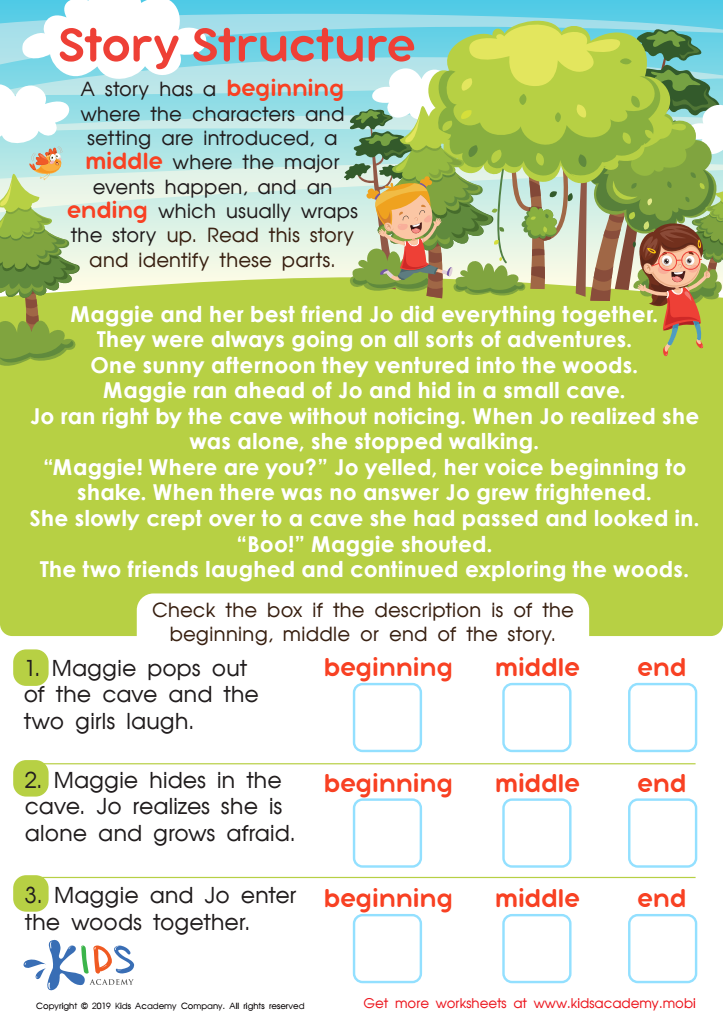
Story Structure Worksheet
 Assign to My Students
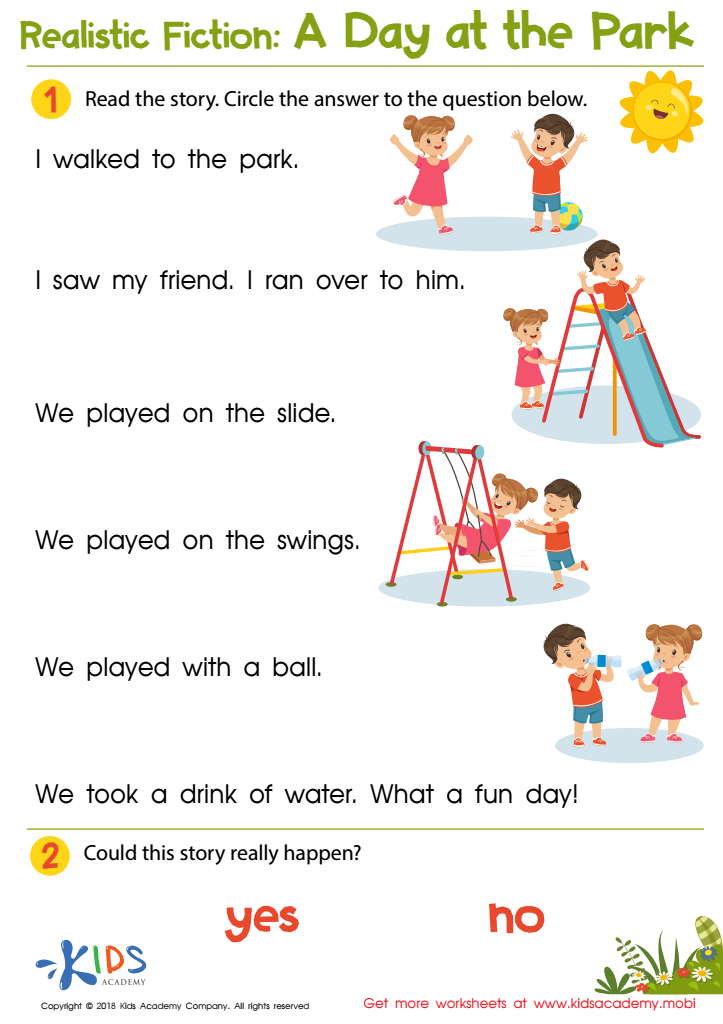
A Day at the Park Worksheet
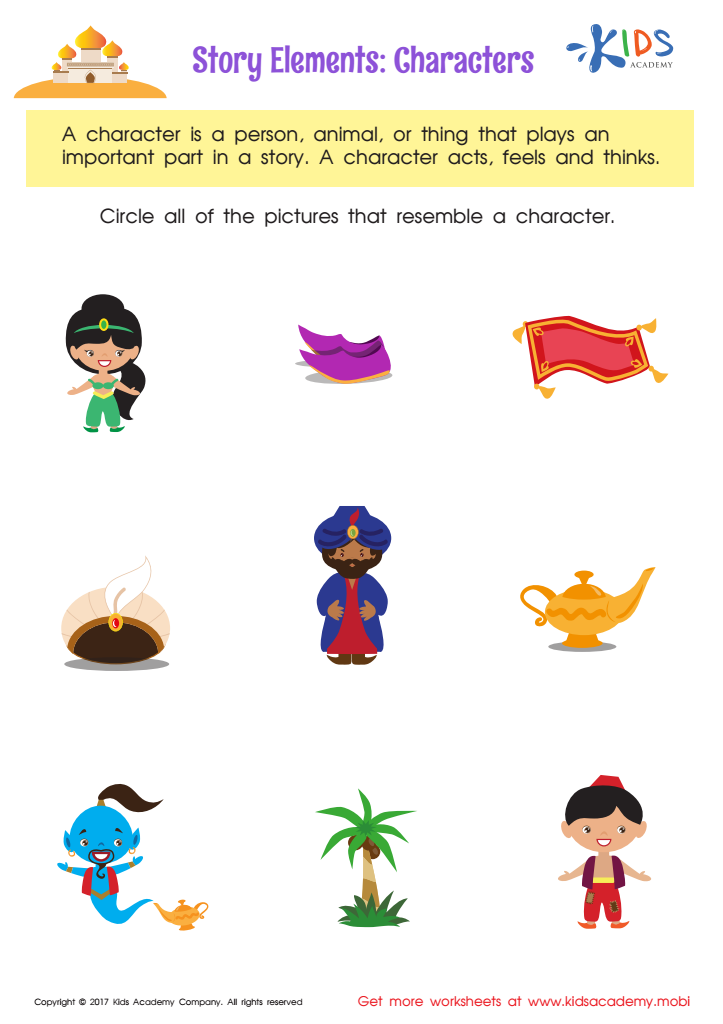
Story Elements Printable








Identifying story elements is crucial for 7-year-olds as it enhances their comprehension and critical thinking skills. For parents and teachers alike, understanding the basic components of a story—such as characters, setting, plot, conflict, and resolution—links directly to a child’s ability to grasp and engage with the material they read. By encouraging children to identify these elements, adults foster a deeper appreciation of literature.
When children recognize characters and their motivations, they learn empathy and develop social-emotional skills. Understanding the setting provides context, helping them visualize the story and relate it to their experiences. The plot encourages them to think critically about the sequence of events and how different outcomes can arise from choices.
Moreover, mastering story elements promotes advanced literary skills. As children articulate their insights about a narrative, they enhance their communication abilities and creativity. This critical engagement builds a foundation for analysis essential in academic success and lifelong learning.
Ultimately, parents and teachers investing time in teaching story elements not only supports literacy development but also nurtures a love for reading, equipping children with tools they’ll use throughout their educational journey and beyond.








