Identifying story elements Normal Reading Fiction Worksheets for 7-Year-Olds
3 filtered results
-
From - To
Welcome to our "Identifying Story Elements: Normal Reading Fiction Worksheets" tailored for 7-year-olds! These engaging worksheets are designed to enhance young readers' comprehension skills by encouraging them to identify essential story elements such as characters, setting, plot, and conflict. Each worksheet features age-appropriate fiction scenarios that captivate young imaginations while providing a fun and interactive way to practice reading skills. Teachers and parents will find these resources invaluable for fostering a love of reading and deepening comprehension in early learners. Empower your child's journey into the world of stories with these creative and educational tools!
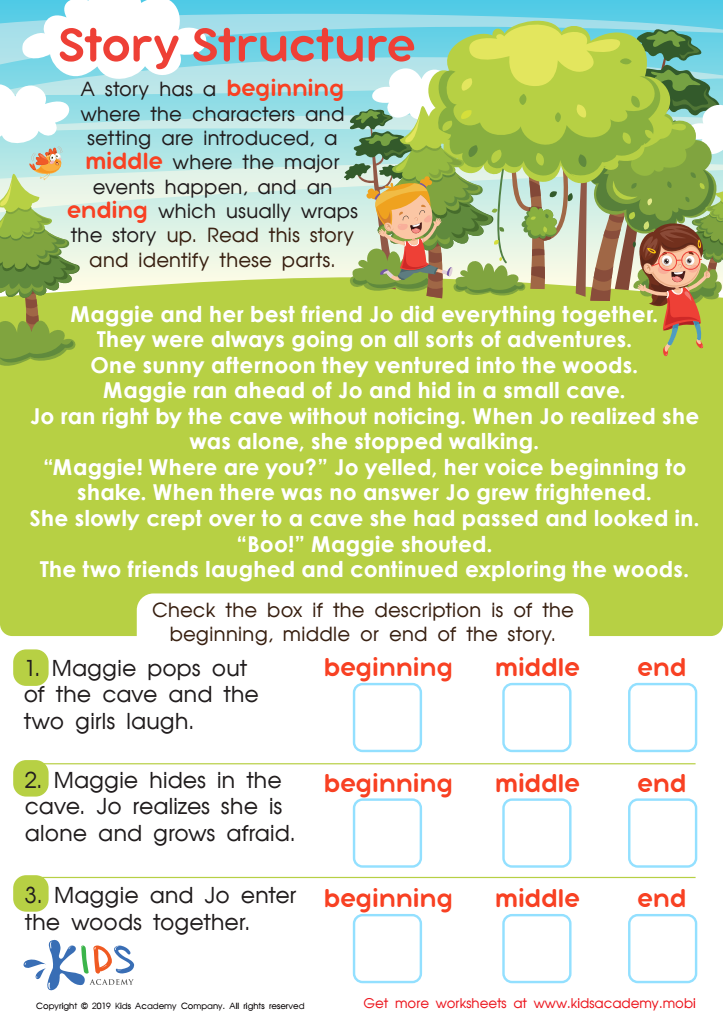
Story Structure Worksheet
 Assign to My Students
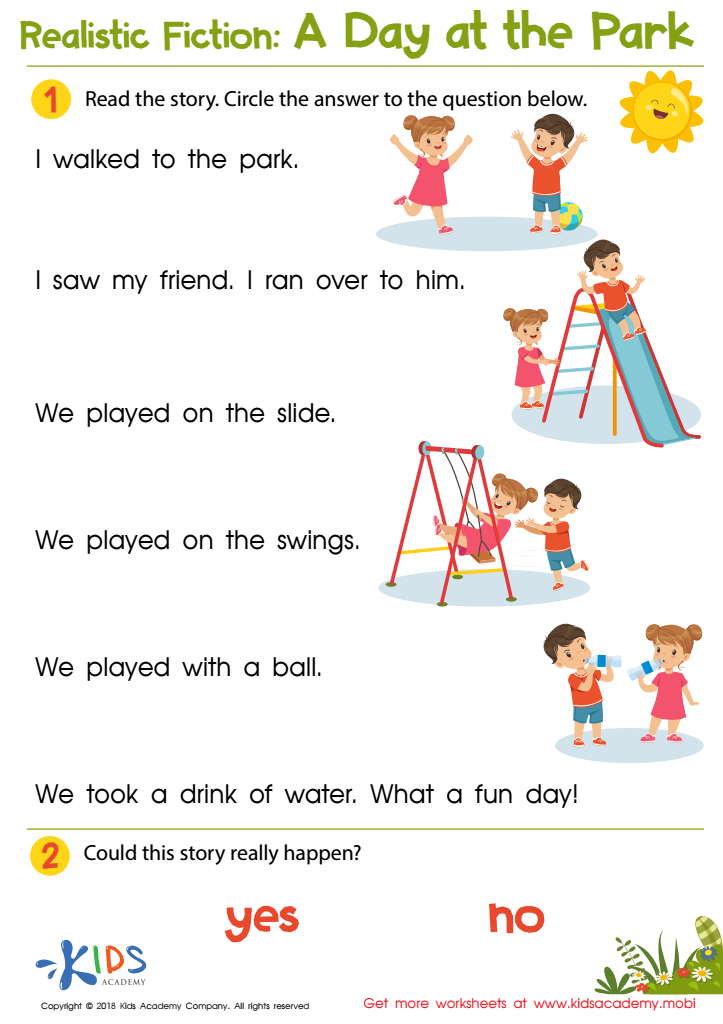
A Day at the Park Worksheet
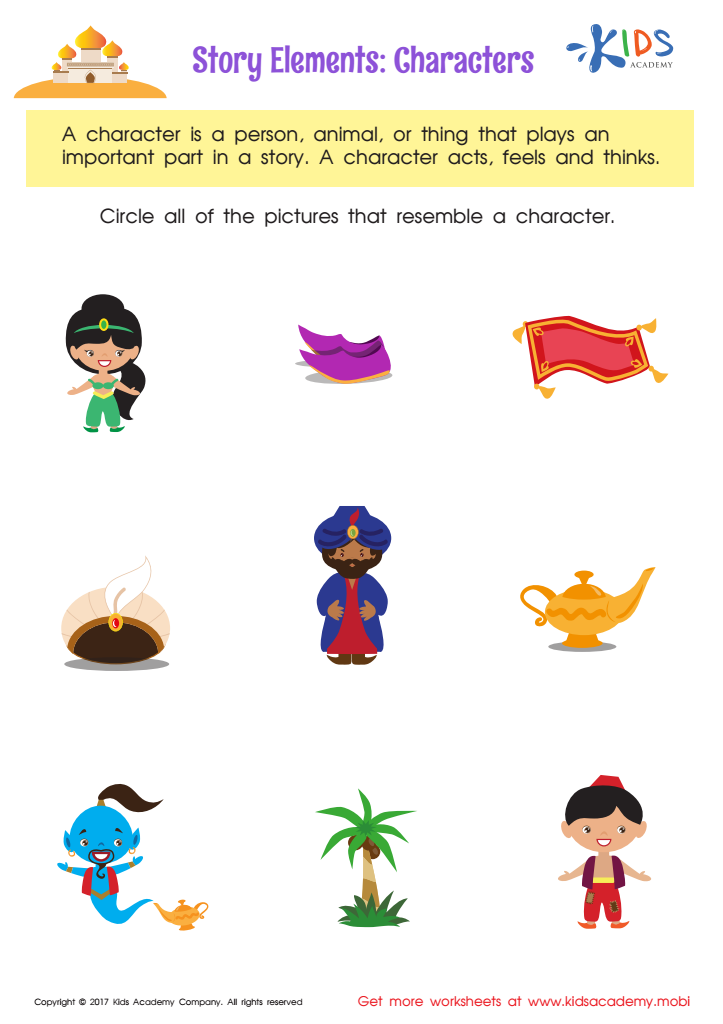
Story Elements Printable





.jpg)

.jpg)
Identifying story elements in fiction is crucial for 7-year-olds as it lays the foundation for reading comprehension and critical thinking. At this age, children are developing essential skills to understand narratives, which includes recognizing key components such as characters, setting, plot, conflict, and resolution. Parents and teachers should care about this for several reasons.
Firstly, understanding story elements helps young readers make connections between the text and their own experiences, fostering empathy and imagination. It encourages them to analyze characters' motivations and the consequences of their actions, enriching their comprehension skills.
Secondly, identifying story elements supports vocabulary development. As children learn to describe and discuss these components, they expand their language skills, which are vital for effective communication.
Lastly, these skills promote a love for reading. When children can dissect and appreciate a story, they are more likely to engage with literature, cultivating a lifelong habit.
Encouraging children to engage with story elements equips them not only for academic success but also prepares them for creative and strategic thinking in everyday situations. Both parents and teachers play a pivotal role in nurturing these skills for the holistic development of young readers.







