Vocabulary Building Normal Reading Fiction Worksheets for 7-Year-Olds
6 filtered results
-
From - To
Enhance your 7-year-old’s vocabulary with our engaging Vocabulary Building Normal Reading Fiction Worksheets! Tailored specifically for early readers, these worksheets combine fun stories with educational exercises, promoting comprehension and language skills. Each worksheet encourages children to explore new words in context, fostering a love for reading while boosting language development. With colorful illustrations and age-appropriate topics, your child will be motivated to learn new vocabulary through enjoyable fiction. Perfect for home or classroom use, these resources make vocabulary enhancement interactive and delightful! Explore our collection today and watch your child’s reading abilities flourish as they discover the joy of words!
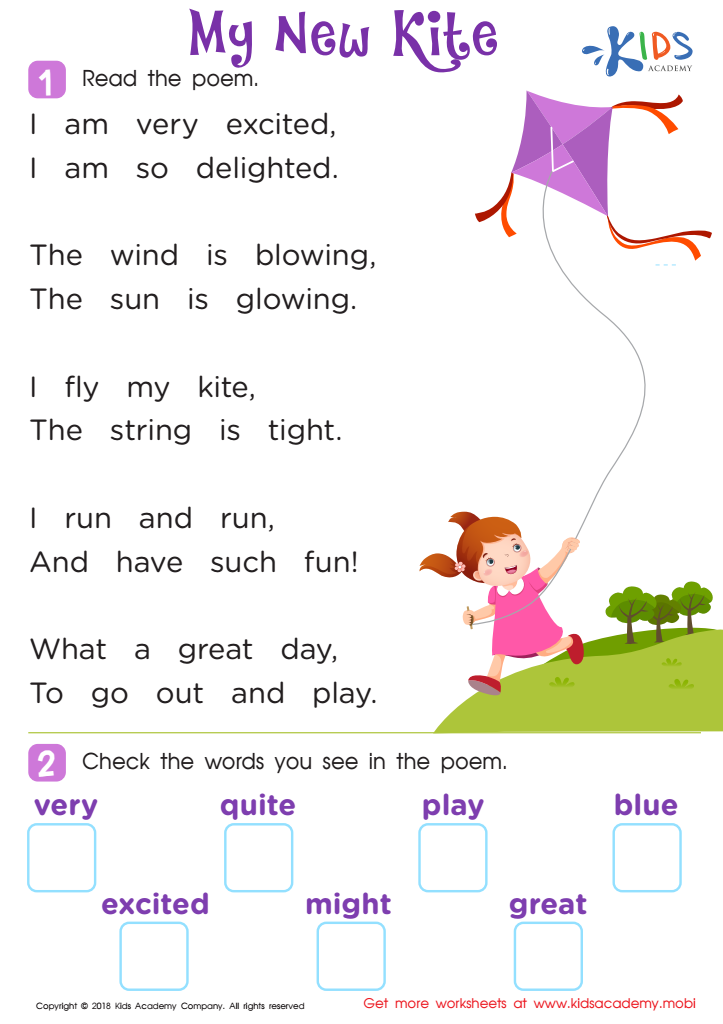
Poem: My New Kite Worksheet
 Assign to My Students
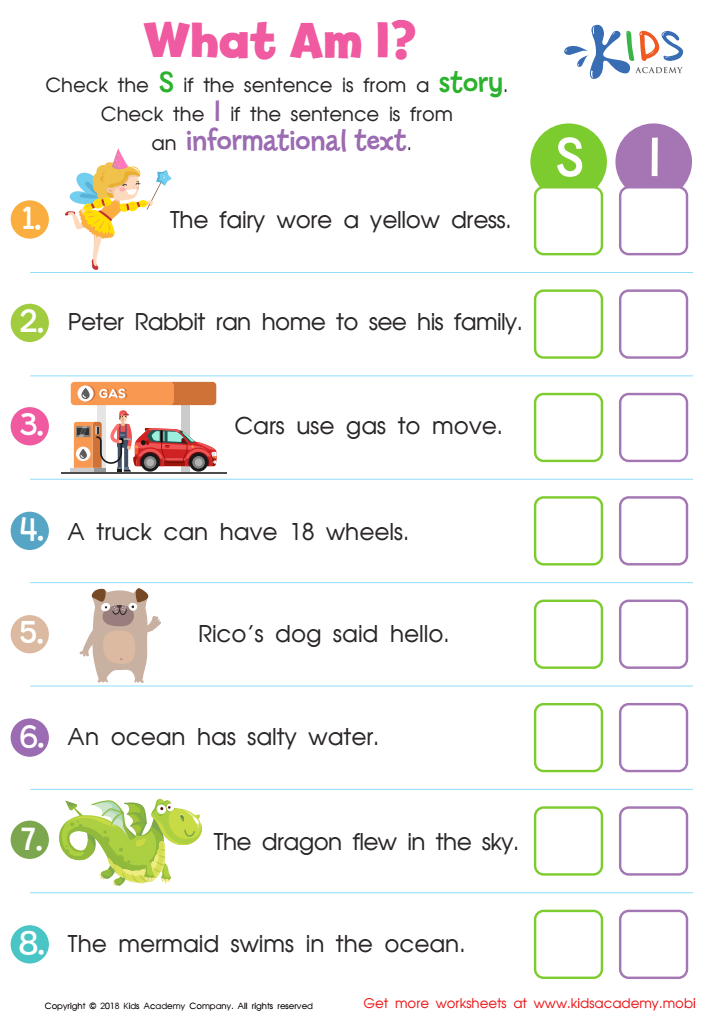
What Am I? Worksheet
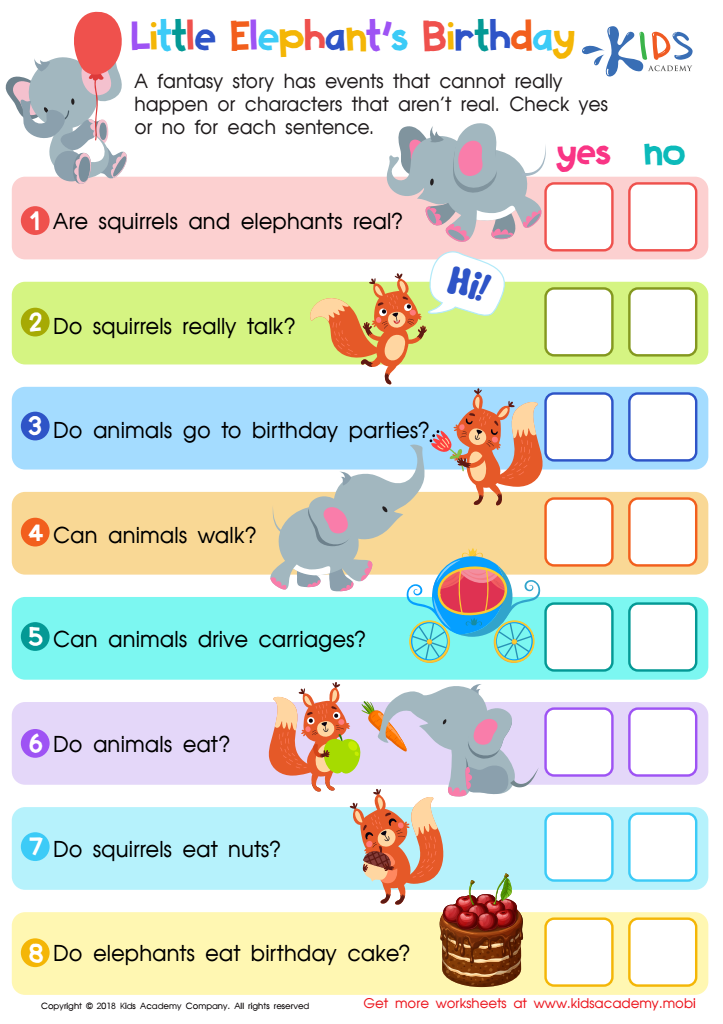
Little Elephant's Birthday Worksheet
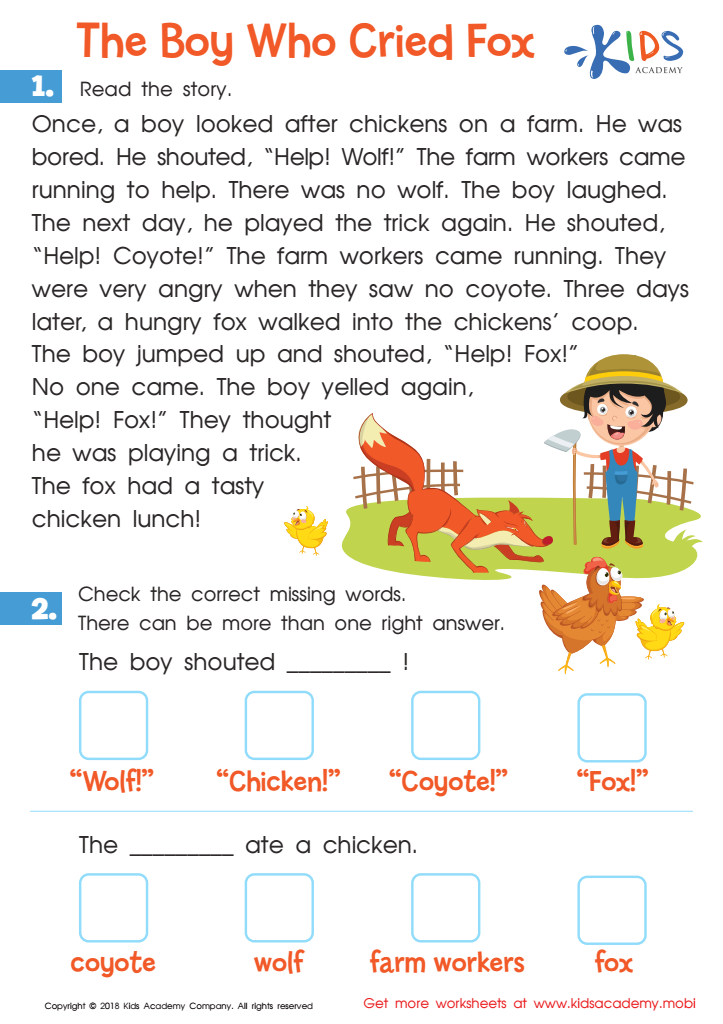
The Boy Who Cried Fox Worksheet
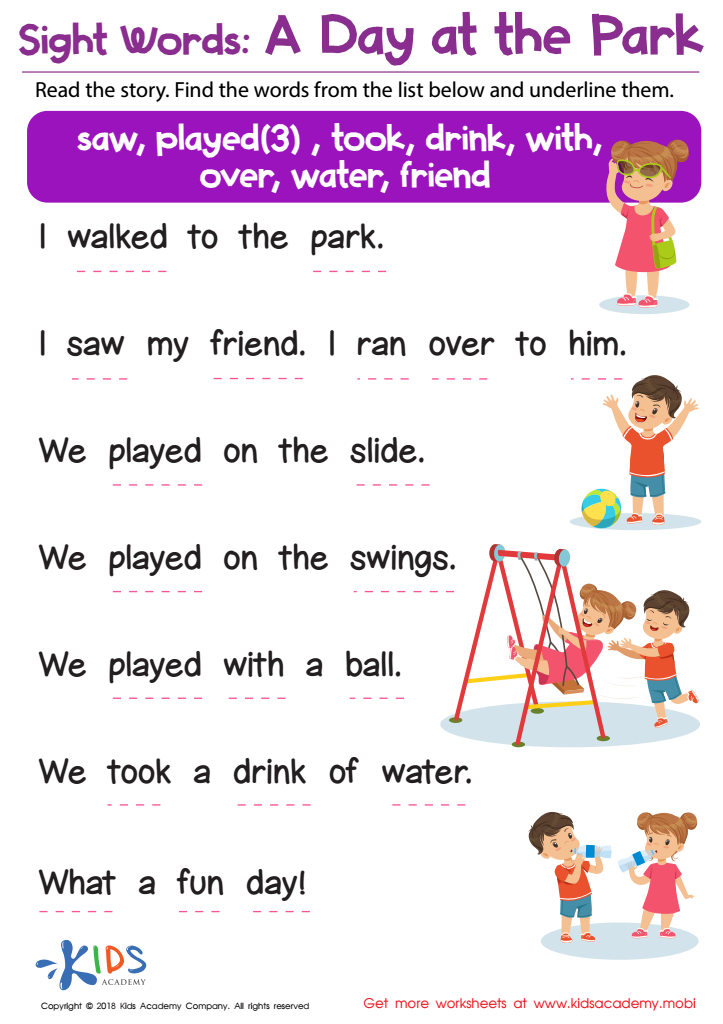
Sight Words: A Day at the Park Worksheet
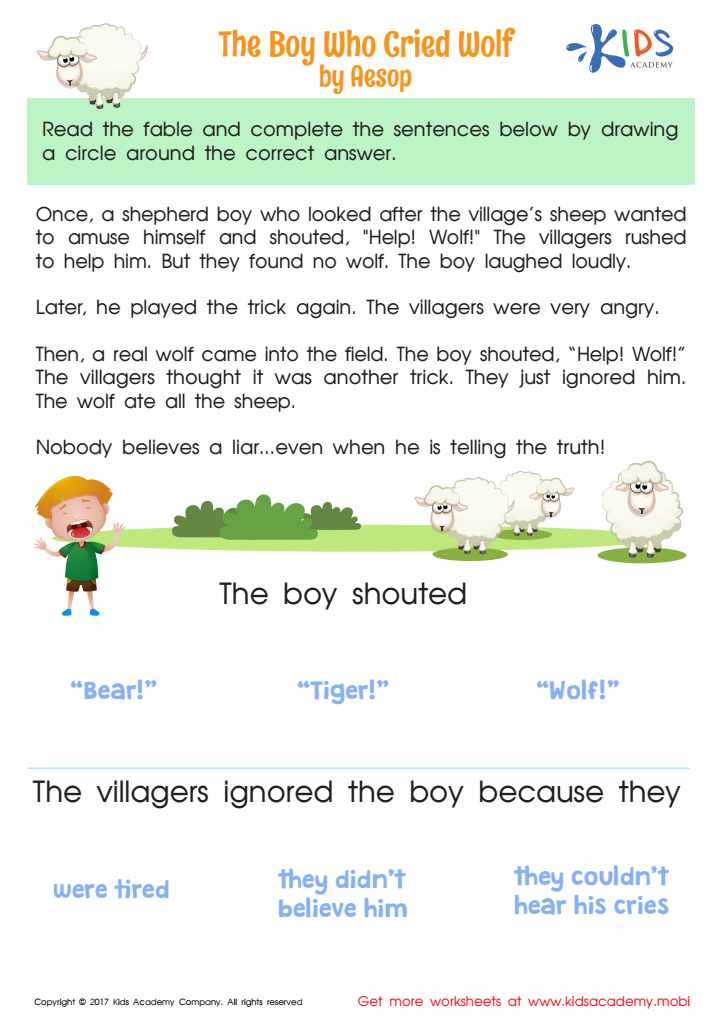
The Boy Who Cried Wolf Worksheet






.jpg)

Building vocabulary through reading fiction is crucial for 7-year-olds, as it lays the foundation for effective communication, comprehension, and critical thinking. At this age, children are developing their language skills rapidly, and exposure to diverse vocabulary in fictional stories enriches their understanding of words and phrases in context.
Reading fiction not only captivates young minds with imaginative storytelling but also introduces them to complex themes, emotions, and social situations. This exposure enables children to grasp nuanced meanings, thereby enhancing their ability to express themselves and understand others. Moreover, vibrant vocabulary helps children articulate their thoughts and feelings more accurately, fostering confidence in speaking and writing.
Additionally, vocabulary building through fiction supports academic success. Children with a strong vocabulary are more likely to excel in reading comprehension tests and other linguistically-intensive subjects. The magical worlds found in stories also promote a love for reading, instilling lifelong literacy habits essential for continuous learning.
For parents and teachers, encouraging vocabulary development through engaging fiction serves as a powerful tool, nurturing both cognitive and social skills vital for a child's development and success in school and beyond. Investing in vocabulary-building activities thus paves the way for a brighter, academically-rich future for children.







