Categorizing objects Normal Science Worksheets for 7-Year-Olds
3 filtered results
-
From - To
Discover our engaging Categorizing Objects Normal Science Worksheets, designed specifically for 7-year-olds! These worksheets help young learners develop vital sorting and categorization skills essential for early scientific understanding. Students will explore various themes, such as animals, plants, and everyday objects, encouraging critical thinking and fostering creativity. With vibrant illustrations and age-appropriate activities, kids will enjoy hands-on practice in class or at home. Perfect for reinforcing knowledge and enhancing classroom learning, our worksheets promote independent learning and make science fun! Download now and inspire your child's curiosity about the world around them while honing essential observational skills.
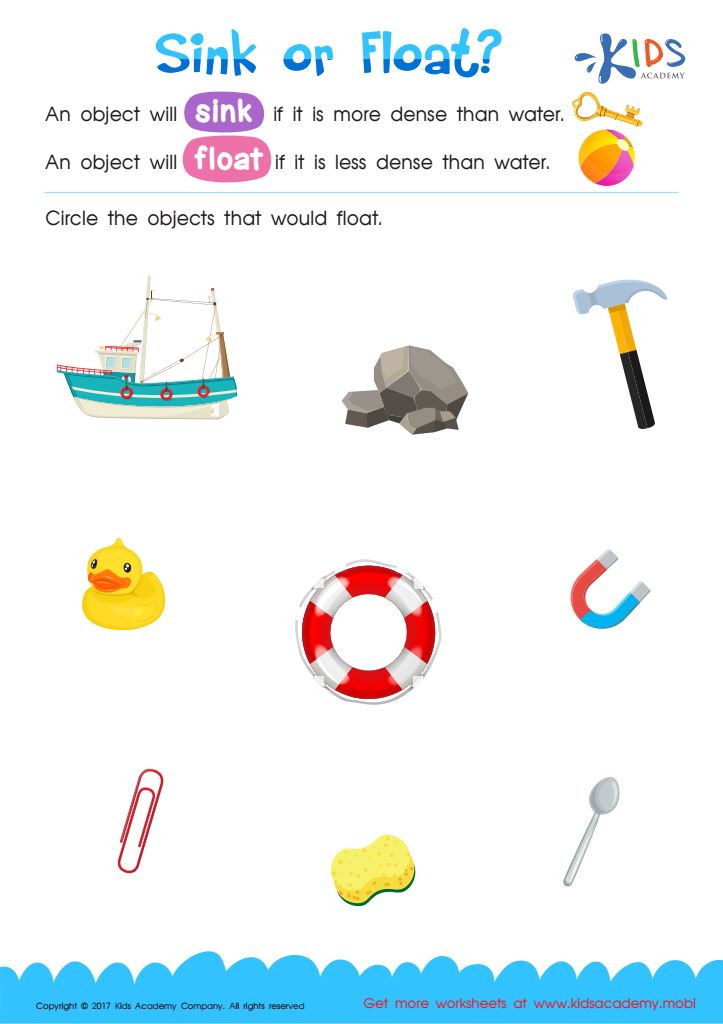
Sink or Float Printable
 Assign to My Students
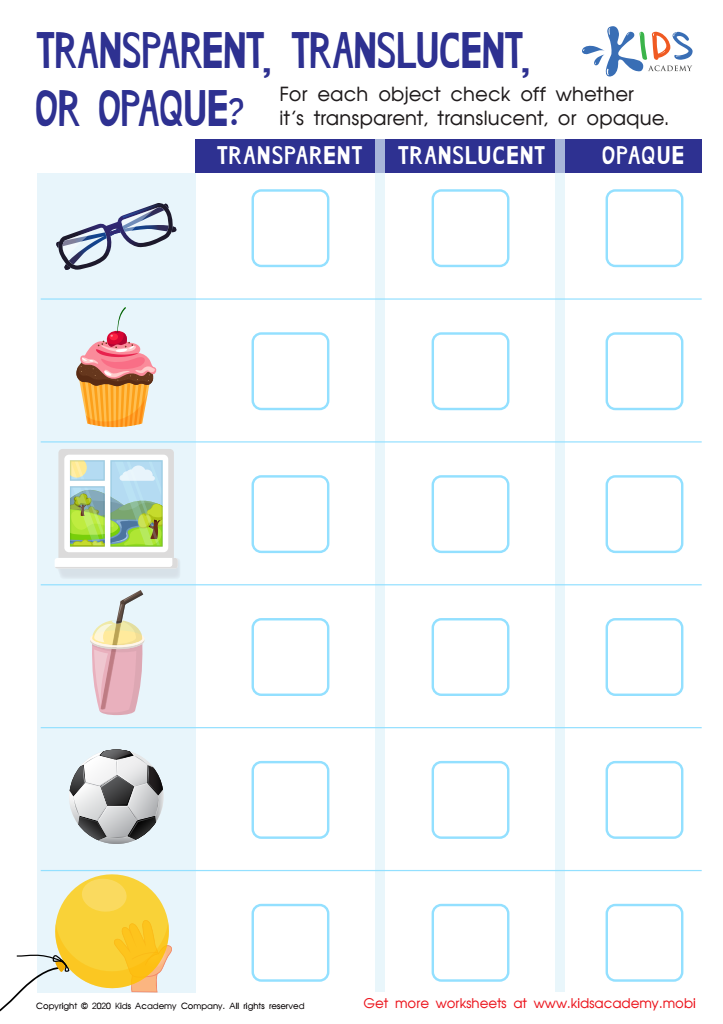
Transparent, Translucent, or Opaque Worksheet
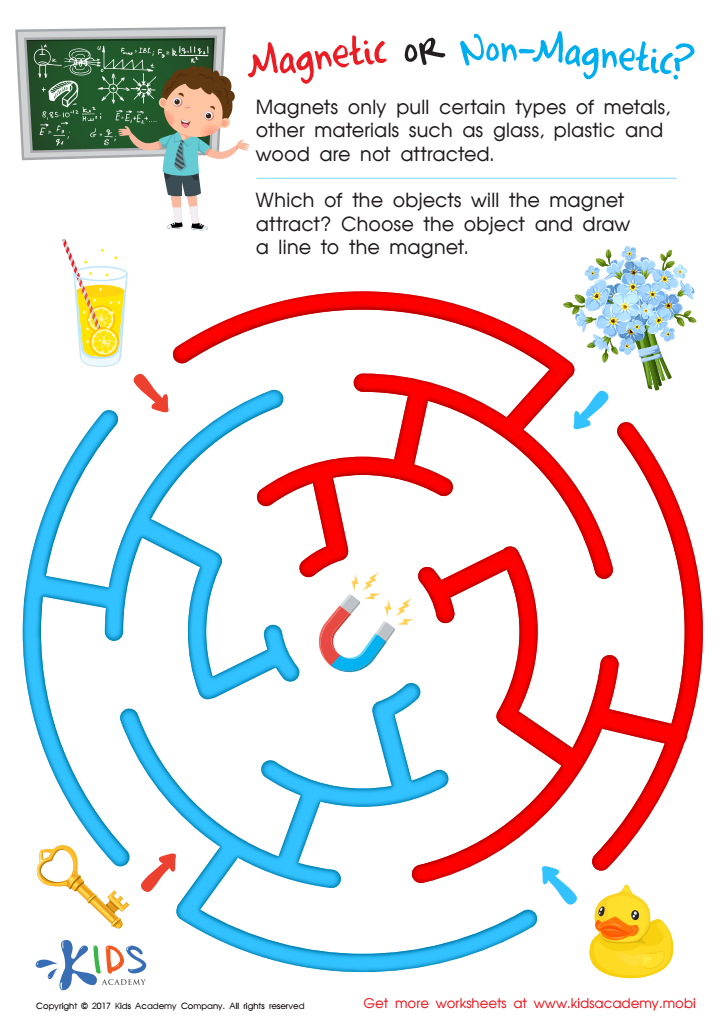
Magnetic or Non–Magnetic Worksheet






Parents and teachers should care about categorizing objects in normal science for 7-year-olds because it lays a crucial foundation for critical thinking and cognitive development. At this age, children are naturally curious and eager to explore the world around them. By categorizing objects, they learn to make sense of information, identify patterns, and understand relationships among different items. For instance, sorting objects by shape, size, or color enhances their observational skills and aids in problem-solving.
Furthermore, categorization encourages children to engage in discussions about their findings, fostering communication skills and boosting their confidence in expressing ideas. This process also introduces basic scientific principles, such as classification in biology—helping them appreciate the diversity of life around them.
Moreover, understanding the classification of objects helps children develop a scientific mindset, empowering them to ask questions, seek evidence, and draw conclusions. These skills are fundamental not only in science but in everyday decision-making, making them better equipped to navigate challenges as they grow. Overall, integrating object categorization into learning engages children's creativity, boosts their knowledge retention, and prepares them for more complex subjects in the future, making it a valuable educational tool.







