Understanding life cycles Normal Science Worksheets for 7-Year-Olds
4 filtered results
-
From - To
Explore the fascinating cycles of life with our engaging "Understanding Life Cycles" science worksheets, tailor-made for 7-year-olds. Designed to align with normal developmental milestones, these worksheets bring the extraordinary transformations in animals and plants to life. Through interactive activities and vivid illustrations, children will grasp the concept of various life stages, from seeds and eggs to full-grown organisms. Perfect for curious young learners, our printable worksheets enhance scientific knowledge, observational skills, and understanding of natural processes. Help your child discover the wonders of life cycles in a fun, educational, and age-appropriate way. Dive into the journey of life today!
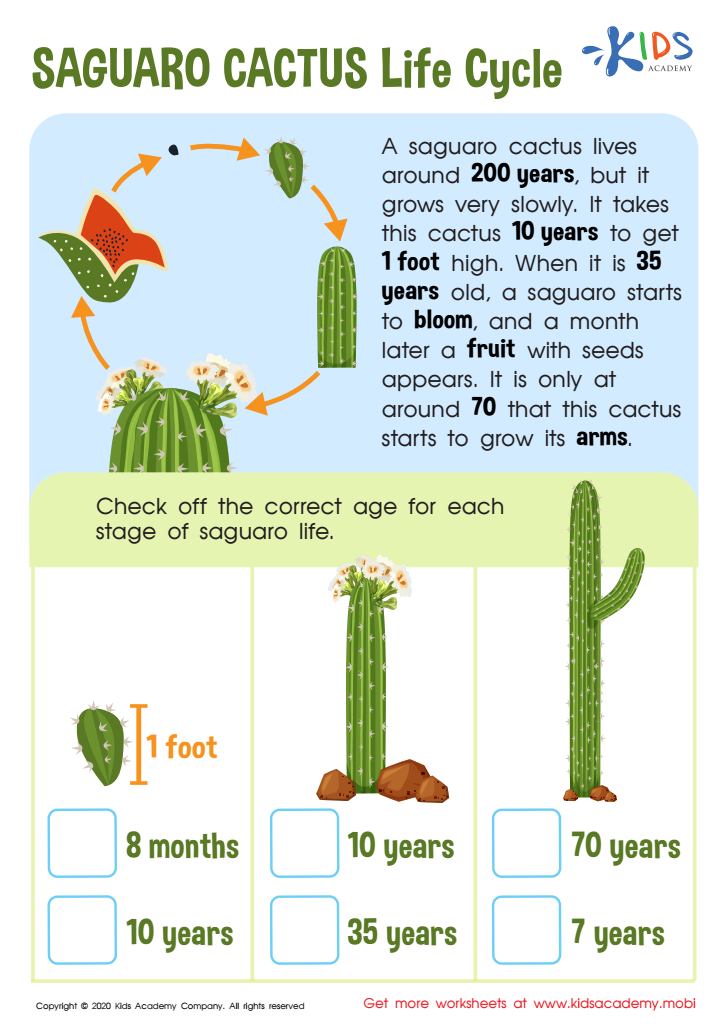
Saguaro Cactus Life Cycle Worksheet
 Assign to My Students
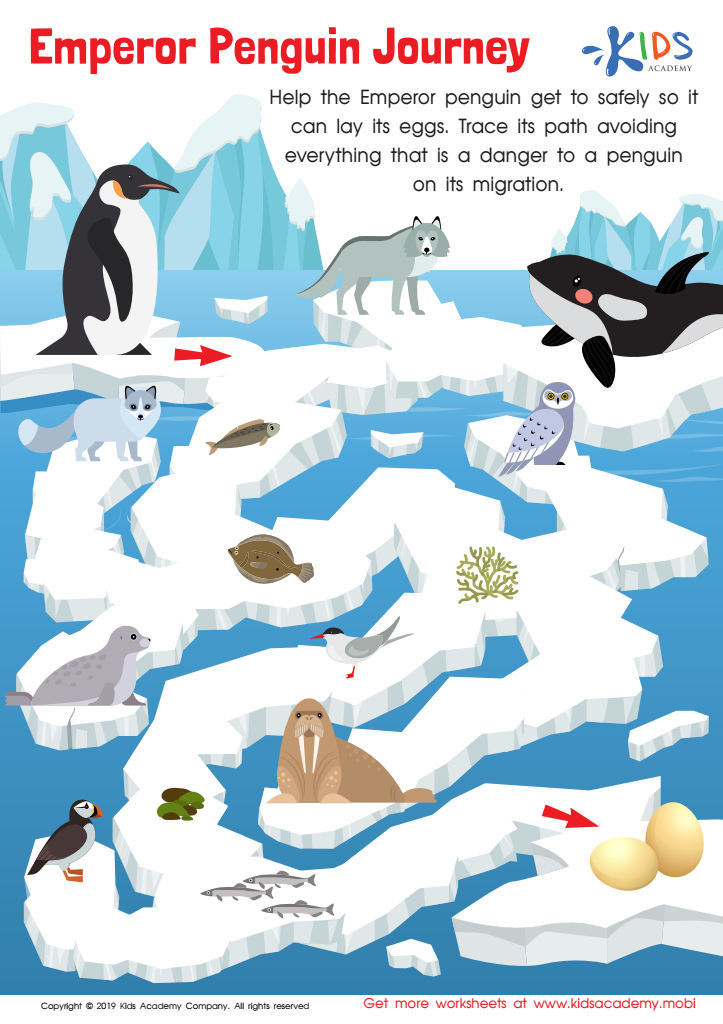
Emperor Penguin Journey Worksheet
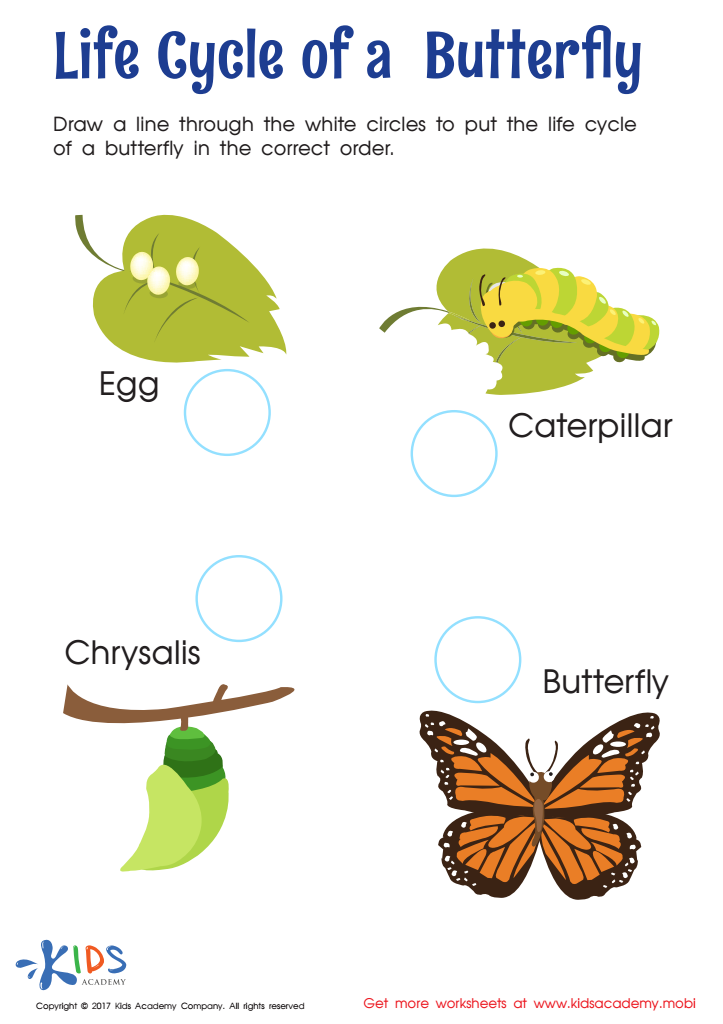
Life Cycle of Butterfly Worksheet
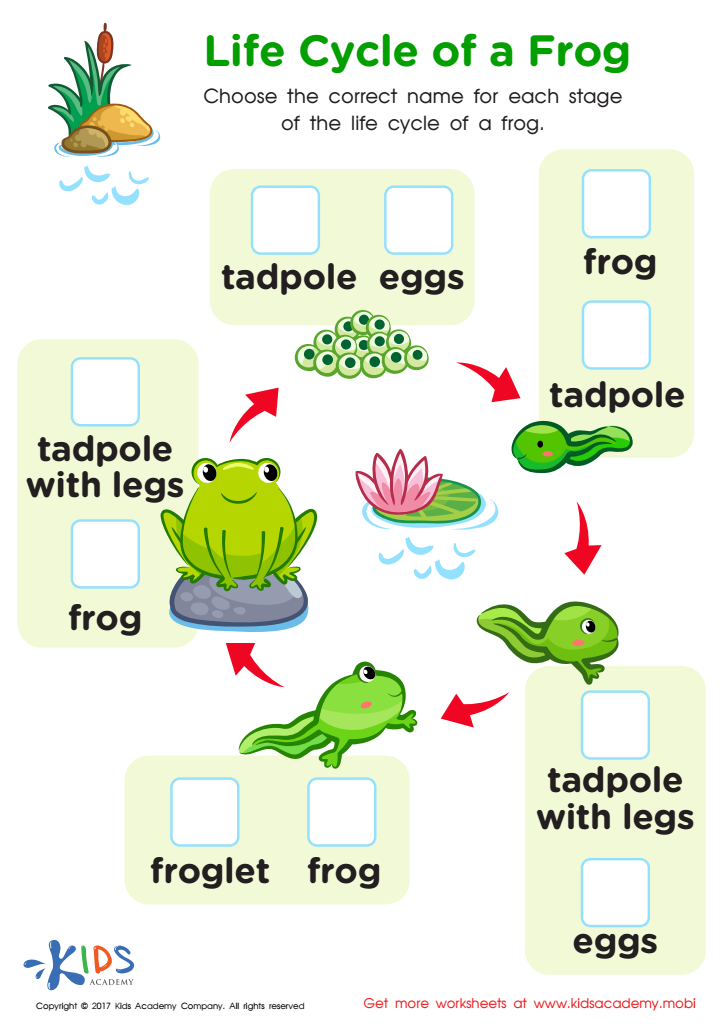
Life Cycle Frog Printable






Understanding life cycles is crucial for 7-year-olds, and parents or teachers should care about this aspect of normal science education for several important reasons. Firstly, life cycles help children comprehend the fundamental processes of birth, growth, reproduction, and death. This foundational knowledge fosters a sense of curiosity about nature and science, encouraging children to explore and ask questions.
Secondly, learning about life cycles promotes an understanding of interdependence within ecosystems. Children can see how plants, animals, and insects rely on each other, as well as how humans fit into the broader natural world. This awareness can cultivate respect and a sense of responsibility towards the environment from an early age.
Thirdly, understanding life cycles supports cognitive and observational skills. Watching a butterfly evolve from a caterpillar, or a seed grow into a plant, helps children develop patience, attention to detail, and critical thinking. Such observational activities also highlight concepts like change, continuity, and adaptation, which are broader scientific principles.
Finally, knowing about life cycles can support emotional development. Recognizing that all living things have a life cycle helps children better understand their own development and cope with their own changes. It prepares them for discussions about health, growth, and even loss, in comprehensible and age-appropriate ways.
Engaging children in life cycles through hands-on activities and inquiry-based learning resonates well with their natural curiosity, laying a solid foundation for future scientific learning and personal growth.







