
Vocabulary development Normal Science Worksheets for 7-Year-Olds
6 filtered results
Difficulty Level
Grade
Age
-
From - To
Subject
Activity
Standards
Welcome to our "Vocabulary Development Normal Science Worksheets" designed specifically for 7-year-olds! These engaging and interactive printable worksheets focus on enriching young learners' scientific vocabulary through fun activities and visually stimulating content. Each worksheet encourages children to explore essential science concepts while building their word recognition and comprehension skills. Ideal for both home and classroom use, our worksheets cover various science topics tailored to this age group, promoting a love for learning and enhancing critical thinking. Foster your child's vocabulary development in science with these creative resources, making education an enjoyable adventure they won't want to miss!
Favorites
With answer key
Interactive
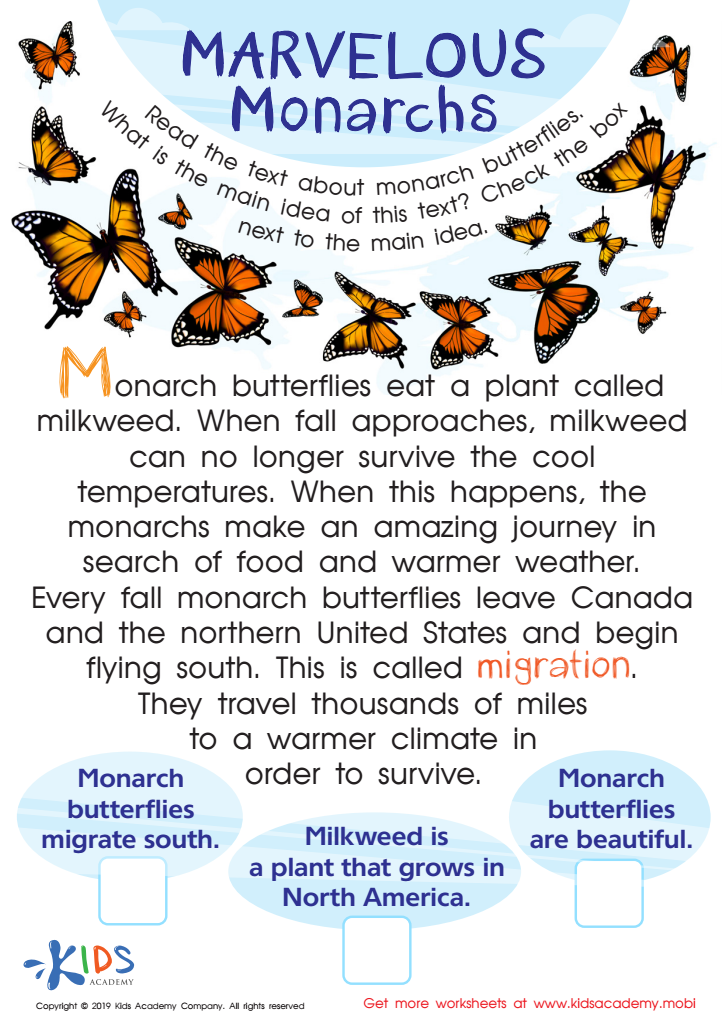
Marvelous Monarchs Worksheet
Help your kids have fun while reading - start with small words and short sentences. This worksheet can test your kids' reading and comprehension skills. Ask them to read the text about Monarch butterflies and help them locate the main idea.
Marvelous Monarchs Worksheet
Worksheet
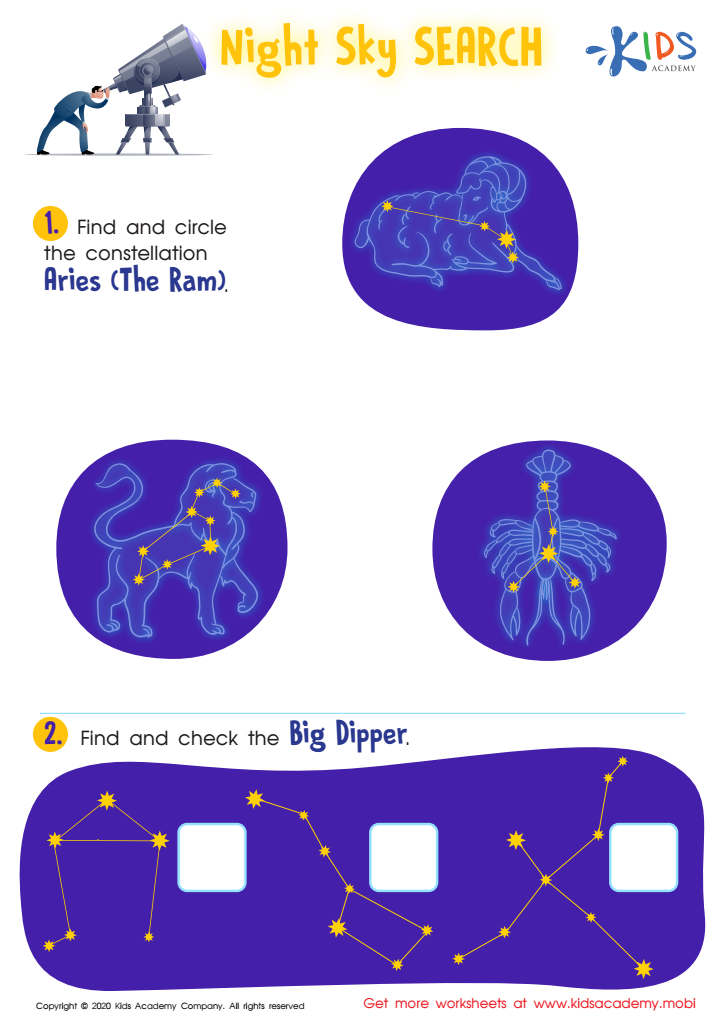
Night Sky Search Worksheet
Gaze up into the night sky and spot the stars! Your little astronomer can learn about Aries and Big Dipper constellations with this science worksheet. Simply find the ram for Aries and check the box for Big Dipper. Then, when the weather is right, go outside and look for them in the night sky!
Night Sky Search Worksheet
Worksheet
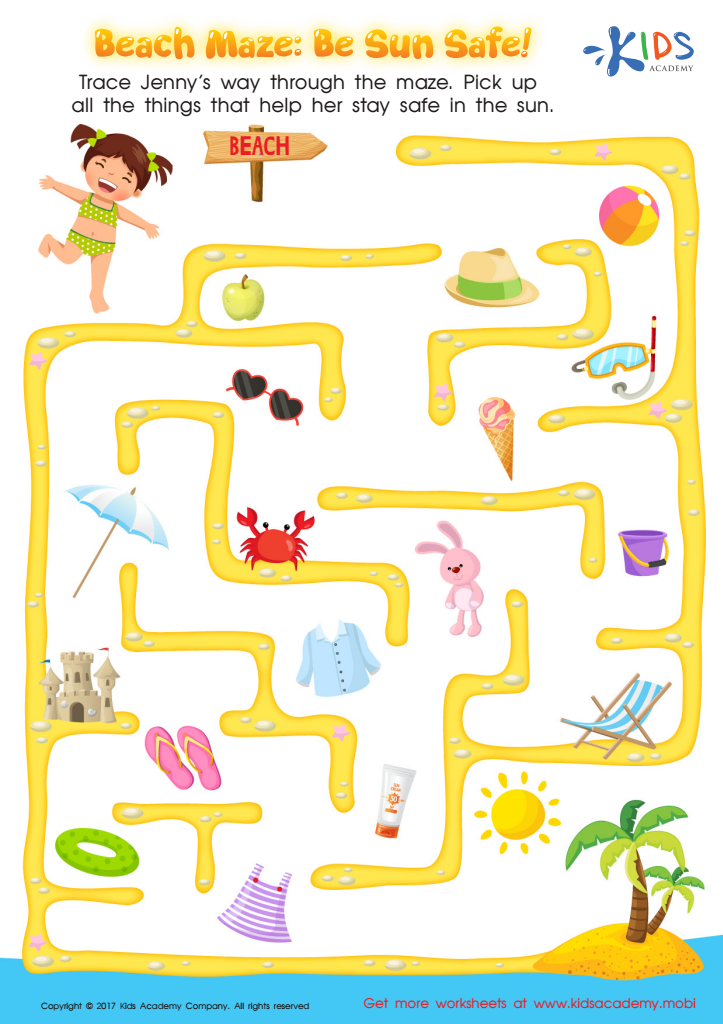
Beach Maze: Sun Safe Worksheet
Let's have fun in the sun! Use this worksheet to help guide your child - Jenny - through the maze and find the items she needs to stay safe. Your child will learn more about sun safety while they think through the maze and protect their skin.
Beach Maze: Sun Safe Worksheet
Worksheet
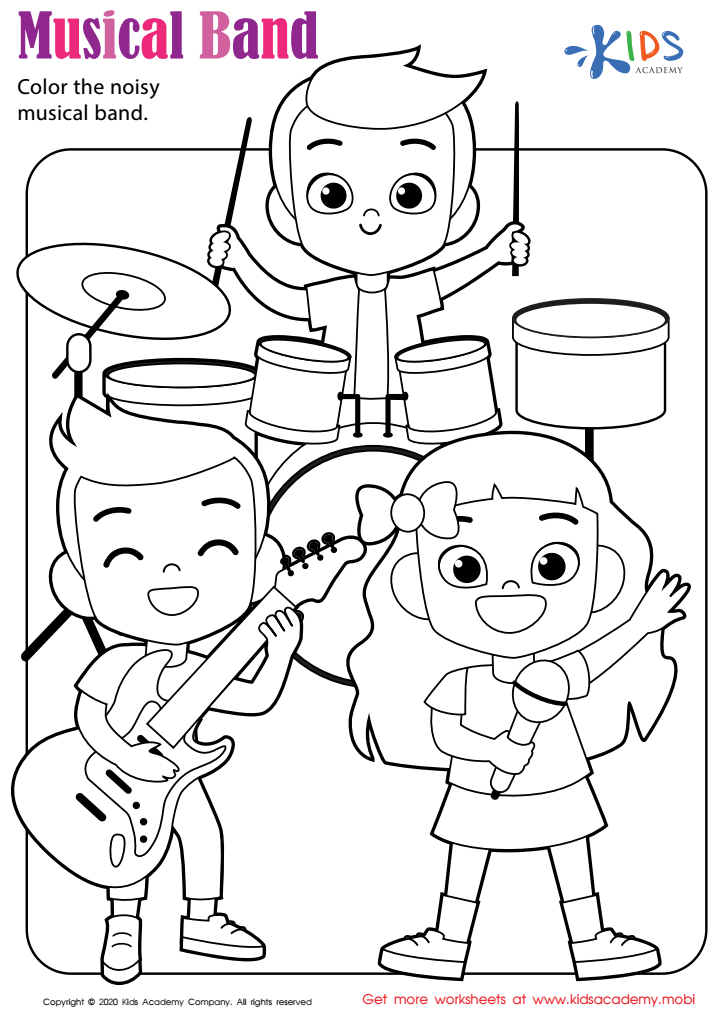
Musical Band Worksheet
Introduce music to your kids with this free printable coloring worksheet! Ask them to name the instruments and their sounds, then let them get creative with the colors. A band is formed when several people play instruments together - help your child learn this concept and get inspired to join a band one day!
Download (PDF)
 Assign to My Students
Assign to My Students
Musical Band Worksheet
Worksheet
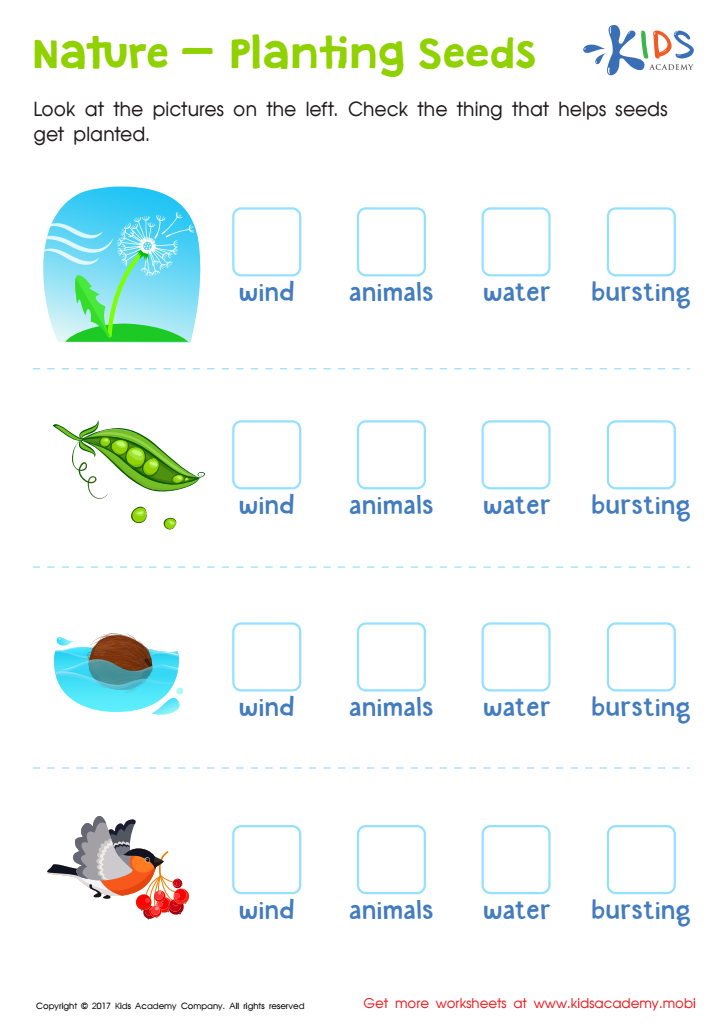
Nature Planting Seeds Worksheet
Help your child explore the fascinating cycle of plants and seeds with this worksheet. They'll learn how plants grow and how seeds travel to the ground. Challenge them to identify the right way each seed gets planted!
Nature Planting Seeds Worksheet
Worksheet
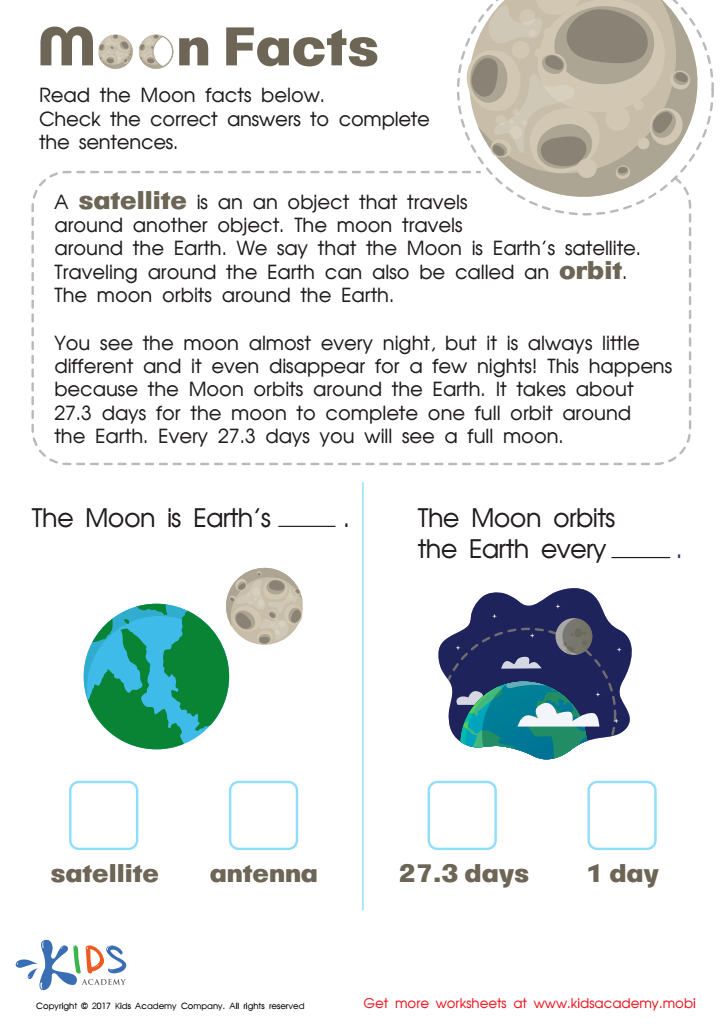
Moon Facts Worksheet
This worksheet challenges your child's reading comprehension. They'll learn all about satellites and the moon's orbit, observing the moon's fascinating phases!
Moon Facts Worksheet
Worksheet
Join Kids Academy for Free
Who is primarily going to use this learning content?






Vocabulary development is crucial for 7-year-olds, particularly in the context of their science education. At this age, children are transitioning from learning to read to reading to learn, making a strong vocabulary essential for understanding scientific concepts. When parents and teachers prioritize vocabulary development in science, children gain the language skills needed to articulate observations, ask questions, and engage in discussions about the natural world.
Understanding scientific terminology, such as "ecosystem," "habitat," or "experiment," helps children grasp complex concepts that form the foundation of scientific literacy. A robust vocabulary enables students to make connections between ideas, fostering critical thinking and problem-solving skills. Moreover, a rich vocabulary stimulates curiosity and a desire to explore, which is fundamental in nurturing a lifelong love for learning.
Support from parents and teachers can include reading science-related books, encouraging the use of new words in conversation, and integrating vocabulary activities into everyday experiences. This collaborative effort not only enhances children's understanding of science but also cultivates a broader enthusiast for learning. By prioritizing vocabulary development, caregivers ensure that children are better equipped to succeed academically and in their daily lives, setting them on a path for future success.







