Vocabulary expansion Normal Plants and Animals Worksheets for 7-Year-Olds
6 filtered results
-
From - To
Enhance your 7-year-olds' vocabulary with our engaging "Plants and Animals" worksheets! Tailored for early learners, these printable resources foster a love for nature while expanding language skills. Each worksheet is designed to introduce children to essential terminology related to various plants and animals, encouraging exploration and understanding of the environment. Through fun activities and vibrant illustrations, students will learn to identify and describe different species, making science relatable and exciting. These vocabulary expansion resources are perfect for home or classroom use, providing a wonderful opportunity for young learners to connect words with the natural world around them. Boost learning today!
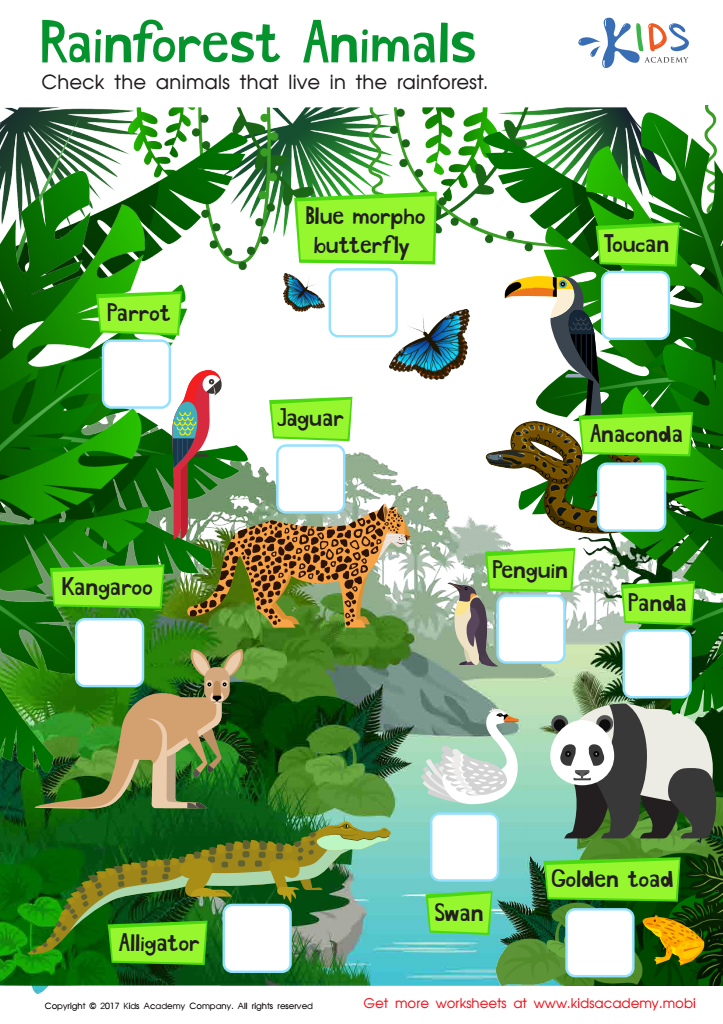
Rainforest Animals Worksheet
 Assign to My Students

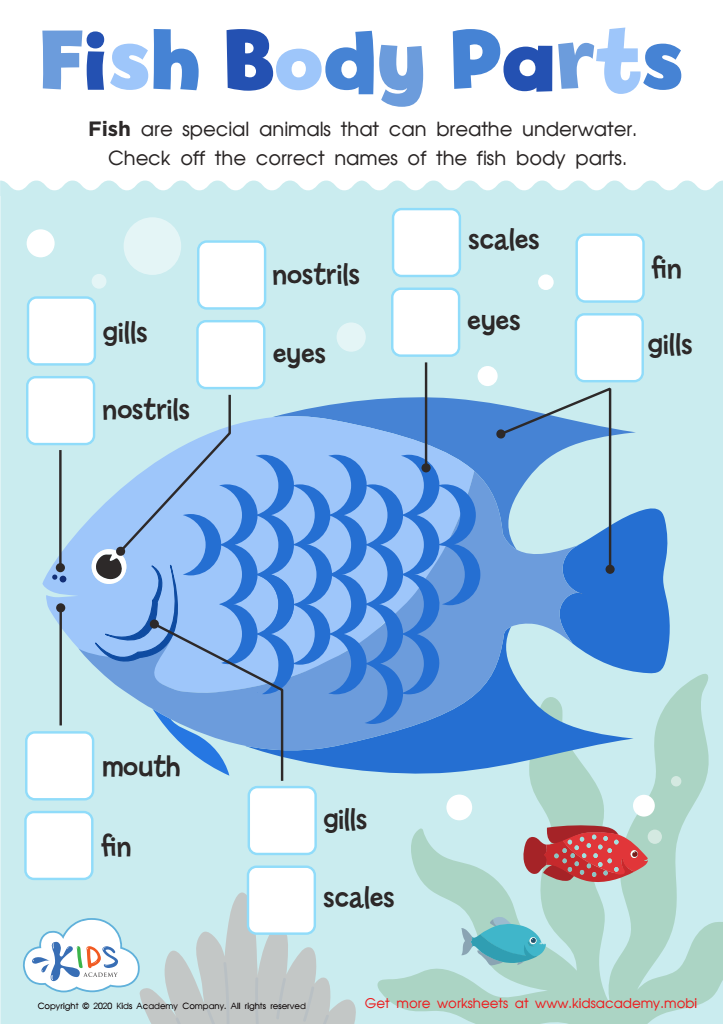
Fish Body Parts Worksheet
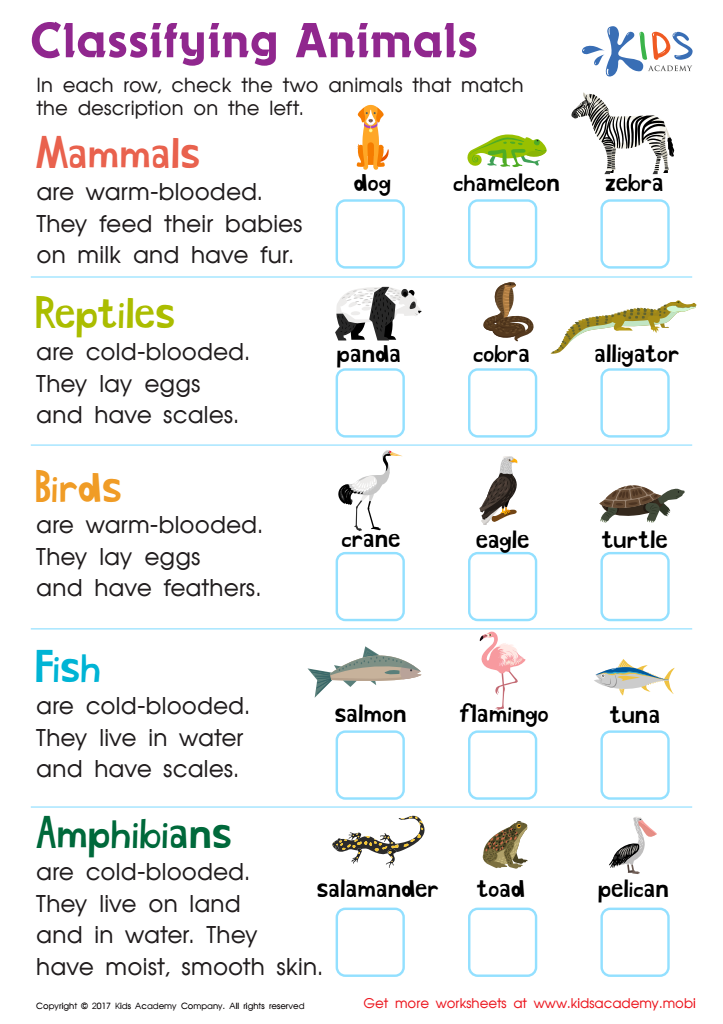
Classifying Animals Worksheet
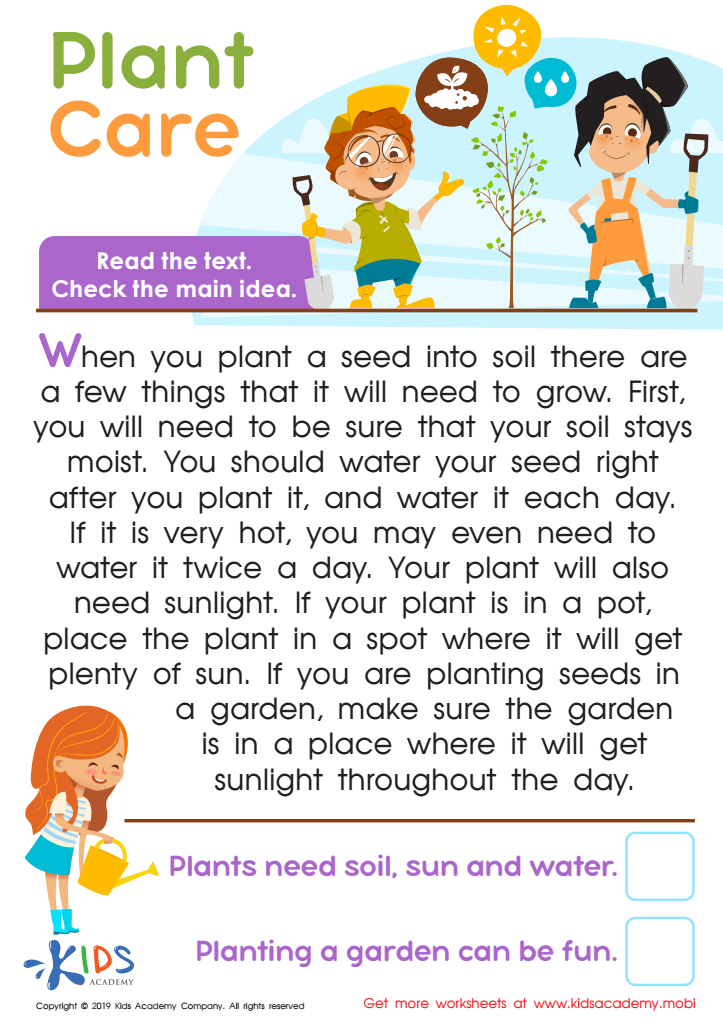
Plant Care Worksheet
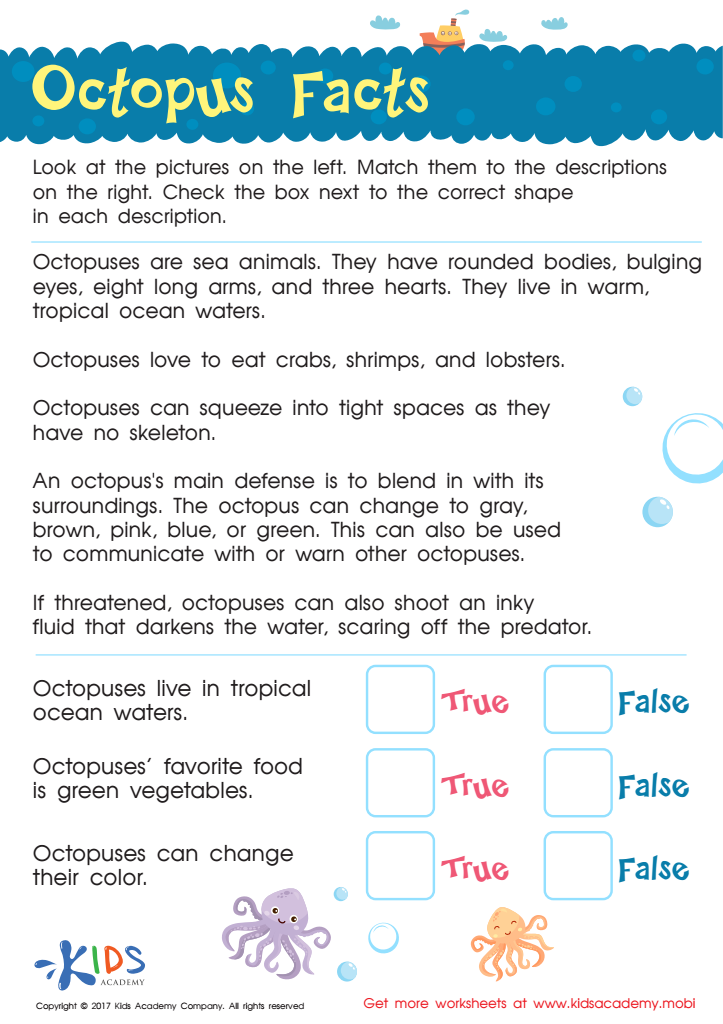
Octopus Facts Worksheet For Kids
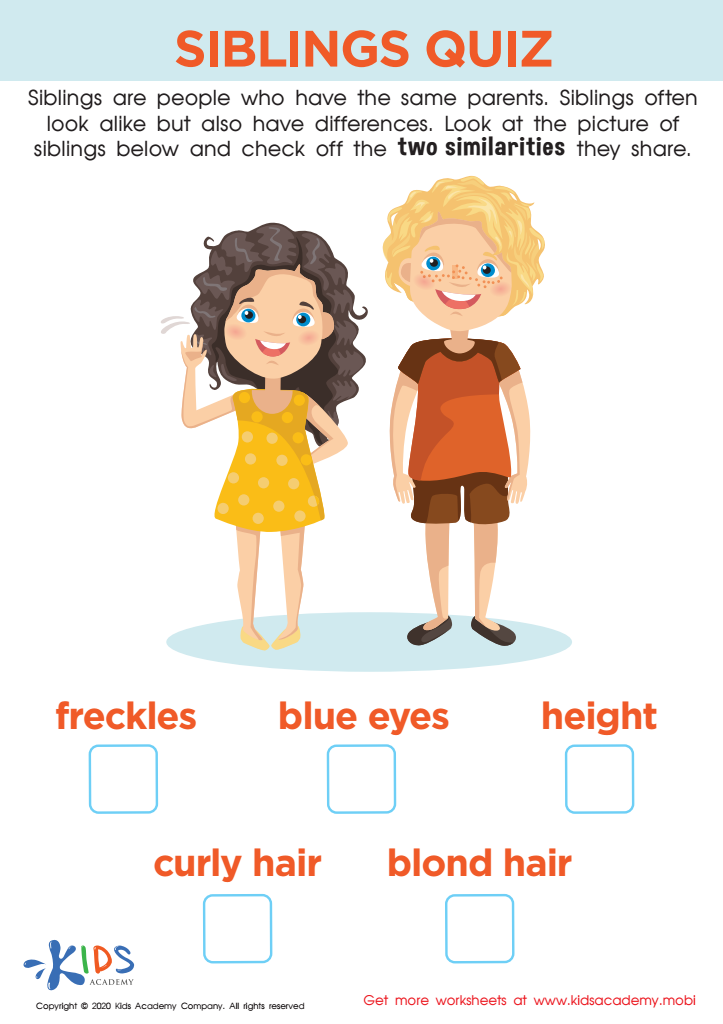
Siblings Quiz Worksheet


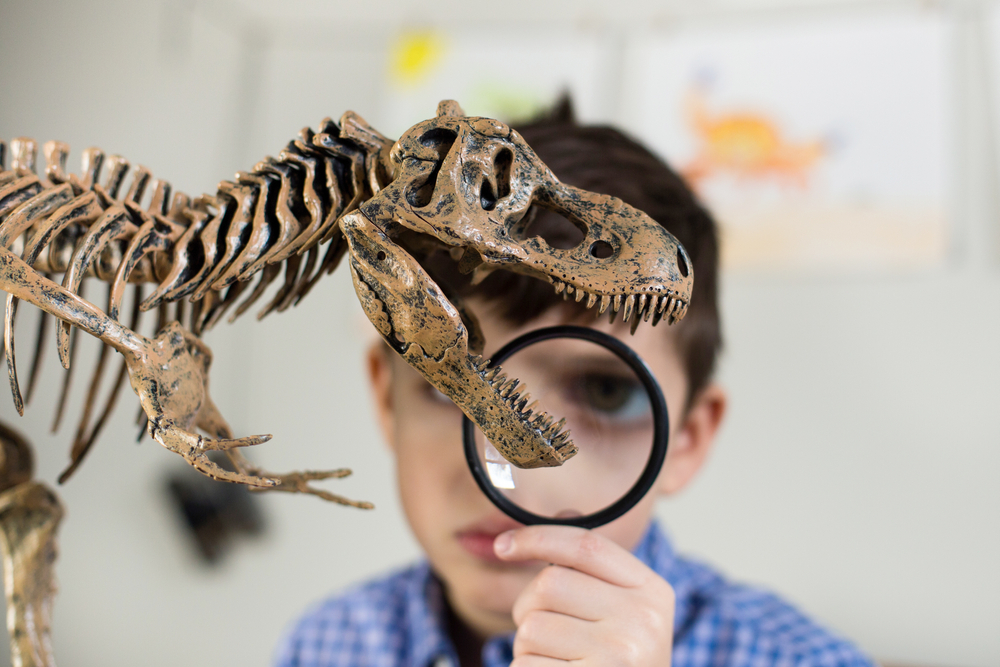





Vocabulary expansion in the context of "Normal Plants and Animals" is crucial for 7-year-olds as it lays the foundation for effective communication, comprehension, and ecological literacy. At this age, children are developing their language skills and understanding of the world around them. Introducing a rich vocabulary related to everyday plants and animals enhances their ability to express thoughts and ask questions about the natural environment.
Understanding common vocabulary connected to plants and animals helps children develop observational skills and scientific reasoning. When children learn terms like "photosynthesis," "habitat," or "ecosystem," they can engage more deeply with nature, making connections between what they learn in school and real-life experiences. This fosters curiosity and encourages exploration.
Furthermore, a strong vocabulary promotes literacy skills, as children are better equipped to read and understand texts that contain these terms. It can lead to improved academic performance across subjects, particularly in science and reading.
By focusing on expanding vocabulary related to normal plants and animals, parents and teachers can foster a love for nature, enhance critical thinking skills, and promote holistic development, enabling children to become informed, responsible stewards of their environment. Investing in vocabulary growth at this age ultimately supports long-term educational success.







