Word identification Normal Alphabet Worksheets for Ages 8-9
5 filtered results
-
From - To
Discover our engaging Word Identification Normal Alphabet Worksheets designed for children aged 8-9! These interactive worksheets enhance reading skills by encouraging students to recognize and differentiate words within the normal alphabet. Each activity is tailored to ignite curiosity and strengthen vocabulary, ensuring a fun yet educational experience. Our carefully curated content supports literacy development, helping young learners build confidence in their reading abilities. With vibrant graphics and varied exercises, these worksheets are perfect for classroom use or homeschooling. Empower your child’s language skills and make word identification a rewarding adventure! Explore our collection today and watch them thrive!
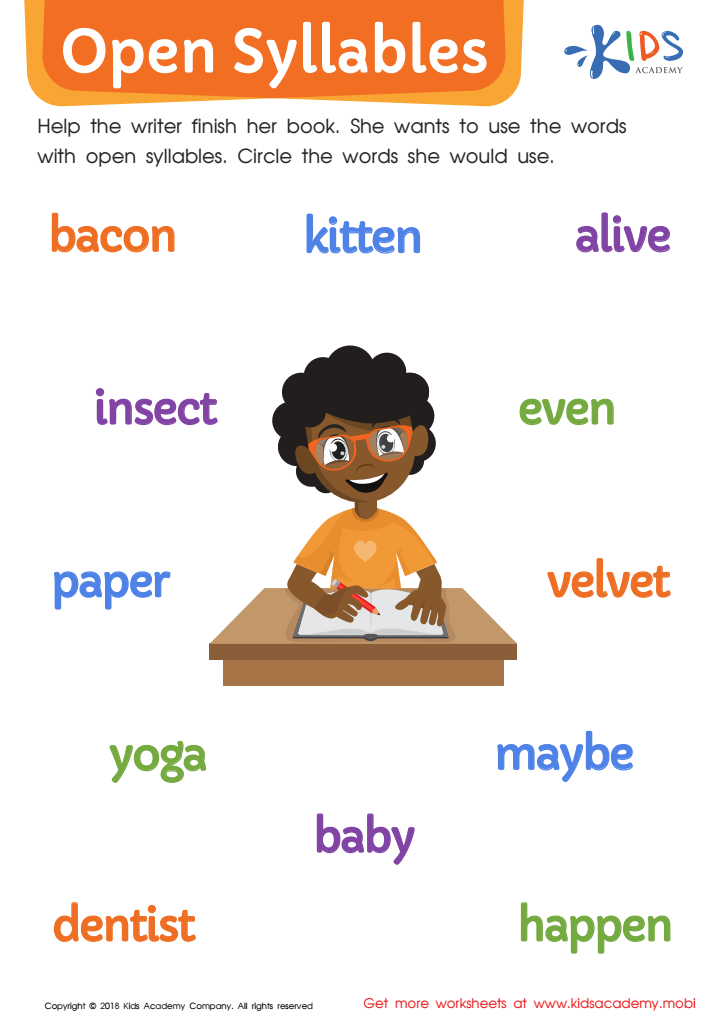
Open Syllables Worksheet
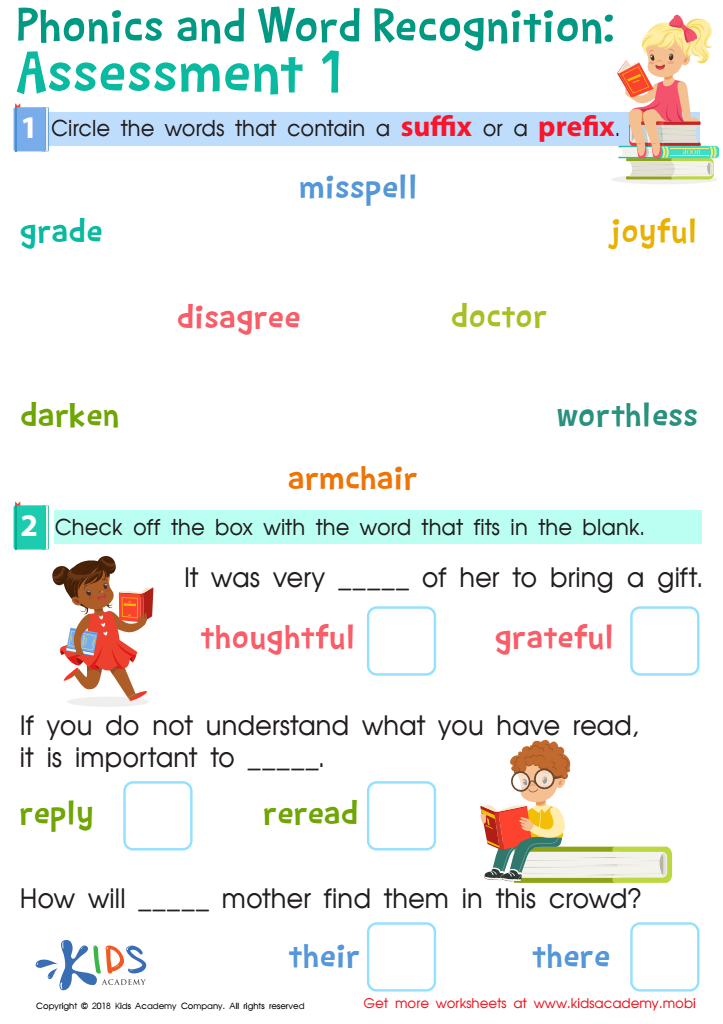
Phonics and Word Recognition: Assessment 1 Worksheet
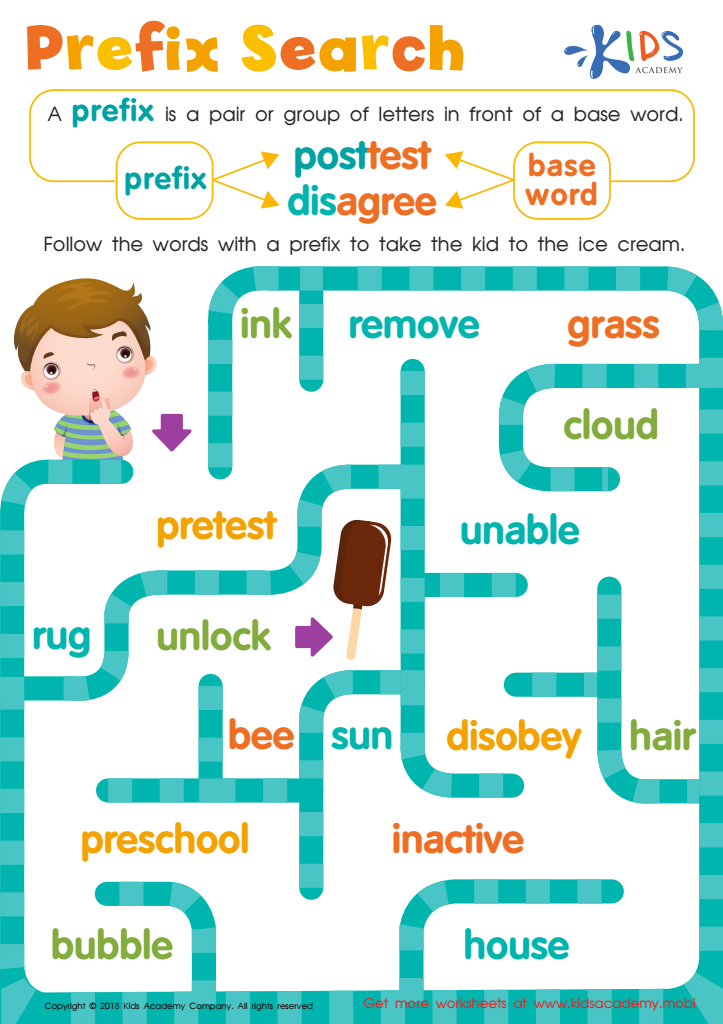
Reading: Prefix Search Worksheet
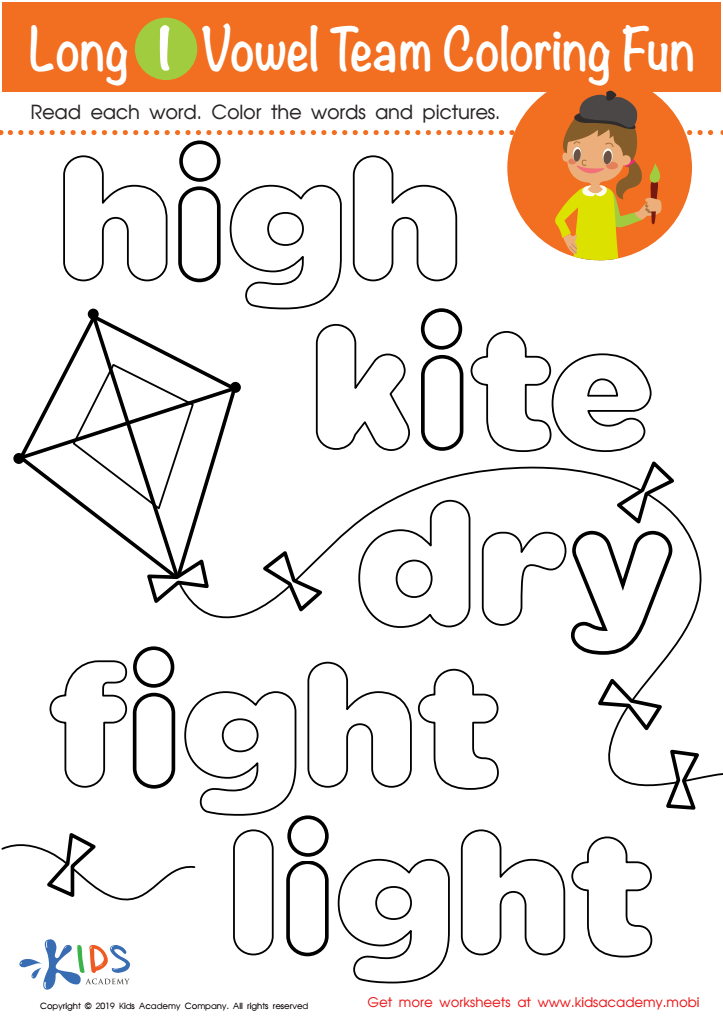
Long I Vowel Team Coloring Worksheet
 Assign to My Students
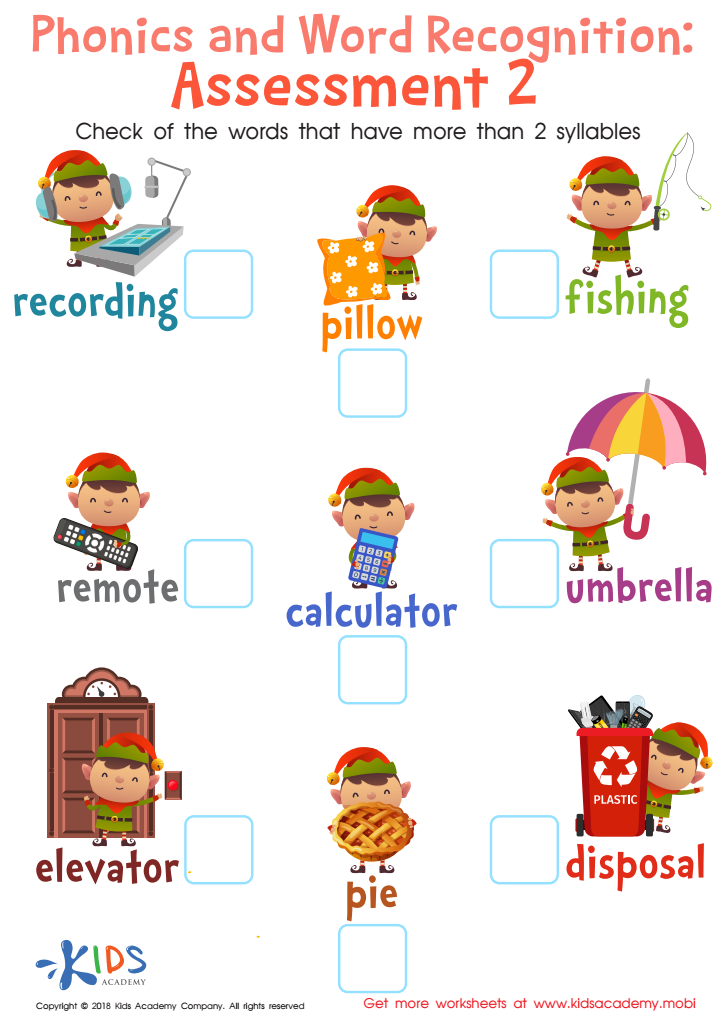
Phonics and Word Recognition: Assessment 2 Worksheet





Word identification using the normal alphabet is crucial for children aged 8-9 as they build on foundational reading skills to enhance their literacy development. At this stage, children transition from learning to read to reading to learn. A strong ability to identify words accurately supports comprehension and fluency, which are vital for academic success across subjects.
Parents and teachers should care about word identification for several reasons. First, proficient word identification allows students to decode sentences more efficiently, enabling them to grasp ideas and concepts quickly. This skill also boosts confidence, as students become more comfortable engaging with increasingly complex texts.
Moreover, practicing word identification fosters vocabulary growth, which is essential for effective communication, critical thinking, and overall cognitive development. By encouraging children to master this skill, parents and teachers create a solid foundation for lifelong learning.
Lastly, improved word identification directly correlates with standardized testing and academic performance. In an information-driven world, the ability to read and understand educational material reflects on students’ achievements and personal growth. Therefore, prioritizing word identification in young learners is essential for their current success and future opportunities. Cultivating this skill is a critical investment in their overall education and personal development.







