Phonics Skills Normal Vowel Blends Worksheets for Ages 8-9
5 filtered results
Difficulty Level
Grade
Age
-
From - To
Subject
Activity
Standards
Boost your child's reading abilities with our engaging "Phonics Skills: Normal Vowel Blends Worksheets" tailored for ages 8-9. These expertly designed printables focus on helping young learners master common vowel blends, enhancing their pronunciation and spelling skills. Through a variety of activities and exercises, children will confidently recognize patterns in words, leading to improved reading fluency and comprehension. Perfect for classroom or home use, these worksheets are a fantastic resource for making phonics practice fun and effective for your 3rd grader. Access high-quality, educational content that fosters a lifelong love for reading at Kids Academy.
Favorites
With answer key
Interactive
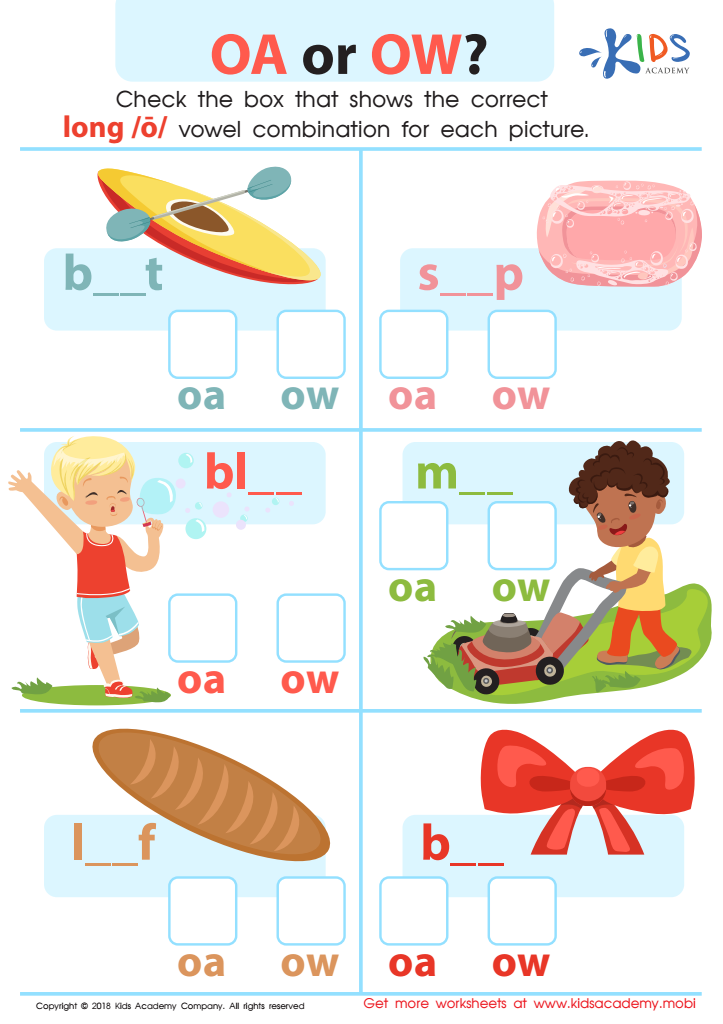
Reading: OA or OW Worksheet
This printable worksheet helps young and emergent readers with decoding words and understanding digraphs (two letters with one sound). It requires students to complete the spelling for each word based on the picture, focusing on /oa/ and /ow/ spellings. It's ideal for a reading classroom and for spelling practice.
Reading: OA or OW Worksheet
Worksheet
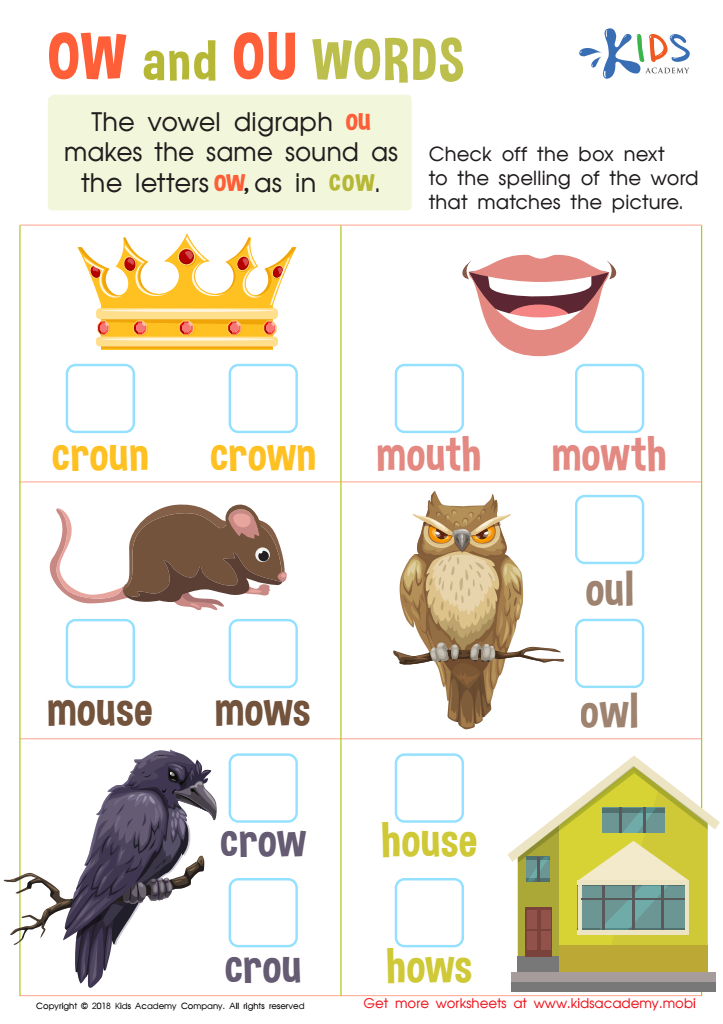
Reading: OW and OU Words Worksheet
Help your kids learn phonetics! Explain the different sounds and long/short variations. Emphasize that some vowel sounds are the same, e.g. ou = ow in cow. For practice, have them read aloud the words in the worksheet and check the box next to the spelling that matches the picture.
Reading: OW and OU Words Worksheet
Worksheet
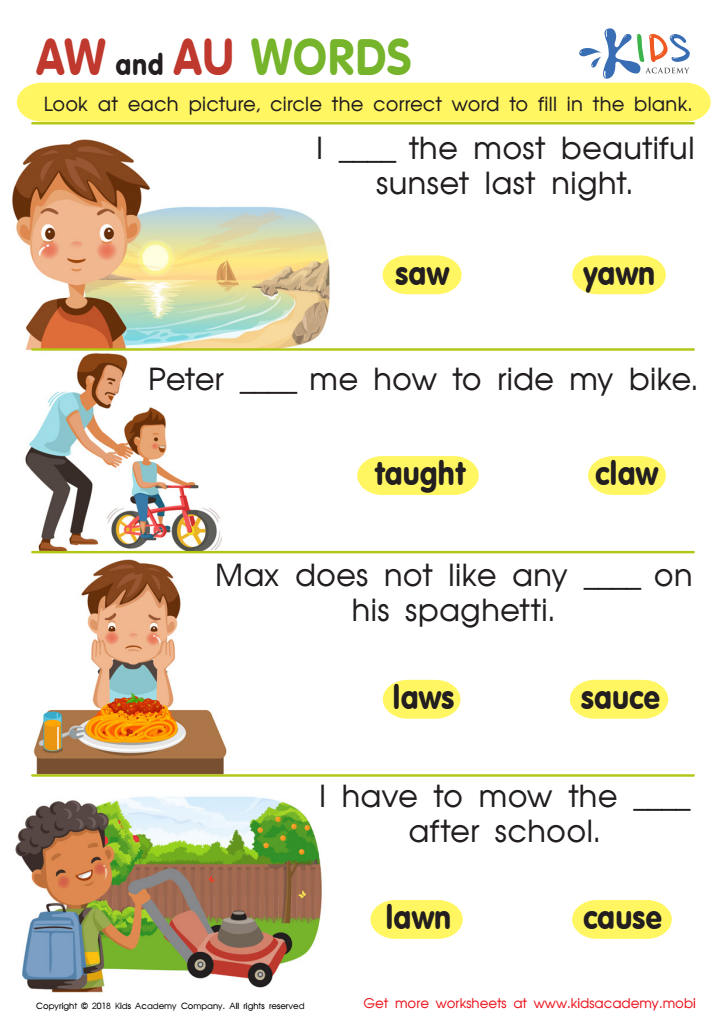
Reading: AW and AU Words Worksheet
This worksheet helps kids recognize that /au/ and /aw/ can make the same sound. Students read sentences and pick the correct word with one of the digraphs. Understanding digraphs improves decoding and reading fluency. Perfect for reading and phonics classes.
Reading: AW and AU Words Worksheet
Worksheet
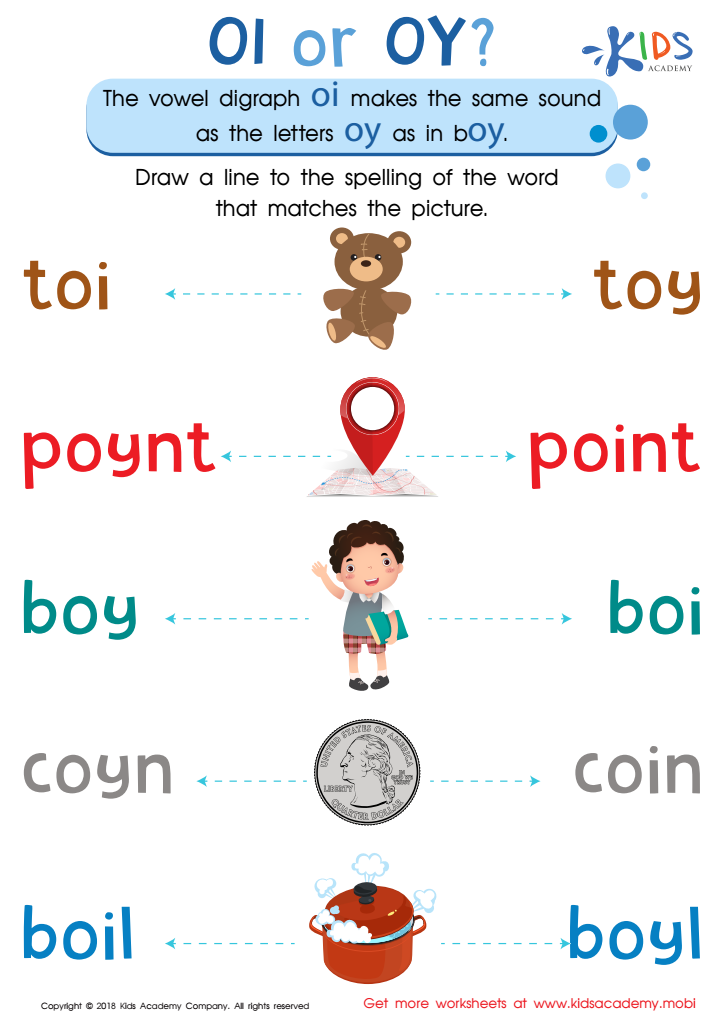
Reading: OI and OY Worksheet
Ask your students if they know the rule for words with /oi/ or /oy/ sound. If not, it's easy to learn! Rule: If /oy/ at end of word, spell with 'oy'; if /oi/ in middle of word, spell with 'oi'. Use this worksheet to help them master these digraphs and improve their ability to decode.
Reading: OI and OY Worksheet
Worksheet
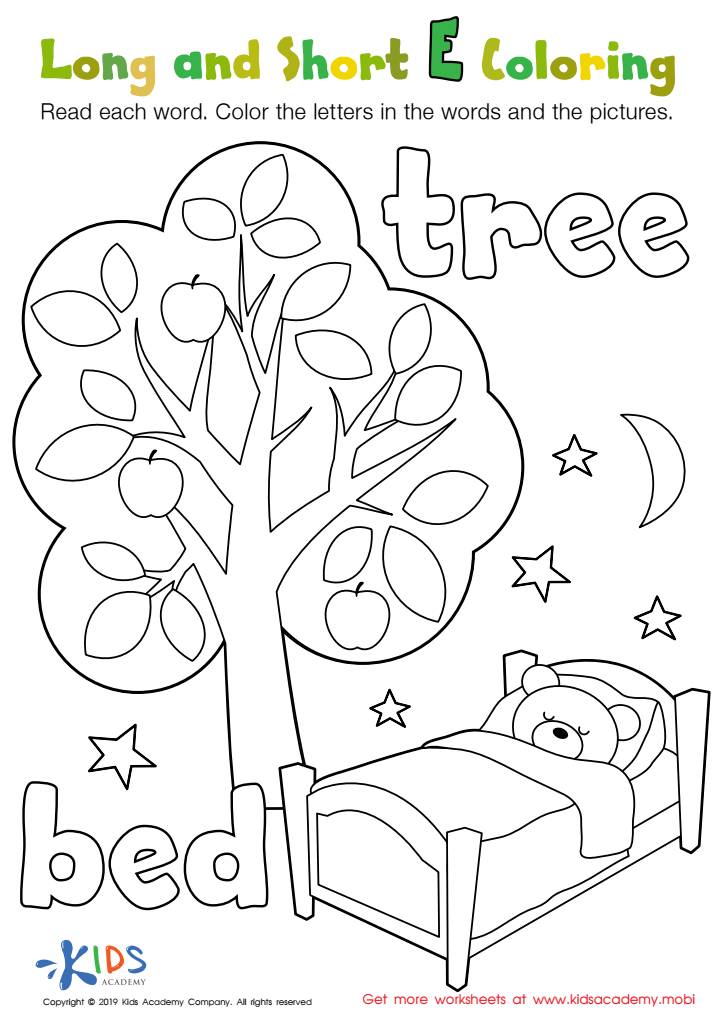
Long and Short E Worksheet
This fun printout makes learning phonics enjoyable for Grade 3 students. Get them to read the words “tree” and “bed” to recognize the different sounds of the letter “E”. After hearing the words they can color the words and the pictures to understand differences between long and short vowels.
Download (PDF)
 Assign to My Students
Assign to My Students
Long and Short E Worksheet
Worksheet
Join Kids Academy for Free
Who is primarily going to use this learning content?





Understanding phonics skills, particularly normal vowel blends, is crucial for children aged 8-9 as they lay the foundational blocks for reading proficiency. At this developmental stage, students transition from learning to read to reading to learn. Mastering vowel blends enhances their decoding abilities, making it easier to read new words and understand texts across the curriculum.
For parents and teachers, promoting these skills means supporting kids in recognizing patterns within words, leading to improved accuracy and fluency. When children can effortlessly identify vowel combinations like "ea," "ai," or "ou," they become more confident readers, which contributes to a love for reading and better educational outcomes.
Moreover, developing these phonics skills aids in spelling, writing, and comprehension. Students learn how different letter combinations produce specific sounds, which in turn helps them spell words correctly. Enhanced reading skills also lead to superior comprehension abilities, allowing children to engage more deeply with content, making connections between their reading and real-world experiences.
In essence, emphasizing vowel blends prepares children not just academically but also boosts their self-esteem and motivation for learning. Both parents and teachers play an essential role in reinforcing these skills, offering consistent practice, and providing encouragement every step of the way.