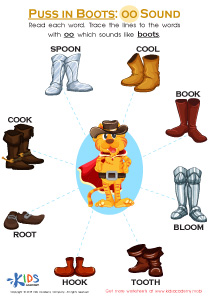
Reading comprehension Normal Vowel Blends Worksheets for Ages 8-9
6 filtered results
-
From - To
Enhance your child's reading skills with our engaging Reading Comprehension Normal Vowel Blends Worksheets, crafted specifically for ages 8-9. These thoughtfully designed worksheets focus on enhancing understanding of vowel blends within engaging stories and exercises. Students will develop essential skills such as decoding, fluency, and vocabulary, along with comprehension strategies to grasp main ideas and details. Perfect for at-home practice or classroom use, our worksheets aim to make learning both effective and enjoyable. Unlock your child's potential and boost their confidence in reading with Kids Academy’s valuable resources. Empower your child to become a fluent, confident reader today!
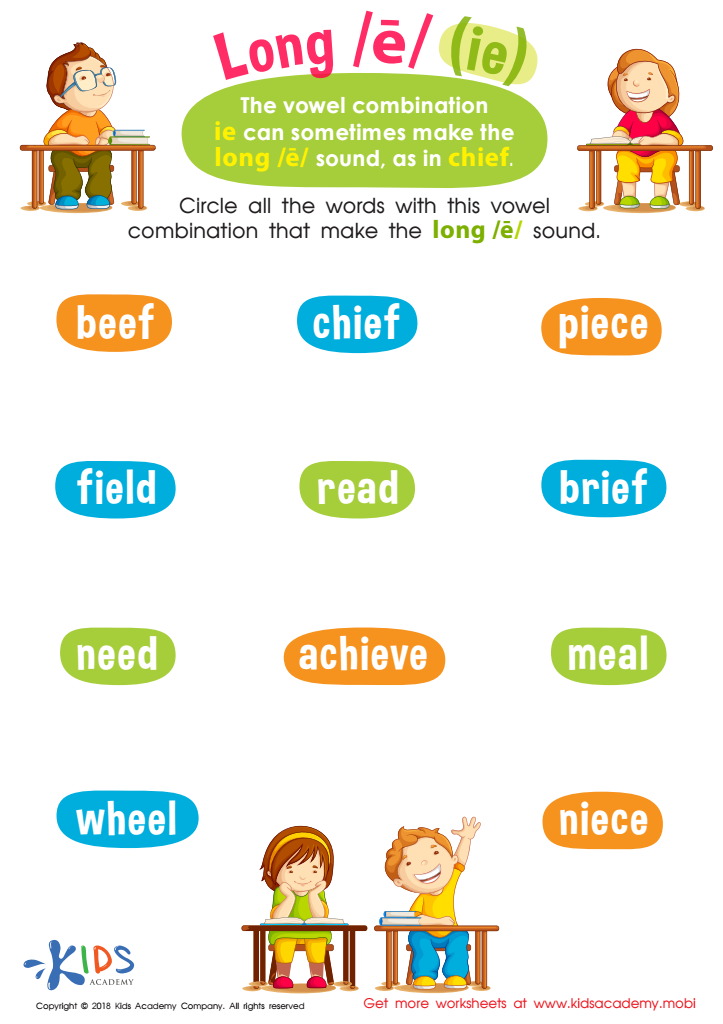
Reading: Long E and IE Worksheet
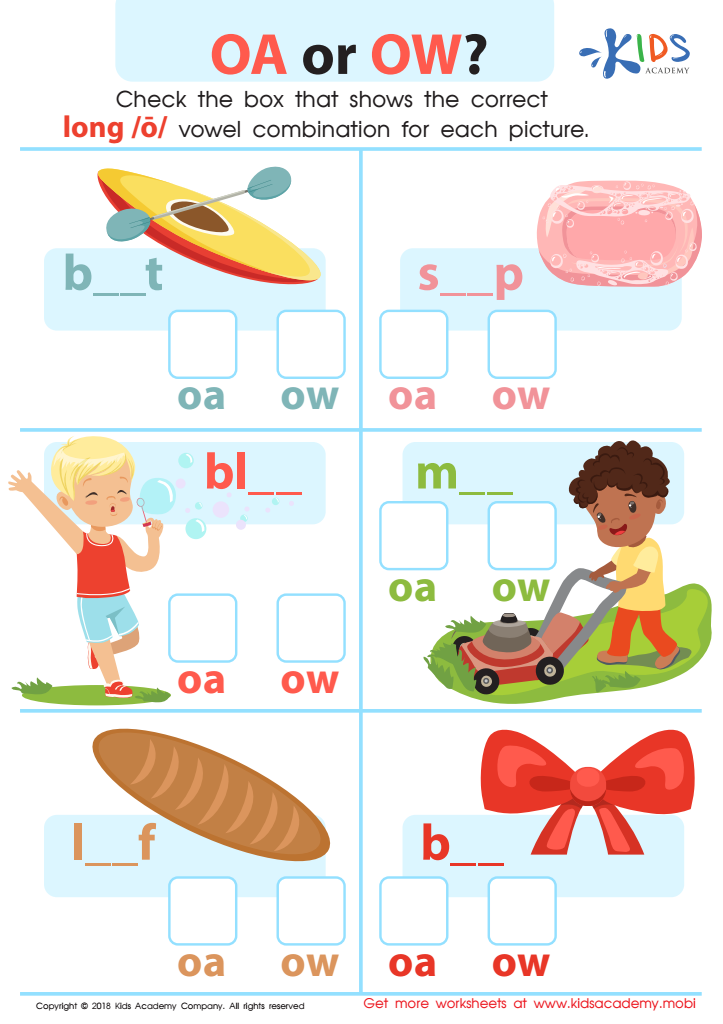
Reading: OA or OW Worksheet
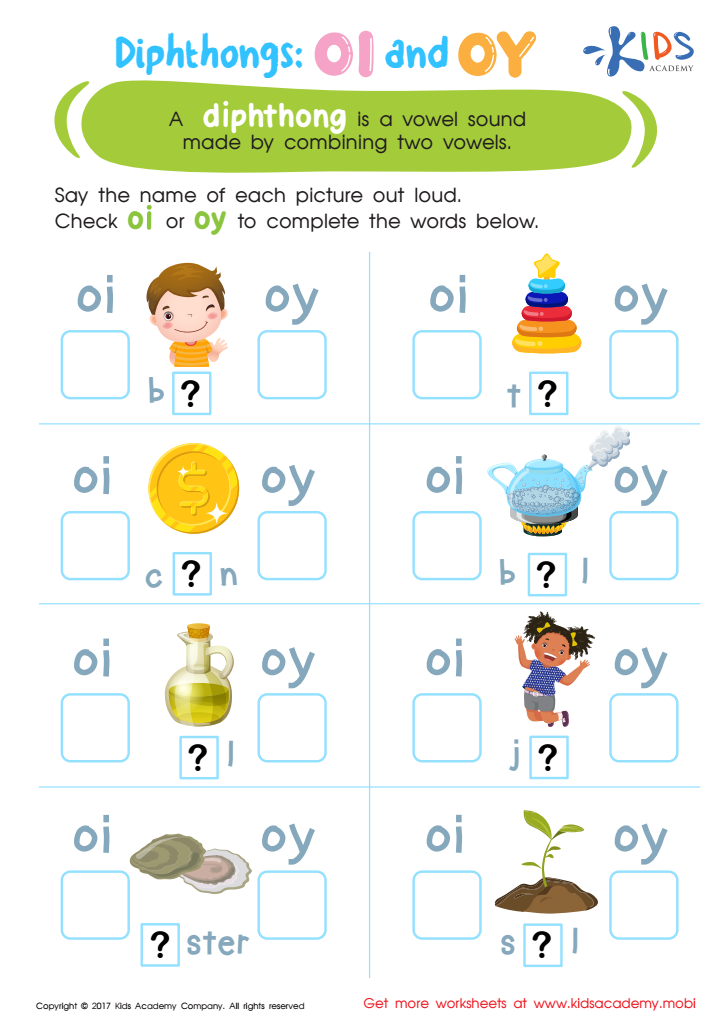
Vowel Diphthongs OI OY Worksheet
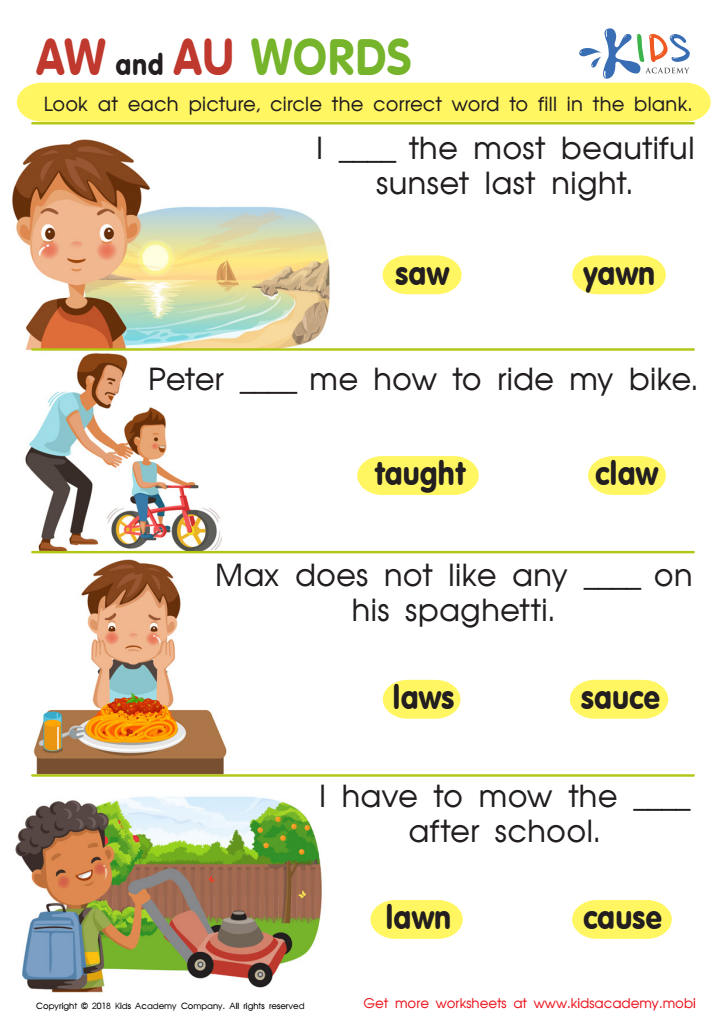
Reading: AW and AU Words Worksheet
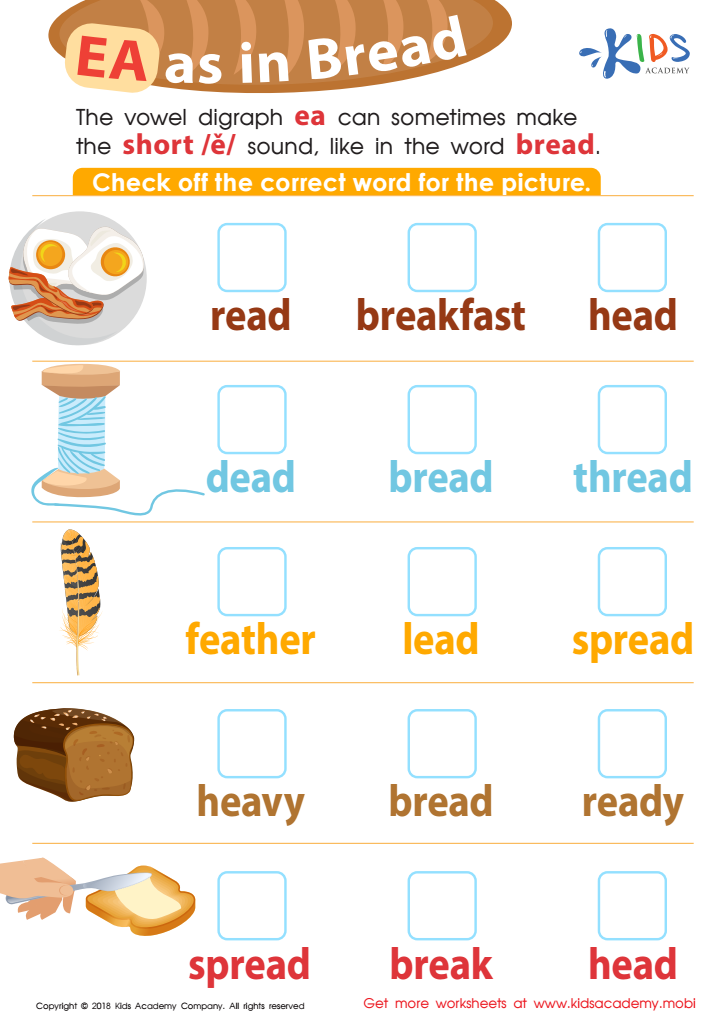
Reading: EA as in Bread Worksheet

Long and Short E Worksheet
 Assign to My Students





Reading comprehension is a vital skill for children, particularly in the critical age range of 8-9 years. At this developmental stage, normal vowel blends—combinations like "ea," "ai," "oi," and "ou"—play a significant role in expanding a child’s reading abilities and overall literacy. Understanding these blends helps in decoding new words, making the transition from simple phonics to more complex language structures smoother. For educators and parents, nurturing competency in vowel blends enhances children’s confidence and independence in reading.
Fostering strong reading comprehension skills through practice with vowel blends allows students to better grasp the meaning and context of the text. This type of reading practice builds vocabulary, critical thinking, and analytical skills. Proficiency in normal vowel blends directly supports better performance in core subjects such as science and math. Moreover, as children develop the ability to understand more nuanced and detailed texts, their interest in reading for pleasure tends to increase, which correlates with longer-term academic achievement.
In the context of social development, being good at reading comprehension, including vowel blends, enables children to better understand instructions, write effectively, and engage in sophisticated discussions, laying the groundwork for lifelong learning and effective communication. Therefore, prioritizing reading comprehension and vowel blends at ages 8-9 has far-reaching positive implications for a child's academic and personal growth.