Filters

10 filtered results

Clear all filters
Favorites
With answer key
Interactive

10 filtered results

Difficulty Level

Grade


Unlock the power of language with our Vocabulary Enhancement Normal Vowels Worksheets designed for ages 8-9! These engaging worksheets focus on reinforcing understanding of normal vowels through fun activities and exercises. By creatively integrating normal vowel sounds, children will improve their reading, writing, and spelling skills while expanding their vocabulary. Each worksheet encourages critical thinking and includes interactive tasks that make learning both enjoyable and effective. Ideal for classroom or home use, our resources support early literacy by providing a solid foundation in phonetics and vocabulary. Fuel your child's love for language and watch their confidence soar with our thoughtfully crafted worksheets!

Check out this FREE Trial Lesson on Vowels for age 8-9!

The Two Common Sounds of IE

Favorites
With answer key
Interactive
  • 8-9
  • Vocabulary enhancement
  • Vowels
  • Normal
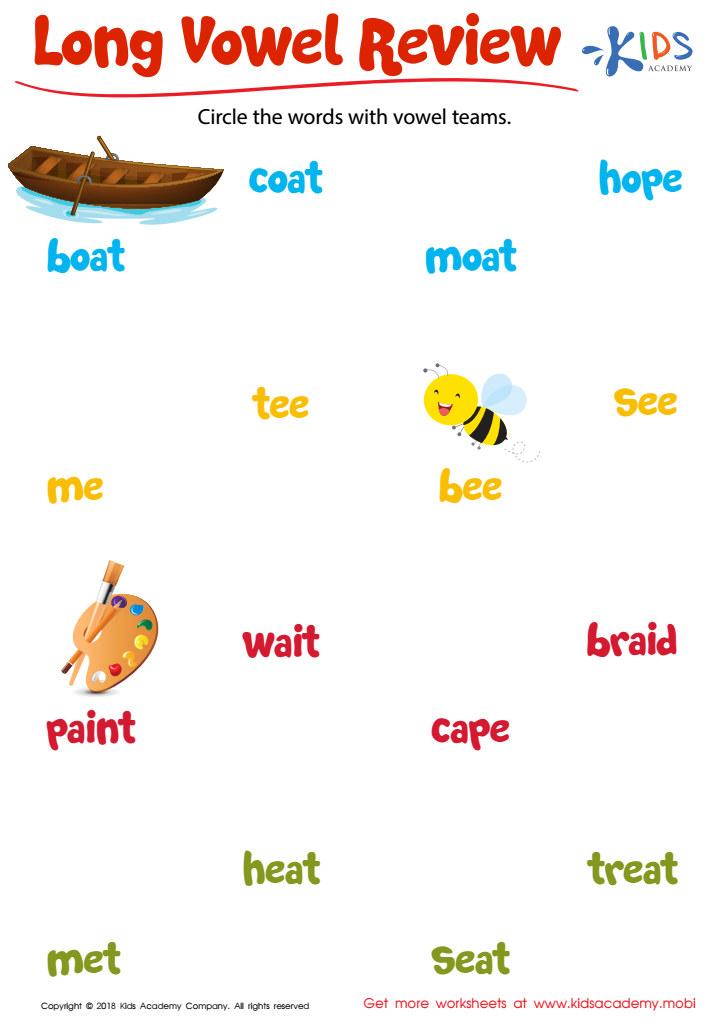
Long Vowel Review Worksheet

Long Vowel Review Worksheet

Vowel teams like "ea" and "ai" help us make words, and understanding these patterns aids emerging readers in becoming more fluent. This review worksheet has students finding words with vowel teams that make the long vowel sound, and helps them recognize high-frequency words.
Long Vowel Review Worksheet
Worksheet
Vowel team ee Worksheet

Vowel team ee Worksheet

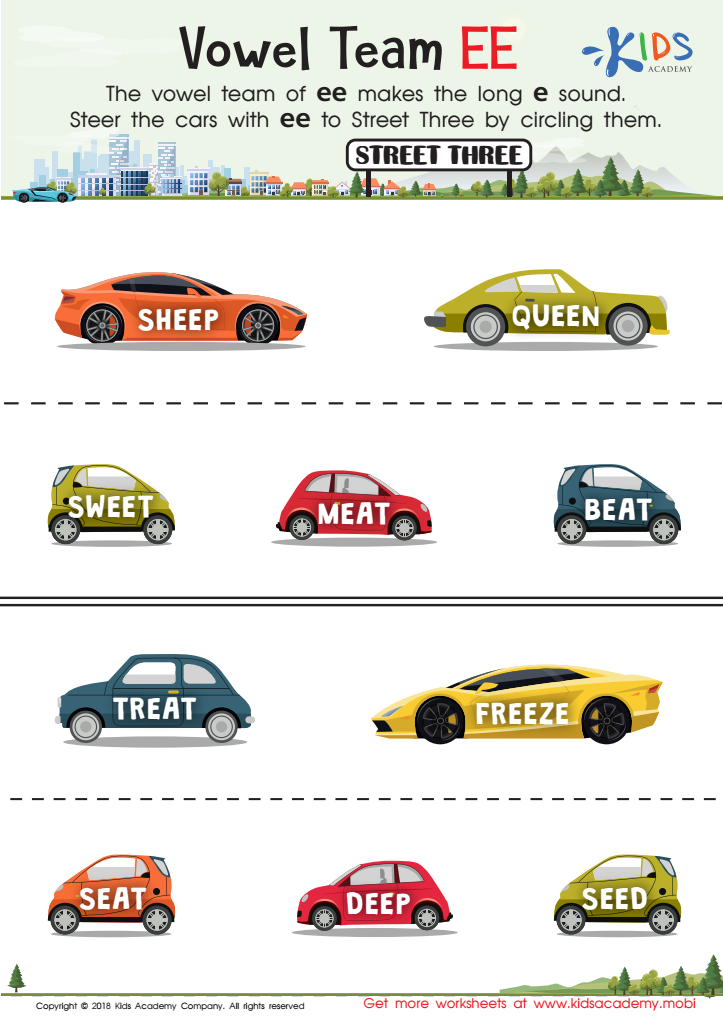
Revised: Kids will have a blast steering cars with the -ee digraph towards Street Three! This fast-paced worksheet reinforces that -ee makes the long -e sound while boosting fine motor skills. Kids will love the bright colors and stay engaged with this fun printable. Get ready for hours of off-road excitement!
Vowel team ee Worksheet
Worksheet
Reading: Long I and IE Worksheet

Reading: Long I and IE Worksheet

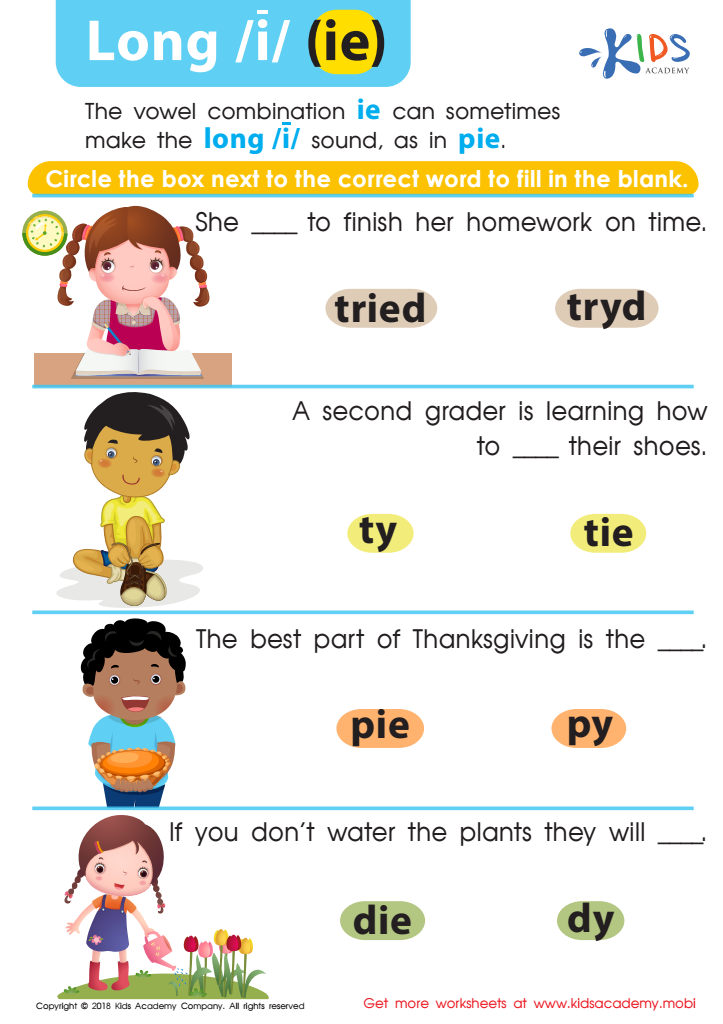
Have your child list words with the long /i/ sound (eg. 'pie'), and if needed, help them out with some examples. Read each word in the worksheet together and check their answer by having them circle the correct word.
Reading: Long I and IE Worksheet
Worksheet
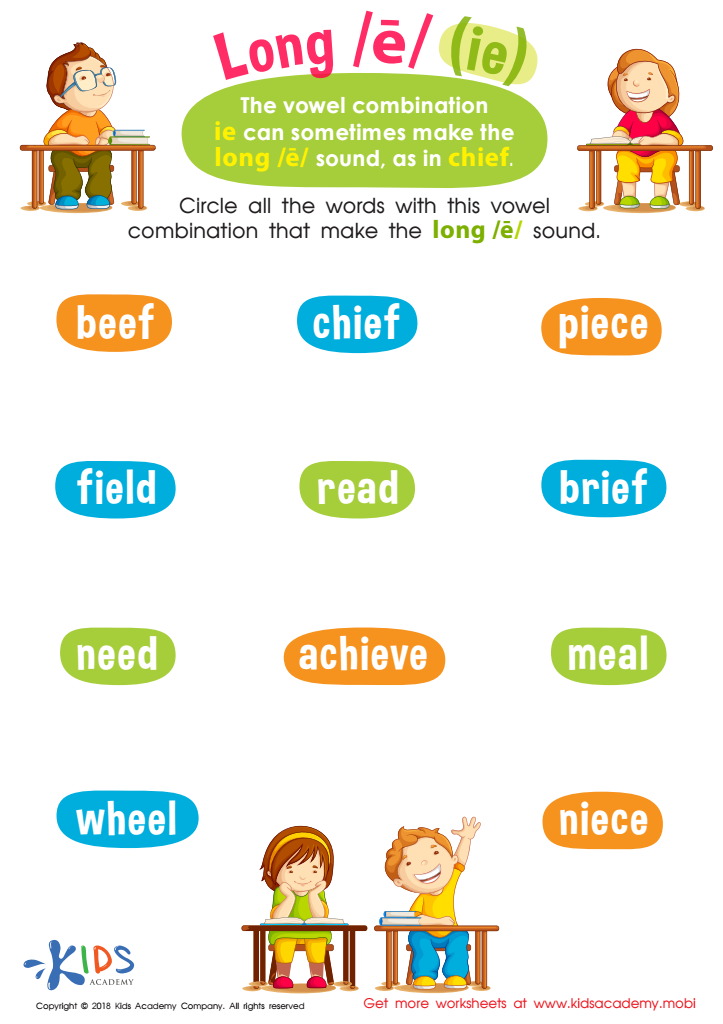
Reading: Long E and IE Worksheet

Reading: Long E and IE Worksheet

Ask your child to name some words with the long /e/ sound they hear every day. Then, read aloud all the words in the worksheet with them. Ask them to circle the words containing ie that make this sound.
Reading: Long E and IE Worksheet
Worksheet
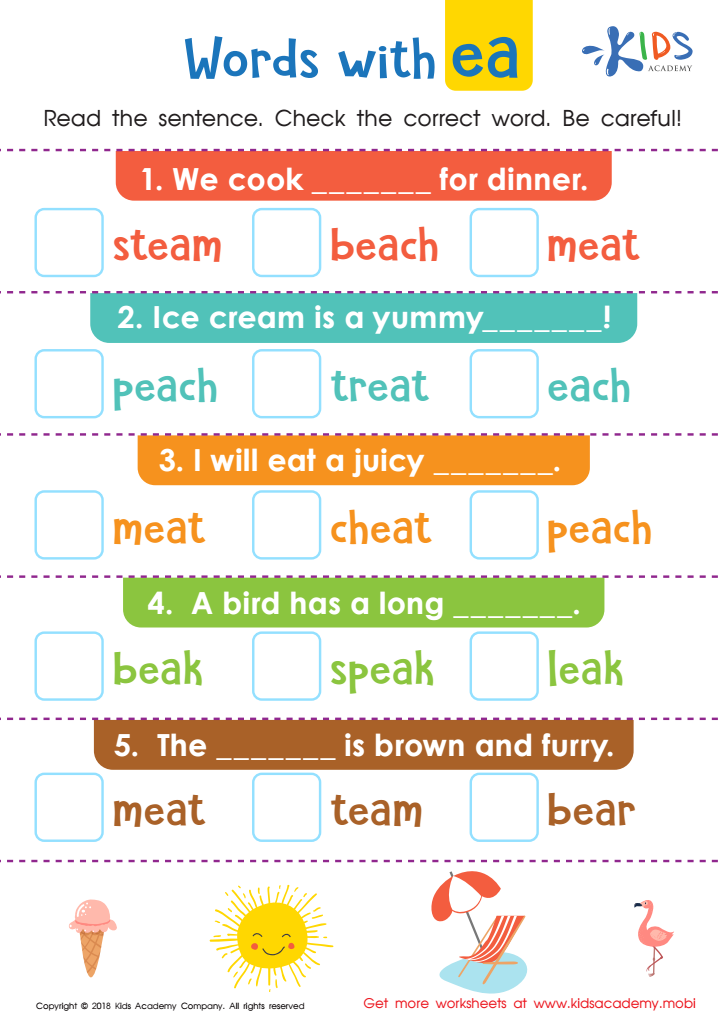
Words with ea Worksheet

Words with ea Worksheet

Beginning readers may struggle with -ea vowel digraphs, which can have multiple sounds and be tricky to decode. This cheerful worksheet helps kids practice reading sentences with missing -ea words, using context clues to fill in the blanks. They'll also be exposed to various -ea sound examples, and build their sight word knowledge.
Words with ea Worksheet
Worksheet
Reading: Long E and Short E Worksheet

Reading: Long E and Short E Worksheet

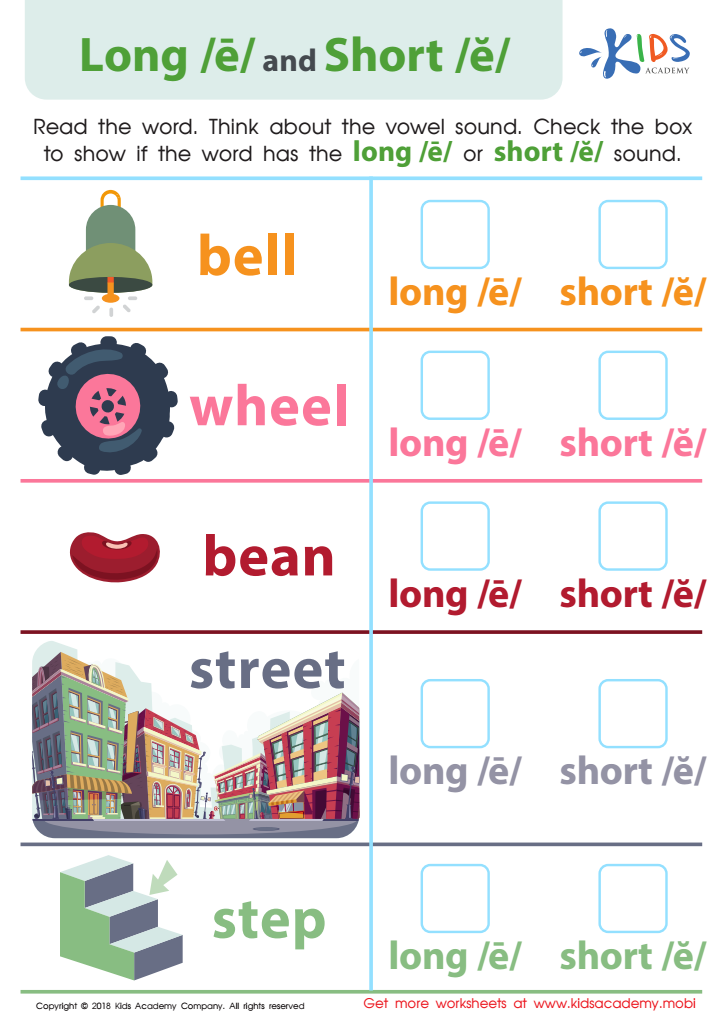
Provide your students with valuable practice in distinguishing long and short E sounds with this worksheet. They'll look at pictures and read the words, then decide which sound is being used. It's an effective tool to help them master a difficult concept.
Reading: Long E and Short E Worksheet
Worksheet
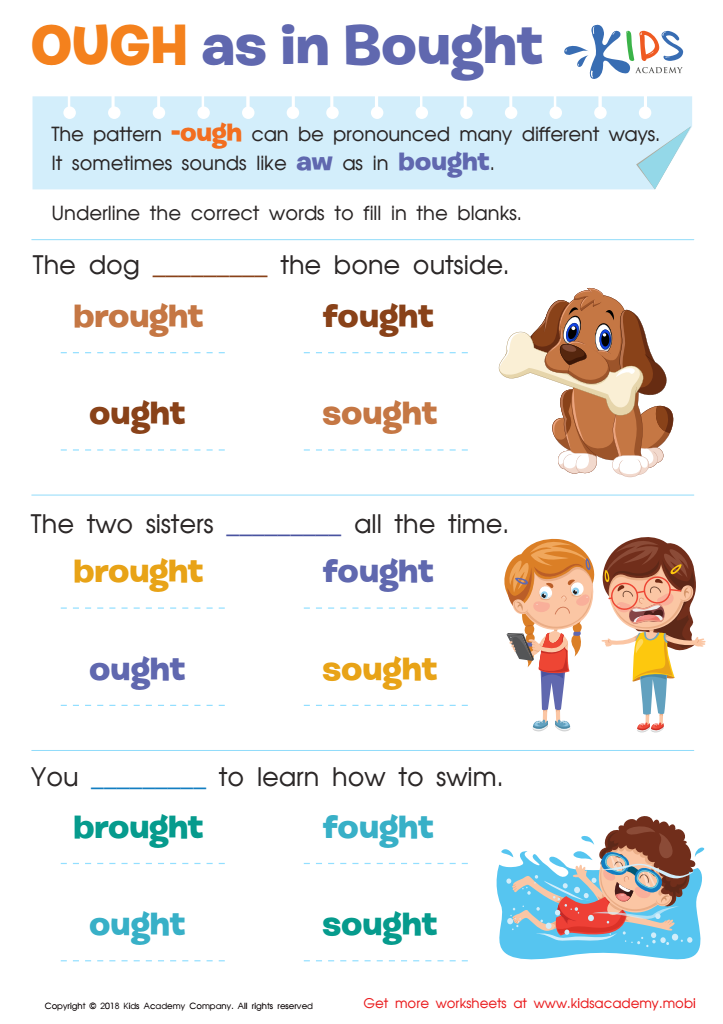
OUGH as in Bought Worksheet

OUGH as in Bought Worksheet

Use this worksheet to teach your child the different pronunciations of -ough. For example, -ough can sound like ‘aw’ in ‘bought’. Ask your child to give more examples and help them underline the correct answers to fill in the blanks.
OUGH as in Bought Worksheet
Worksheet
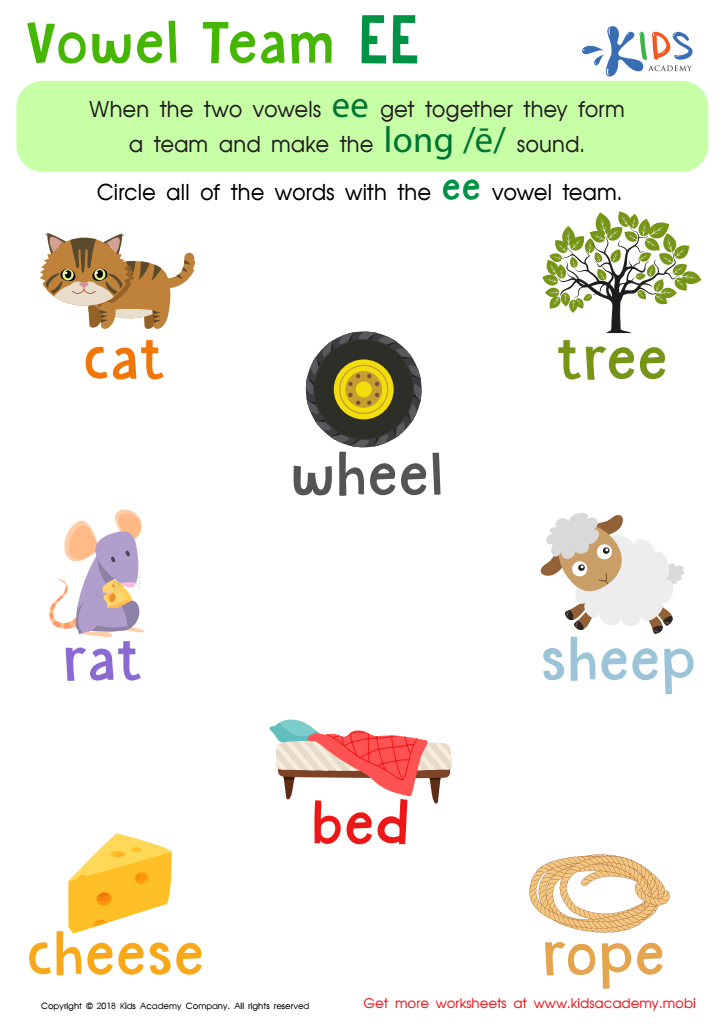
Reading: Vowel Team EE Worksheet

Reading: Vowel Team EE Worksheet

This worksheet is perfect for helping young learners master the /ee/ vowel team. It shows the first vowel with a long sound and the second vowel silent. It also provides pictures for unfamiliar words for readers of all levels. It's an ideal resource for teaching phonics skills.
Reading: Vowel Team EE Worksheet
Worksheet
Silent e worksheet
Silent e worksheet

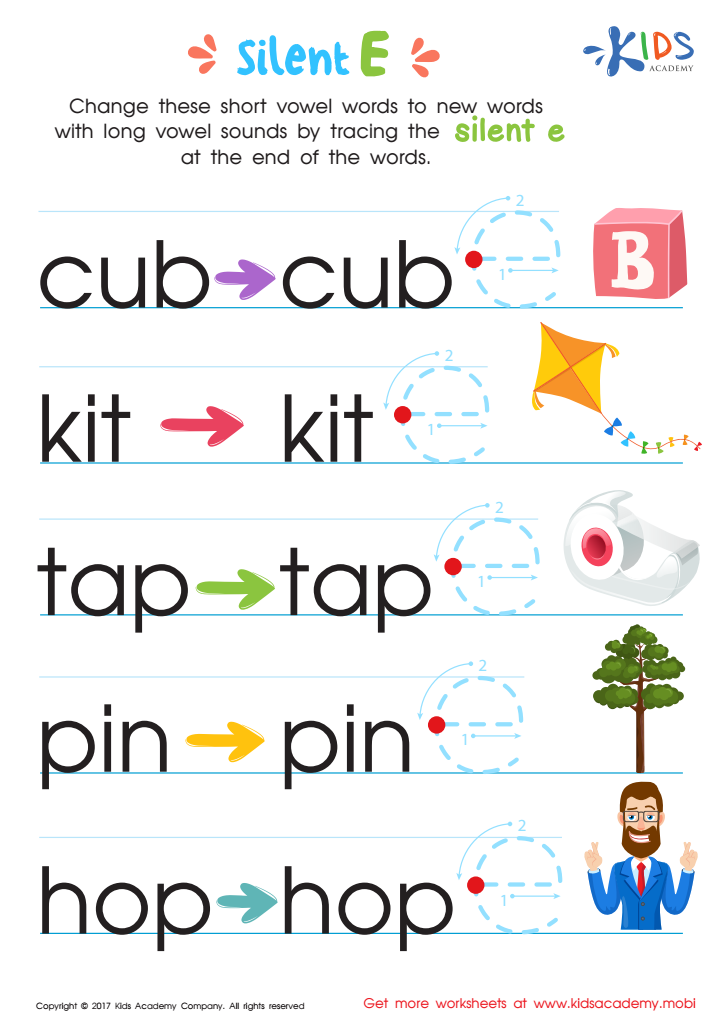
Silent E Words Worksheet

The letter e is amazing - it changes words without making a sound! Boost spelling and phonics with this Silent e worksheet from Kids Academy - fun and colorful!
Silent E Words Worksheet
Worksheet
Reading: Long I and Short I Sound Maze Worksheet


Reading: Long I and Short I Sound Maze Worksheet

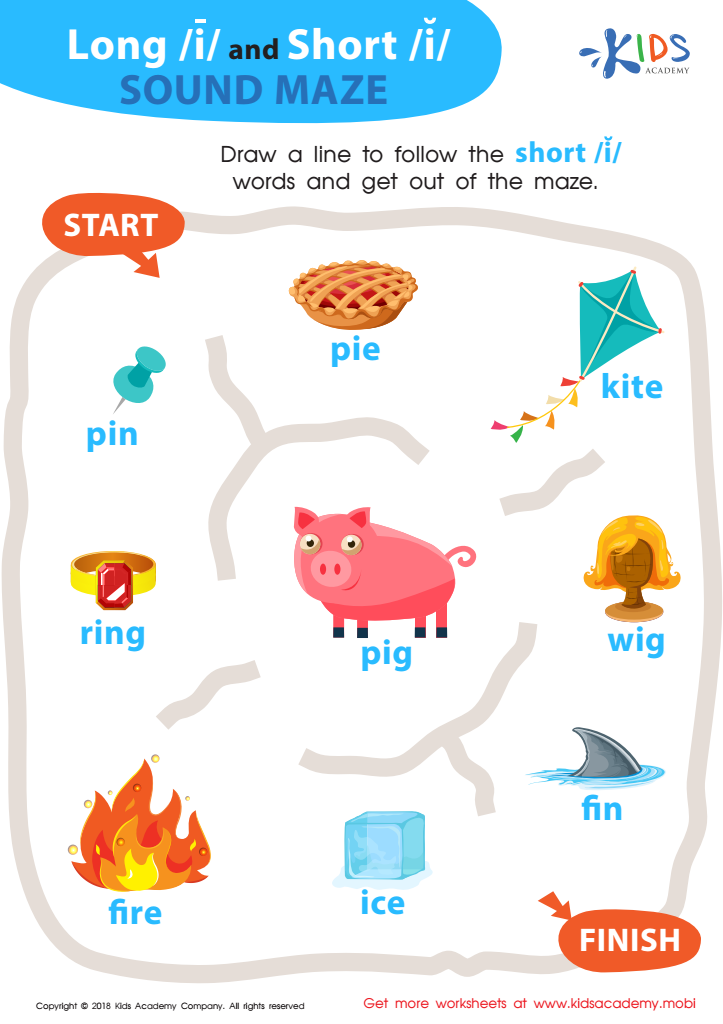
Question your students if the worksheet is entertaining. They may respond negatively! Nonetheless, this activity will bring satisfaction while learning the distinction between a long and short I sound. Students read the words in the maze and only follow the words with the short I sound to finish the exercise. Grasping the difference between long and short vowels is demanding, but this worksheet helps students understand this reading skill.
Reading: Long I and Short I Sound Maze Worksheet

Worksheet


Vocabulary enhancement is crucial for children aged 8-9, as it directly influences their reading comprehension, writing skills, and overall academic success. During this pivotal stage, children's cognitive and linguistic abilities rapidly develop, laying a strong foundation for lifelong learning. Normal vowels—essential components of language—play a key role in word formation and pronunciation, aiding children in grasping the nuances of language.

By focusing on vocabulary enhancement with an emphasis on normal vowels, parents and teachers help students expand their word bank, enabling them to express thoughts more clearly and effectively. A robust vocabulary empowers children to engage with diverse texts and improves their understanding of more complex language structures. This, in turn, fosters critical thinking and enhances communication skills.

Moreover, children with a well-developed vocabulary are often more confident in their abilities, leading to increased participation and engagement in classroom activities. By caring about vocabulary enhancement, parents and teachers contribute to children's academic achievement and overall self-esteem, encouraging a love for learning. Cultivating these skills early sets the stage for future success—both academically and in life, making it an essential focus for educators and caregivers alike.