
Animal identification Normal Worksheets for Ages 8-9
4 filtered results
Difficulty Level
Grade
Age
-
From - To
Subject
Activity
Standards
Discover engaging animal identification worksheets designed for kids ages 8-9. These colorful, fun-filled worksheets from Kids Academy help young learners sharpen their observational skills while identifying various animals. Each activity encourages curiosity and builds foundational knowledge about wildlife, their habitats, and characteristics. Perfect for student engagement in classroom or homeschooling environments, these printable resources combine education and entertainment seamlessly. Enhance your child's learning journey with our expertly crafted animal identification worksheets, helping them explore the animal kingdom while cultivating critical thinking and attention to detail. Start their adventure in learning today!
Favorites
With answer key
Interactive
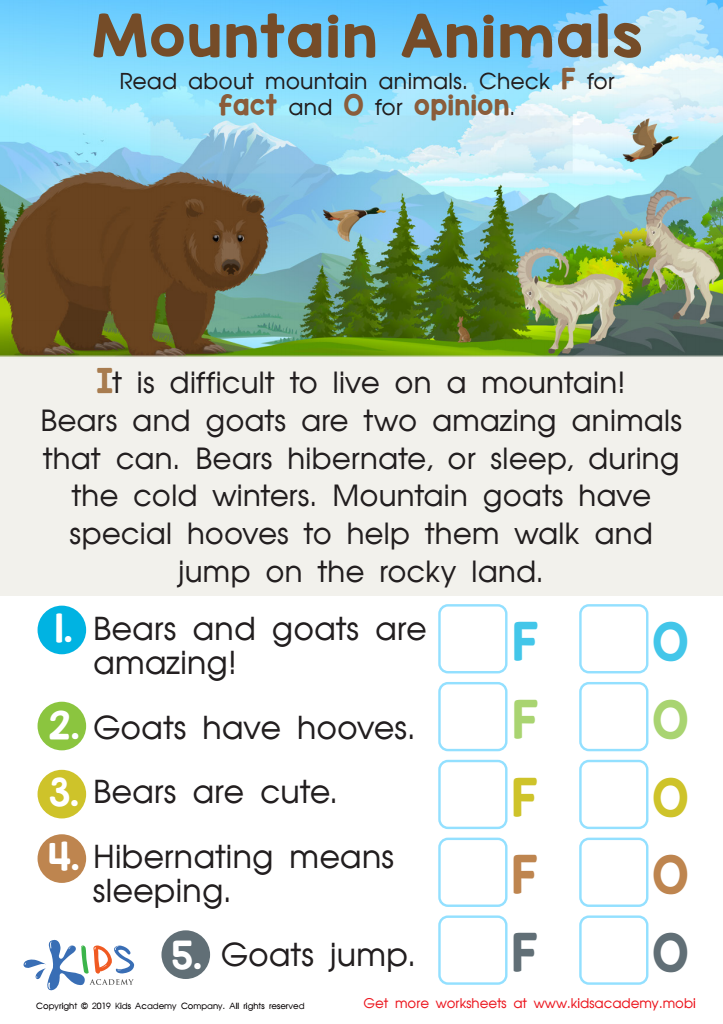
Mountain Animals Worksheet
Is mountain wildlife amazing? Fact or fiction? Help your child sharpen critical-thinking skills with this engaging worksheet. Featuring a fun nonfiction passage about animals like bears and goats, your child will read through the text and identify each statement as fact or fiction. Perfect for boosting reading comprehension and analytical abilities!
Mountain Animals Worksheet
Worksheet
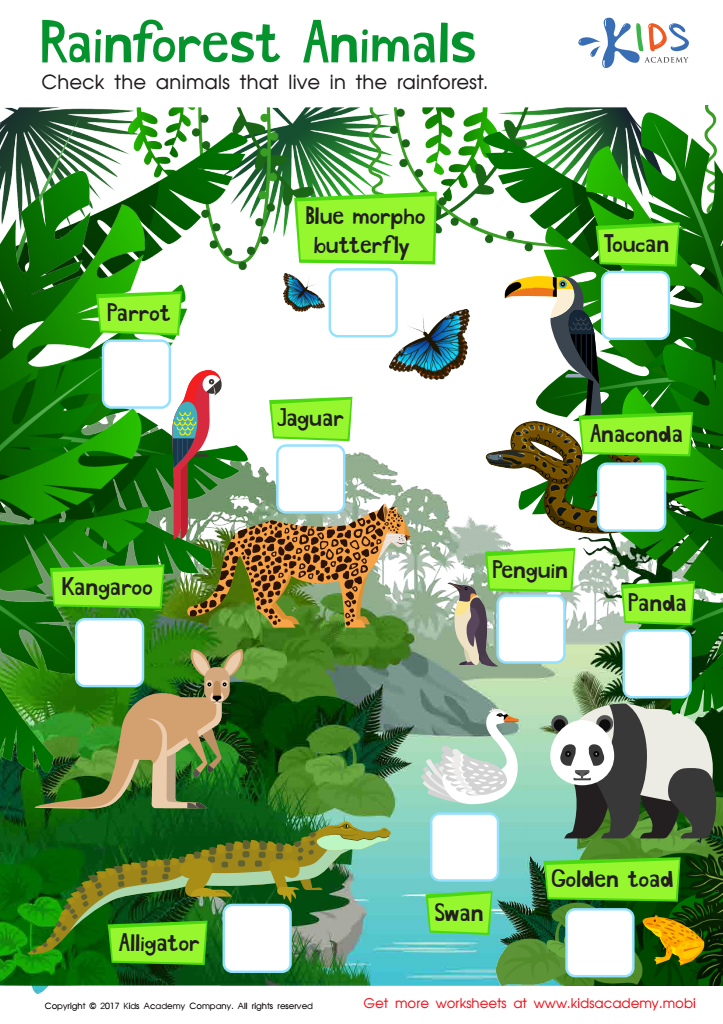
Rainforest Animals Worksheet
Kids love the bright, vivid pics of rainforest animals in this worksheet. It fuels their interest in life science and brings joy to their learning. It encourages them to study these animals in detail.
Rainforest Animals Worksheet
Worksheet
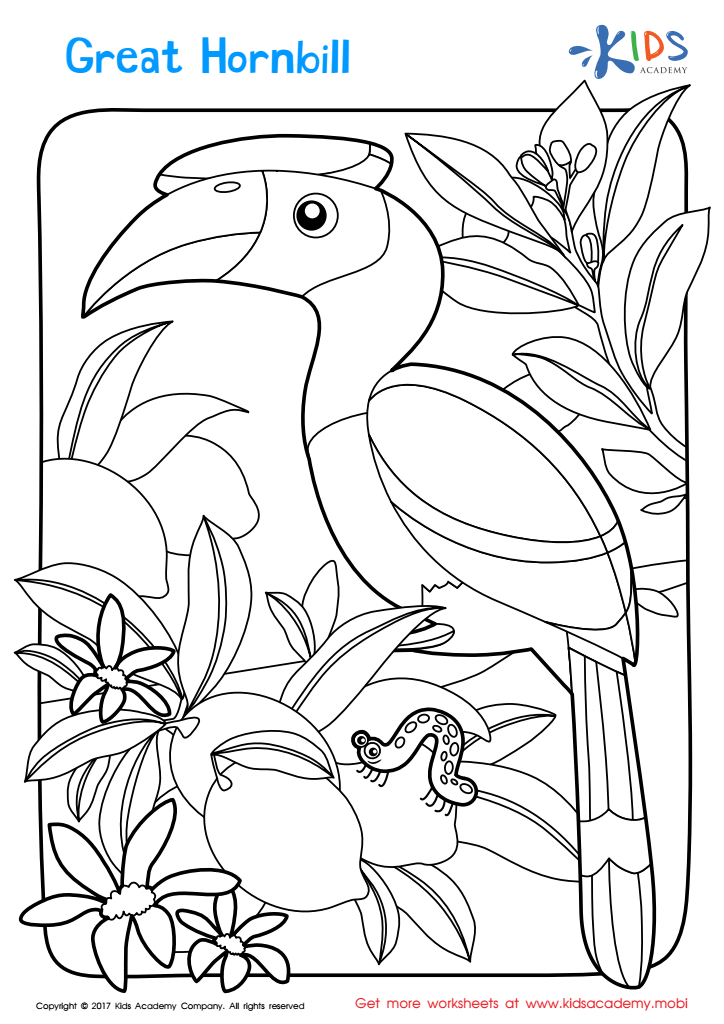
Great Hornbill Worksheet
Expand your child's knowledge with our exotic animal printable: the great hornbill coloring page. It’s a fun and easy way to explore this beautiful bird's stunning array of colors without leaving home. Look up pics online to get a better understanding of this incredible creature.
Download (PDF)
 Assign to My Students
Assign to My Students
Great Hornbill Worksheet
Worksheet
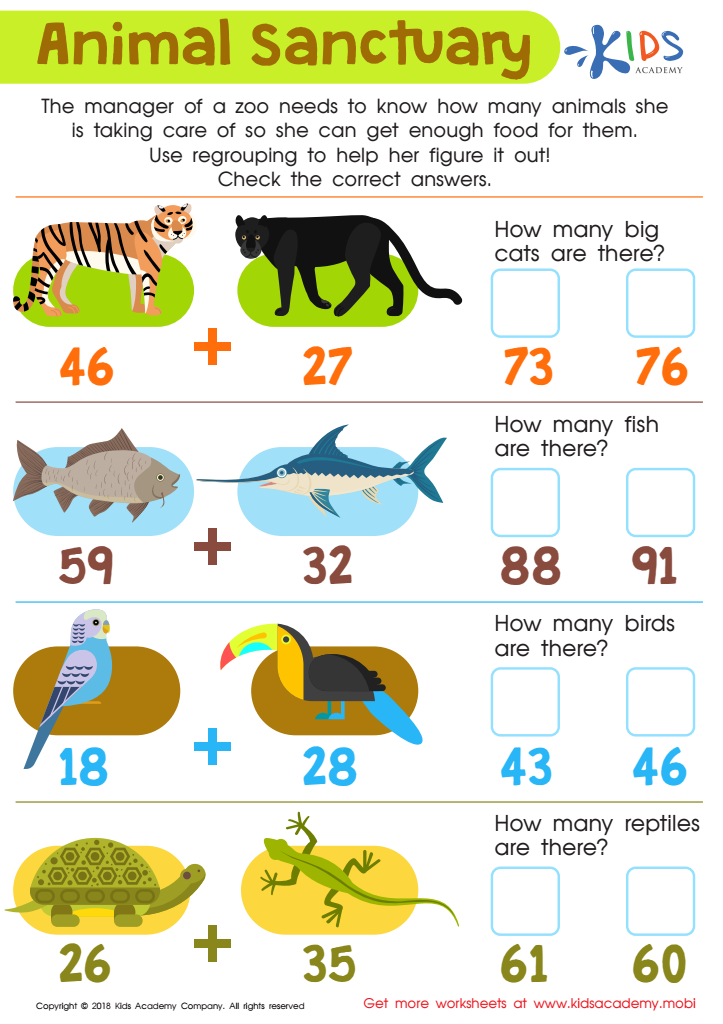
Animal Sanctuary Worksheet
Do your kids love visiting the zoo? Ask which animals they remember & which ones they liked the most. The manager needs help to get enough food for all the animals. Help your child use regrouping to figure out how many animals there are. And ask them to check the answers.
Animal Sanctuary Worksheet
Worksheet
Join Kids Academy for Free
Who is primarily going to use this learning content?



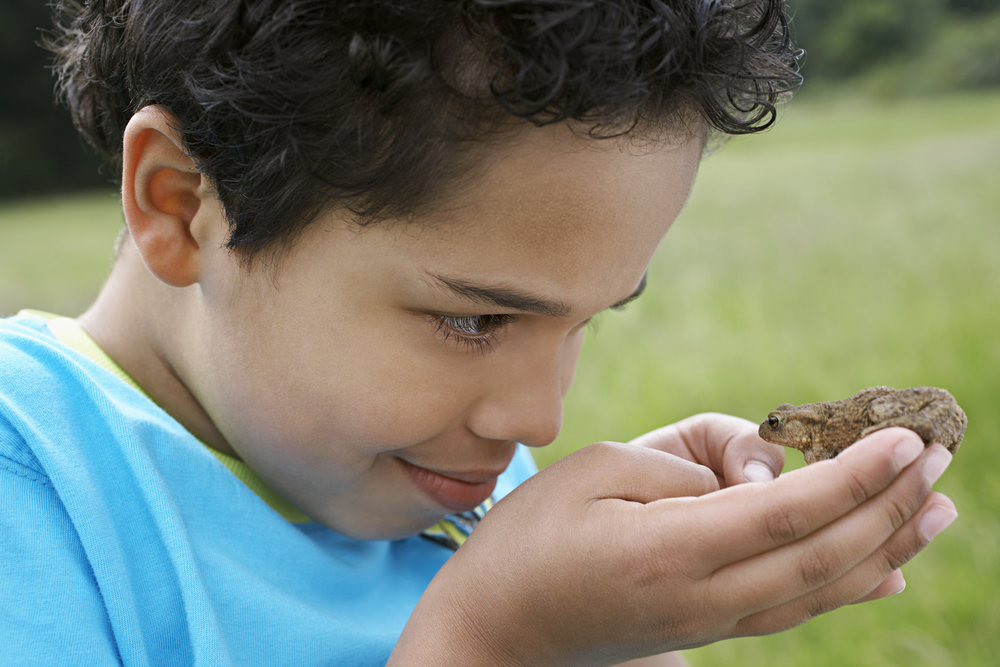




Animal identification skills are crucial for children aged 8-9 as they foster a range of educational and developmental benefits. Firstly, learning to identify different animals enhances observational skills and attention to detail, essential components in a child's cognitive growth. It encourages curiosity about the natural world, fostering a lifelong interest in wildlife conservation and environmental stewardship.
Additionally, understanding various animals' habitats, diets, and behaviors can integrate knowledge across subjects such as geography, biology, and ecology. For instance, discussing why polar bears are white ties into lessons about climate and adaptation, promoting critical thinking.
Furthermore, animal identification can aid in language development. Learning animal names, sounds, and characteristics enriches vocabulary and improves descriptive abilities, enhancing communication skills. Talking about animals can also provide context for cultural stories and folklore, offering a richer multicultural perspective.
Social-emotionally, recognizing and learning about animals teaches empathy and compassion. When children understand that animals have needs and feelings, they are more likely to develop caring attitudes towards other living beings, promoting kindness and responsible behavior.
In essence, parents and teachers should value animal identification activities as they nurture a well-rounded growth, intertwining intellectual, linguistic, social, and moral development in a uniquely engaging and enjoyable way.








