
Comparing Fractions Normal Worksheets for Ages 8-9
5 filtered results
Difficulty Level
Grade
Age
-
From - To
Subject
Activity
Standards
Enhance your child's math skills with our Comparing Fractions Normal Worksheets, specially designed for ages 8-9! These engaging worksheets help students grasp the concept of comparing fractions through interactive activities tailored to their learning level. Kids will practice identifying and utilizing fractions, learning to determine which fraction is greater or smaller with ease. Our carefully crafted exercises include visuals and real-life examples to make learning fun and relatable. Ideal for classroom use or at-home practice, these worksheets foster critical thinking and problem-solving abilities. Start your young learner's journey to mastering fractions today! Access our printable worksheets now!
Favorites
With answer key
Interactive
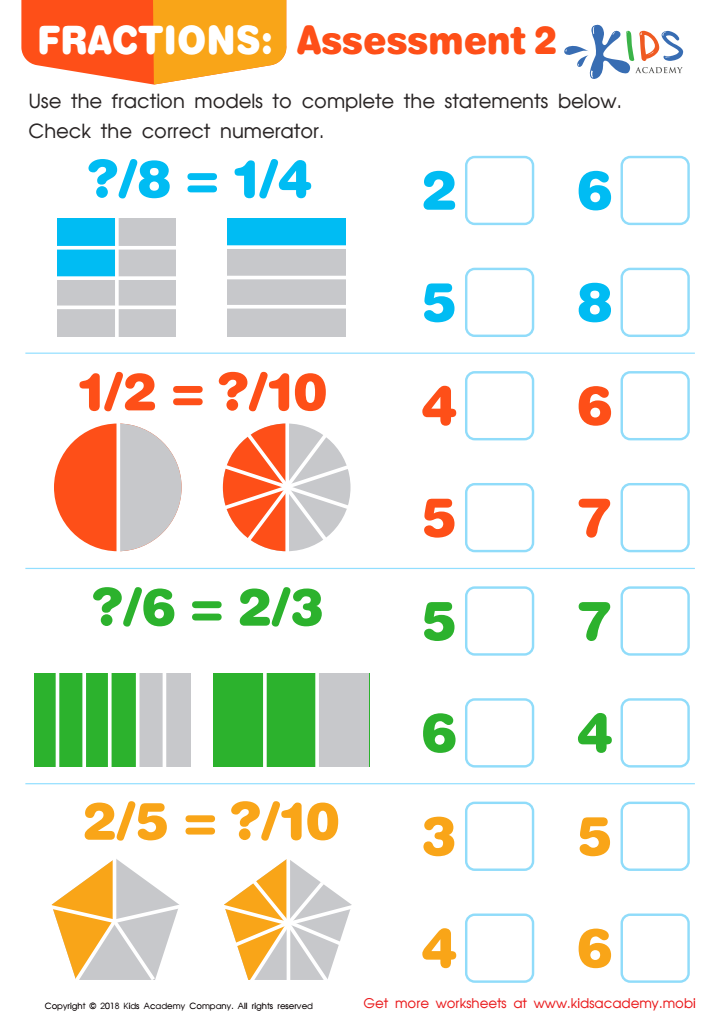
Fractions: Assessment 2 Worksheet
Help your kids understand fractions better with this worksheet. Ask them to complete the fraction statements using the fraction models on the left and then check the correct numerators. This can help clear up any confusion they may have with fractions and fraction models.
 Assign to My Students
Fractions: Assessment 2 Worksheet
Worksheet
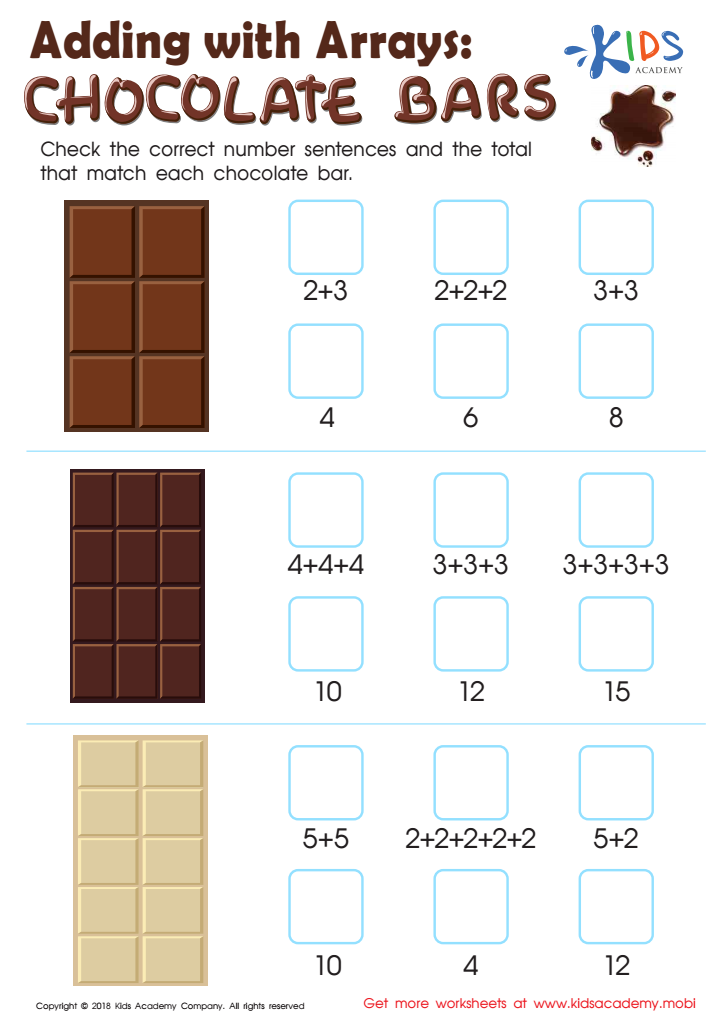
Adding with Arrays: Chocolate Bars Worksheet
Kids love chocolates! Gauge how enthused your kids get when you mention them. This worksheet is a fun exercise about chocolates - get your kids to check the correct number sentences and totals for each chocolate bar. Reward their hard work with some chocolates - extra incentive for a job well done!
Adding with Arrays: Chocolate Bars Worksheet
Worksheet
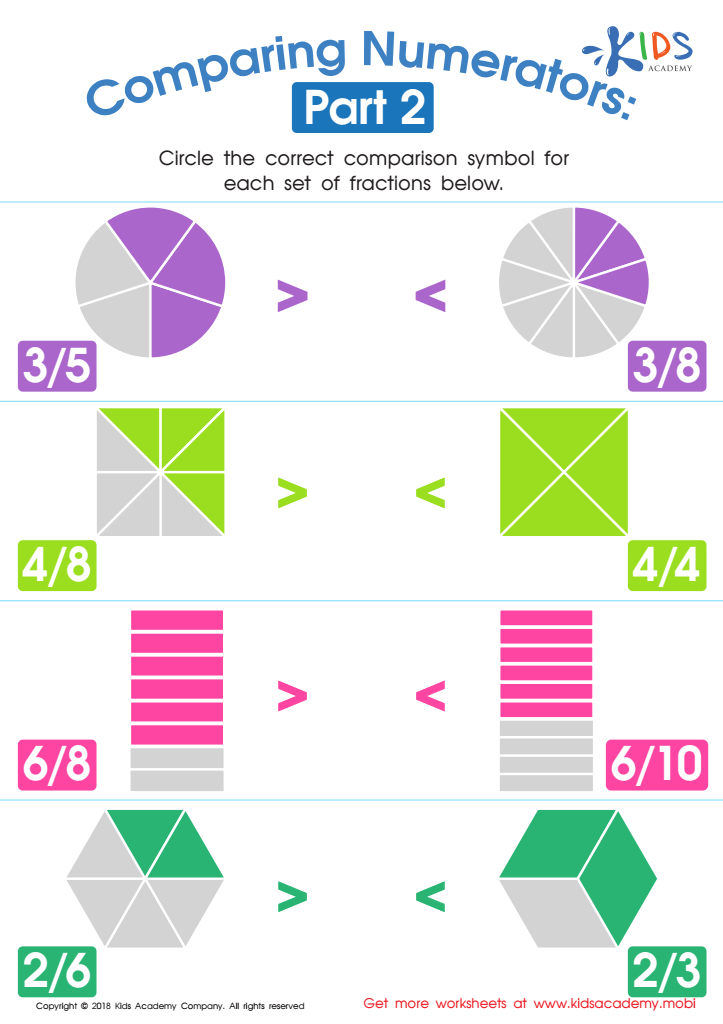
Comparing Numerators Part 2 Worksheet
Before beginning this exercise, your child should have knowledge of fractions, including counting and identifying them in shaded areas of shapes. In the pdf, they must compare two fractions in each set and circle the symbol for the larger fraction. Help them as needed.
Comparing Numerators Part 2 Worksheet
Worksheet
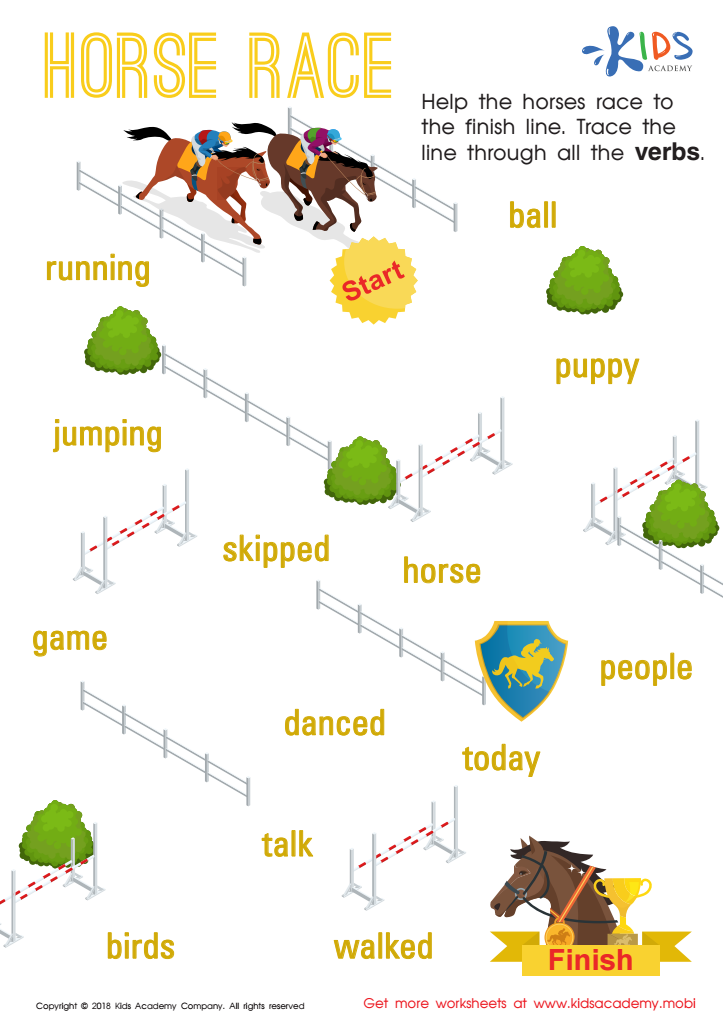
Horse Race Worksheet
This tracing sheet is perfect for horse-loving kids! Start by confirming they know what a verb is - it's a word that shows an action (e.g. jump, talk, walk, play, read). Then ask them to give you some more examples. Finally, help them trace the line through all the verbs. They'll be delighted!
Horse Race Worksheet
Worksheet
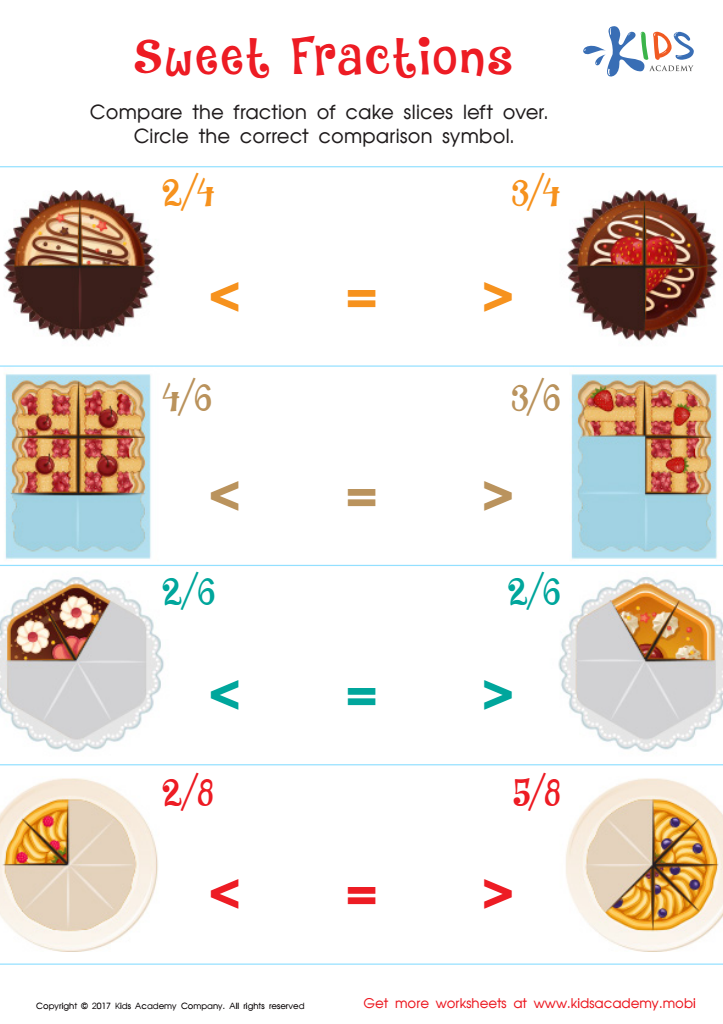
Compare Fractions Worksheet
This compare fractions worksheet is great for 3rd graders to learn and understand fractions in a fun way. Let them explore fractions visually with the help of sweet treats!
Compare Fractions Worksheet
Worksheet
Join Kids Academy for Free
Who is primarily going to use this learning content?






Comparing fractions is an essential skill for children aged 8-9, and both parents and teachers should prioritize its importance in early education. Mastering this concept lays the groundwork for understanding more complex mathematical principles, such as addition and subtraction of fractions and rational numbers later in school.
Understanding how to compare fractions fosters critical thinking and problem-solving skills. It encourages children to analyze quantities and make thoughtful decisions, such as determining which of two pizzas is larger even when sliced differently. Additionally, the ability to compare fractions helps students relate mathematics to real-life situations, such as cooking or budgeting, making learning more relevant and engaging.
By nurturing fractions comparison, parents and teachers can build confidence in students’ mathematical abilities, helping reduce math anxiety. Moreover, collaborating in this learning process enhances the learning experience – practicing at home complements lessons taught at school, reinforcing knowledge.
Ultimately, investing time in understanding fractions fosters numerical fluency and prepares children for future academic challenges. This foundational skill is not just about numbers; it's about developing a mindset that values precision, analysis, and problem-solving competencies that will serve them well throughout their education and everyday life.








