Contextual understanding Normal Worksheets for Ages 8-9
5 filtered results
-
From - To
Explore our "Contextual Understanding Worksheets for Ages 8-9" designed to enhance your child's comprehension skills in a fun and engaging way. These worksheets focus on helping children grasp the meaning of words and phrases within everyday contexts, fostering better reading and analytical skills. With well-crafted exercises and relatable scenarios, students will improve their ability to navigate through texts, making learning both effective and enjoyable. Ideal for classroom use or homeschooling, these resources support your child’s academic growth, preparing them for more advanced concepts. Unlock your child's potential with our expertly-designed worksheets today!
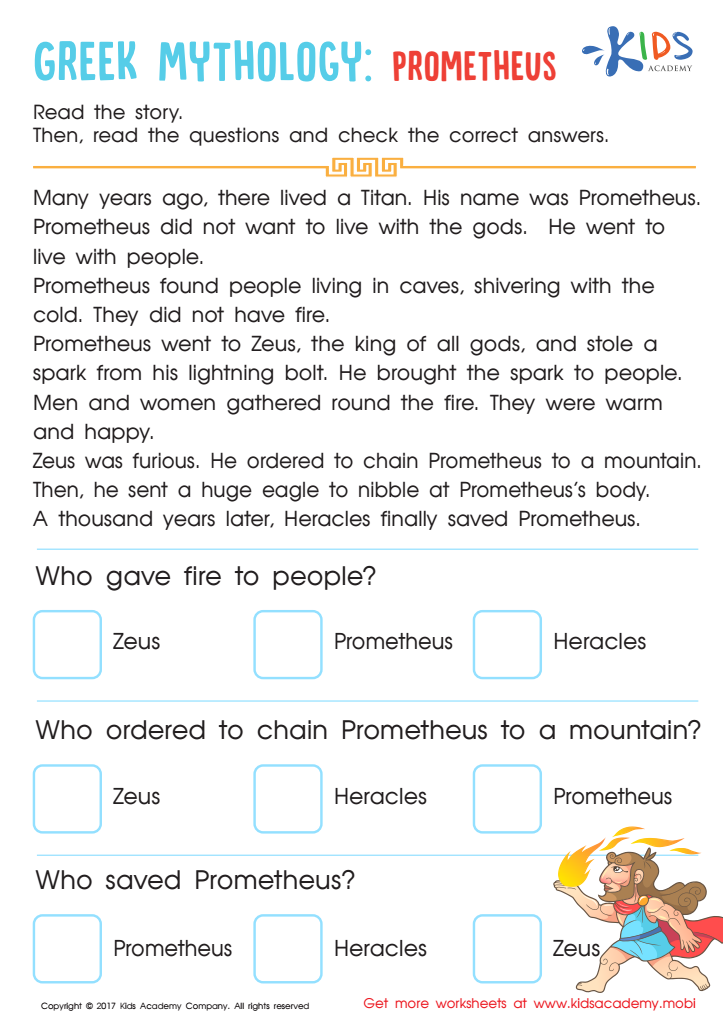
Prometheus Story Worksheet
 Assign to My Students
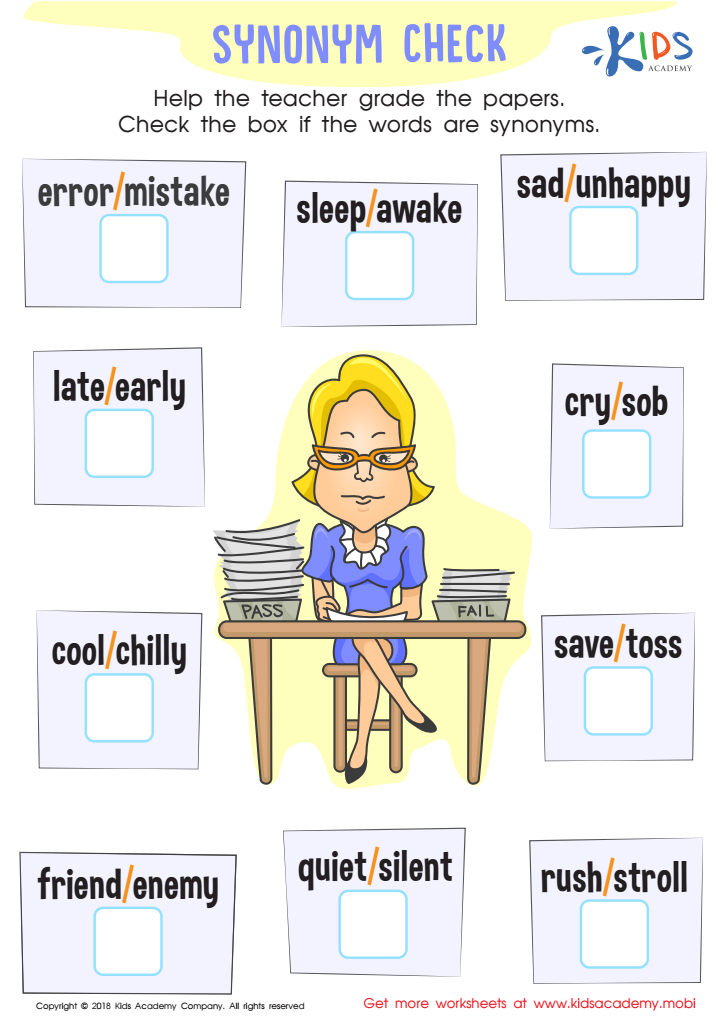
Synonym Check Worksheet
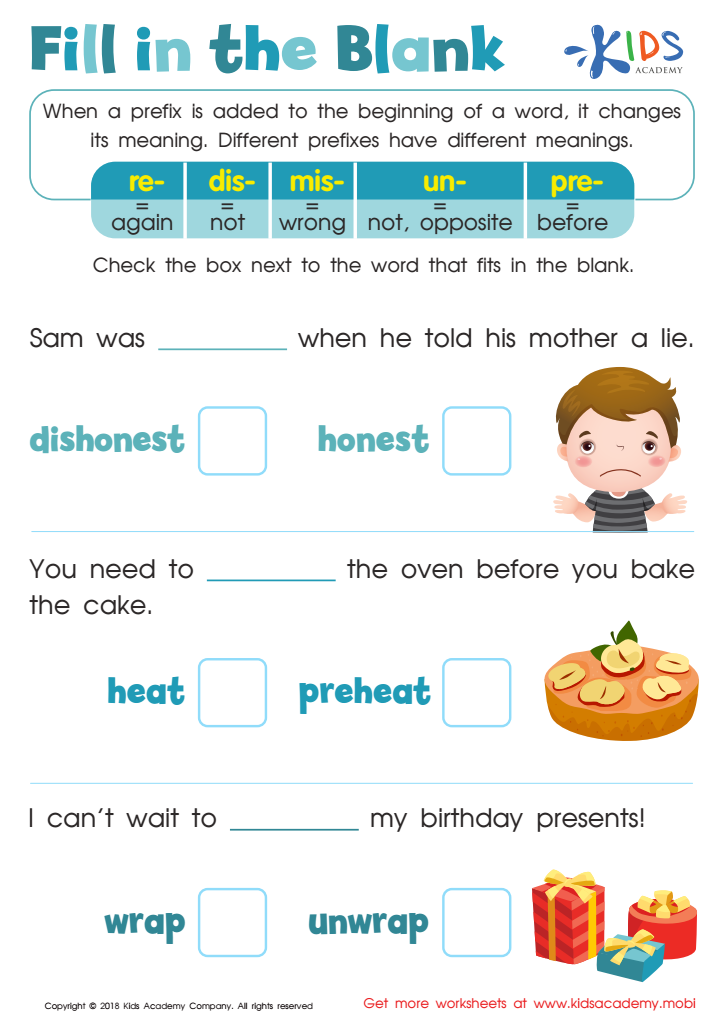
Reading: Fill in the Blank Worksheet
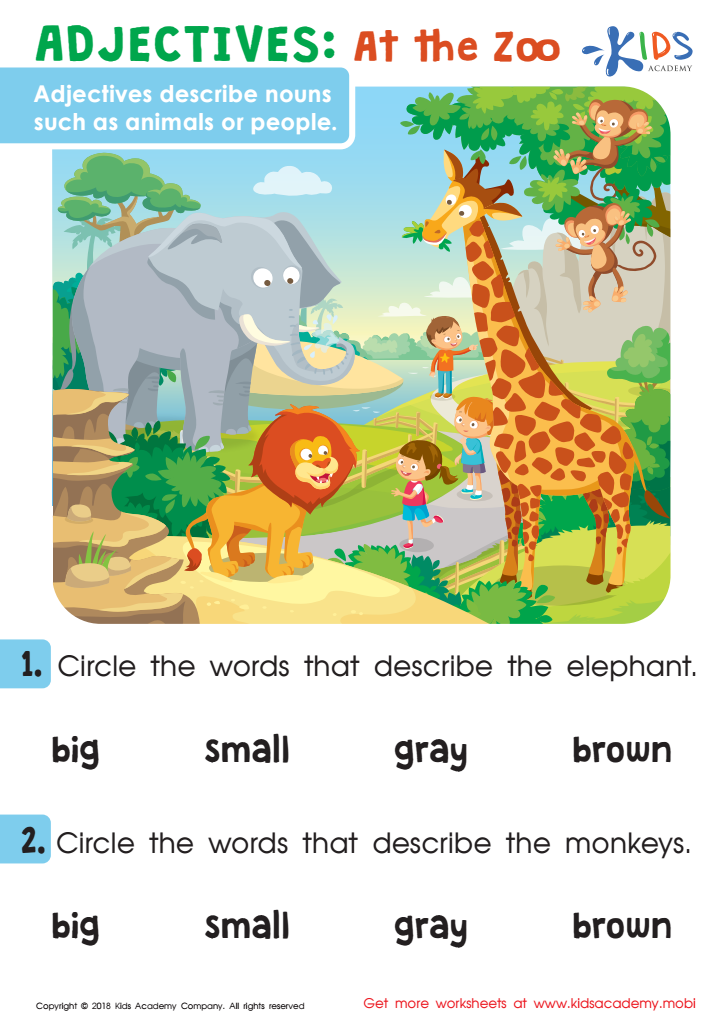
Adjectives: At The Zoo Worksheet
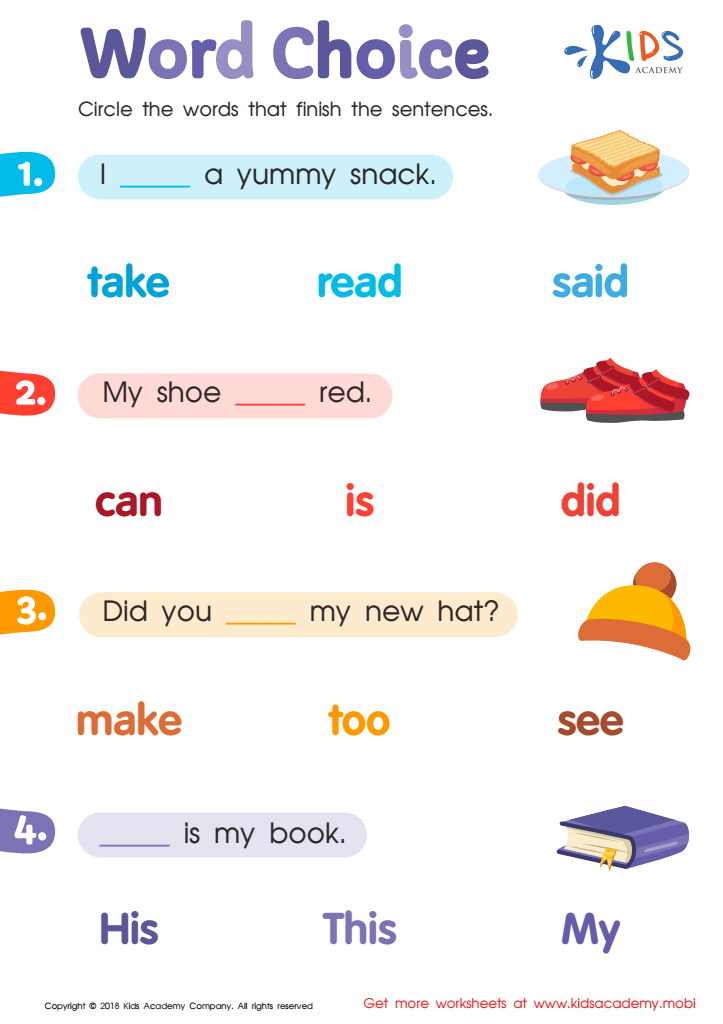
Word Choice Worksheet




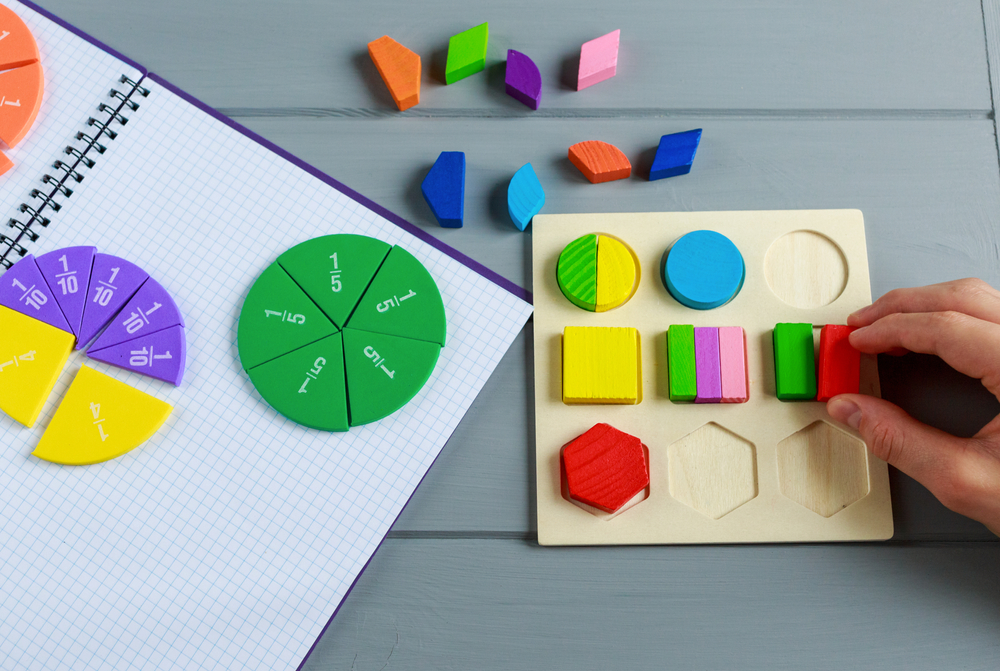

Parents and teachers should place significant emphasis on contextual understanding for children ages 8-9 because it forms the foundation of critical thinking and effective communication skills. At this developmental stage, kids are moving beyond basic reading and arithmetic to more complex ideas that require integration and application. When children grasp the context of what they're learning, they move away from rote memorization and toward meaningful comprehension. For instance, understanding the context behind a story or a math problem allows children to make connections to their own experiences, fostering deeper learning and retention.
Contextual understanding also boosts language development. Children learning new vocabulary in context are better able to infer meaning and usage, making them more proficient readers and communicators. When words and concepts are learned in isolation, they often don't stick, but context-rich learning experiences anchor these new ideas in a more understandable framework.
Moreover, contextual understanding is essential for social learning. It helps children interpret social cues and empathize with others, improving their interactions in school and beyond. They begin to understand why rules exist and the reasons behind others' behaviors and emotions, which are crucial for developing social consciousness and emotional intelligence.
By focusing on contextual understanding, parents and teachers equip children with the cognitive tools needed to navigate both academic and real-world challenges with confidence and competence.








