Enhancing observational skills Normal Worksheets for Ages 8-9
5 filtered results
-
From - To
Enhance your child's observational skills with our engaging worksheets designed specifically for ages 8-9. These normal worksheets encourage keen observation and critical thinking through fun, interactive activities. From identifying differences in images to completing find-and-match tasks, each worksheet provides a valuable opportunity for young learners to sharpen their focus and attention to detail. Ideal for both the classroom and at home, these resources foster cognitive development and boost confidence in problem-solving abilities. Help your child become more mindful and attentive with exercises that transform learning into an exciting adventure. Explore our collection and watch their observational skills flourish!
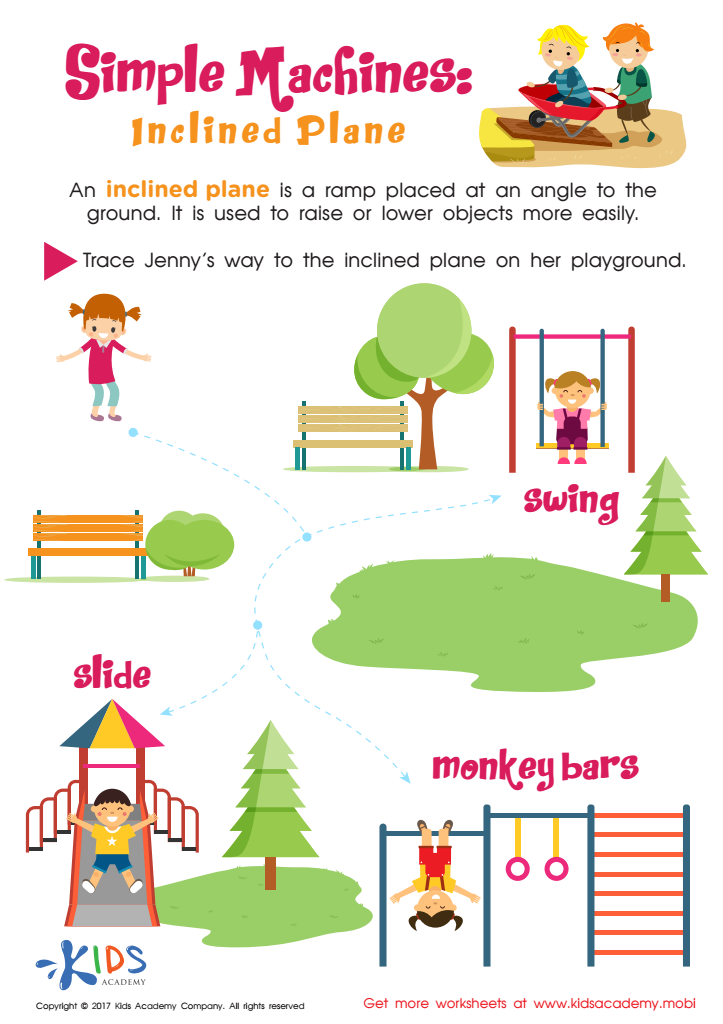
Simple Machines Inclined Plane Worksheet
 Assign to My Students
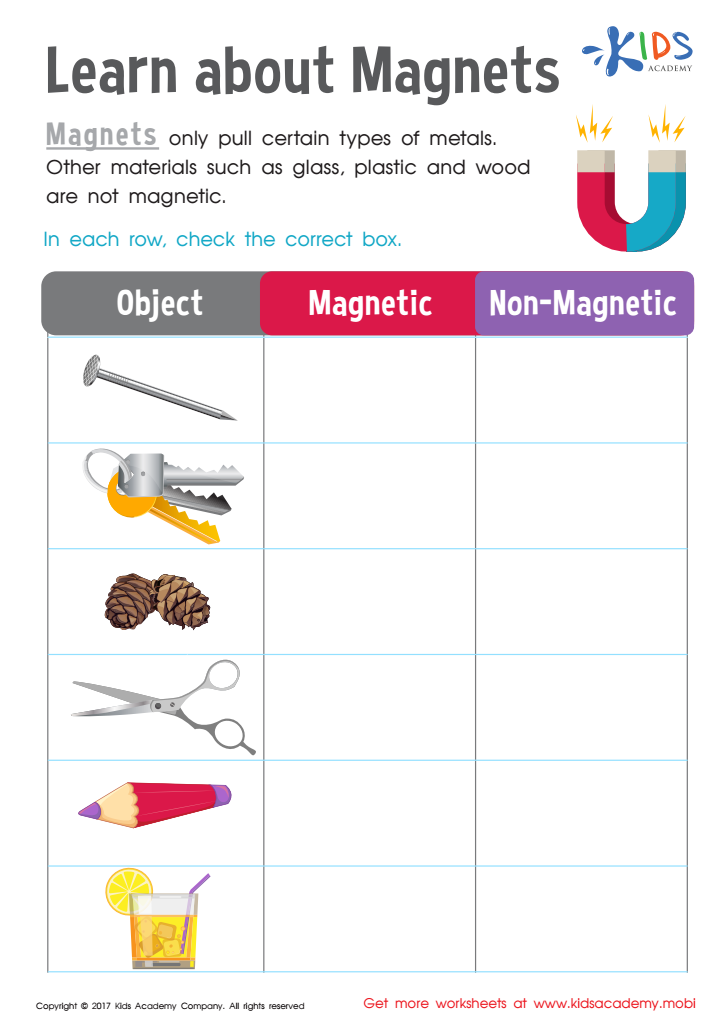
Magnetic Or Not Worksheet
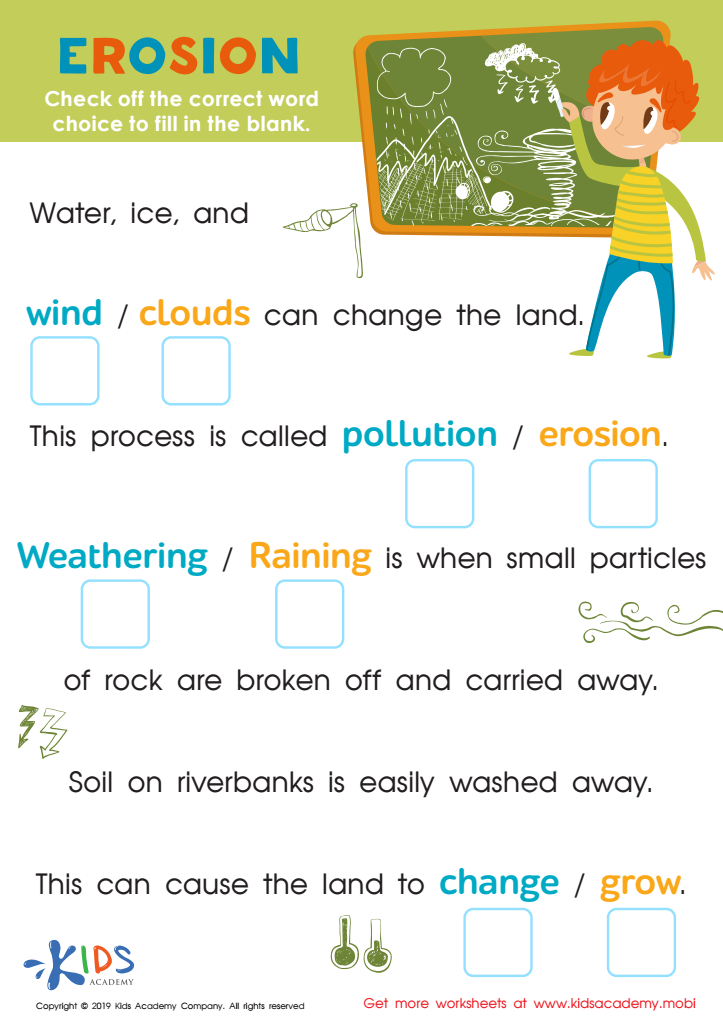
Erosion Worksheet
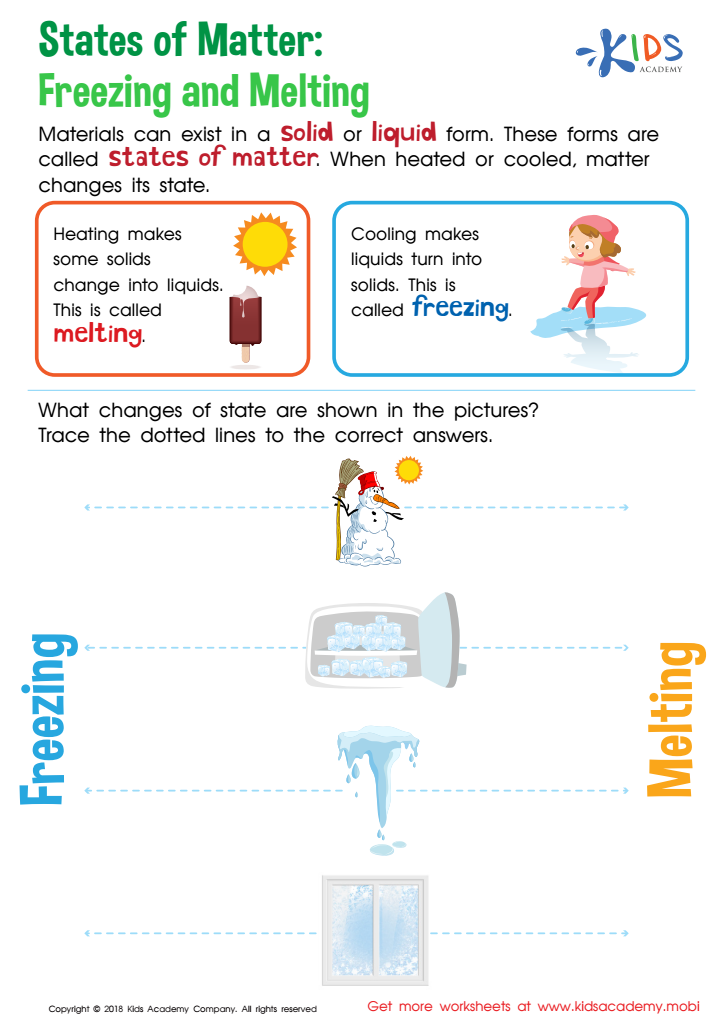
States of Matter: Freezing and Melting Worksheet
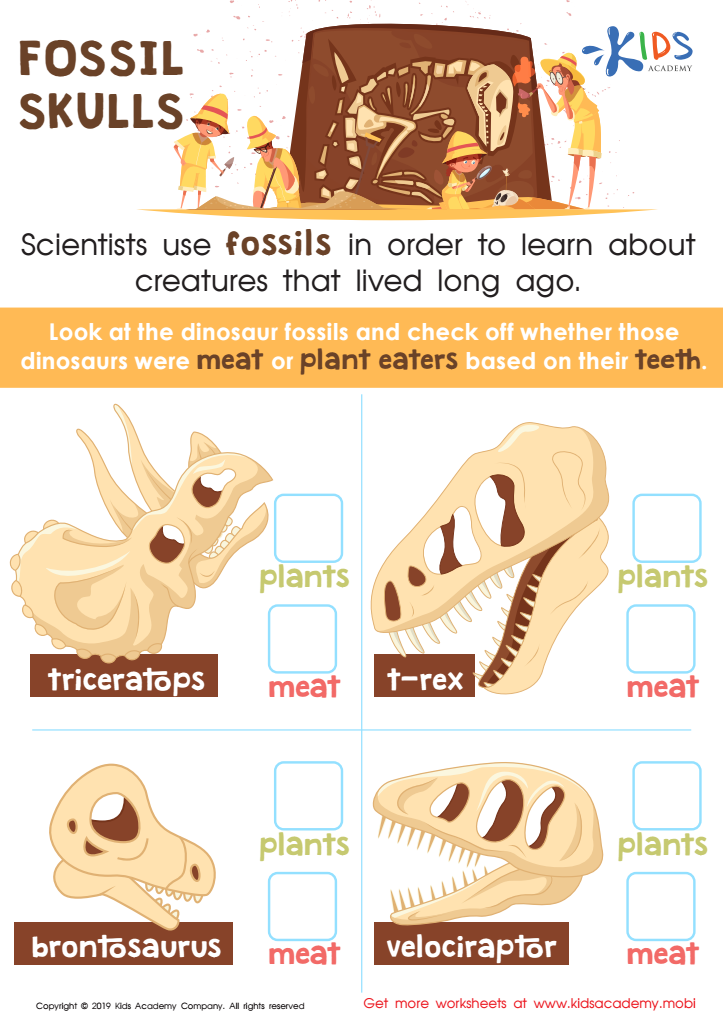
Fossil Skulls Worksheet






Enhancing observational skills for children ages 8-9 is vital for their overall development, as it lays the foundation for critical thinking and cognitive growth. At this age, children are transitioning into more complex learning, and strong observational skills help them better understand their environment and make meaningful connections between concepts.
Parents and teachers should prioritize observational skills because these abilities contribute to academic success across subjects. For example, in science, children who observe details can ask insightful questions and form hypotheses, while in literature, keen observation aids in understanding characters and themes. Furthermore, nurturing these skills enhances children's ability to focus, which is essential in today's distraction-heavy world.
Additionally, enhanced observational skills encourage creativity and problem-solving, enabling children to notice patterns and explore ideas more thoroughly. This skill set supports emotional intelligence as children learn to perceive non-verbal cues in social interactions, fostering empathy and cooperation with peers.
In summary, prioritizing observational skills during ages 8-9 not only enriches academic learning but also promotes social and emotional development. Parents and teachers can work together to create engaging activities that cultivate these essential skills, preparing children for future challenges and lifelong learning.








