Moral understanding Normal Worksheets for Ages 8-9
3 filtered results
-
From - To
Discover our Moral Understanding Normal Worksheets, specially designed for children aged 8-9! These engaging resources help young learners explore important ethical concepts, encouraging them to think critically about right and wrong. Through fun activities and relatable scenarios, students develop empathy, fairness, and responsible decision-making skills essential for their social growth. Each worksheet is crafted to foster meaningful discussions, allowing children to connect moral lessons to their daily lives. With a mix of imaginative exercises and reflective questions, these worksheets provide a perfect blend of learning and fun. Empower your child with the tools they need to navigate the complexities of moral understanding!
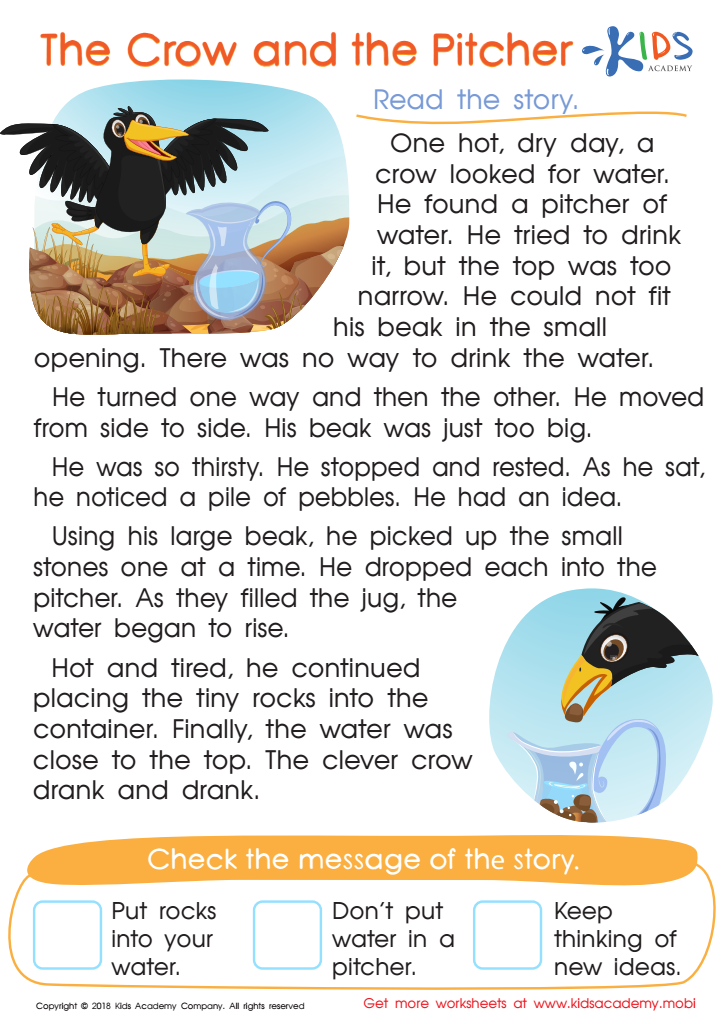
The Crow and the Pitcher Worksheet
 Assign to My Students
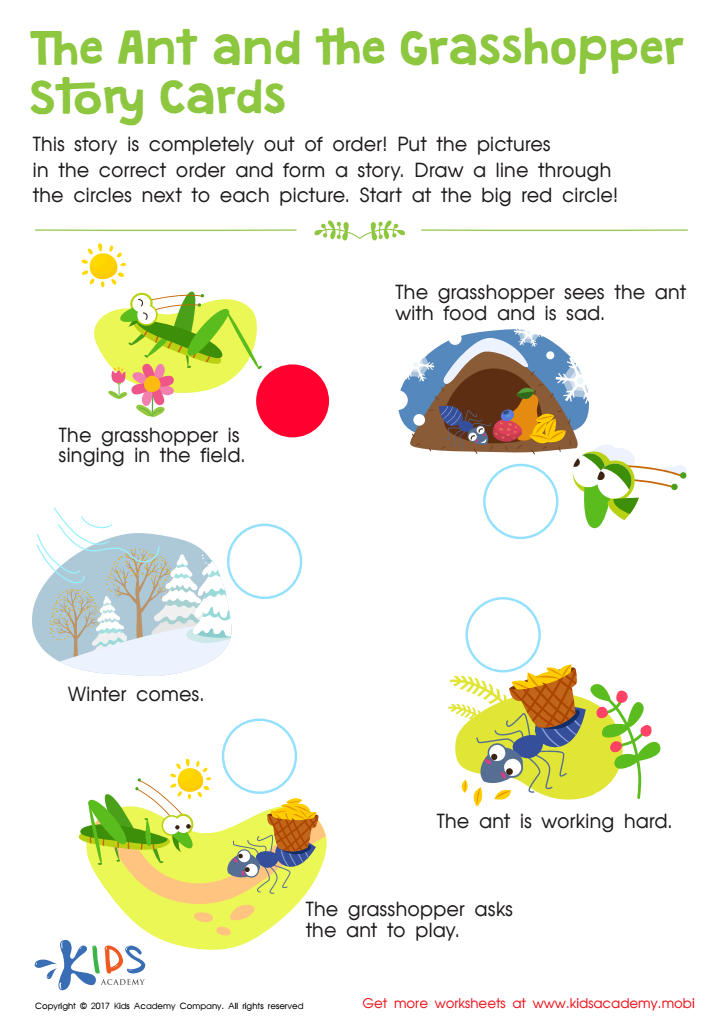
The Ant and The Grasshopper Worksheet
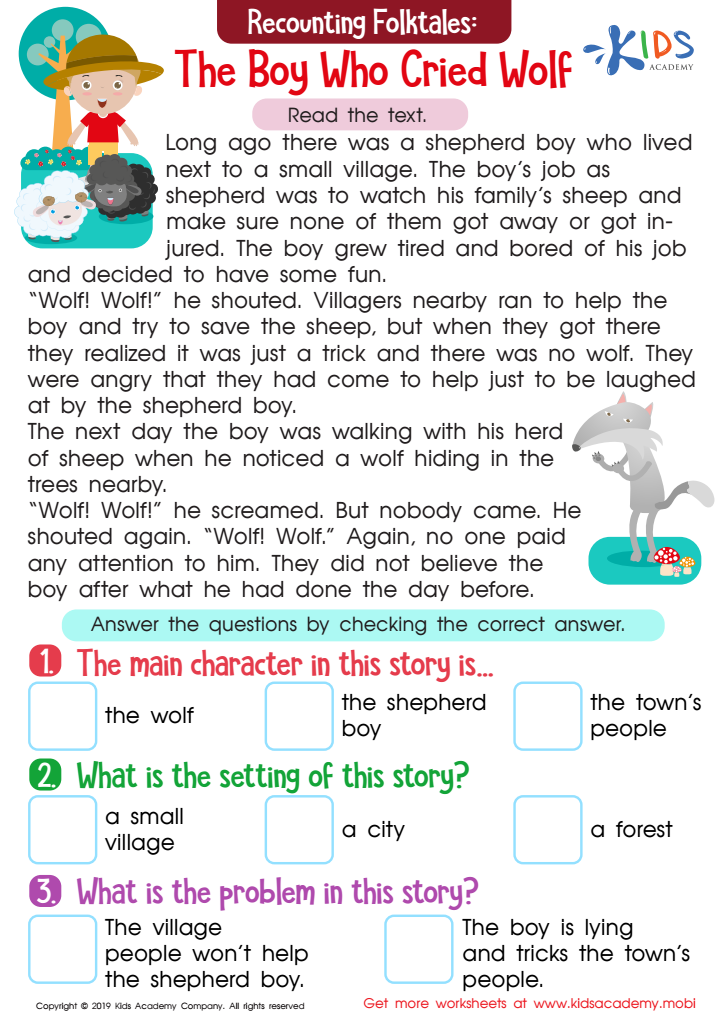
The Boy Who Cried Wolf Part 1 Worksheet







Moral understanding is a crucial aspect of child development, especially for children aged 8-9, as they begin to navigate complex social relationships and their own values. At this age, children develop a deeper understanding of right and wrong and begin to question fairness, justice, and empathy. Parents and teachers should care about nurturing this moral awareness because it lays the foundation for responsible citizenship, social interactions, and emotional intelligence later in life.
By fostering moral understanding, adults help children make informed decisions, resolve conflicts, and engage in ethical reasoning. Instilling values such as kindness, respect, and integrity at this stage encourages positive behavior in the classroom and at home, reducing conflicts and promoting a supportive community. Furthermore, discussions around morality can enhance critical thinking and reflection, enabling children to articulate their thoughts and feelings more effectively.
Incorporating moral lessons through literature, storytelling, and real-life experiences not only enriches children’s educational experiences but also empowers them to consider diverse perspectives, enhancing their social skills and emotional resilience. Overall, prioritizing moral education at this age supports holistic development, helping children grow into empathetic and conscientious individuals.








