Sound recognition Normal Worksheets for Ages 8-9
4 filtered results
-
From - To
Discover our engaging Sound Recognition Worksheets designed for children ages 8-9! These interactive worksheets help children enhance their listening skills as they learn to identify and differentiate various sounds in their environment. Each worksheet offers a fun blend of activities, including matching sounds to pictures, completing sound-related word puzzles, and auditory discrimination exercises. Tailored to meet educational standards, these resources promote auditory skills while keeping kids excited about learning. Perfect for use in classrooms or at home, our sound recognition worksheets engage young learners through captivating illustrations and relatable themes, fostering critical thinking and sound awareness essential for their development.
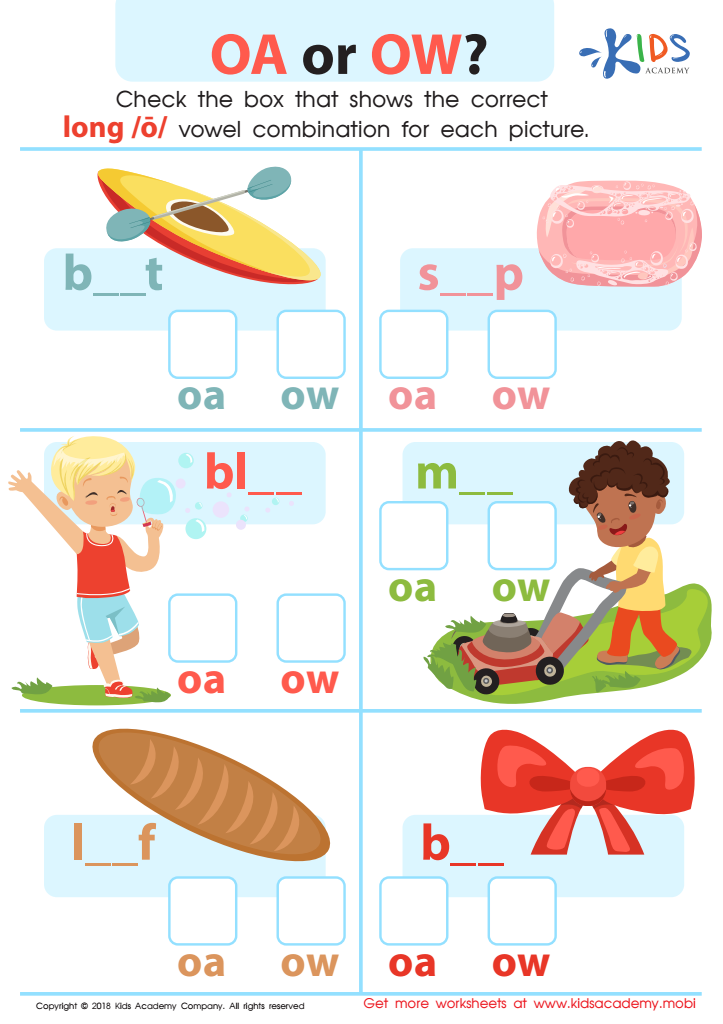
Reading: OA or OW Worksheet
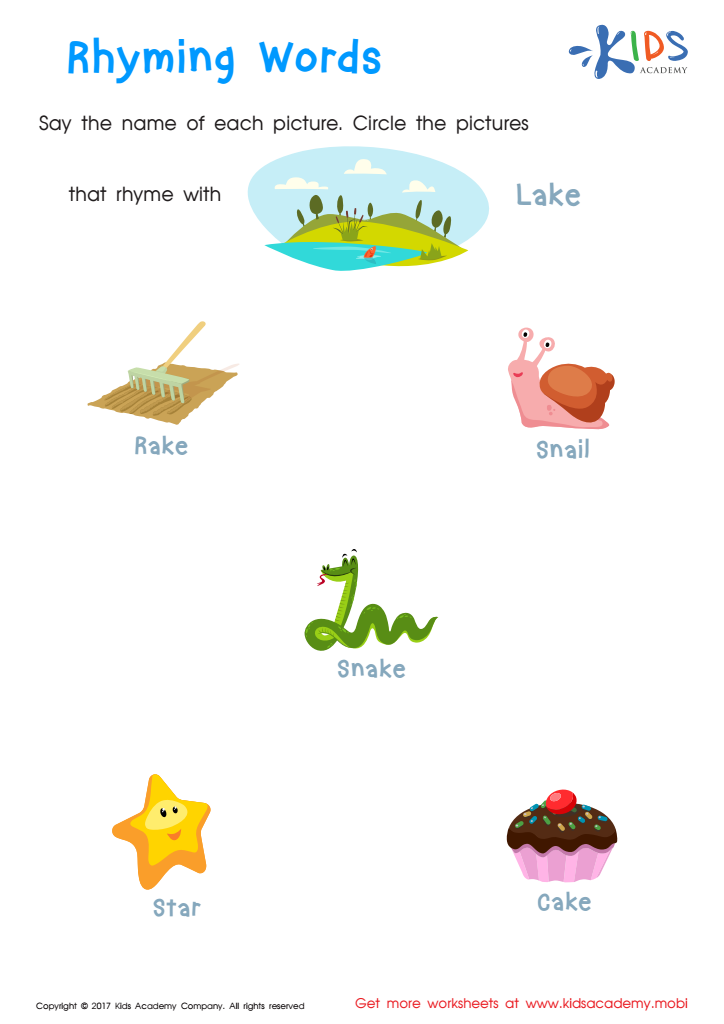
Rhyming Words Rhyming Worksheet

Long and Short U Worksheet
 Assign to My Students
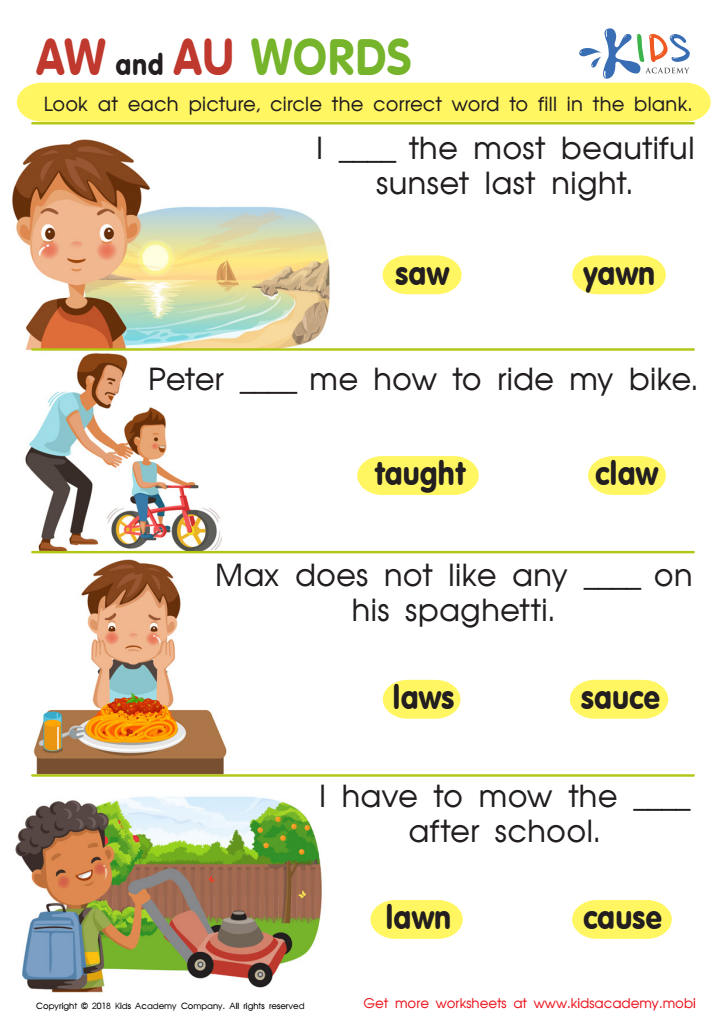
Reading: AW and AU Words Worksheet






Sound recognition is a critical skill for children aged 8-9, serving as a foundation for effective communication, reading, and language development. At this age, children are expanding their vocabulary and learning to decode words, and their ability to identify and differentiate between various sounds in language is essential. When teachers and parents prioritize sound recognition, they create stronger learners.
Being able to recognize sounds enhances phonemic awareness, which is integral to mastering reading skills. Children who struggle with sound identification may experience difficulties in phonics and reading comprehension, affecting their overall academic performance. Moreover, sound recognition plays a role in social interactions; it aids in following directions, understanding conversations, and participating in group activities.
Additionally, sound recognition skills extend beyond the classroom. They contribute to critical listening skills, which are important for effective communication and collaboration in real-world scenarios. By encouraging sound recognition through playful activities, such as rhymes or games, both parents and teachers foster a supportive environment that promotes learning.
Ultimately, investing attention in sound recognition helps children build a strong foundation for lifelong learning, encouraging confidence and competence in both academic and social settings. Thus, it’s essential for both teachers and parents to nurture this ability at a young age.








