
Understanding economics Normal Worksheets for Ages 8-9
3 filtered results
Difficulty Level
Grade
Age
-
From - To
Subject
Activity
Standards
Unlock your child's potential with our "Understanding Economics" normal worksheets, designed for ages 8-9! These engaging, easy-to-understand resources help young learners grasp essential economics concepts through fun activities and exercises. From distinguishing needs vs. wants to exploring money management and basic economic principles, these worksheets integrate real-world examples perfectly tailored for growing minds. Equip your students with foundational skills for smart decision-making, instilling early financial literacy. Developed by educational experts, our worksheets promote critical thinking and make complex ideas accessible and enjoyable. Get started today and empower your child’s financial awareness and confidence!
Favorites
With answer key
Interactive
 Assign to My Students
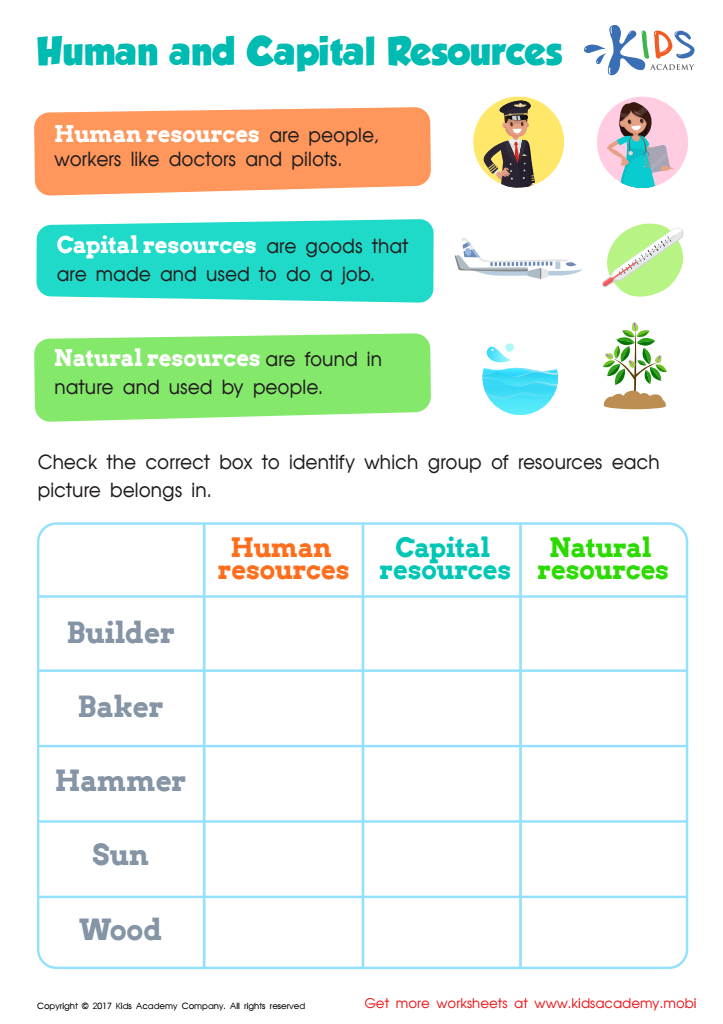
Human and Capital Resources Worksheet
It helps identify and differentiate human, natural and capital resources, so your kid can understand how each affects their world.
Human and Capital Resources Worksheet
Worksheet
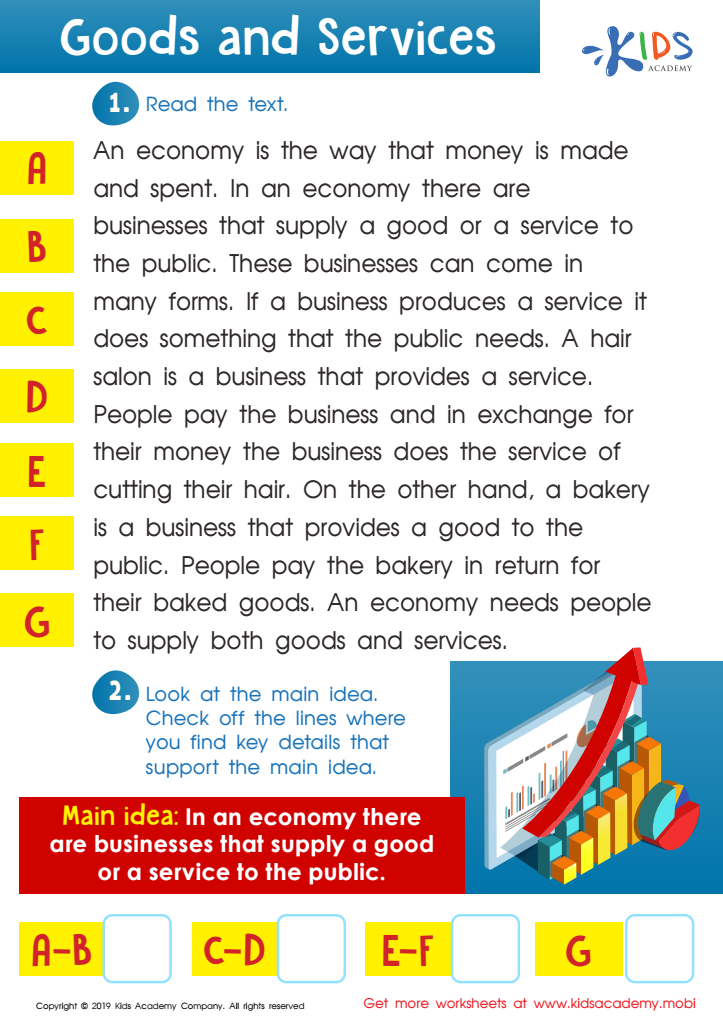
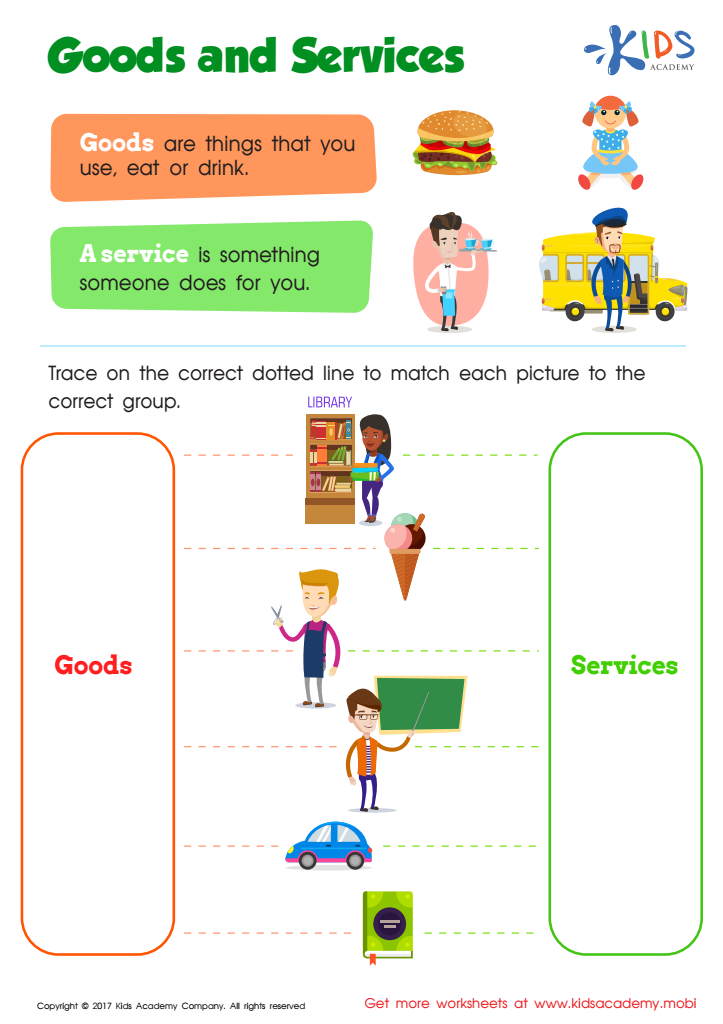
Goods and Services Worksheet
Teach your kids about the economy and businesses with this worksheet. Ask them if they know what goods and services are. After they complete the worksheet, they'll have a better understanding. Read the text to them and guide them step-by-step through the instructions. Help them learn!
Goods and Services Worksheet
Worksheet
Join Kids Academy for Free
Who is primarily going to use this learning content?








Understanding basic economics is essential for children ages 8-9 for several important reasons. Early exposure to economic concepts helps youngsters develop critical life skills that are foundational for making informed decisions. At this age, children are curious and begin to understand the value of money, work, and savings, making it the ideal time to introduce them to fundamental economic principles.
Firstly, teaching basic economics empowers children to grasp the concept of making choices. They learn that money is a limited resource and must be earned and spent wisely. This understanding promotes financial literacy, fostering habits of saving and budgeting that can benefit them throughout life.
Secondly, understanding economics helps children to appreciate the value of work and earning an income. They see how effort, productivity, and collaboration are connected to achieving personal and communal goals.
Moreover, basic economic education encourages critical thinking and problem-solving. When children learn about supply and demand, trade, goods, and services, they become better equipped to analyze and navigate the world around them.
Lastly, fostering an early appreciation for economics instills a sense of responsibility. Kids learn the importance of contributing to their community and environment, emphasizing the significance of resource conservation and ethical consumption.
In conclusion, early economic education lays a foundation for a child’s lifelong financial well-being, effective decision-making, and responsible citizenship.








