Understanding ecosystems Normal Worksheets for Ages 8-9
4 filtered results
-
From - To
Explore fascinating ecosystems with our "Understanding Ecosystems Normal Worksheets" designed specifically for ages 8-9! This engaging resource provides students with interactive activities that foster curiosity about nature's diverse communities. Through colorful illustrations and straightforward exercises, children will learn to identify different ecosystems, understand the roles of plants and animals, and comprehend the importance of biodiversity. Our worksheets promote critical thinking and environmental awareness, making learning about ecosystems both fun and educational. Perfect for classroom use or at-home enrichment, these worksheets inspire young learners to appreciate and protect the natural world around them. Help your child connect with nature today!
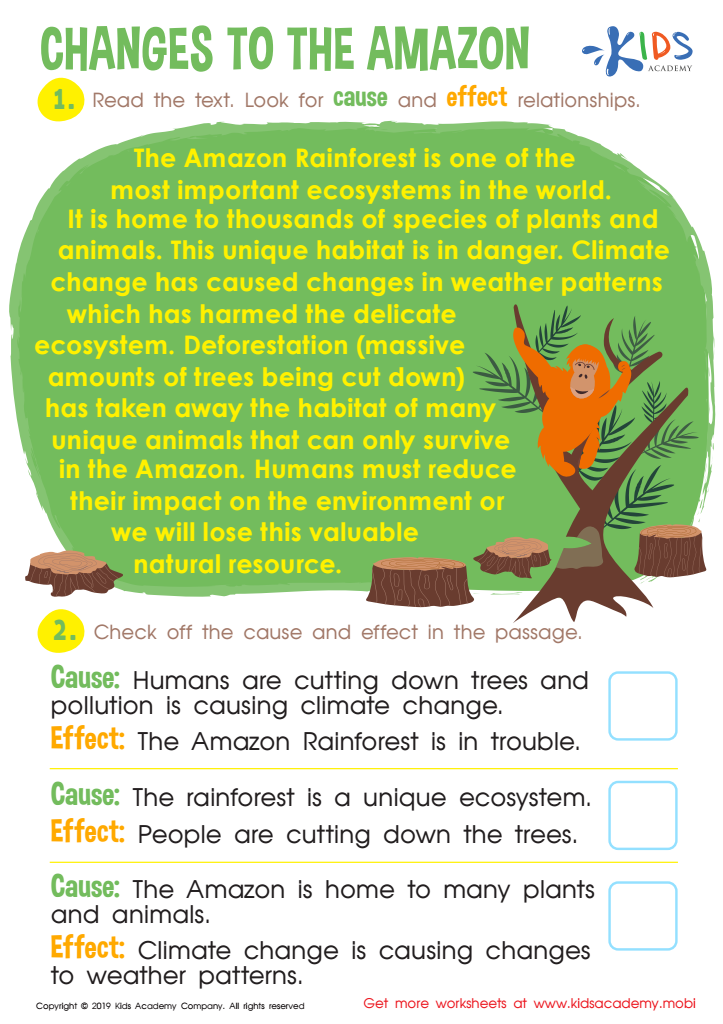
Changes to the Amazon Worksheet
 Assign to My Students
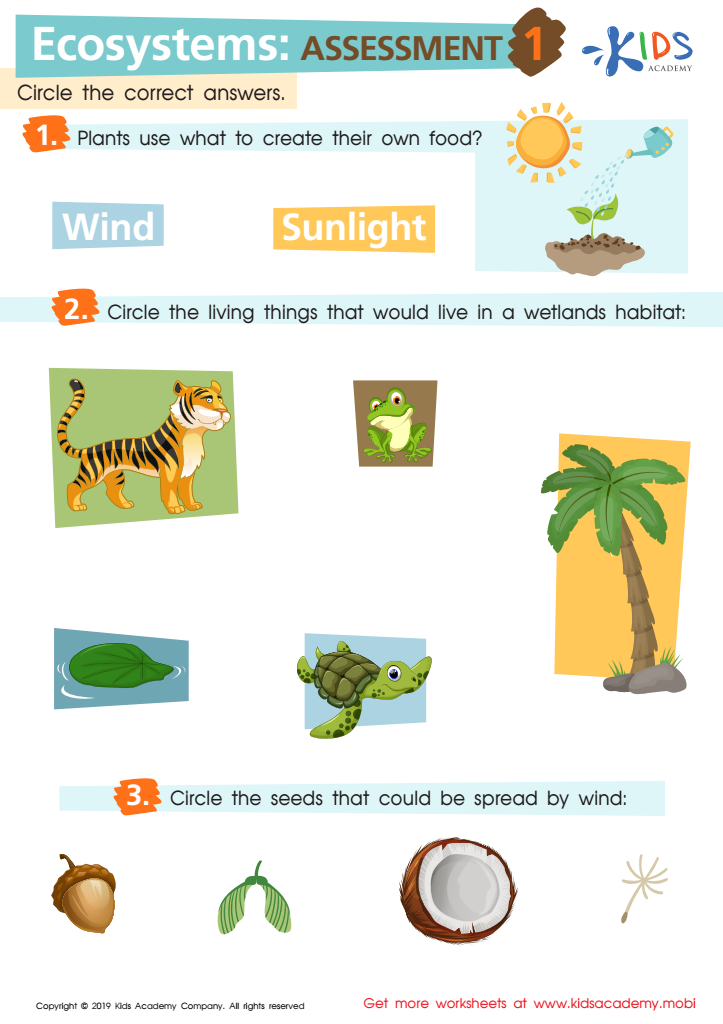
Ecosystems: Assessment 1 Worksheet
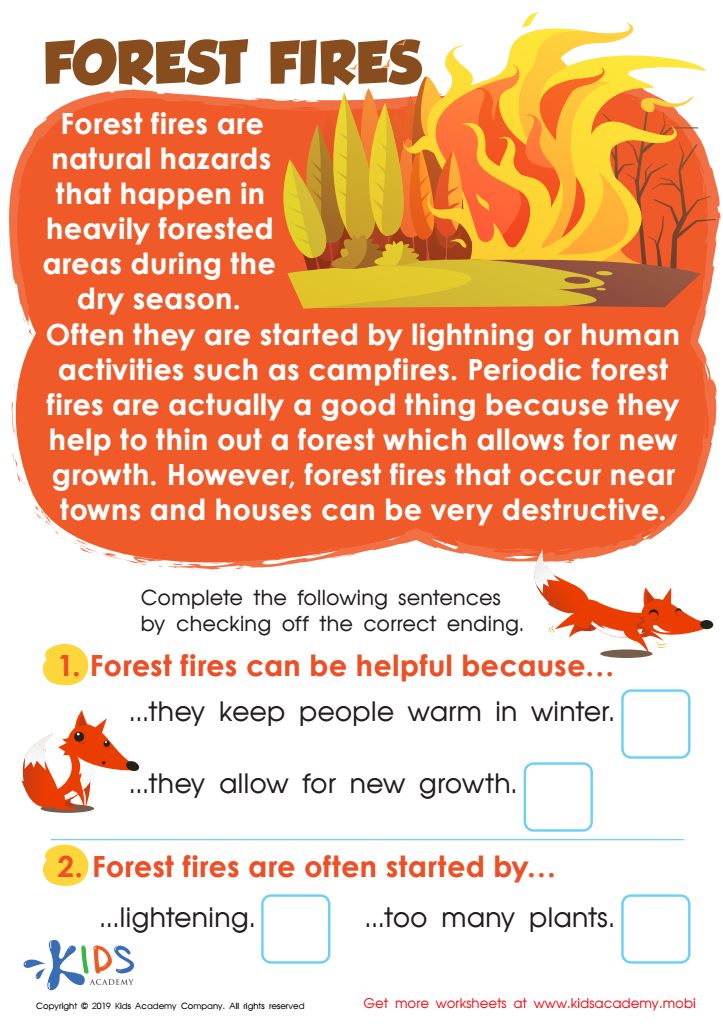
Forest Fires Worksheet
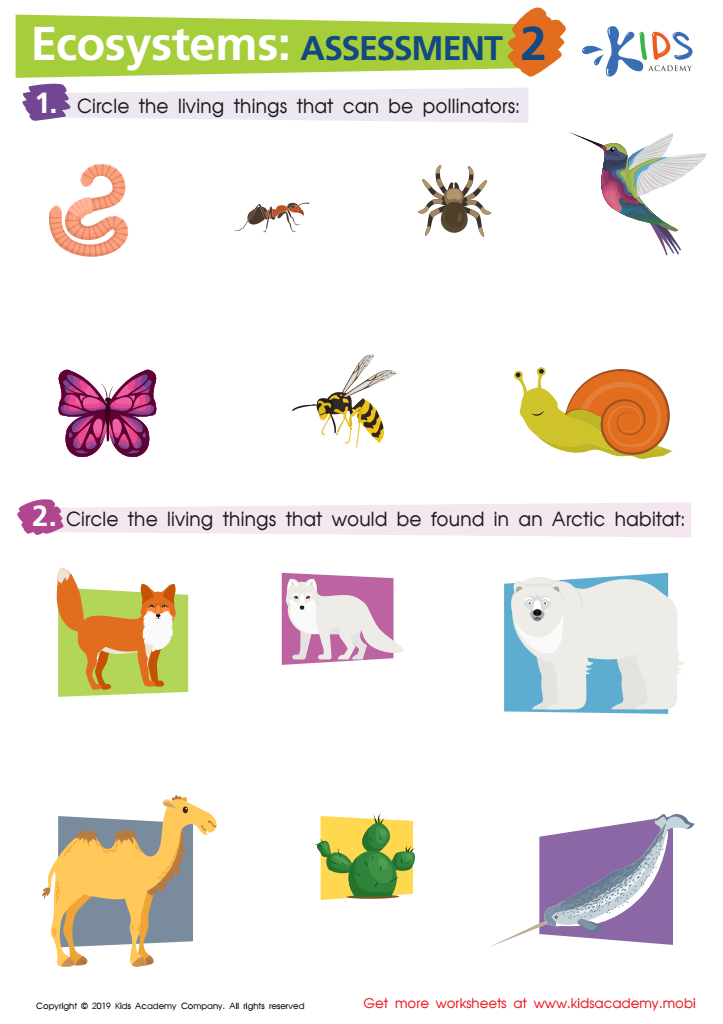
Ecosystems: Assessment 2 Worksheet








Understanding ecosystems is vital for children aged 8-9, and parents or teachers play a crucial role in fostering this knowledge. Ecosystems represent the intricate balance between living organisms and their environments. By exploring ecosystems, children learn about the interdependence of plants, animals, and their habitats, which fosters respect for nature.
At this age, children's curiosity is high, making it an ideal time to introduce environmental concepts. Understanding ecosystems helps them grasp important concepts like food chains, habitats, and biodiversity. These lessons encourage critical thinking and inquiry as they observe and explore nature firsthand.
Moreover, comprehension of ecosystems instills a sense of responsibility in children towards the environment. They begin to realize the impact of human actions on ecosystems – such as pollution and deforestation – and the importance of conservation.
By fostering an appreciation for ecosystems, parents and teachers can help build environmentally aware future citizens. Promoting outdoor activities, discussions, and even projects centered around ecosystems can spark a lifelong passion for nature and science. Ultimately, understanding ecosystems empowers children to make informed choices and encourages them to advocate for a sustainable future.








