Discover engaging "Understanding Prefixes" worksheets tailored for ages 8-9. These expertly designed activities enhance vocabulary and comprehension by teaching children how prefixes modify word meanings. Ideal for young learners, they build a solid language foundation through fun exercises, promoting critical thinking and language skills. Each worksheet is crafted to capture kids’ interest, offering a balance of challenge and enjoyment. Watch as your child gains confidence and proficiency in word formation. Perfect for classroom or at-home learning. Dive into the world of prefixes with these delightful resources and empower your child’s educational journey today!

Check out this FREE "Understanding prefixes" Trial Lesson for age 8-9!

Identify the Meaning of Common Prefixes

Favorites
With answer key
Interactive
  • 8-9
  • Understanding prefixes
  • Normal
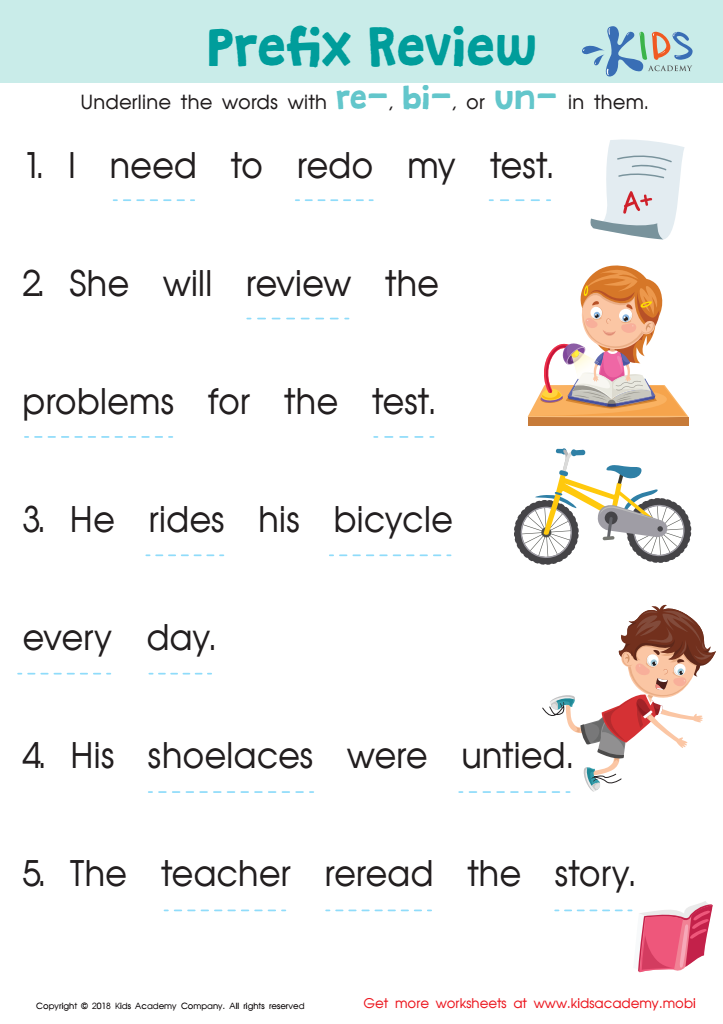
Prefix Review Worksheet

Prefix Review Worksheet

Learning prefixes is key for effective communication. Help your child master re-, bi-, and un- with a Kids Academy worksheet. Ask them to go through each sentence, underlining words with one of the prefixes. This will help them appreciate how prefixes alter the meaning of a root word.
Prefix Review Worksheet
Worksheet
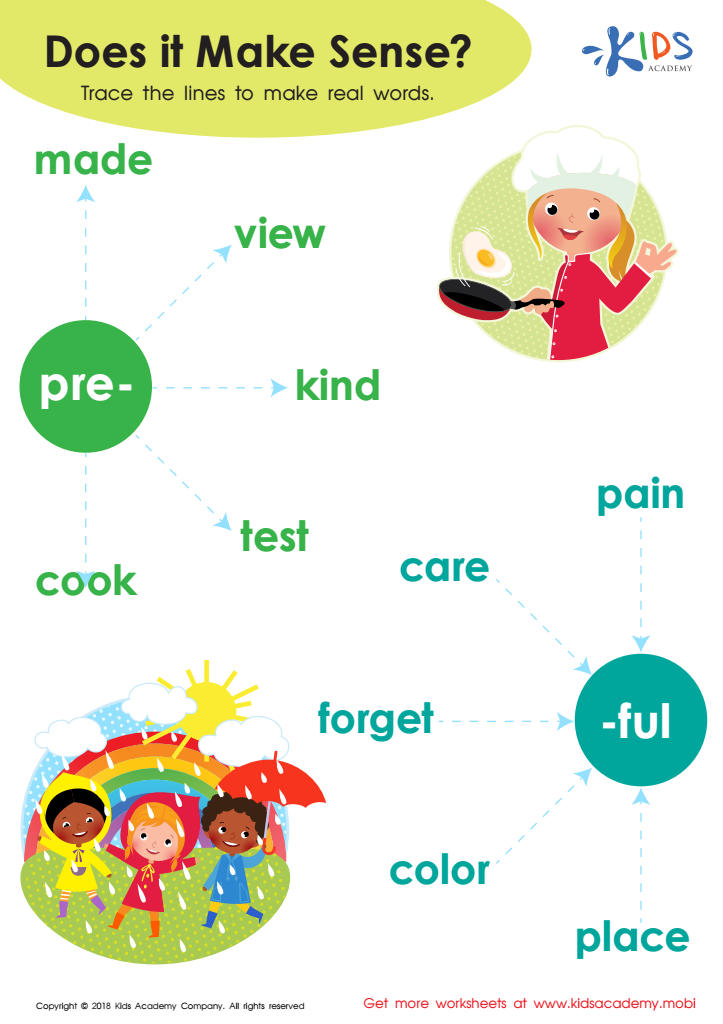
Prefix pre and suffix ful worksheet

Prefix pre– and Suffix ful– Worksheet
Can't preforget something! This worksheet helps kids learn how to attach prefixes and suffixes to root words, forming new words that make sense. With this activity, they'll evaluate how the root words change when adding the prefix or suffix.
Prefix pre– and Suffix ful– Worksheet
Worksheet
Prefix and suffix worksheet for grade 3

Prefix and Suffix Worksheet For Grade 3
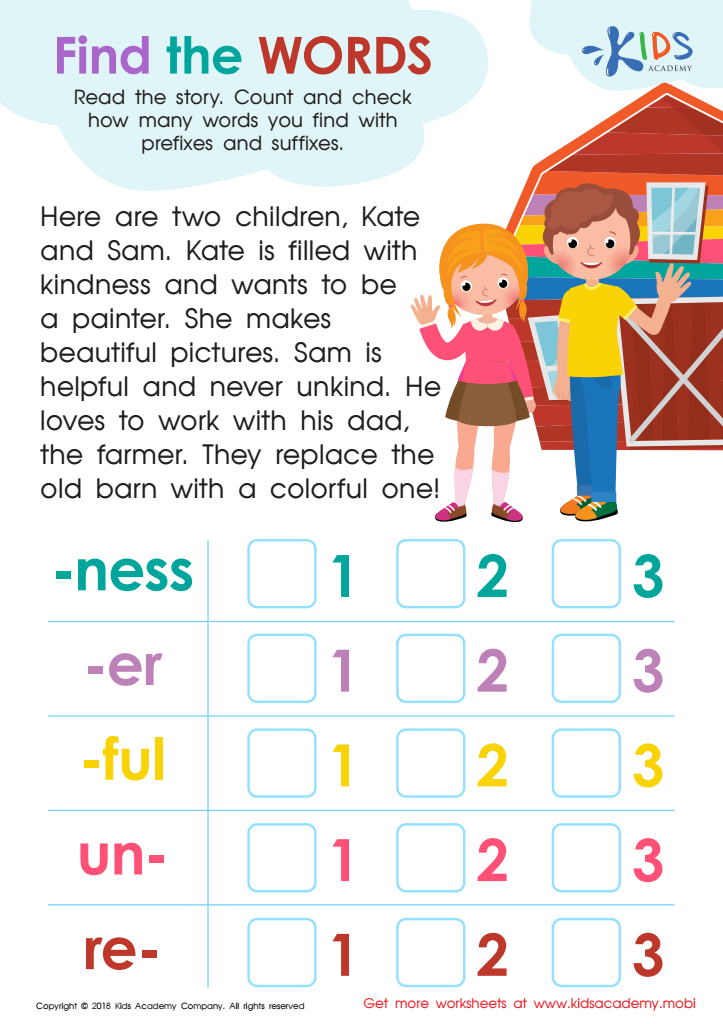
Read the story about Sam and Kate and help your grade 3 child tally all the words with prefixes and suffixes. Check their work by counting the words and ticking the appropriate boxes. This entertaining worksheet will help develop their reading and counting skills! (80 words)
Prefix and Suffix Worksheet For Grade 3
Worksheet
Prefix Un- Worksheet

Prefix Un- Worksheet

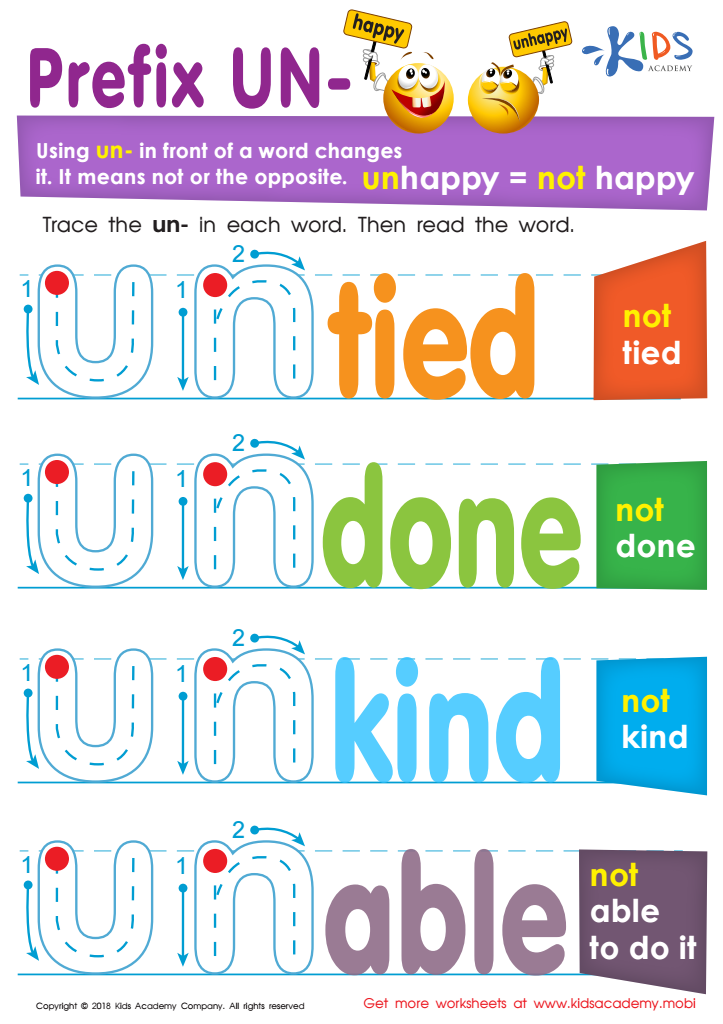
Help your child understand the concept of adding "un-" to the front of words by giving examples such as "unhappy" (not happy) and "unserious" (not serious). Guide them in tracing the "un-" in each word and read it aloud together.
Prefix Un- Worksheet
Worksheet
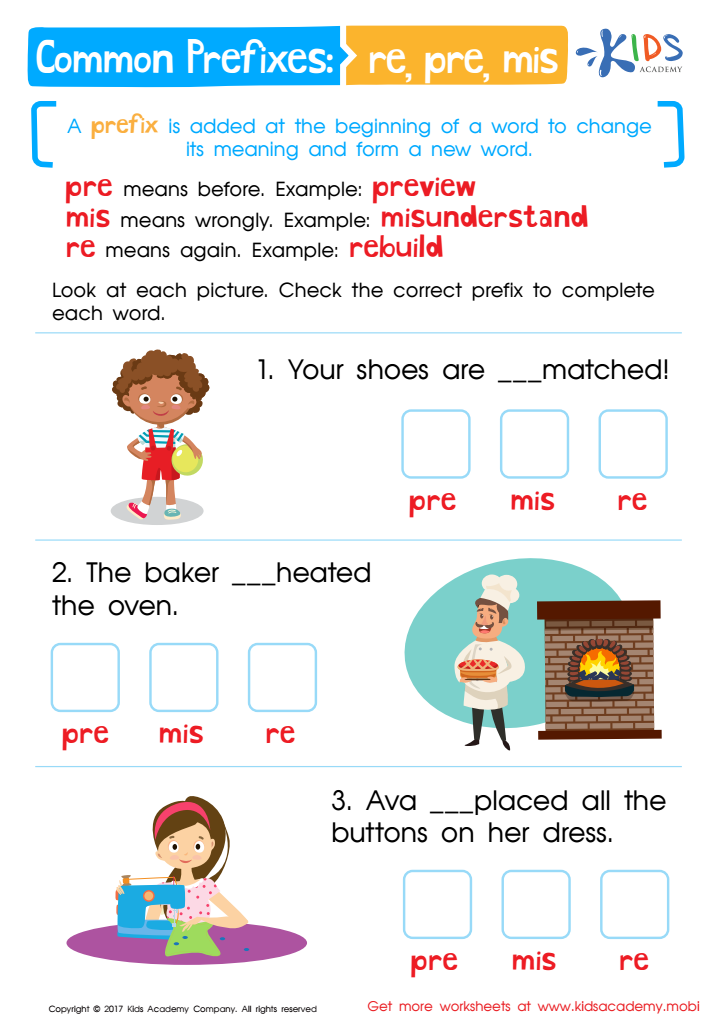
Common Prefixes Worksheet: RE, PRE, MIS

Common Prefixes Worksheet: RE, PRE, MIS

Transform your child's language skills with this simple prefix worksheet! Kids learn to identify the prefixes RE, PRE and MIS while reading fun sentences. Easily build their language understanding with this engaging activity!
Common Prefixes Worksheet: RE, PRE, MIS
Worksheet
Reading: Find the Prefixes Worksheet

Reading: Find the Prefixes Worksheet

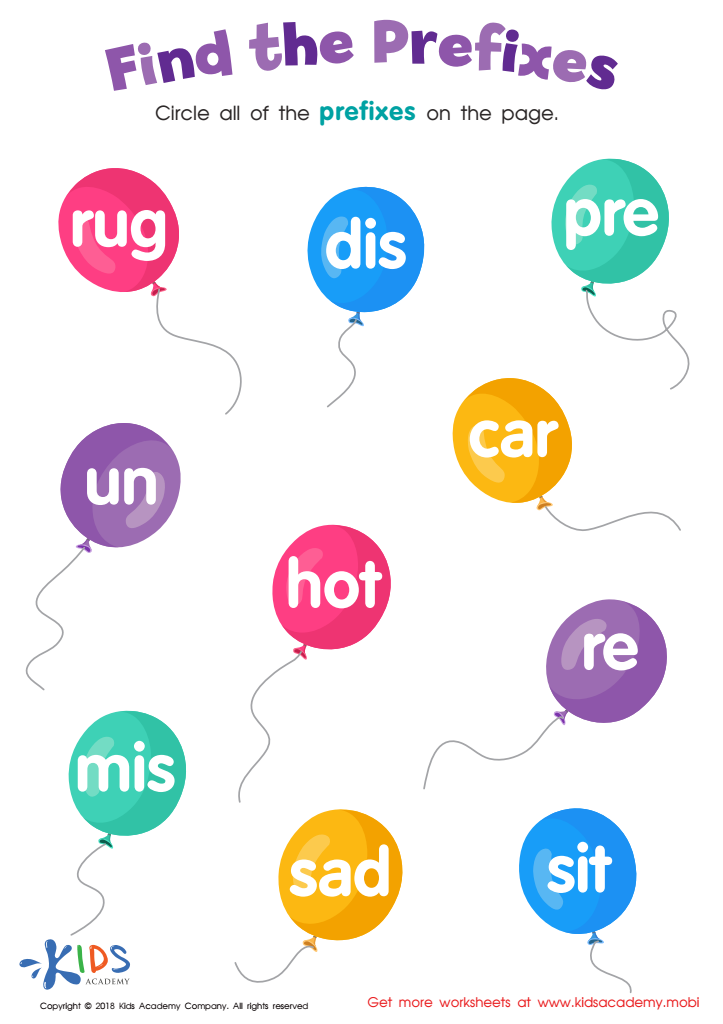
Students are asked to circle all prefixes on this worksheet and brainstorm a list of words that have them. It's a great tool for teaching vocabulary and helps students understand new and unfamiliar words by recognizing how prefixes change meaning.
Reading: Find the Prefixes Worksheet
Worksheet
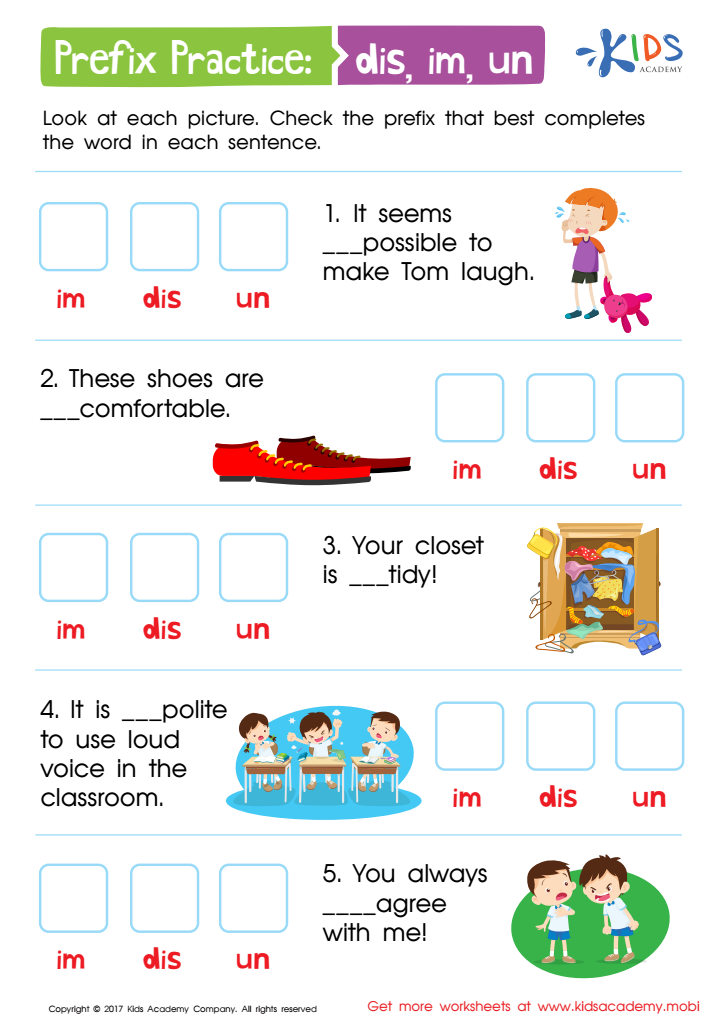
Prefix practice worksheet: DIS, IM, UN

Prefix Practice Worksheet: DIS, IM, UM
This PDF worksheet entertains while helping kids build language skills! Using funny illustrations and context clues, they'll pick the right prefix (DIS, IM, UN) to complete the root words. It's a fun way to practice and expand your child's vocabulary.
Prefix Practice Worksheet: DIS, IM, UM
Worksheet
Prefix Re- Worksheet

Prefix Re- Worksheet

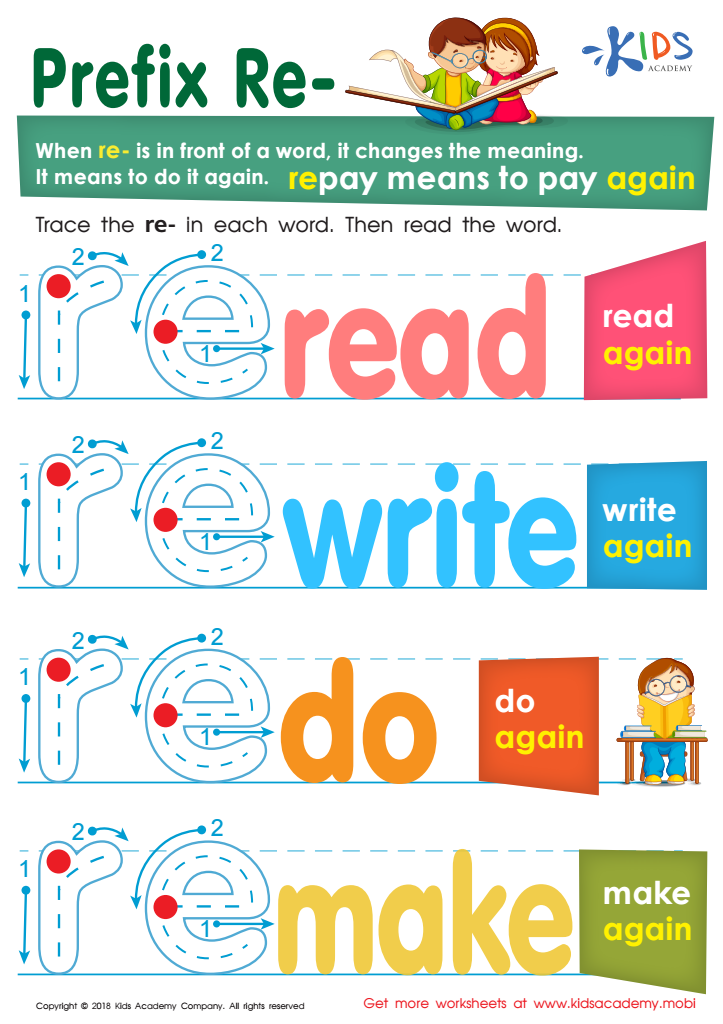
Give your child examples of the re- prefix such as repay, restart, et cetera. Hold their hand and trace the re- in each word. Read the word aloud together and explain how it changes the meaning to 'to do again'. This worksheet will help your child see the re- prefix in action.
Prefix Re- Worksheet
Worksheet


Understanding prefixes is crucial for children aged 8-9 as it significantly enhances their reading, spelling, and vocabulary skills. At this developmental stage, children's cognitive abilities are rapidly expanding, making it the ideal time to introduce them to prefixes—a key element of language.

Learning prefixes helps children break down complex words into more manageable parts, aiding comprehension. For instance, knowing that "un-" means "not" or "the opposite of" can help them grasp the meaning of words like "unhappy" or "unkind" without needing to consult a dictionary. This ability to decode words independently nurtures their confidence and encourages a love for reading.

Furthermore, understanding prefixes allows children to expand their vocabulary systematically. They begin to recognize patterns in different words, which improves spelling and supports their ability to guess meanings, making learning new words less daunting and more enjoyable.

For teachers, integrating prefix lessons can make language instruction more efficient and targeted. For parents, reinforcing this knowledge at home encourages better literacy habits and can turn everyday conversations into learning opportunities. Thus, grasping prefixes isn't just an academic exercise; it's a foundational skill that supports lifelong learning and communication.