
Categorization skills Normal Math Worksheets for Ages 8-9
3 filtered results
Difficulty Level
Grade
Age
-
From - To
Subject
Activity
Standards
Explore our engaging Categorization Skills Normal Math Worksheets for ages 8-9! These comprehensive resources are designed to enhance children's mathematical understanding through hands-on practice. These worksheets focus on grouping and categorizing objects, numbers, and shapes, promoting critical thinking and organizational abilities. Ideal for reinforcing classroom learning or for effective home study, our activities cater to various learning styles and skill levels. With clear instructions and colorful designs that capture students' attention, children will enjoy developing essential math skills while having fun. Access our repository of printable worksheets today and watch your child's confidence in math soar!
Favorites
With answer key
Interactive
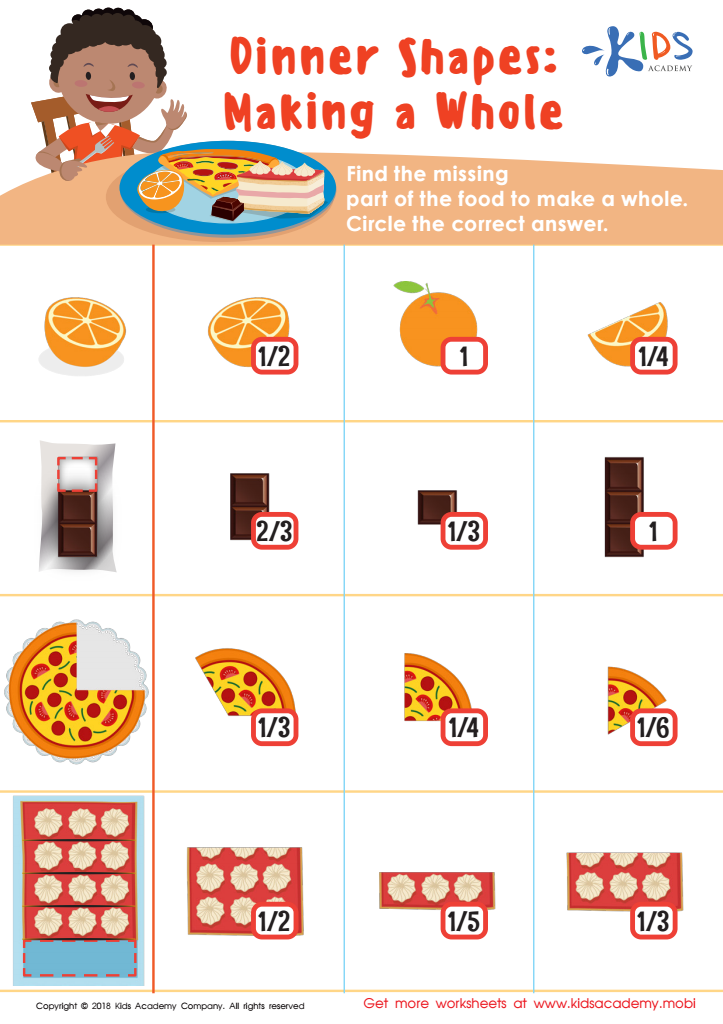
Dinner Shapes: Making a Whole Worksheet
Using food and snacks to stimulate learning and interest in topics is a great strategy. Fractions can prove tricky, but this worksheet can help your child become an expert. Have them look for the missing parts of the food to make a whole, then circle the answer.
 Assign to My Students
Dinner Shapes: Making a Whole Worksheet
Worksheet
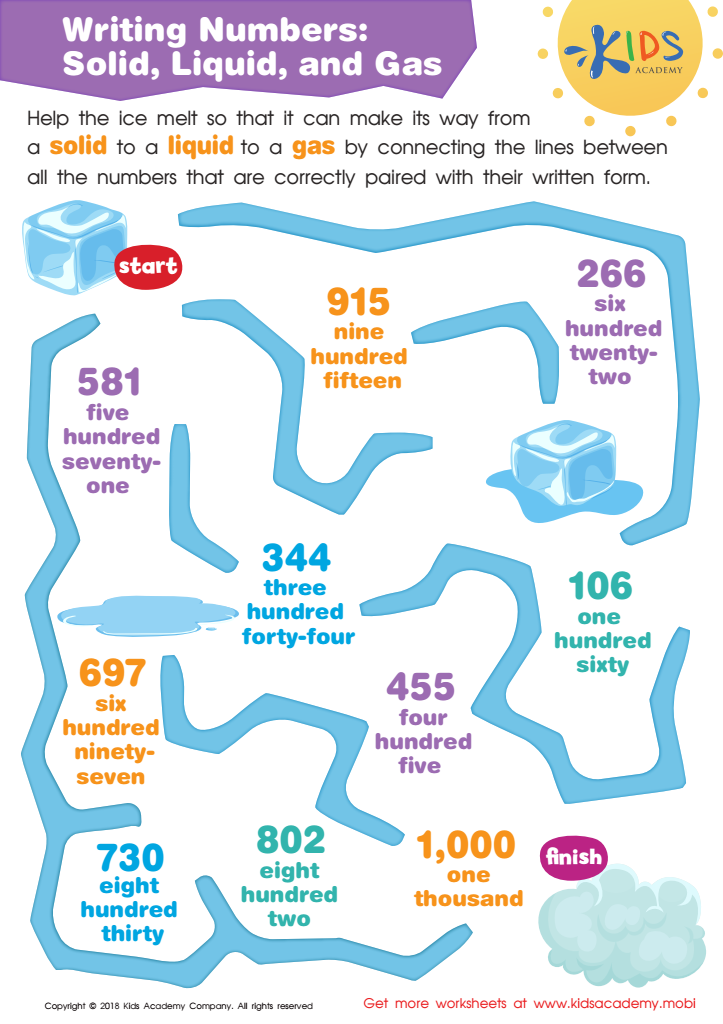
Solid, Liquid, and Gas Writing Numbers Worksheet
Your student can see the math/science connection in this fun maze! Download the PDF and help the ice melt by navigating a maze of number words and numeral representations. To the finish line! Only the paired words and numbers that match get you there.
Solid, Liquid, and Gas Writing Numbers Worksheet
Worksheet
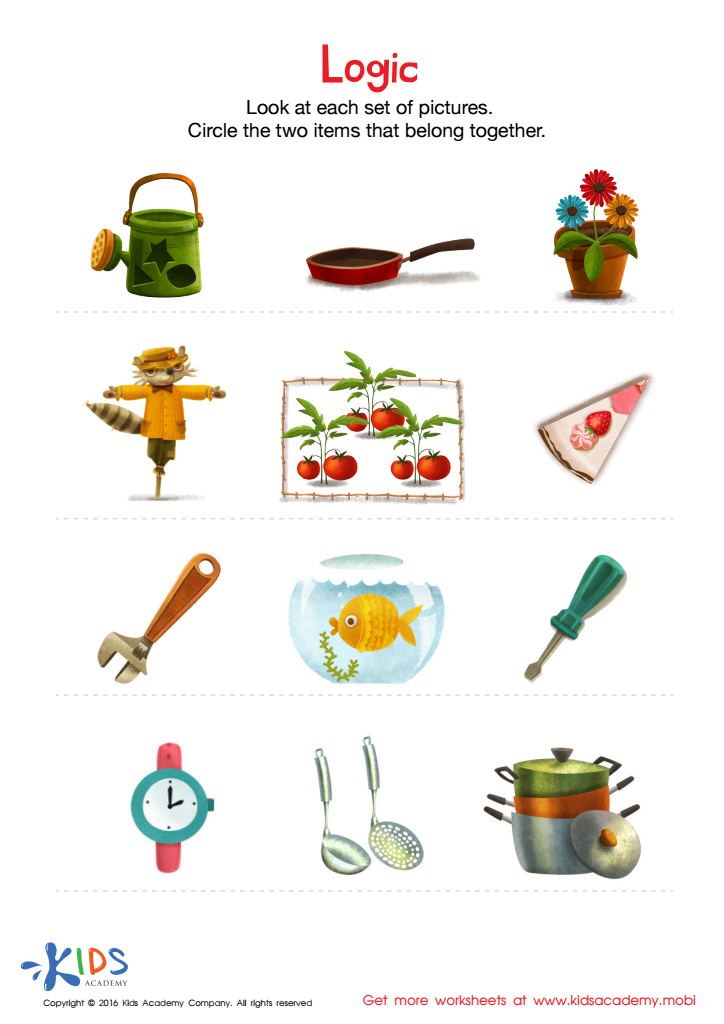
Logic Game Sorting Worksheet
Start your child's logic and reasoning development early with this fun matching worksheet! Through cute images and simple conversations, your little one can learn problem-solving, categorization, and matching skills. Plus, it's a great way for children to explore how items are used in real life. Try it and watch them boost skills with ease and fun!
Logic Game Sorting Worksheet
Worksheet
Join Kids Academy for Free
Who is primarily going to use this learning content?



%20(1).jpg)


Categorization skills play a crucial role in the development of young learners, specifically for children aged 8-9, who are transitioning into more complex mathematical concepts. At this age, students are experiencing significant cognitive growth and are beginning to understand abstraction. Teaching categorization in math helps them recognize patterns, classify objects, and think critically.
Parents and teachers should invest time in developing these skills because they serve as a foundational block for higher-order thinking and problem-solving abilities. When children learn to categorize numbers, shapes, and other mathematical elements, they build a framework that enhances their ability to make connections between various concepts. This skill enriches their understanding of topics like addition, subtraction, and geometry.
Moreover, strong categorization skills foster confidence and independence in mathematical reasoning. Children who can sort and group information are more adept at tackling complex math problems and express themselves effectively during collaborative activities. Additionally, these skills support language development as students learn to articulate their reasoning and compare characteristics.
Ultimately, prioritizing categorization skills in young learners can lead to a deeper understanding of mathematics, promoting lifelong learning and encouraging a positive attitude towards the subject. Hence, it's essential for parents and teachers to focus on this critical skill.








