Comparing Fractions Normal Math Worksheets for Ages 8-9
4 filtered results
-
From - To
Explore our engaging "Comparing Fractions Normal Math Worksheets" designed for children aged 8-9. These worksheets provide a fun and interactive way for young learners to grasp the concept of comparing fractions, helping them develop critical mathematical skills. With a variety of exercises that include visual aids, number lines, and fraction models, your child will confidently compare fractions and understand their relationships. Ideal for home practice or classroom use, our worksheets facilitate independent learning while reinforcing essential math concepts. Give your child the tools they need to succeed in math with our well-crafted, age-appropriate resources today!
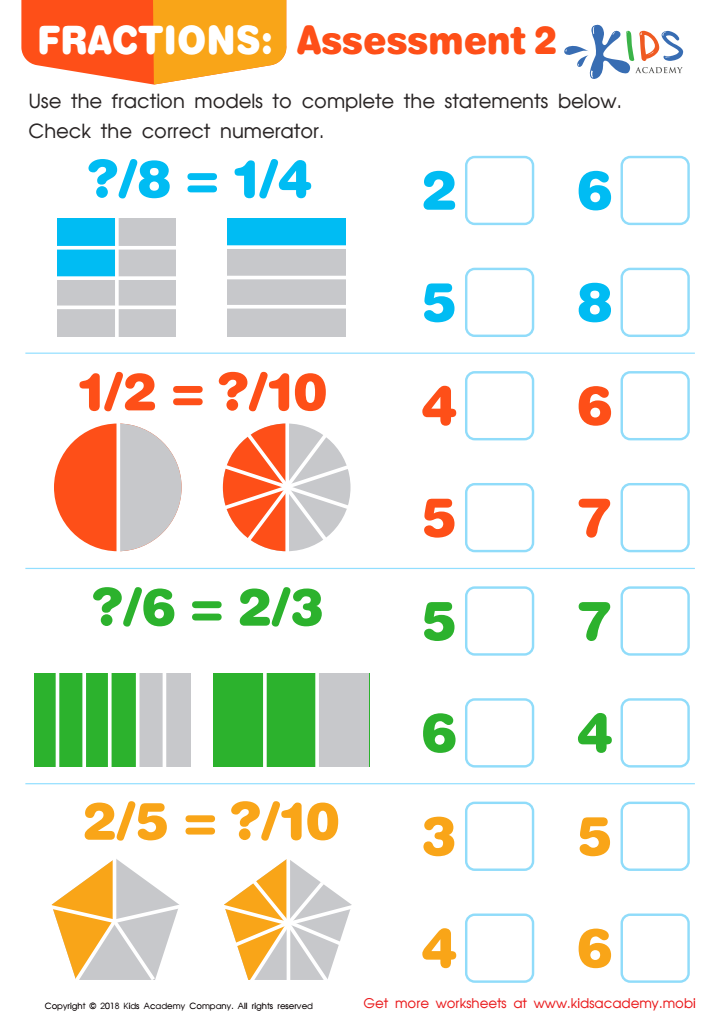
Fractions: Assessment 2 Worksheet
 Assign to My Students
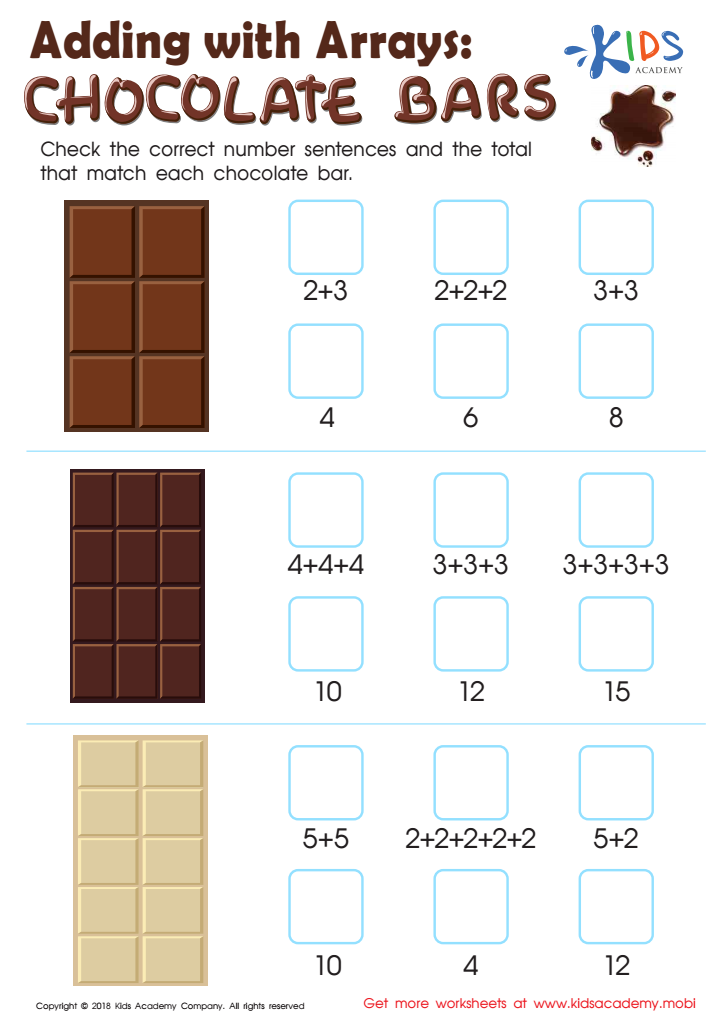
Adding with Arrays: Chocolate Bars Worksheet
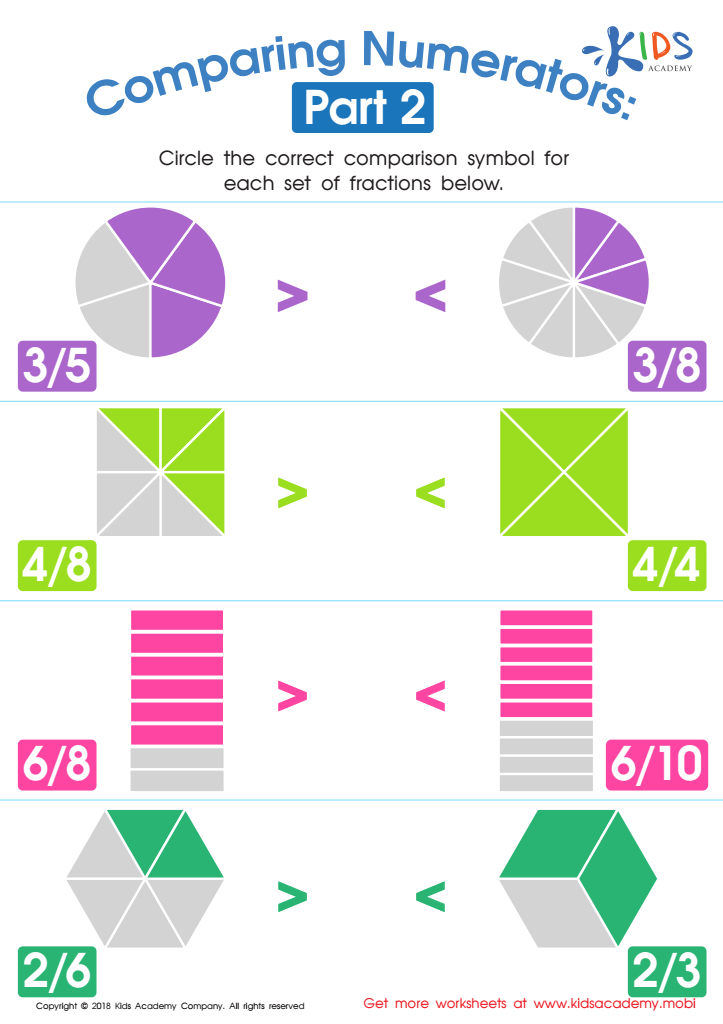
Comparing Numerators Part 2 Worksheet
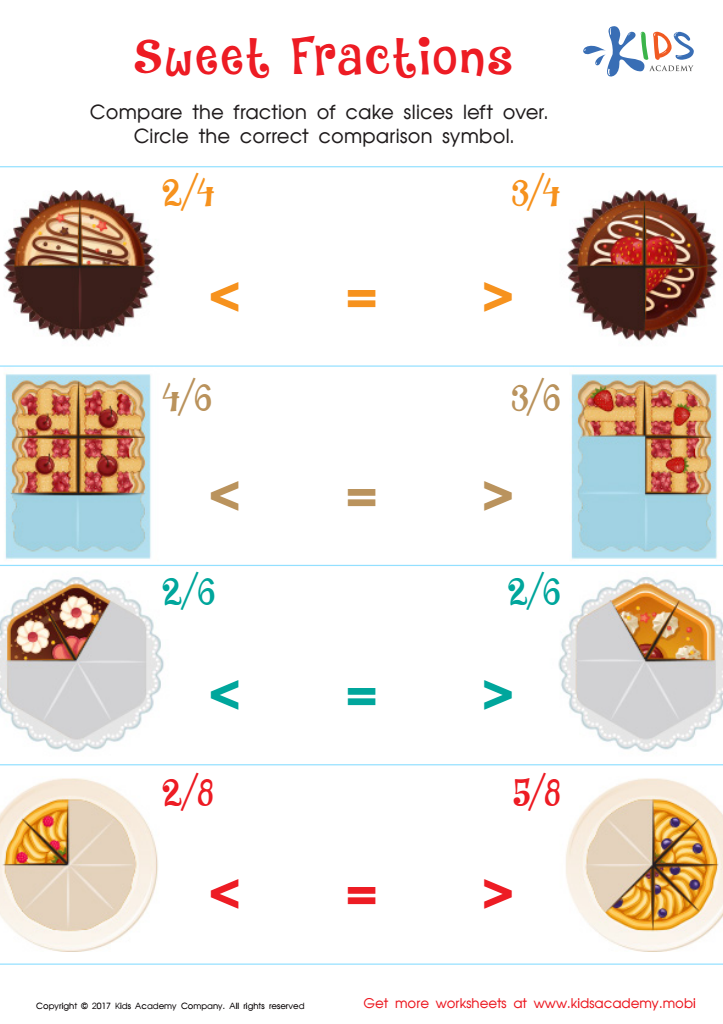
Compare Fractions Worksheet


%20(1).jpg)




Comparing fractions is a vital skill for children ages 8-9, forming a foundational aspect of their overall mathematical development. At this age, children are transitioning from concrete operations to more abstract reasoning, which makes understanding fractions essential for their future math success. By learning to compare fractions, children not only grasp concepts of size and quantity, but they also enhance their critical thinking skills.
Parents and teachers should care about this topic because it empowers children to make informed decisions in real-life situations, like cooking or sharing, where fractions are commonly encountered. Mastery of fraction comparison also supports the development of proficiency in additional math skills, such as addition, subtraction, and simplification of fractions, all of which are crucial for tackling more complex math in later grades.
Moreover, engaging children in this process fosters a positive attitude toward mathematics. When parents and teachers actively participate in discussing and practicing these skills, they build a supportive learning environment that encourages exploration and curiosity. This not only enriches the child's learning experience but also strengthens the bond between adults and children, encouraging collaboration and shared achievements in mastering math concepts. Overall, caring about comparing fractions sets the groundwork for lifelong mathematical fluency.








