Spatial awareness Normal Math Worksheets for Ages 8-9
5 filtered results
-
From - To
Enhance your child’s spatial awareness with our engaging Normal Math Worksheets designed for ages 8-9. These worksheets provide a fun and interactive way for students to explore geometric concepts, improve their problem-solving skills, and develop a strong understanding of spatial relationships. Each activity is carefully crafted to challenge and inspire young learners while building critical thinking abilities. By using these worksheets, children will gain confidence in math and develop essential skills that foster academic success. Perfect for classroom use or at-home practice, our Spatial Awareness Math Worksheets make learning exciting and effective. Download your set today and boost your child's math journey!
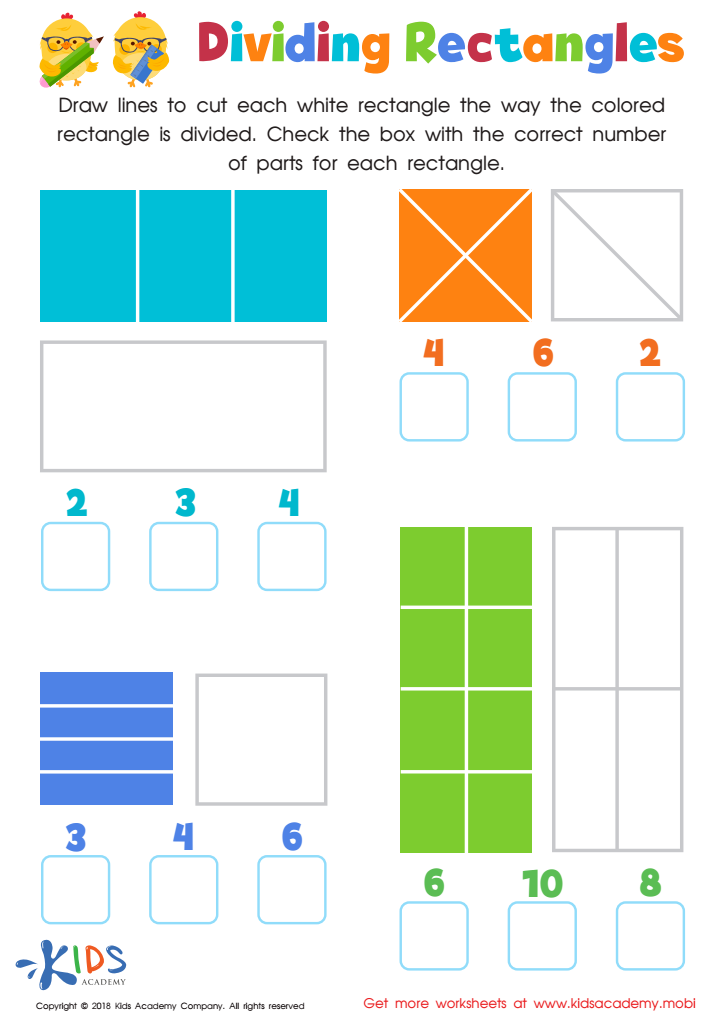
Dividing Rectangles Worksheet
 Assign to My Students
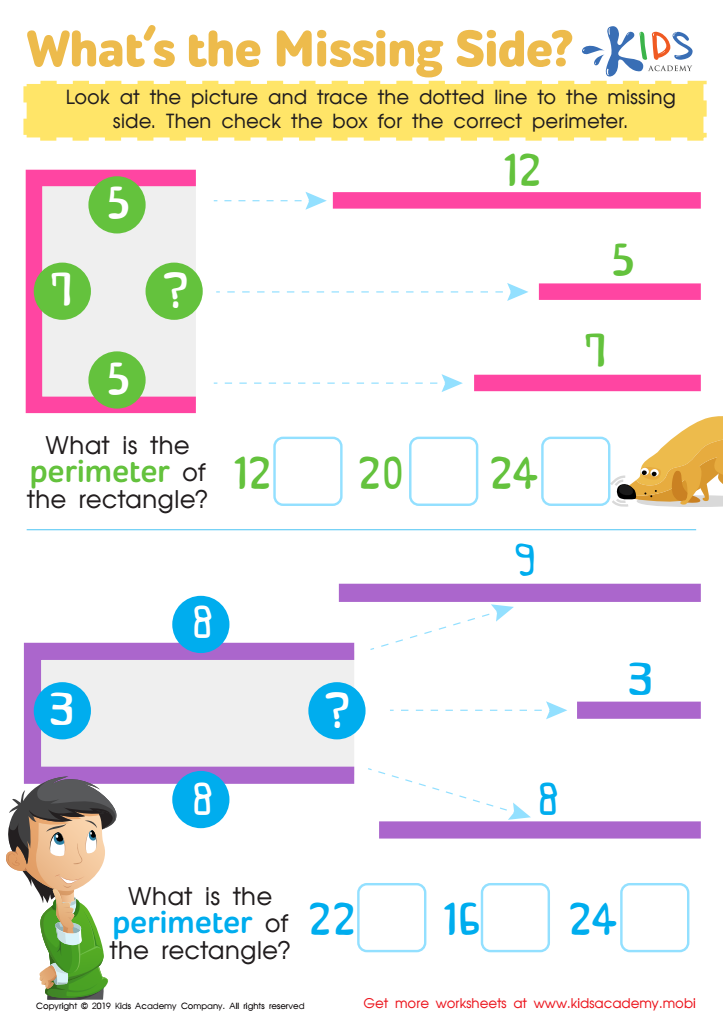
What's the Missing Side Worksheet
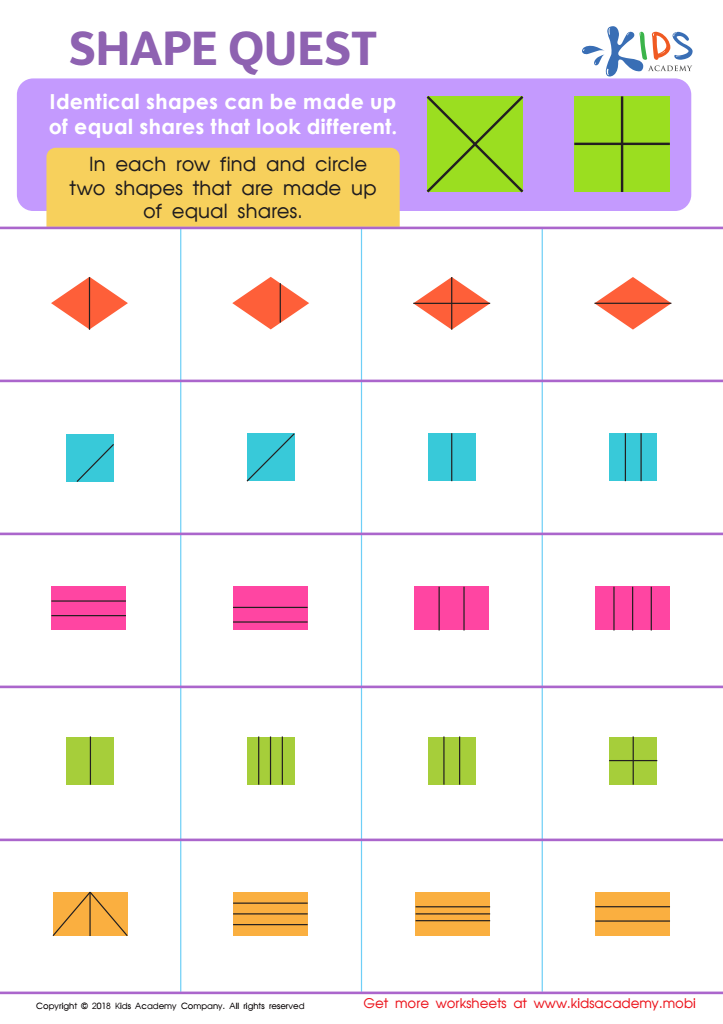
Shape Quest Worksheet
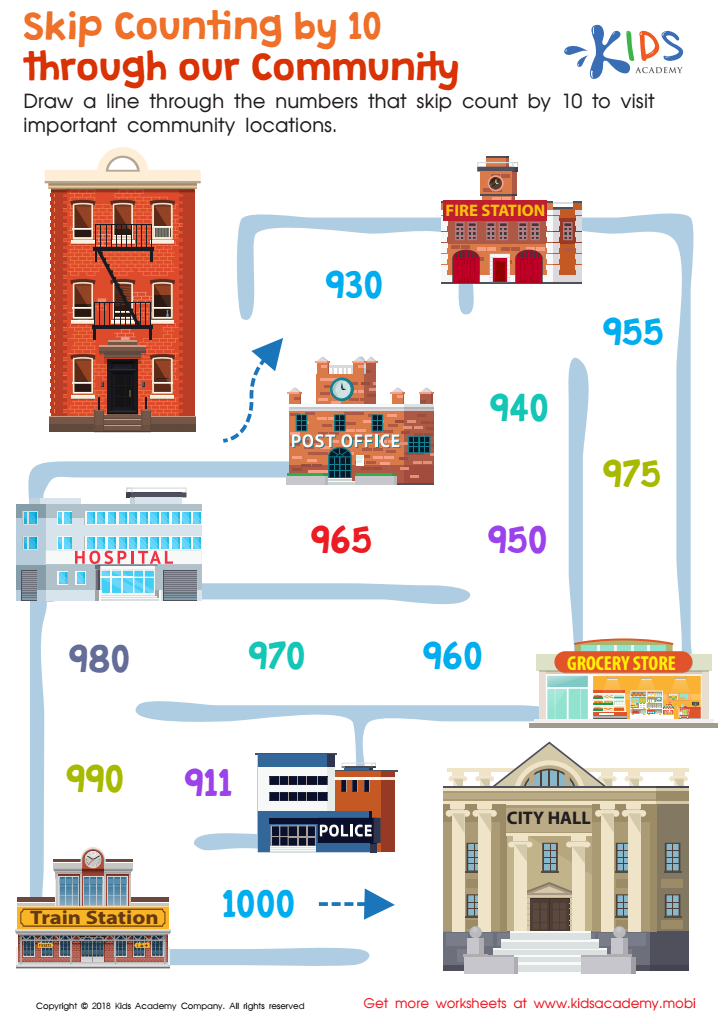
Skip Counting by 10 Through Our Community Worksheet
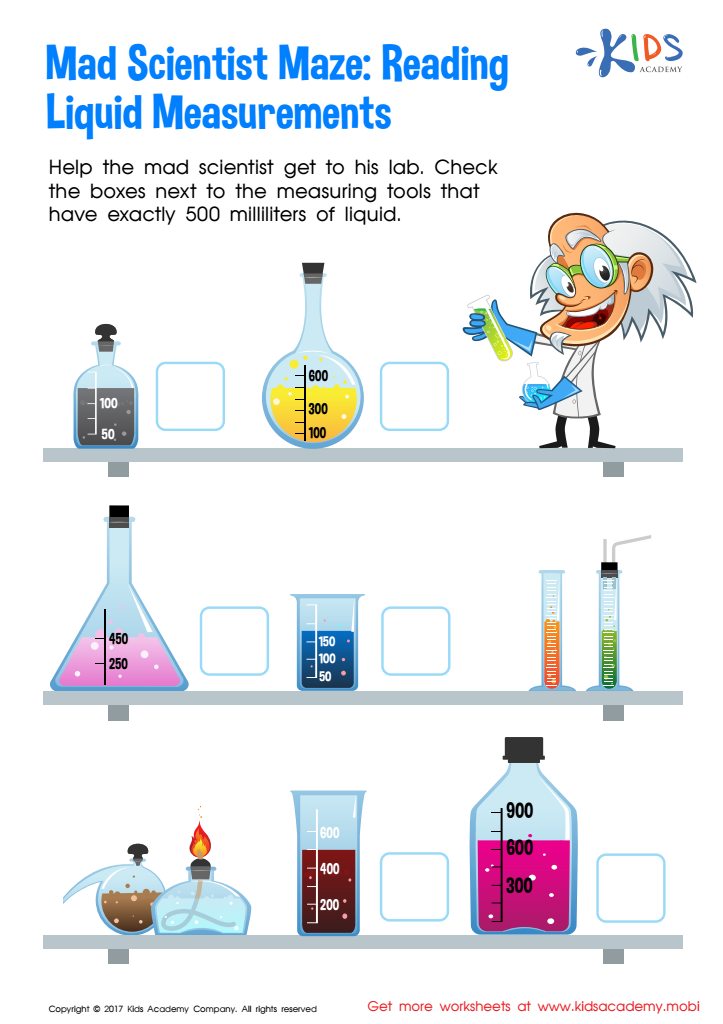
Reading Liquid Measurement Worksheet







Spatial awareness is a crucial skill developed during the early years, particularly for children ages 8-9, as it lays the foundation for more complex mathematical concepts and real-world applications. At this age, children begin to engage more deeply with geometry, understanding shapes, their properties, and how they relate to one another in space. Supporting spatial awareness enhances a child's ability to visualize and manipulate objects mentally, which is essential for recognizing patterns, measurements, and spatial reasoning that are often integral in advanced mathematics and problem-solving.
For parents and teachers, promoting spatial awareness through normal math activities is vital because it fosters critical thinking skills and boosts children's confidence in their mathematical abilities. Kids who excel in spatial reasoning are often better equipped to tackle challenges in subjects such as science, technology, engineering, and even art, where understanding dimensions and shapes plays a significant role. Additionally, enhancing these skills encourages creativity and innovation, which are essential in today's rapidly changing world.
Investing time and resources into spatial awareness not only benefits children academically but also prepares them for future academic and career success, making it a worthy focus for both parents and educators.








