Moral understanding Normal Reading Worksheets for Ages 8-9
3 filtered results
-
From - To
Discover our "Moral Understanding Normal Reading Worksheets" designed for children aged 8-9! These engaging resources help kids explore fundamental moral concepts through captivating stories and scenarios. As they read and reflect, students will enhance their comprehension abilities while learning valuable lessons about empathy, fairness, and kindness. Each worksheet encourages critical thinking and discussion, helping young learners grasp the significance of morals in everyday life. Ideal for classroom use or at-home learning, our worksheets promote both literacy and character development. Equip your students with the skills they need to navigate social interactions and build a strong moral foundation. Download now for enriching educational experiences!
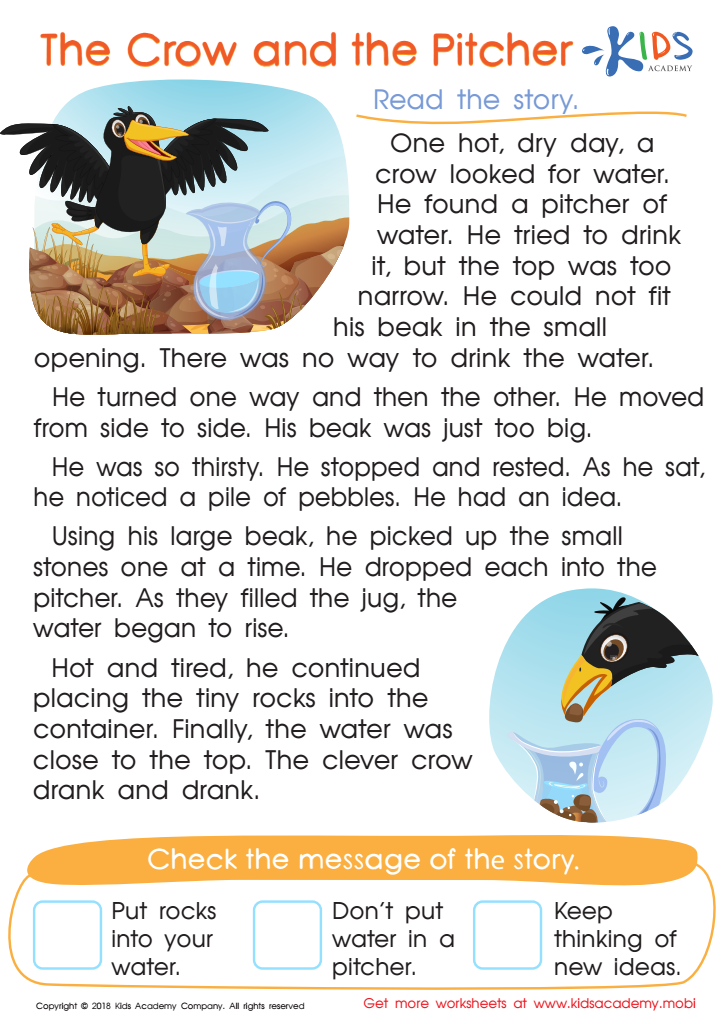
The Crow and the Pitcher Worksheet
 Assign to My Students
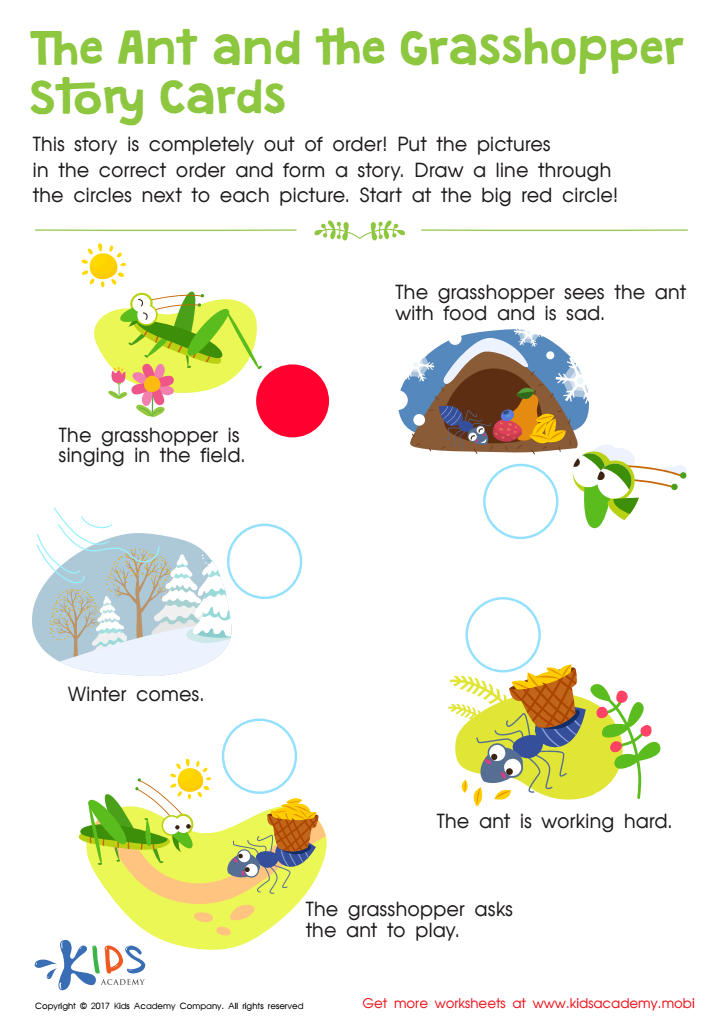
The Ant and The Grasshopper Worksheet
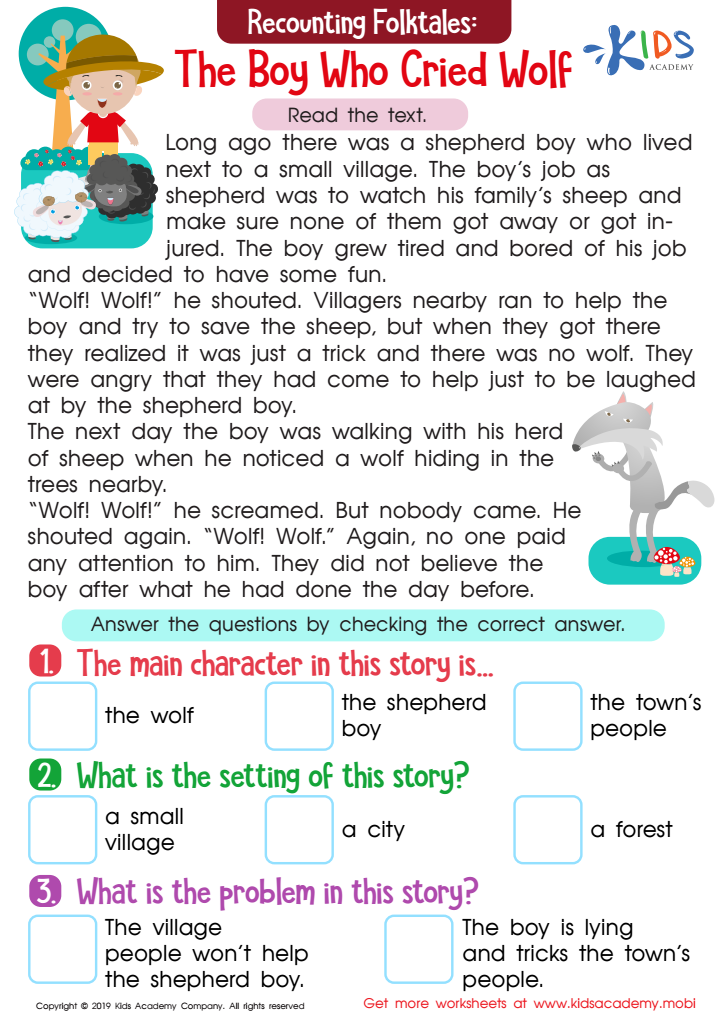
The Boy Who Cried Wolf Part 1 Worksheet



.jpg)

Parents and teachers should prioritize moral understanding in children aged 8-9 as it lays a crucial foundation for their social and emotional development. At this stage, children begin to comprehend complex concepts such as fairness, empathy, and cooperation, which are important for their interactions with peers and adults.
Moral understanding helps children distinguish between right and wrong, enabling them to make responsible choices. By engaging in discussions about moral dilemmas, teachers and parents can foster critical thinking and encourage children to consider the perspectives and feelings of others. This practice not only promotes positive behavior and decision-making but also enhances their communication skills.
Furthermore, a strong moral compass contributes to the development of resilience and self-regulation, as children learn to navigate conflicts and challenges with ethical reasoning. This is essential for creating a supportive and inclusive environment in schools and communities.
Ultimately, by nurturing moral understanding, parents and teachers help children build meaningful relationships, develop strong character traits, and establish a sense of belonging. In a world that often presents them with complex situations, equipping children with moral reasoning is invaluable for their growth into compassionate and responsible individuals.








