Phonics practice Normal Reading Worksheets for Ages 8-9
3 filtered results
-
From - To
Enhance your child's reading skills with our Phonics Practice Normal Reading Worksheets designed for kids ages 8-9. These engaging and interactive worksheets focus on essential phonics concepts, helping young readers develop their decoding and word recognition abilities. With a variety of activities that include matching sounds, rhyming exercises, and reading passages, these worksheets make learning fun while reinforcing foundational literacy skills. Perfect for classroom use or at-home practice, our phonics resources empower children to build confidence and fluency in reading. Unlock the joy of reading with these thoughtfully crafted materials tailored to meet the needs of early learners!
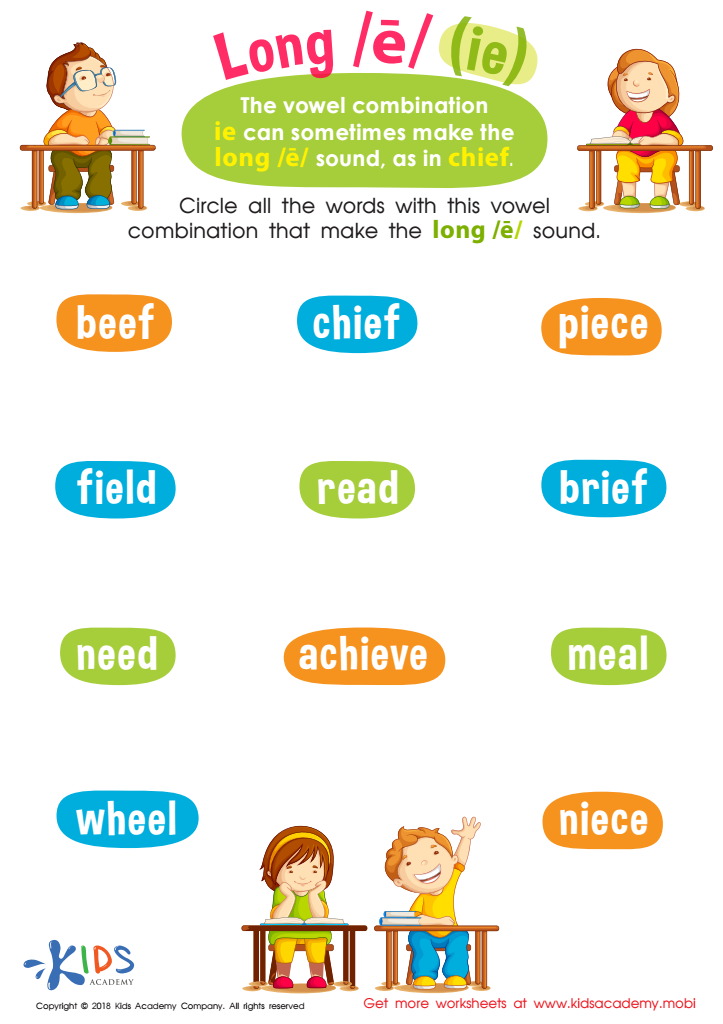
Reading: Long E and IE Worksheet
 Assign to My Students
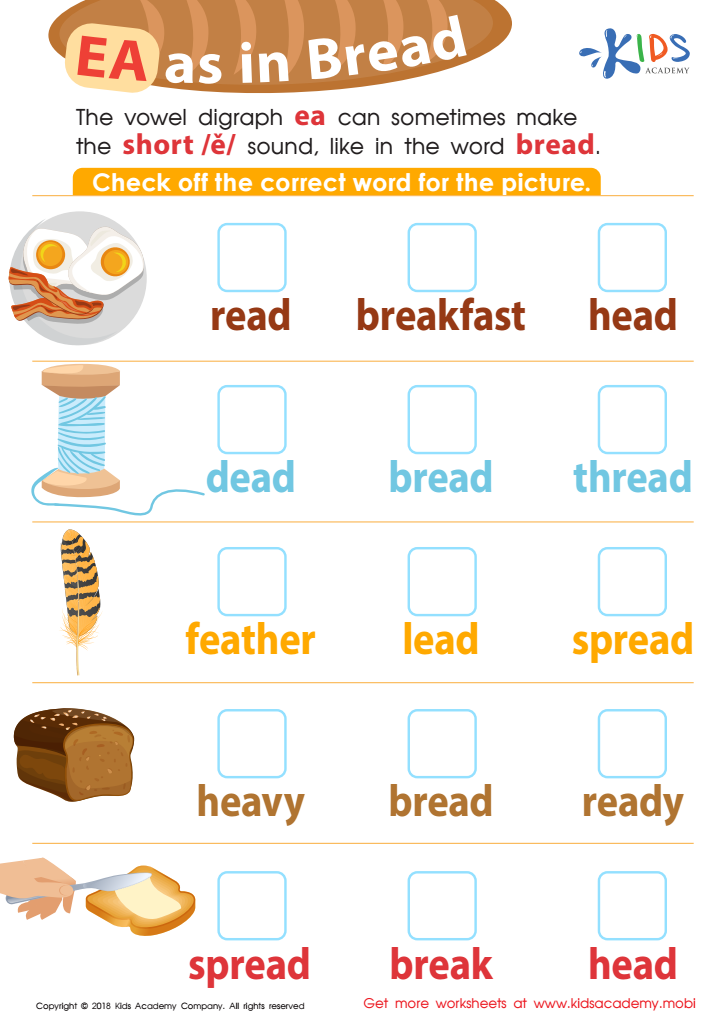
Reading: EA as in Bread Worksheet
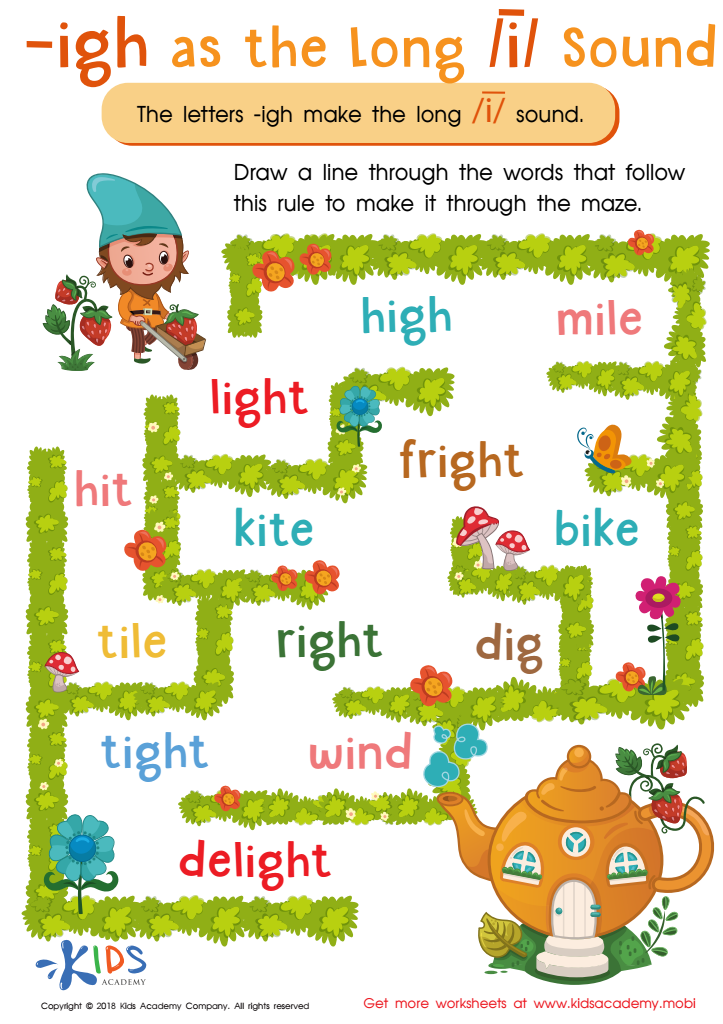
Reading: IGH as Long I Worksheet






Phonics practice is crucial for children aged 8-9 as it forms the foundation for proficient reading and overall literacy. At this age, children are transitioning from learning to read to reading to learn, and a strong phonetic awareness aids in decoding unfamiliar words. This skill not only enhances their ability to read fluently but also improves comprehension across subjects, making learning more enjoyable and effective.
Parents and teachers should prioritize phonics practice because it supports vocabulary expansion, enhances spelling skills, and fosters confidence. By mastering phonics, children can tackle more complex texts, which is essential as curriculum demands increase in upper elementary grades. Moreover, early intervention in phonics can prevent reading difficulties, ensuring that children stay engaged and motivated in their educational journey.
Investing time in phonics activities—such as games, reading exercises, and collaborative learning—can directly impact a child's academic success. Furthermore, fostering a strong partnership between parents and teachers in phonics practice can create a supportive environment, reinforcing learning at home and in school. Ultimately, prioritizing phonics during crucial developmental stages empowers children, setting a solid foundation for their academic futures.








