
Story sequencing Normal Reading Worksheets for Ages 8-9
4 filtered results
Difficulty Level
Grade
Age
-
From - To
Subject
Activity
Standards
Enhance your child’s reading skills with our engaging "Story Sequencing Normal Reading Worksheets for Ages 8-9." These thoughtfully crafted worksheets are designed to help young learners understand the logical order of events within a story. By rearranging sentences and paragraphs, children develop critical thinking and comprehension skills. Our sequential storytelling exercises promote focused reading and a deeper grasp of narrative structure, enabling kids to become confident readers and expressive writers. Ideal for use at home or in the classroom, these worksheets provide practical and enjoyable practice for mastering sequencing, ensuring academic success for your 8-9-year-olds.
Favorites
With answer key
Interactive
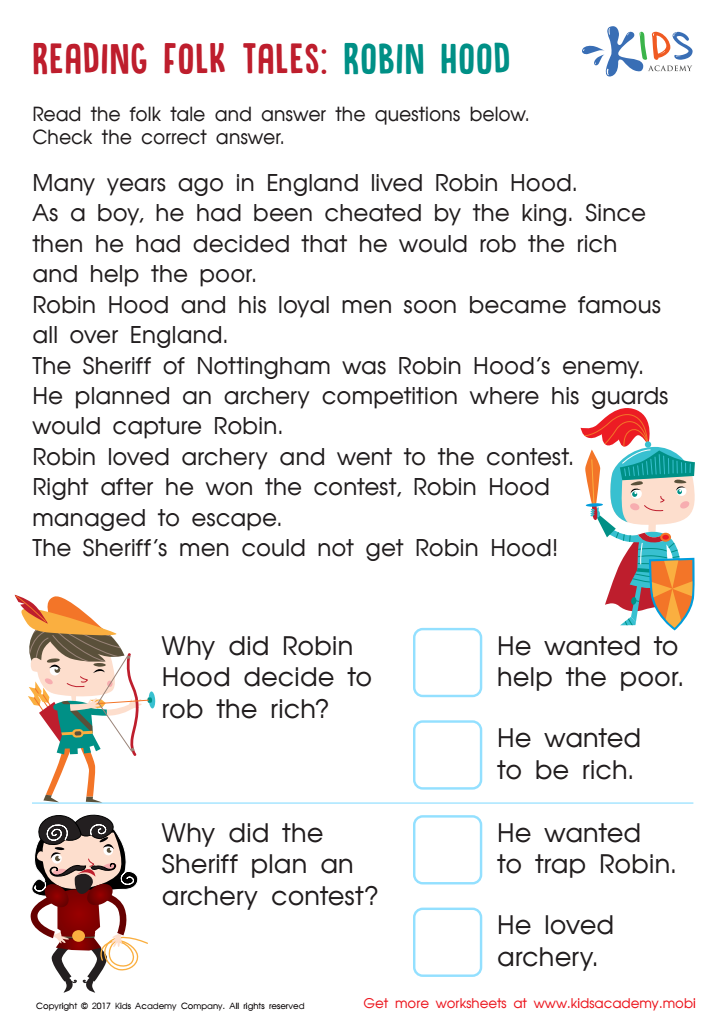
Robin Hood Folktale Worksheet
Have your child practice reading comprehension and inferencing with this Robin Hood folktale worksheet! Get them to read between the lines to find character motivation and answer important questions about the passage. It's a fun way to test their reading skills!
 Assign to My Students
Robin Hood Folktale Worksheet
Worksheet
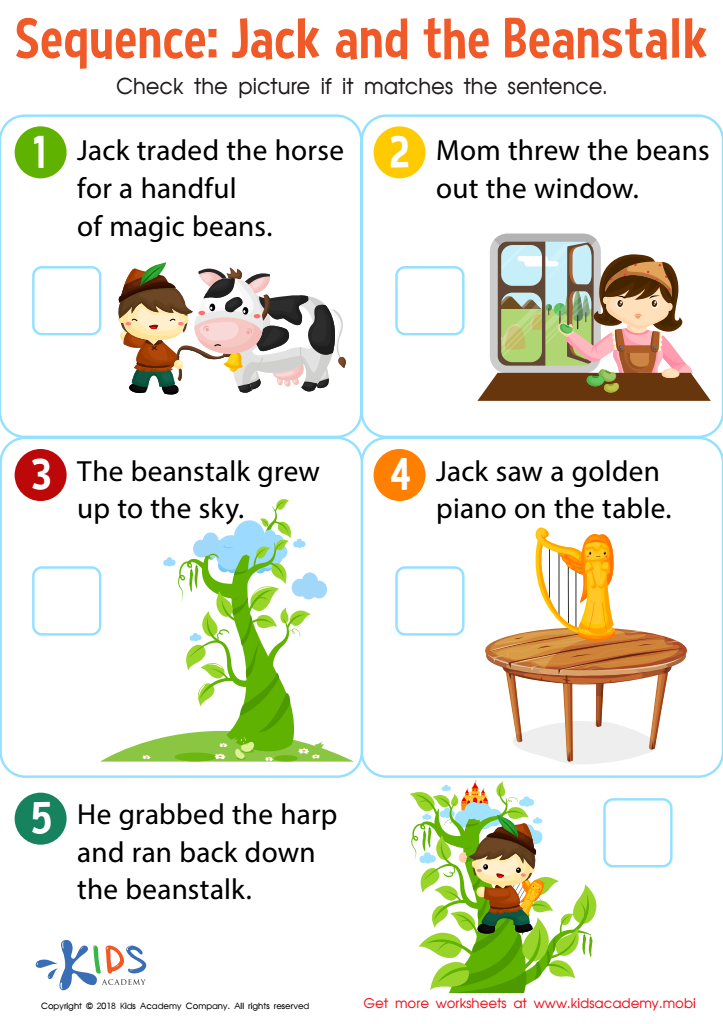
Sequence: Jack and The Beanstalk Worksheet
Ensure your kids are familiar with Jack and the Beanstalk before starting this worksheet. If not, read them the story. In the pdf, there are five pictures with sentences. Read the sentences, ask your kid if it matches the picture, then help them check if it does.
Sequence: Jack and The Beanstalk Worksheet
Worksheet
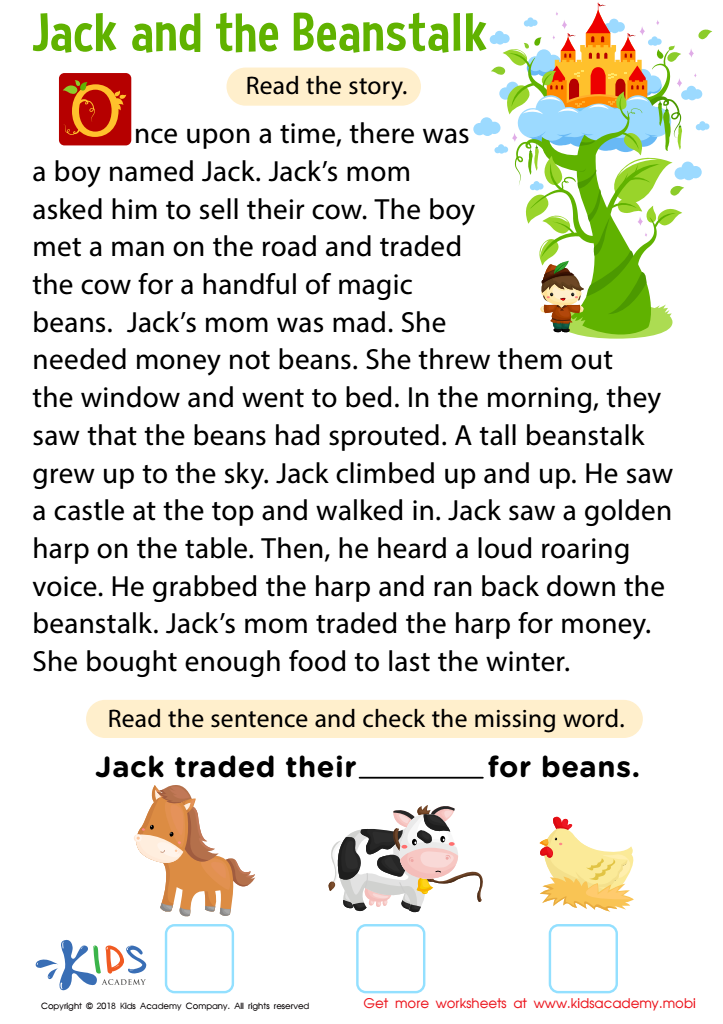
Jack and Beanstalk Worksheet
Story time can be a fun and educational experience for your kids. Read them the classic Jack and the Beanstalk - and even read it twice to help them pay attention. Afterwards, help them fill in the blank on the worksheet to expand their vocabulary and learn more from the story.
Jack and Beanstalk Worksheet
Worksheet
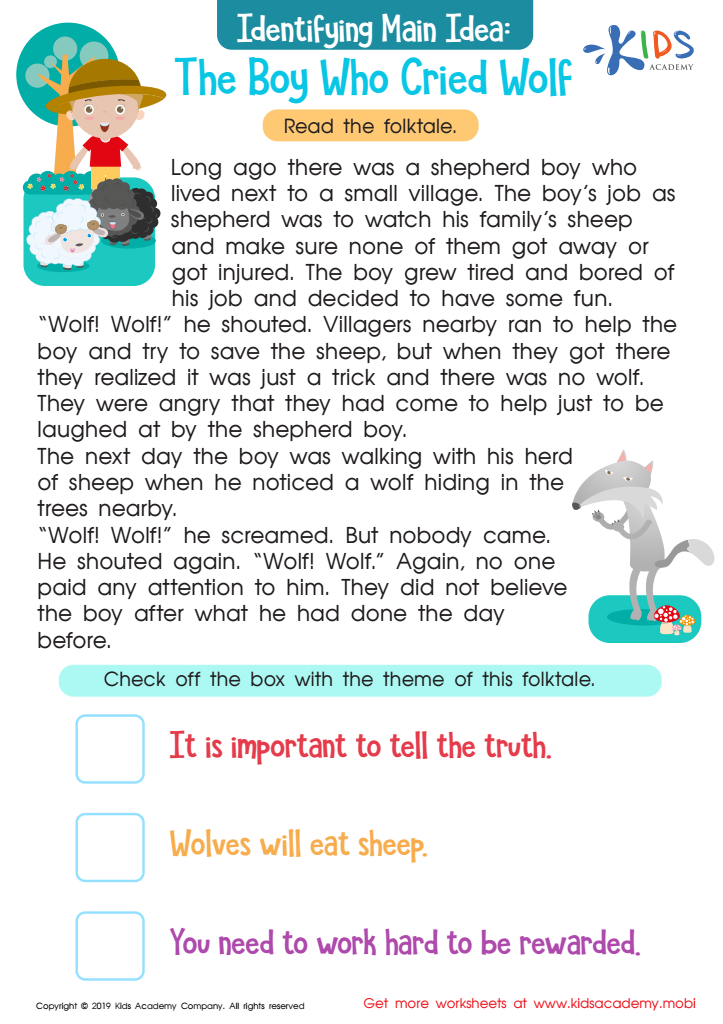
The Boy Who Cried Wolf Part 2 Worksheet
Kids love story time - no doubt they know their favorites! This worksheet tells a story with a theme or main idea. Read it carefully with your kids and ensure they understand every word. Then, help them answer the simple questions at the bottom of the page.
The Boy Who Cried Wolf Part 2 Worksheet
Worksheet
Join Kids Academy for Free
Who is primarily going to use this learning content?





.jpg)


Understanding and applying story sequencing is critical for children aged 8-9 as it supports their reading comprehension and overall learning development. Story sequencing refers to the ability to order events accurately in the narrative of a story. When kids master this skill, they grasp the framework of a plot, which is foundational for discerning cause and effect, making predictions, and comprehending more complex texts.
Parents and teachers should prioritize story sequencing for several reasons. Firstly, it promotes critical thinking and analytical skills. Knowing the correct sequence helps children break down the story into manageable parts, fostering a better understanding of the narrative structure. Secondly, it directly impacts their ability to discuss and write about texts cogently. They learn to retell stories with clarity, detail, and coherence—essential skills not only in language arts but also in broader academic disciplines.
Equally important, sequencing aids memory development. When children practice retelling narratives in sequence, it enhances their ability to recall information, leading to improved academic performance overall. Finally, nurturing this skill boosts children’s confidence as readers and learners, making reading a more enjoyable and rewarding activity. Given these benefits, emphasizing story sequencing by engaging children in activities like ordering story events and summarizing narratives is crucial for their holistic development.








