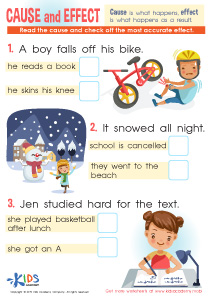
Critical Thinking Normal Reading Non-Fiction Worksheets for Ages 8-9
4 filtered results
-
From - To
Unlock your child's potential with our "Critical Thinking Normal Reading Non-Fiction Worksheets for Ages 8-9." Designed to challenge and engage young minds, these worksheets focus on enhancing critical thinking skills through exciting nonfiction passages. Your child will develop essential analytical abilities, improve comprehension, and gain a deeper understanding of the world around them. Perfect for enriching school learning and promoting independent thinking, our printable resources provide a fun and educational way to explore various topics. Equip your 8-9-year-old with the tools to think critically and confidently with our expertly crafted worksheets. Explore now at Kids Academy!
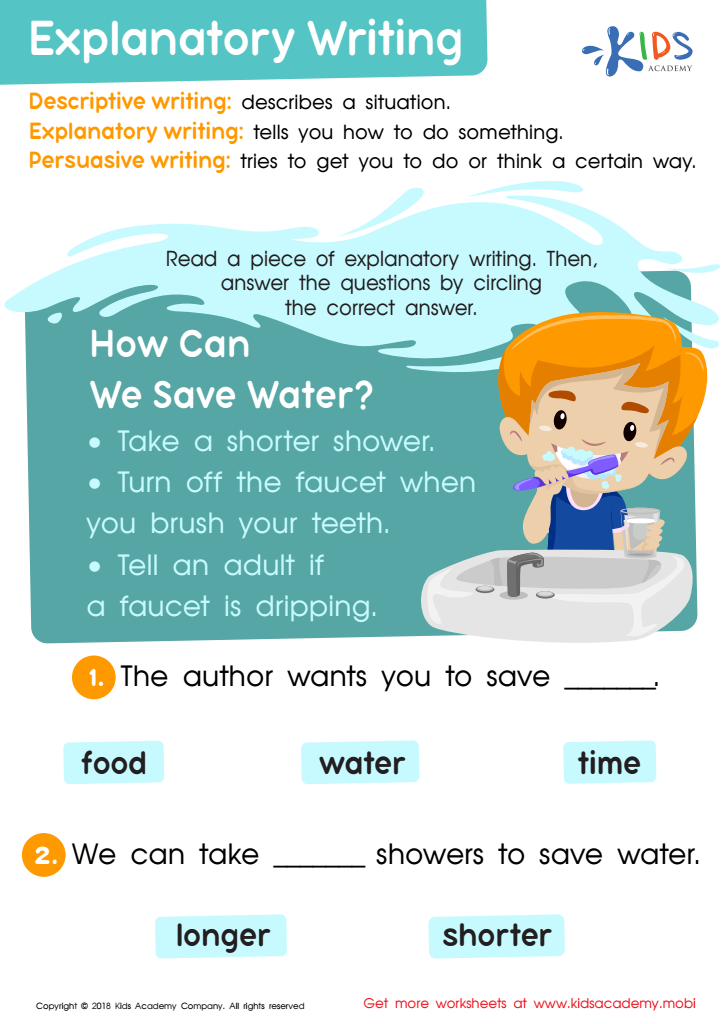
Explanatory Writing Worksheet
 Assign to My Students
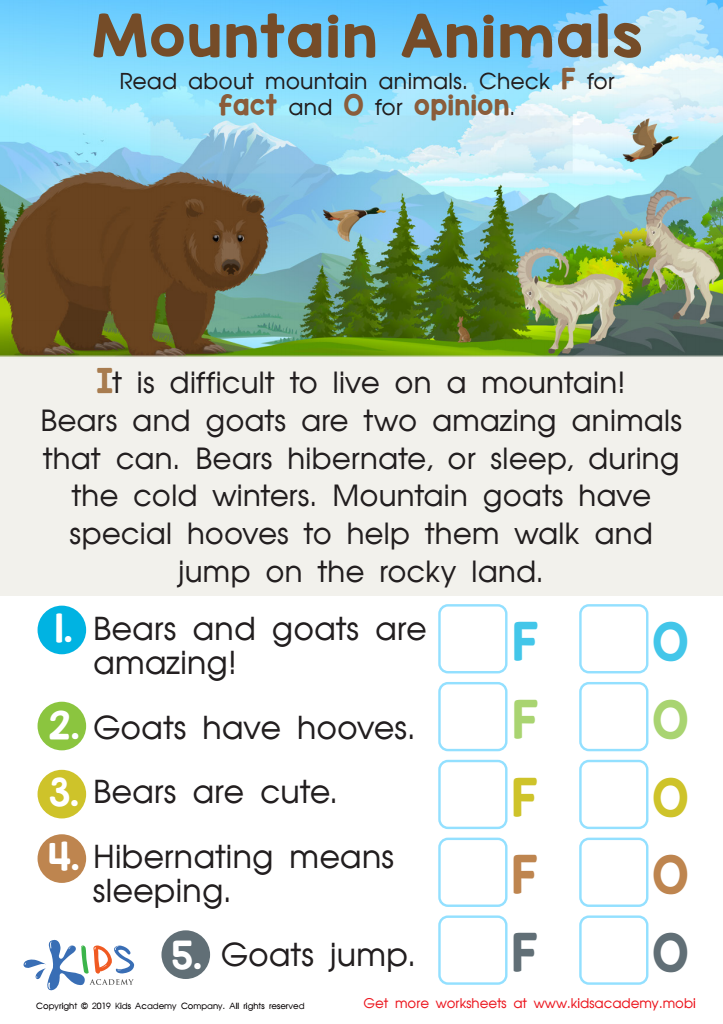
Mountain Animals Worksheet
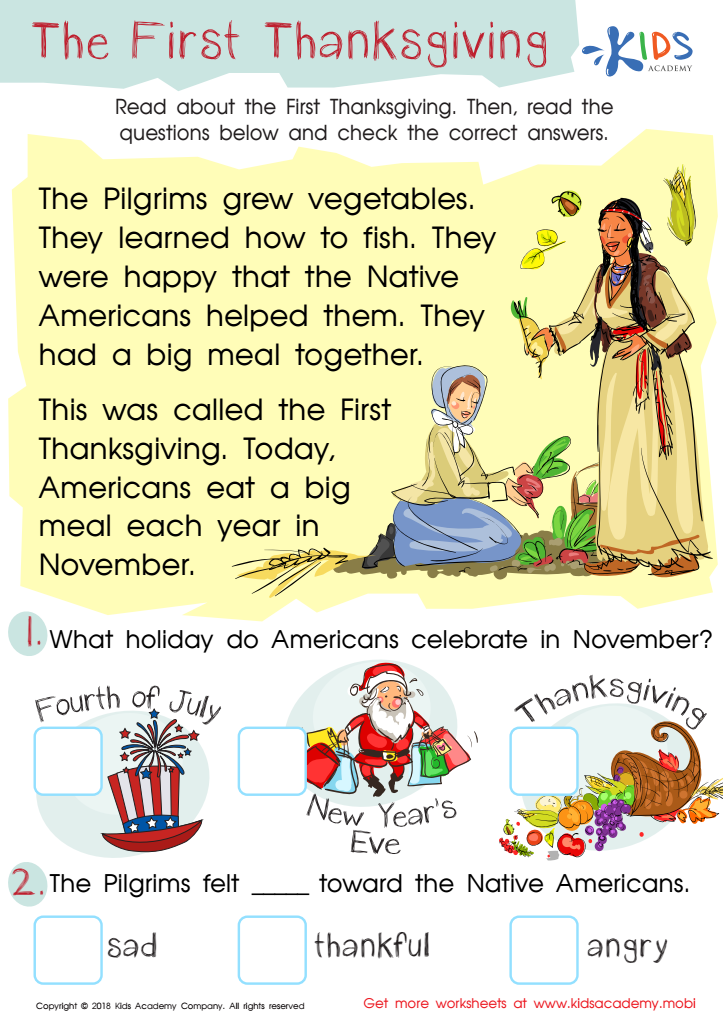
Assessment: First Thanksgiving Worksheet
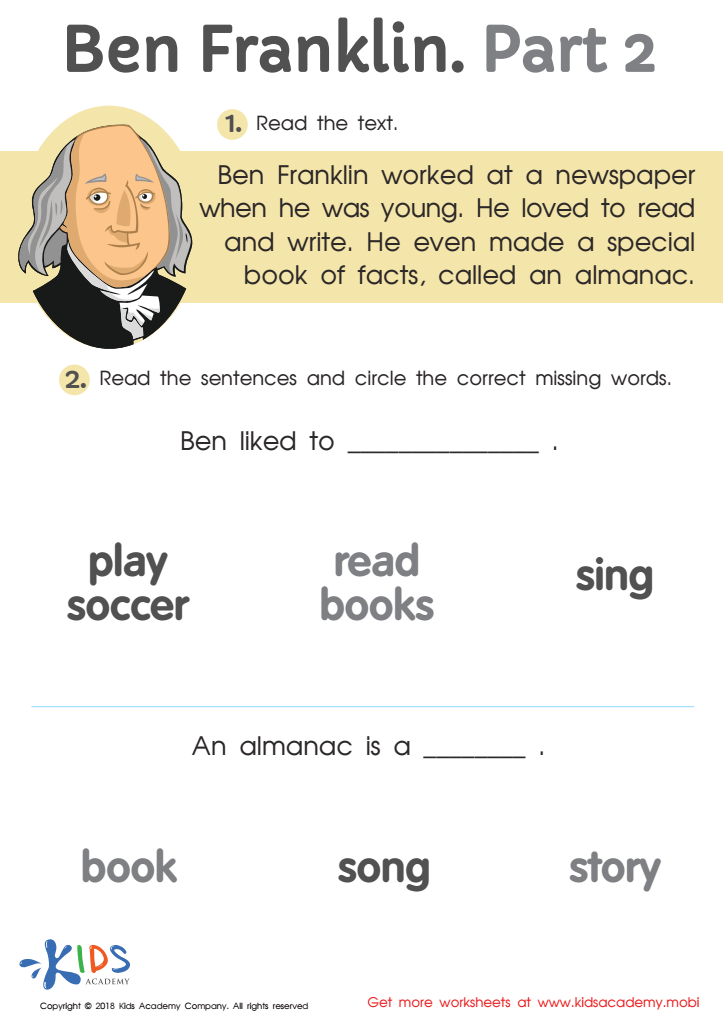
Ben Franklin Part 2 Worksheet








Critical thinking and exposure to non-fiction reading are crucial foundations for children aged 8-9, impacting their overall development and academic success. During these formative years, critical thinking fosters problem-solving skills and the ability to analyze information effectively. Children who engage in regular critical thinking are better equipped to make connections, ask questions, and understand the world around them, turning everyday observations into meaningful insights.
Non-fiction reading, in particular, plays a pivotal role. Unlike fiction, non-fiction text often introduces real-world concepts, stimulating a child's curiosity about subjects like science, history, and the arts. This genre provides factual information, helps broaden vocabulary, and enhances comprehension skills by exposing young readers to various text structures and language styles. Through non-fiction, children also learn to distinguish between opinions and facts, an essential component of critical thinking.
Parents and teachers should prioritize critical thinking and non-fiction reading as they empower children to be knowledgeable, thoughtful individuals. Students who master these skills are better prepared not only for more advanced academic endeavors but also for real-life situations. Investment in these areas promotes independent thinking, resilience, and an overall love for learning, setting a strong foundation for lifelong intellectual growth.