Comparative analysis Normal Science Worksheets for Ages 8-9
3 filtered results
-
From - To
Unlock the power of critical thinking with our "Comparative Analysis Normal Science Worksheets" designed specifically for ages 8-9. These engaging, age-appropriate worksheets help young learners to compare and contrast various scientific concepts, enriching their understanding of the natural world. Featuring interactive activities, stimulating visuals, and clear instructions, these worksheets encourage analytical skills as students explore differences and similarities across diverse scientific topics. Perfect for classroom or home use, they foster independent learning while making science fun. Empower your child's educational journey and spark their curiosity about science with our carefully crafted worksheets!
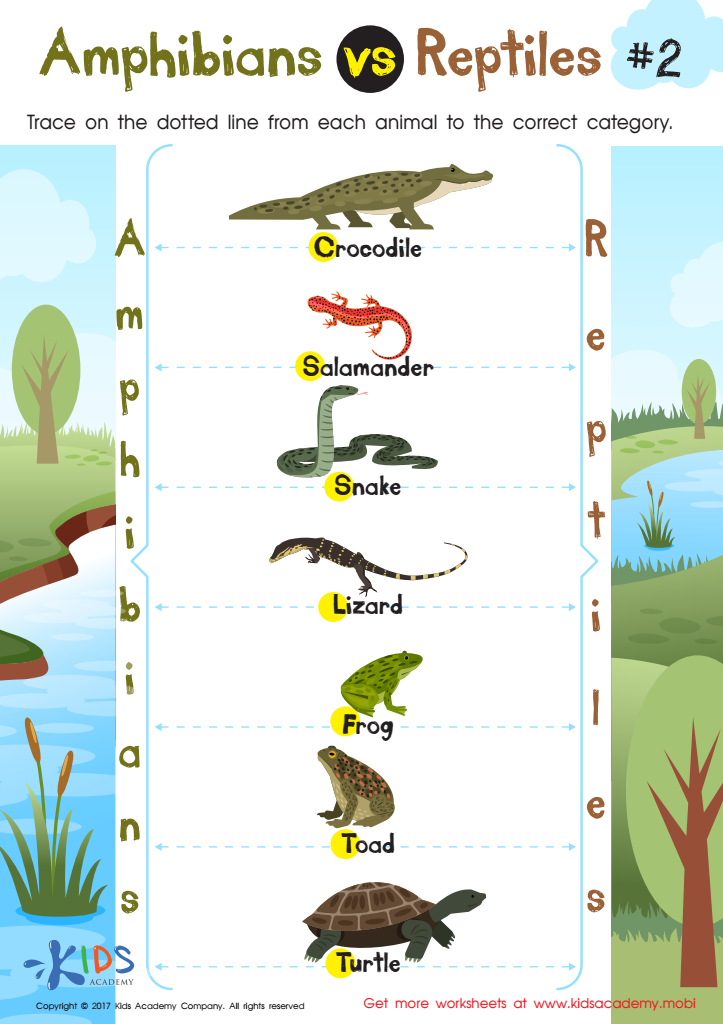
Amphibians vs Reptiles Worksheet for 3rd Grade
 Assign to My Students
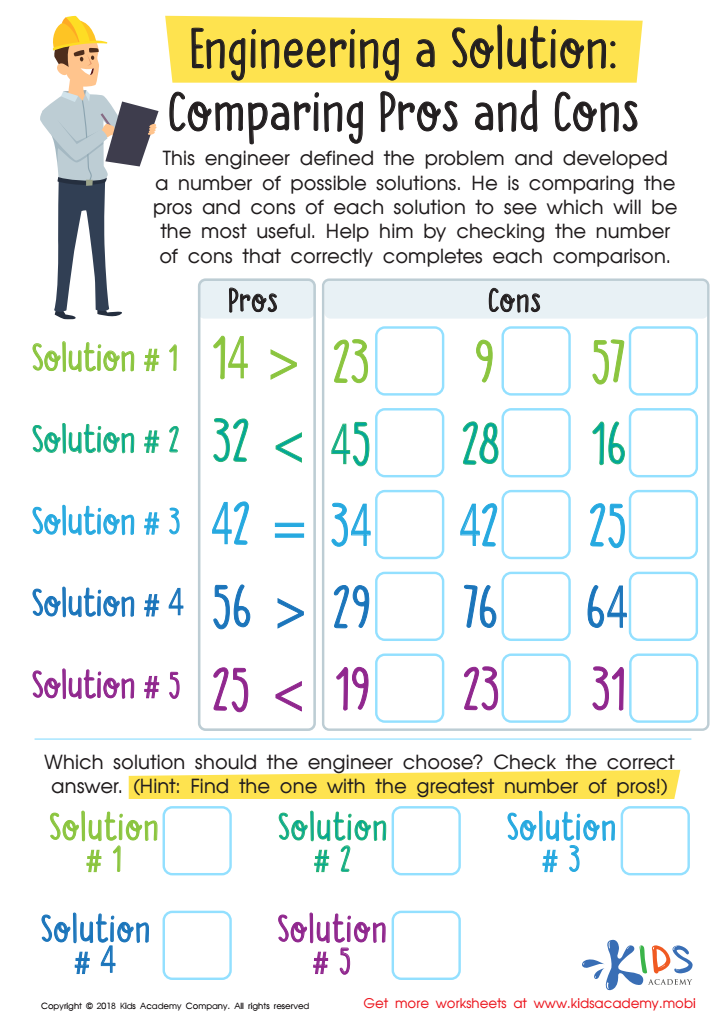
Engineering a Solution: Comparing Pros and Cons Worksheet
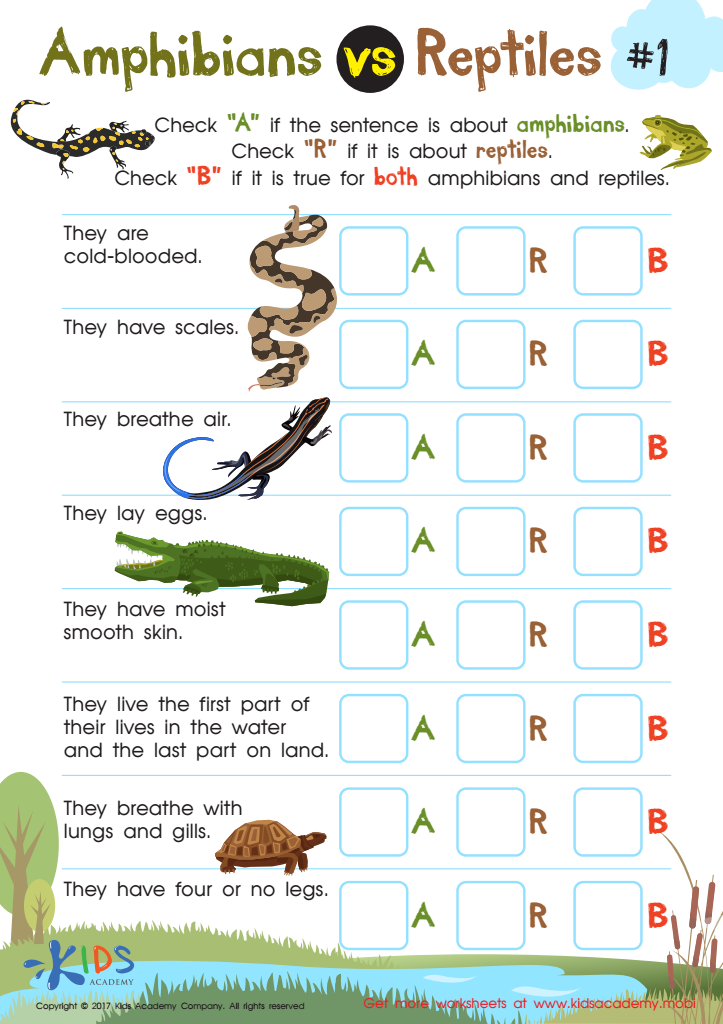
Amphibians vs Reptiles Worksheet







Comparative analysis in normal science is essential for children ages 8-9 as it fosters critical thinking and scientific literacy, skills crucial for their educational development. At this stage, children's cognitive abilities are rapidly evolving, and they become capable of observing similarities and differences in data, concepts, and phenomena. By engaging in comparative analysis, they learn to formulate hypotheses, analyze results, and draw conclusions based on evidence.
Parents and teachers should care about this approach because it nurtures curiosity and a deeper understanding of the world. Through comparative analysis, children can explore scientific principles, such as classification in biology or physical properties in chemistry, making learning not only engaging but also relevant to real-life contexts. It also promotes collaboration and communication, as children often work in groups to share findings, hence developing social skills alongside their academic ones.
Moreover, in a rapidly changing technological landscape, understanding how to assess information critically prepares children for future challenges, fostering informed and responsible decision-making. By supporting comparative analysis in science education, parents and teachers contribute to cultivating the next generation of scientists, informed citizens, and lifelong learners, ultimately enhancing the quality of their education.







