Understanding pollination Normal Science Worksheets for Ages 8-9
3 filtered results
-
From - To
Explore the wonders of pollination with our engaging Normal Science Worksheets designed for children aged 8-9! These worksheets provide an exciting way to learn about the vital role of pollinators in our ecosystem. Through interactive activities, students will discover how plants reproduce, the importance of bees and butterflies, and the process of transferring pollen. Each worksheet promotes critical thinking and enhances comprehension with vibrant illustrations and hands-on tasks. Perfect for classroom use or at-home learning, our resources make understanding pollination enjoyable and accessible. Download today and inspire your young learners to appreciate the beauty of nature and its intricate connections!
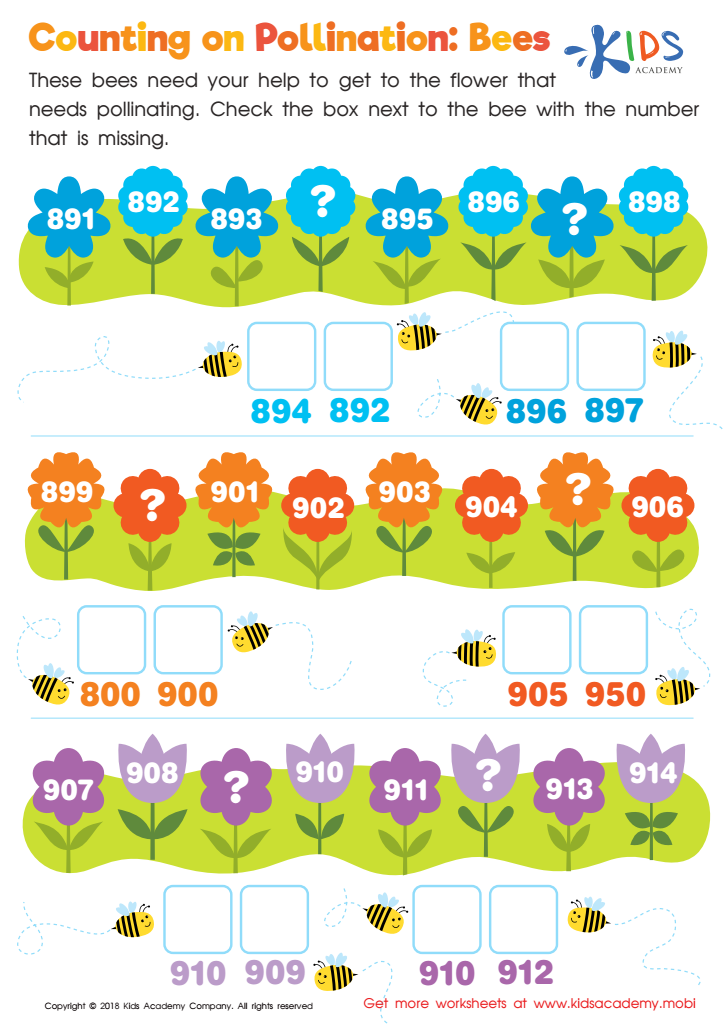
Counting on Pollination: Bees Worksheet
 Assign to My Students
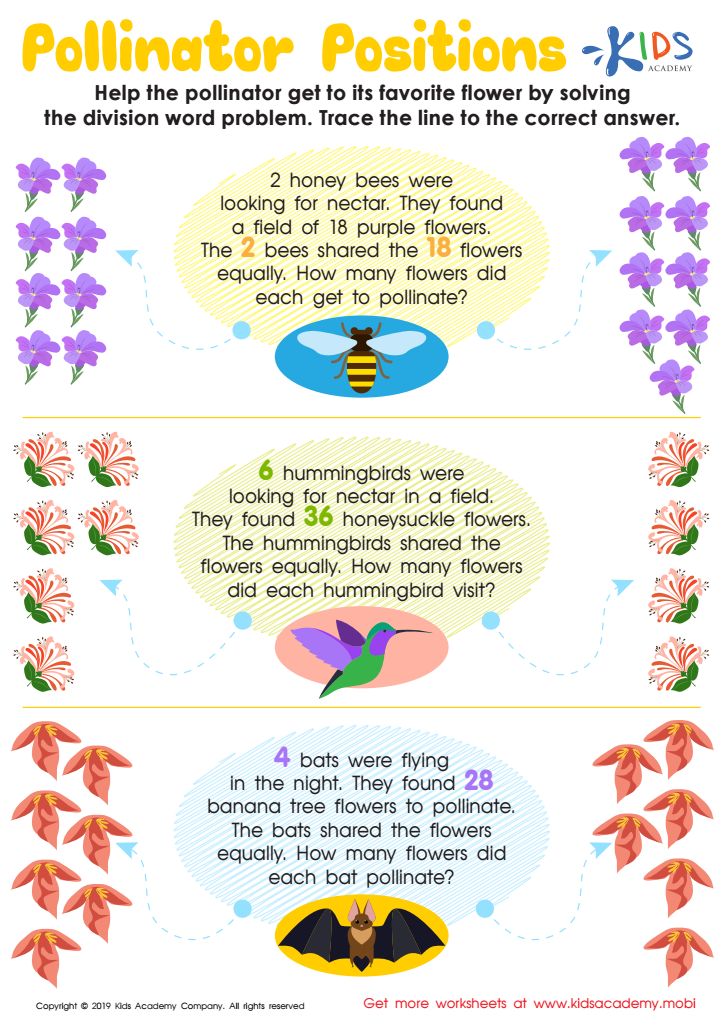
Pollinator Positions Worksheet
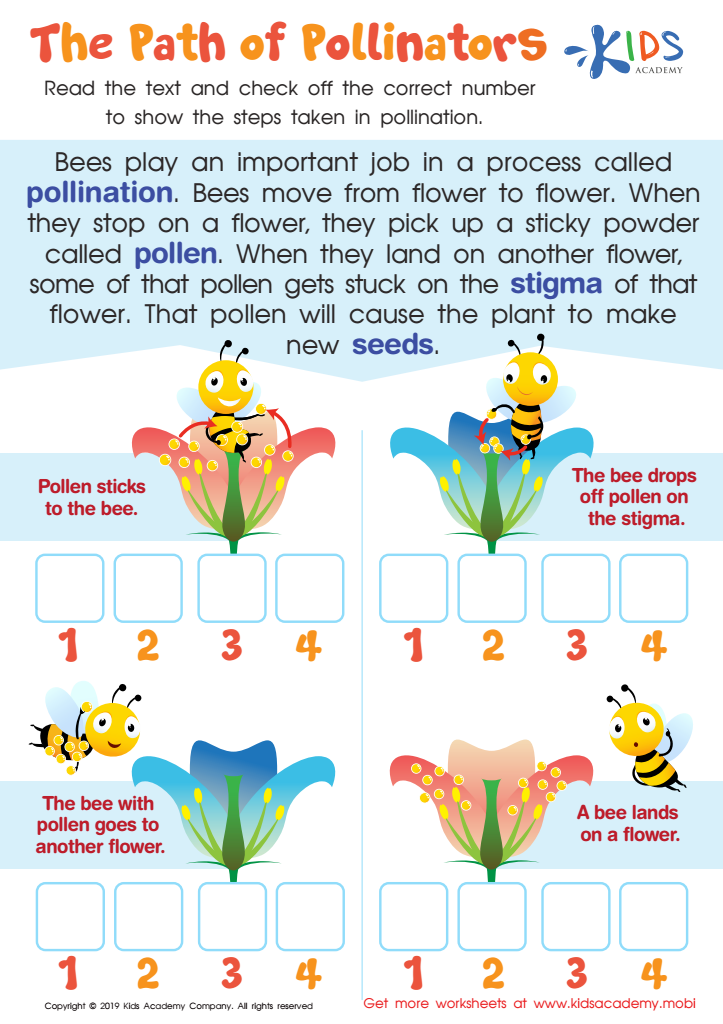
The Path of Pollinators Worksheet








Understanding pollination is crucial for children aged 8-9, as it lays the foundation for both scientific knowledge and ecological awareness. At this age, children are naturally curious about the world around them, making it an ideal time to introduce them to concepts like pollination. Parents and teachers should care because grasping this essential process helps children appreciate how plants reproduce and how insects and animals, particularly bees and butterflies, play a vital role in our ecosystem.
Learning about pollination fosters curiosity and encourages exploration in nature, helping children connect the dots between science and everyday life. It also instills an understanding of the importance of biodiversity and environmental conservation. With declining bee populations and other pollinators, discussing pollination can spark conversations about their role in food production and environmental health.
Furthermore, incorporating lessons on pollination into the curriculum promotes critical thinking, enhances observational skills, and fosters an appreciation for the interconnectedness of life. Overall, understanding pollination not only enriches children’s scientific literacy but also cultivates responsible and informed future stewards of the Earth. By engaging young learners with pollination, we empower them to think critically about environmental issues and the world they inhabit.







