Critical Thinking Normal Physical Science Worksheets for Ages 8-9
3 filtered results
-
From - To
Discover our top-rated Critical Thinking Physical Science Worksheets designed specifically for children aged 8-9. These engaging and educational resources foster curiosity, analytical skills, and problem-solving abilities through exciting, hands-on activities. Each worksheet covers essential physical science topics, aligned with grade-level standards, to enhance understanding and retention. Students will investigate, infer, and draw conclusions, building a solid foundation in scientific principles. Ideal for homeschoolers, teachers, or extra practice, our dynamic worksheets aim to ignite a lifelong love for science and critical thinking. Boost your child's confidence and skills today with Kids Academy Printable Worksheets!
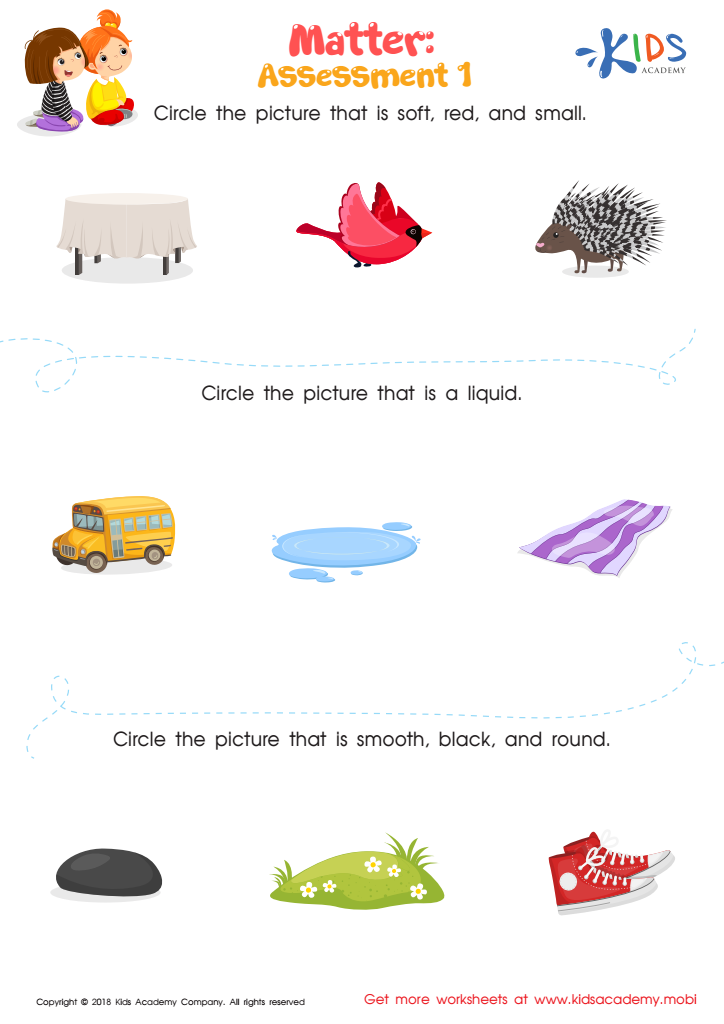
Matter: Assessment 1 Worksheet
 Assign to My Students
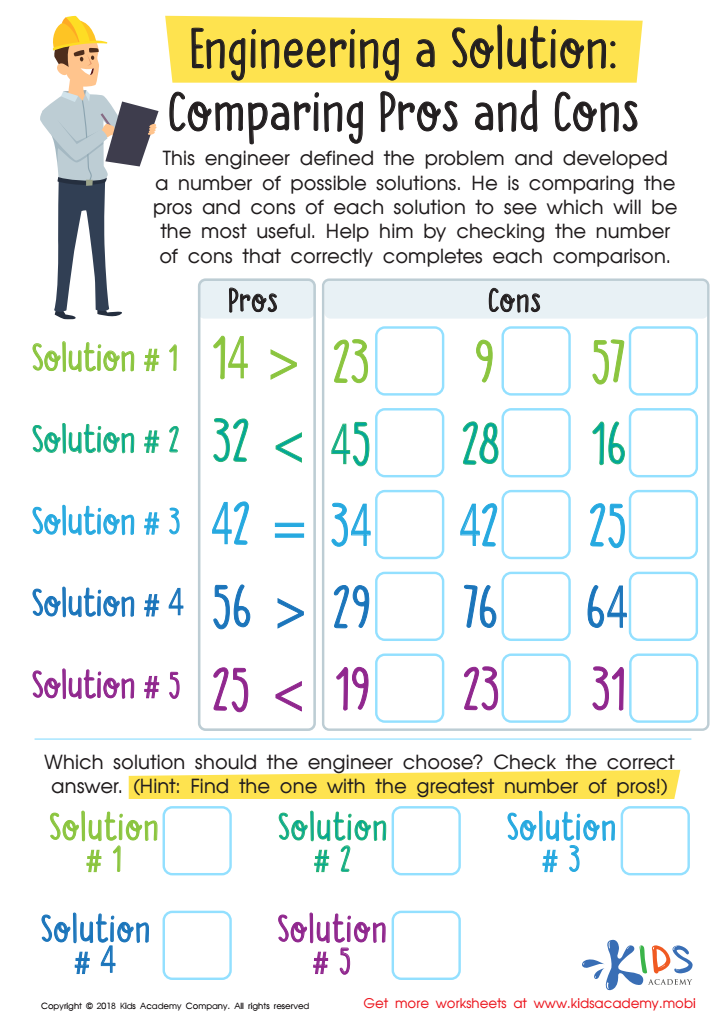
Engineering a Solution: Comparing Pros and Cons Worksheet
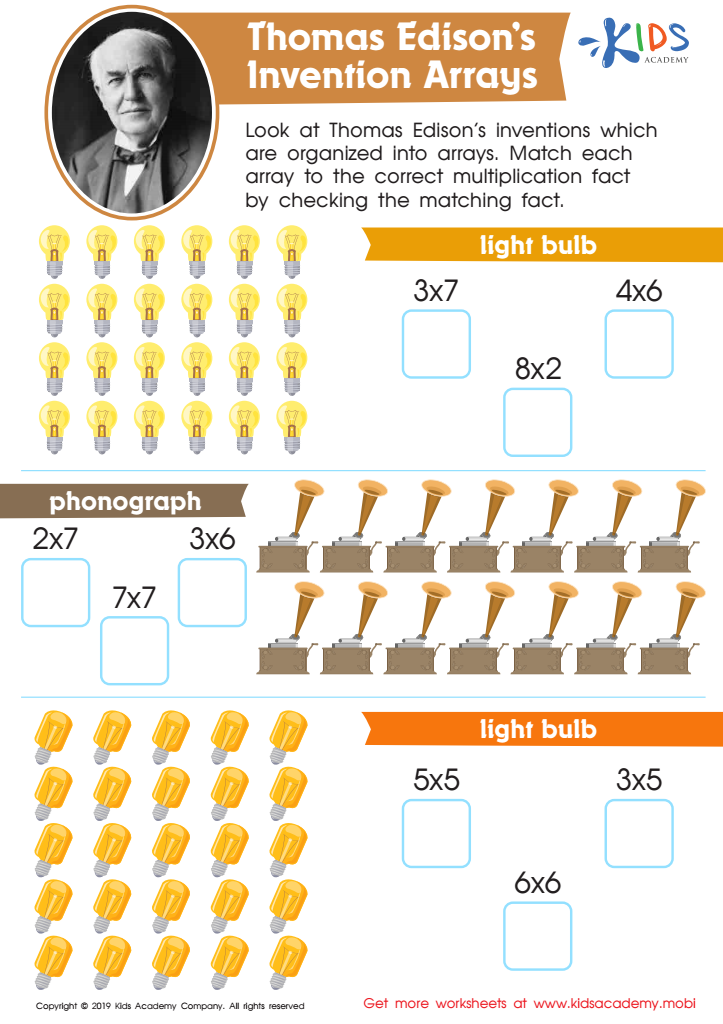
Thomas Edison’s Invention Arrays Worksheet








Parents and teachers should focus on nurturing critical thinking in physical science for ages 8-9 because these formative years are when children lay the foundation for lifelong learning and cognitive development. Critical thinking equips children with essential problem-solving skills that go beyond rote memorization. In the realm of physical science, understanding why things happen the way they do stimulates curiosity, fosters inquisitive minds, and ignites a love for learning.
Critical thinking helps young learners analyze information, identify patterns, and make well-informed decisions. It empowers children to approach challenges logically and enhances their reasoning skills. For instance, investigating physical phenomena like gravity, motion, and energy forces children to inquire, hypothesize, test, and reflect. This scientific method nurtures mental resilience, encouraging them not to shy away from difficult problems but instead view them as puzzles to be solved.
Furthermore, critical thinking in science at a young age helps connect theoretical knowledge to real-world applications, making learning relevant. Engaging in hands-on experiments and classroom discussions helps solidify concepts and fosters collaborative skills. This integrated approach enlightens students on how the world works, promoting innovation and adaptive thinking, which are crucial for future success in any field. Investing in critical thinking bolsters not only academic competence but also shapes well-rounded, intellectually capable individuals.







