Understanding pollination Normal Plants and Animals Worksheets for Ages 8-9
3 filtered results
-
From - To
Explore the fascinating world of pollination with our "Understanding Pollination: Normal Plants and Animals Worksheets" designed for children ages 8-9. These engaging worksheets provide interactive learning opportunities, helping young learners grasp the crucial role of pollinators in the ecosystem. Through fun activities and illustrations, students will delve into the process of pollination, the different types of pollinators, and their significance in plant reproduction and biodiversity. Ideal for classroom or home use, our resources foster critical thinking and scientific inquiry, making learning about plants and animals an exciting adventure. Encourage curiosity and a love for nature with these captivating worksheets today!
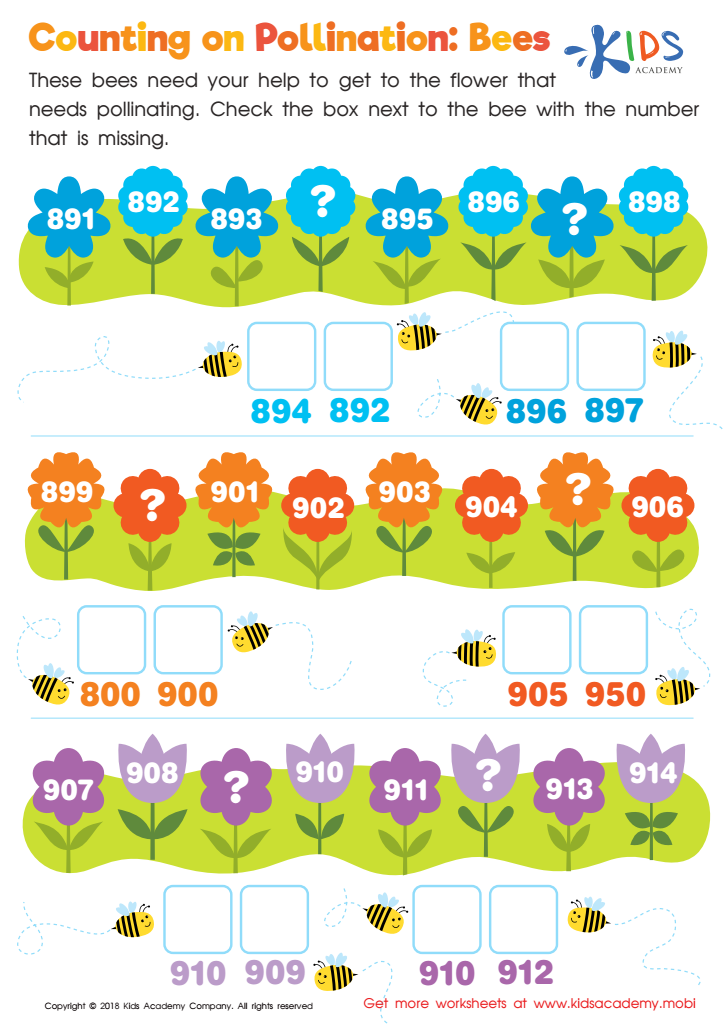
Counting on Pollination: Bees Worksheet
 Assign to My Students

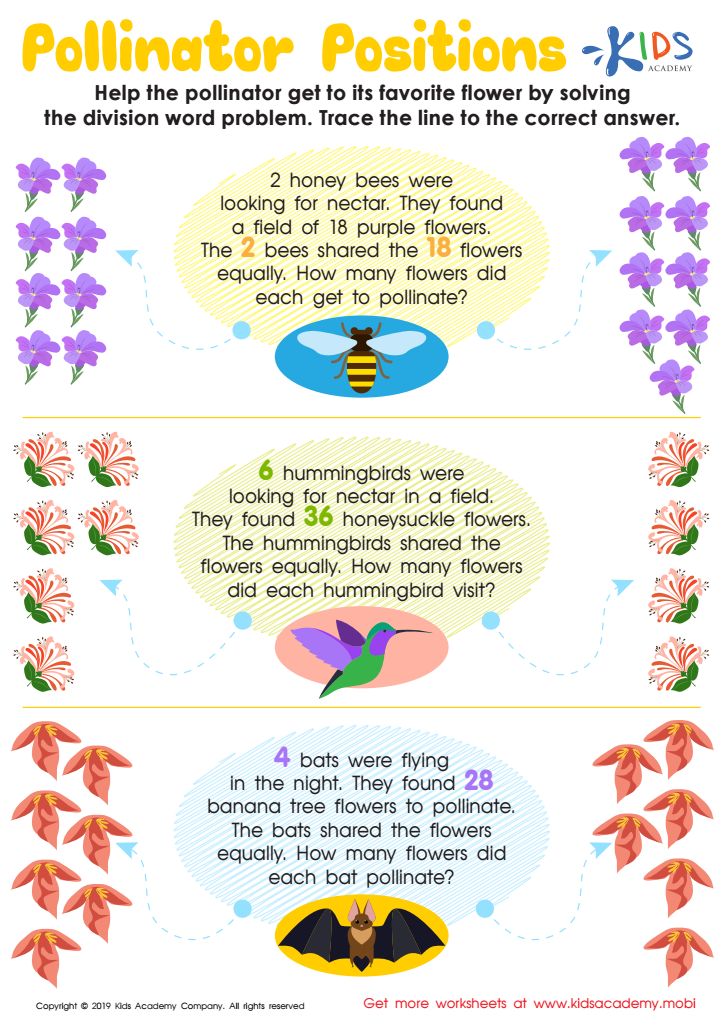
Pollinator Positions Worksheet
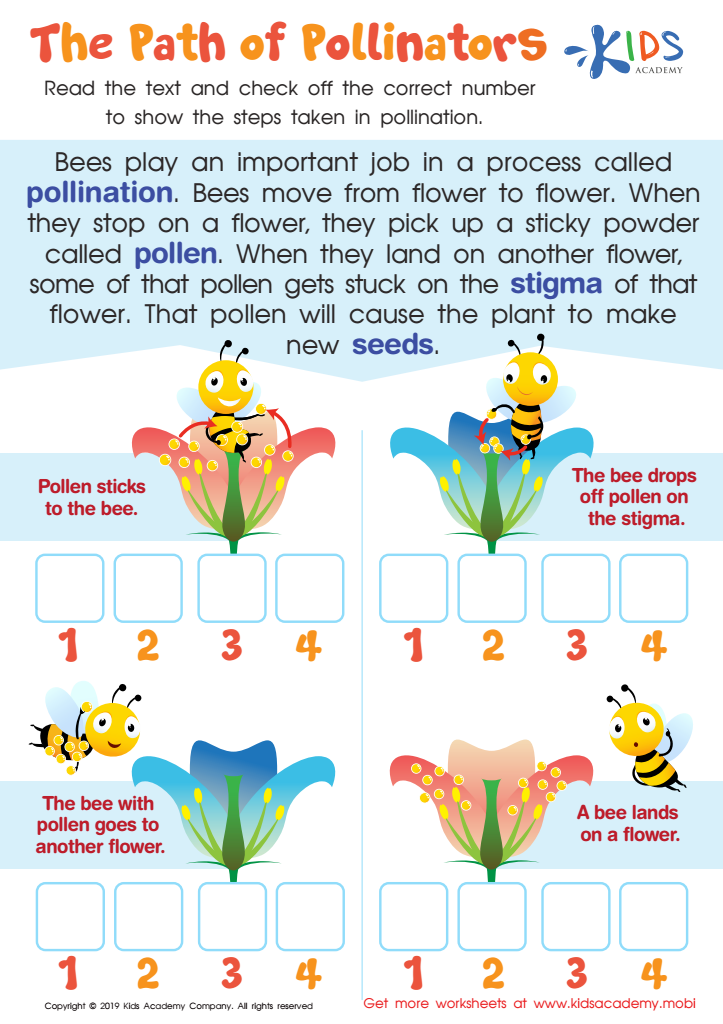
The Path of Pollinators Worksheet



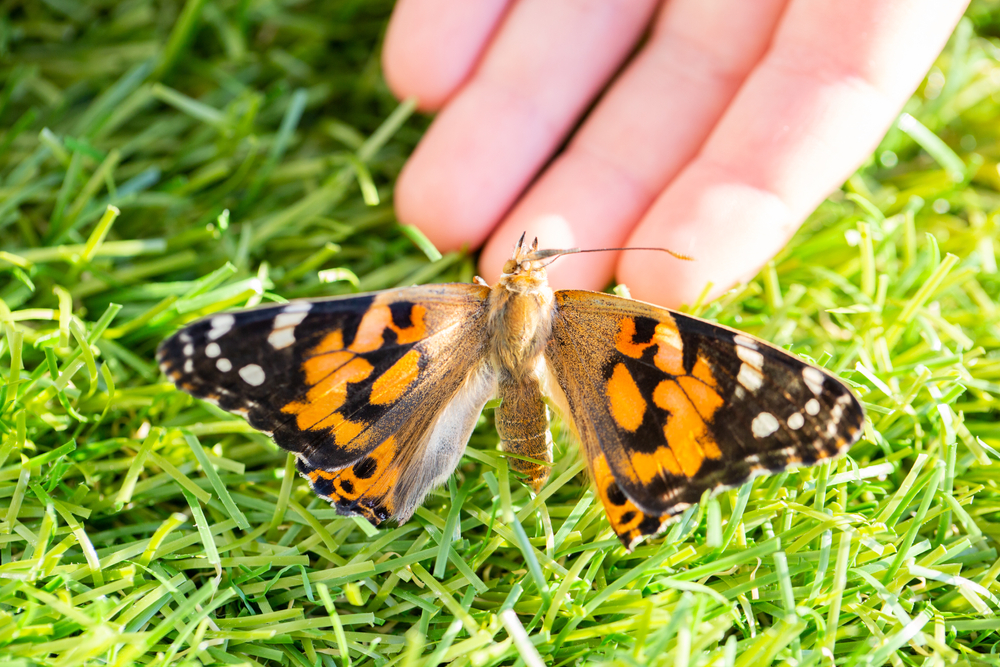



Understanding pollination in normal plants and animals is vital for children aged 8-9, as it lays the foundation for their appreciation of nature and science. At this age, children are increasingly curious about their environment, and learning about pollination helps them grasp the interconnectedness of ecosystems. They begin to recognize that plants, especially flowering ones, rely on pollinators like bees, butterflies, and birds to reproduce. This knowledge fosters respect for biodiversity and the roles various species play in our world.
From an educational standpoint, incorporating topics like pollination engages students in hands-on learning through activities such as planting seeds, observing gardens, or visiting farms. These experiences are not only enjoyable but deepen their understanding of biological processes, encouraging critical thinking about how systems work.
Moreover, teaching children about pollination has broader implications. Aspects such as food sources, climate change, and habitat loss become relevant, instilling a sense of responsibility towards environmental stewardship. As future caretakers of the planet, the insights gained from understanding pollination empower young learners to advocate for sustainable practices, making it essential for parents and teachers to emphasize this knowledge in early education.







