Analytical thinking Normal History Worksheets for Ages 8-9
3 filtered results
-
From - To
Unlock the power of analytical thinking with our engaging History Worksheets for ages 8 to 9! Designed to enhance critical thinking skills, these worksheets guide young learners through exploring key historical events and figures. With a variety of activities, kids will analyze timelines, draw connections, and develop their understanding of cause and effect in history. Each worksheet promotes collaboration and discussion, encouraging students to express their thoughts while building confidence in their analytical abilities. Perfect for classrooms or home learning, these resources make history come alive while fostering essential skills for future success. Dive into the past and watch young thinkers thrive!
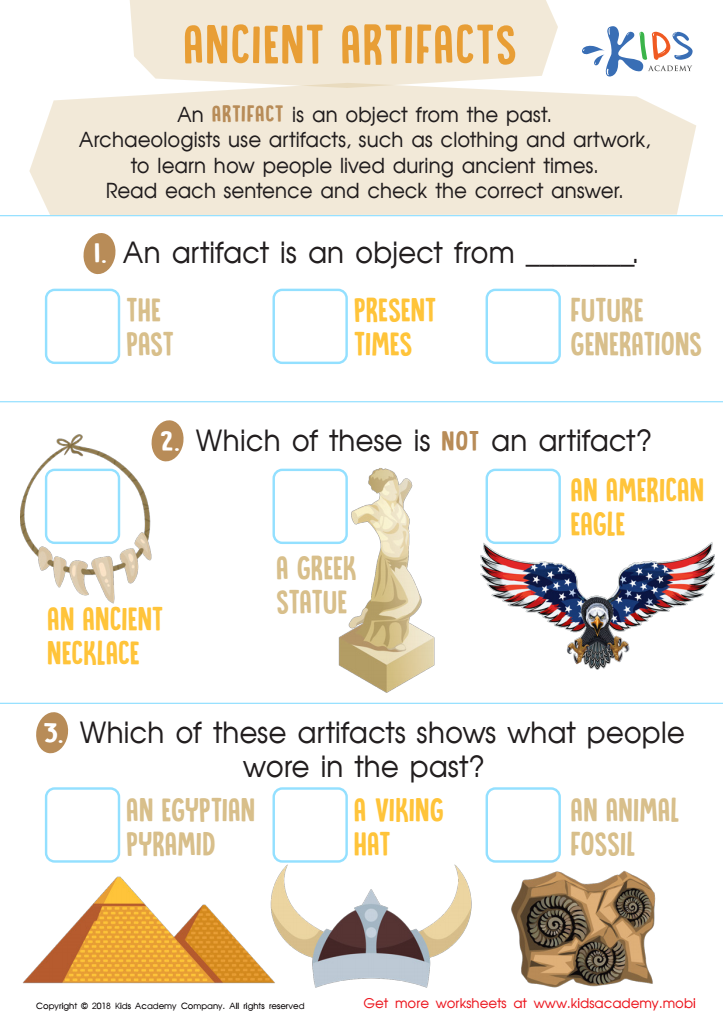
Ancient Artifacts Worksheet
 Assign to My Students
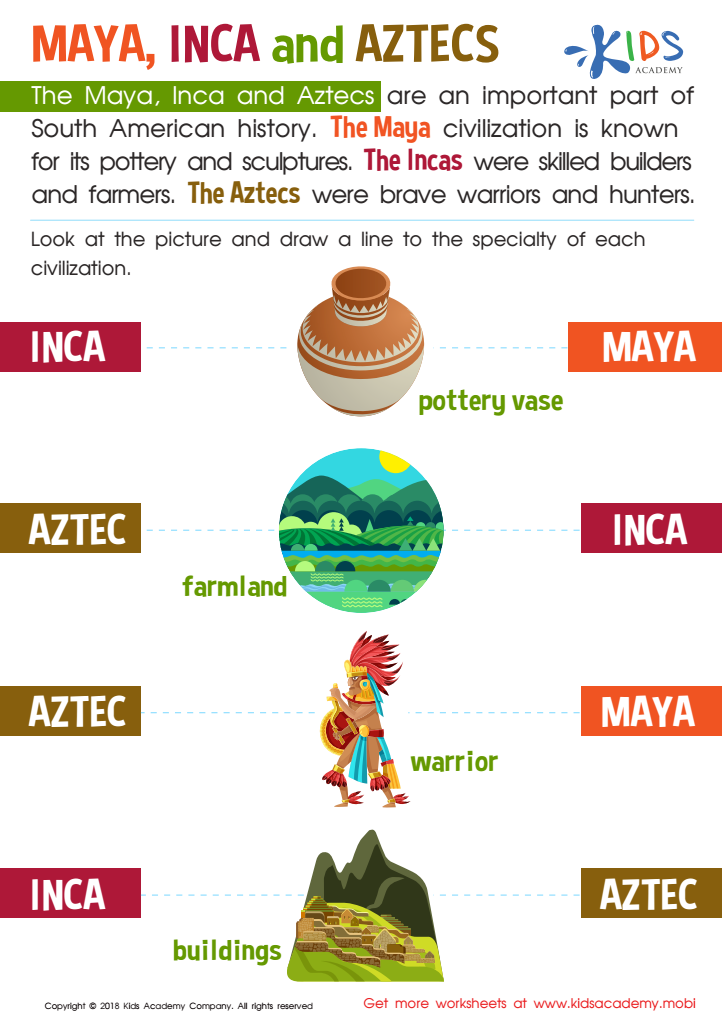
Maya, Inca and Aztecs Worksheet
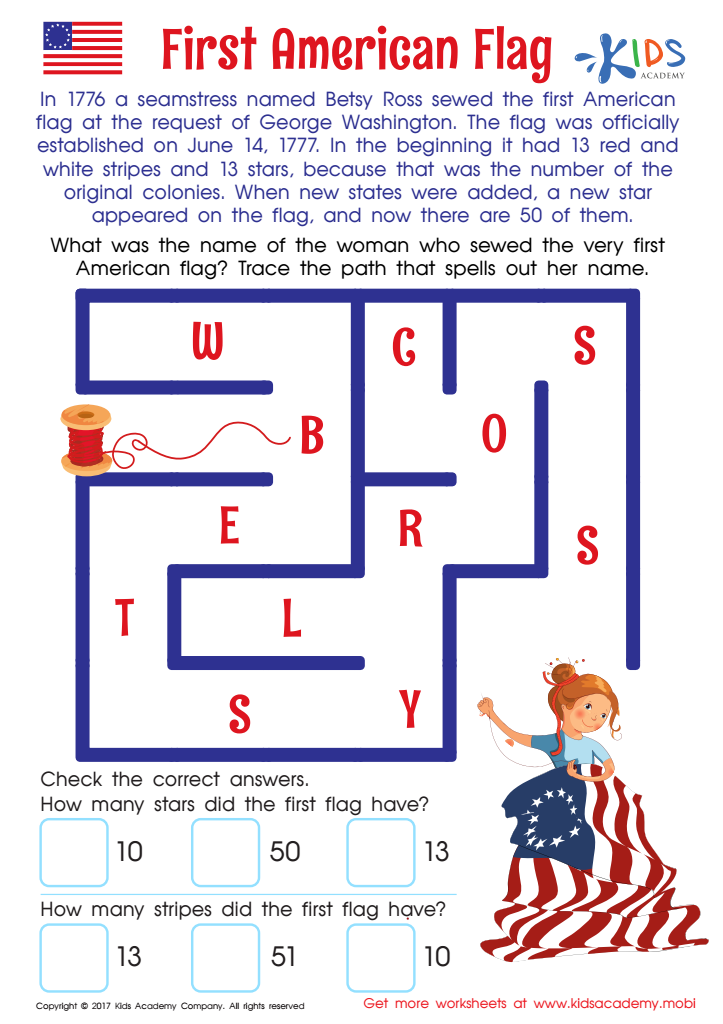
First American Flag Worksheet








Analytical thinking is crucial for children ages 8-9 as they embark on their educational journey. During this stage, children are developing the ability to analyze and evaluate information, which fosters effective problem-solving skills. In a world filled with information, the capacity to assess credibility, draw conclusions, and make informed decisions becomes pivotal.
In the context of Normal History, analytical thinking encourages children to critically engage with historical events and contexts. Rather than just memorizing dates and facts, children learn to question motives, understand cause-and-effect relationships, and recognize different perspectives. This deep understanding enhances not only their grasp of history but also their ability to connect past events with contemporary issues, building informed and compassionate future citizens.
Furthermore, analytical thinking promotes creativity. By evaluating different historical narratives, students cultivate the ability to think outside the box, generating innovative solutions to problems faced in their communities. This skill also supports collaboration, as students learn to communicate their ideas and listen to diverse viewpoints.
Ultimately, fostering analytical thinking in early education equips children with essential life skills that extend beyond academics, preparing them for thoughtful engagement in a complex world. Thus, parents and teachers should prioritize developing these skills during this formative period.








