Analytical thinking Normal Social Studies Worksheets for Ages 8-9
3 filtered results
Difficulty Level
Grade
Age
-
From - To
Subject
Activity
Standards
Discover our collection of Analytical Thinking Social Studies Worksheets designed for ages 8-9. These expertly crafted resources engage young learners with intriguing activities that sharpen critical thinking skills. By navigating through historical events, geography, and cultural studies, students enhance their analytical abilities while fostering a deeper understanding of social studies. Our worksheets combine fun and education, ensuring that your child stays motivated and curious. Perfect for classroom use or supplementary home study, these worksheets will help your child develop crucial skills that extend beyond the classroom. Start your journey to better analytical thinking today with Kids Academy!
Favorites
With answer key
Interactive
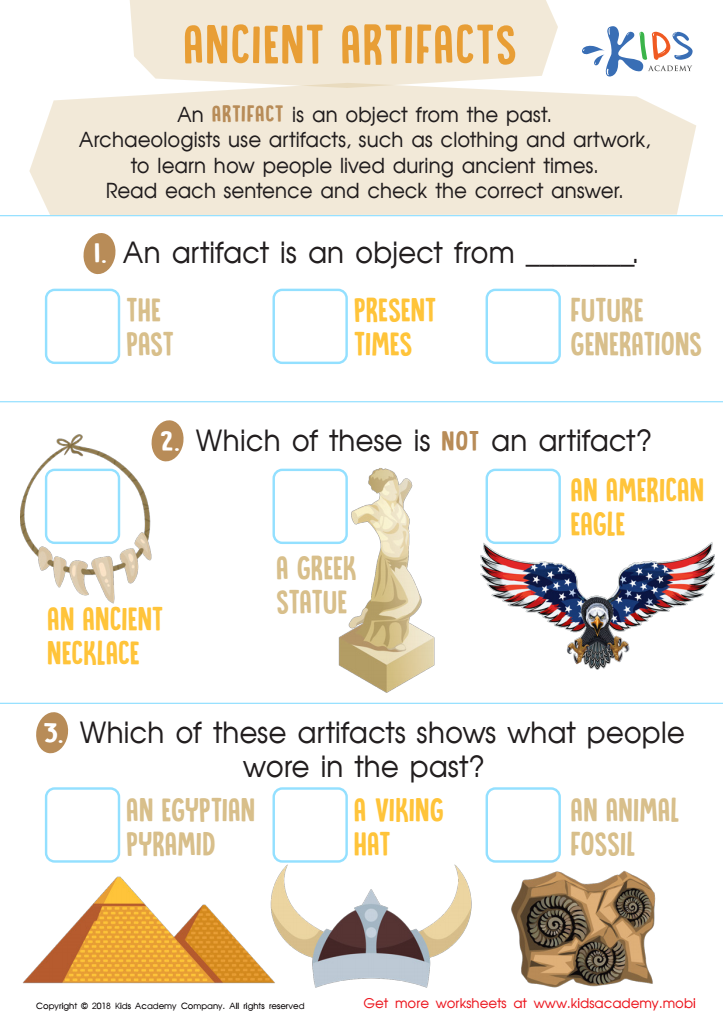
Ancient Artifacts Worksheet
This free worksheet helps kids understand ancient artifacts, from statues to necklaces to fossils. They'll read comprehension questions and select answers from multiple choice options, with pictures to help them grasp the concept. It's a great way for children to learn about artifacts and what they may look like.
 Assign to My Students
Ancient Artifacts Worksheet
Worksheet
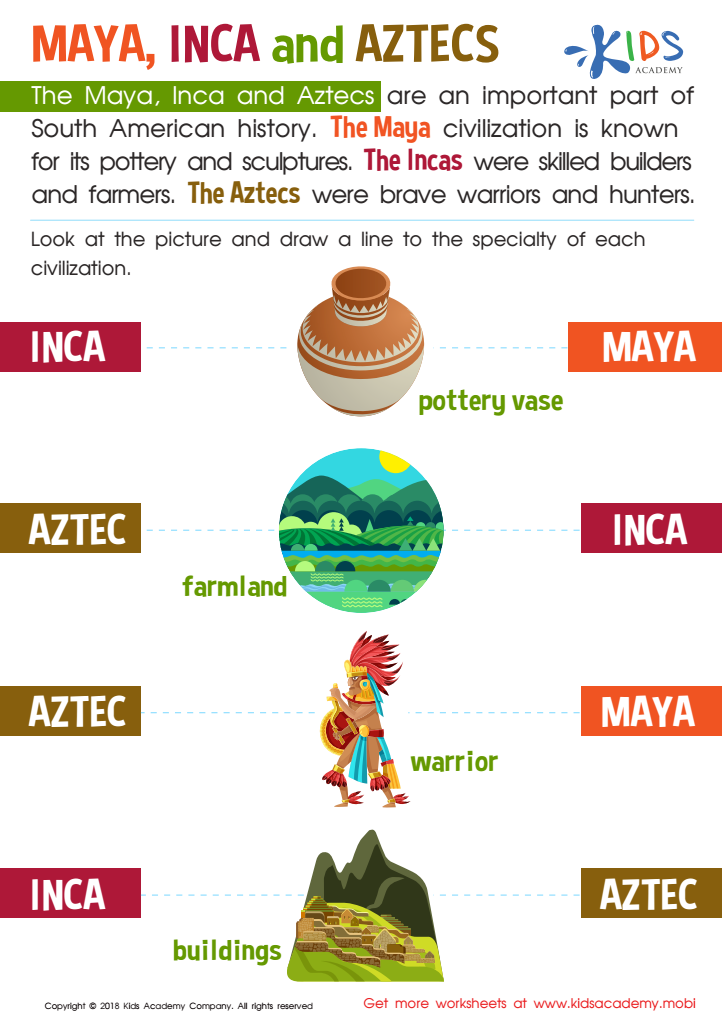
Maya, Inca and Aztecs Worksheet
This worksheet introduces your child to the thrilling histories of the Mayan, Incan and Aztec cultures, teaching them about their warriors, sculptors and farmers. With traceable lines and colorful imagery, they'll connect each culture with its correct associated picture - great for cementing concepts!
Maya, Inca and Aztecs Worksheet
Worksheet
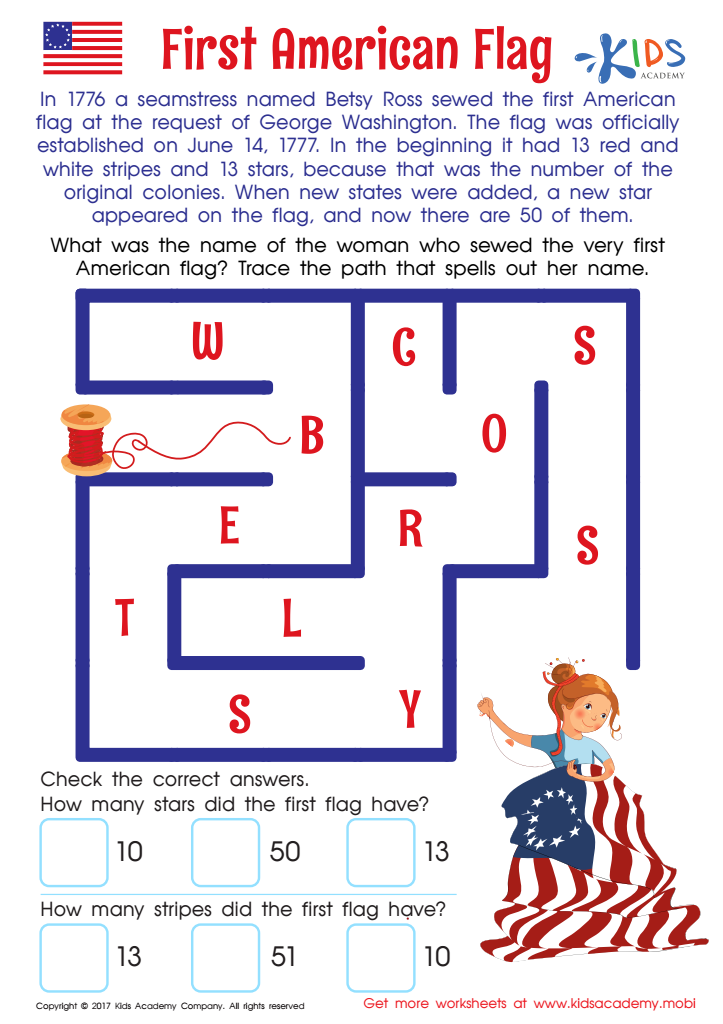
First American Flag Worksheet
Betsy Ross sewed the first American flag at the request of George Washington. This worksheet helps kids learn about this milestone in U.S. history, plus the design and origins of the flag.
First American Flag Worksheet
Worksheet
Join Kids Academy for Free
Who is primarily going to use this learning content?








Parents and teachers should care about analytical thinking skills in social studies education for children aged 8-9 because these skills lay a foundational framework for future learning and critical thinking. At this developmental stage, children are naturally curious about the world around them. Social studies, when taught with an emphasis on analytical thinking, encourages them to go beyond memorizing facts and dates, to understanding the "why" and "how" behind events, cultures, and societal structures.
Developing analytical thinking helps children improve their problem-solving and reasoning abilities. For example, analyzing why certain historical events happened or understanding the cause and effect relationships in different cultures allows students to see connections and patterns. This form of thinking trains them to weigh evidence, formulate their own opinions based on facts, and make informed decisions.
Moreover, such skills are transferable across other subjects and life situations, promoting well-rounded intellectual growth. Critical thinking in social studies helps young learners appreciate diversity and multiple perspectives, fostering empathy and open-mindedness. Therefore, embedding analytical thinking in social studies education equips children with the cognitive tools they need for academic success and responsible citizenship. These skills are essential as they navigate a complex, interconnected world, enabling them to engage thoughtfully and actively in society.