Map reading skills Normal Social Studies Worksheets for Ages 8-9
4 filtered results
Difficulty Level
Grade
Age
-
From - To
Subject
Activity
Standards
Enhance your child's understanding of geography with our "Map Reading Skills" worksheets tailored for ages 8-9! These engaging Social Studies resources help children develop essential map-reading skills through fun, interactive activities. Students will learn to interpret symbols, scale, and directions, enabling them to navigate maps confidently. Our thoughtfully designed worksheets promote critical thinking and spatial awareness, making social studies an enjoyable experience. Perfect for classroom use or at-home learning, these sheets support curriculum standards and encourage collaboration and discussion among peers. Equip your young learners with the skills they need to explore the world through maps!
Favorites
With answer key
Interactive
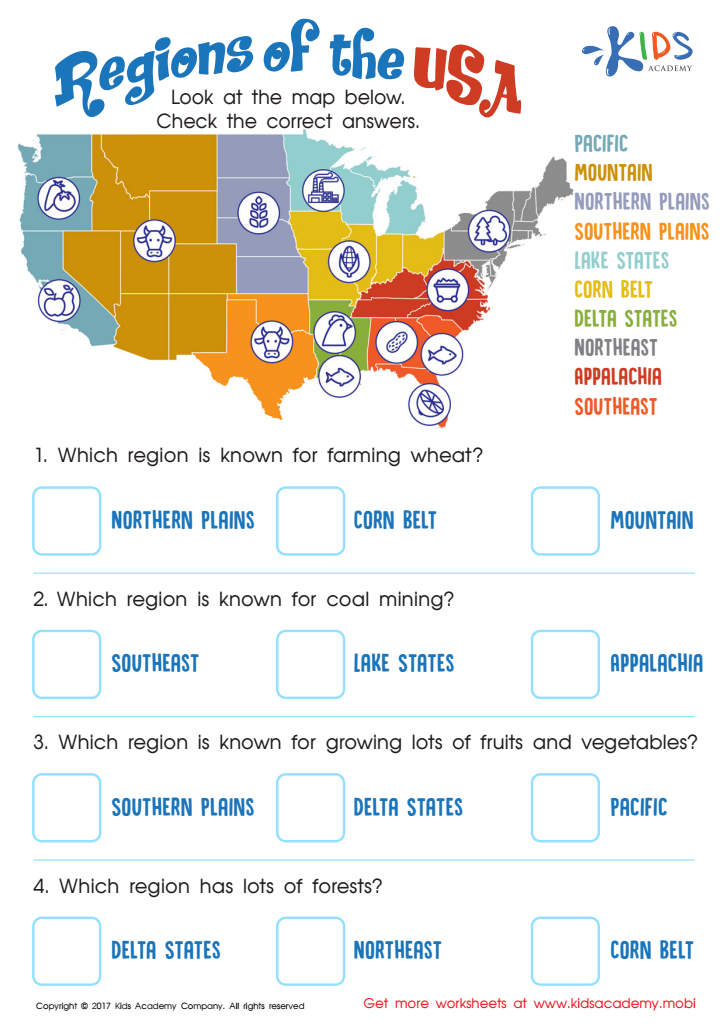
Regions of the USA Worksheet
Help your child explore the US with this regions of the United States worksheet! They'll learn about the diverse cultures, climates and purposes of each region. Make geography and US history fun with this educational exercise!
 Assign to My Students
Regions of the USA Worksheet
Worksheet
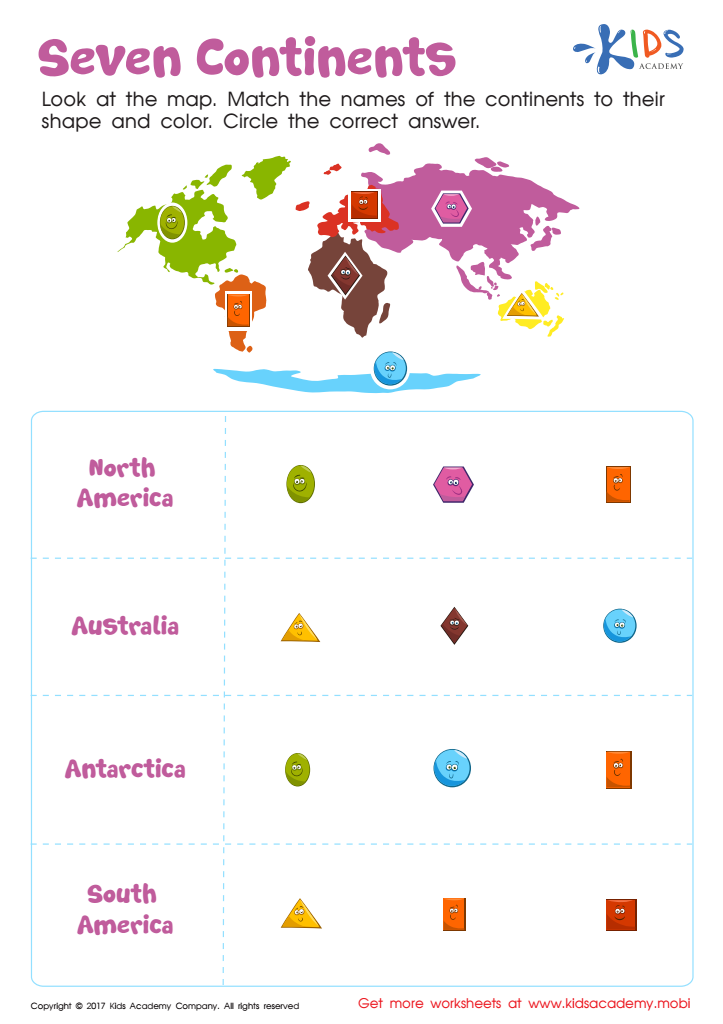
Seven Continents Worksheet
Geography teaches kids about the world! Encourage exploration with a seven continents worksheet - it'll help your child identify each continent using fun shapes.
Seven Continents Worksheet
Worksheet
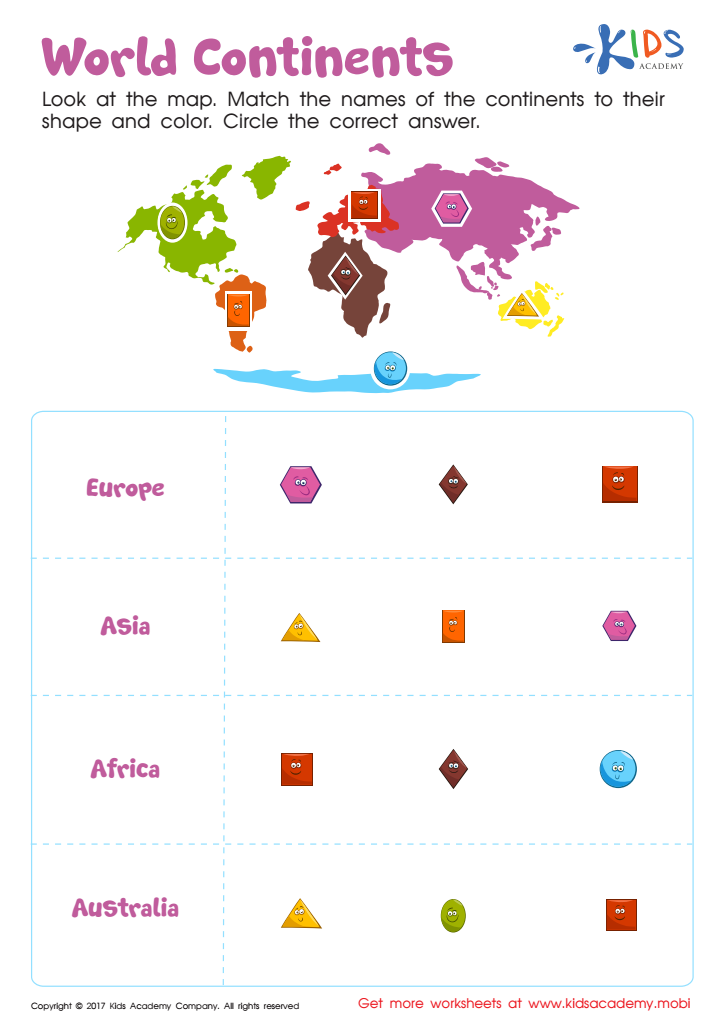
World Continents Worksheet
Help expand your child's knowledge of the world with this fun worksheet! It features goofy shapes to identify each continent, making learning the seven continents fun and memorable.
World Continents Worksheet
Worksheet
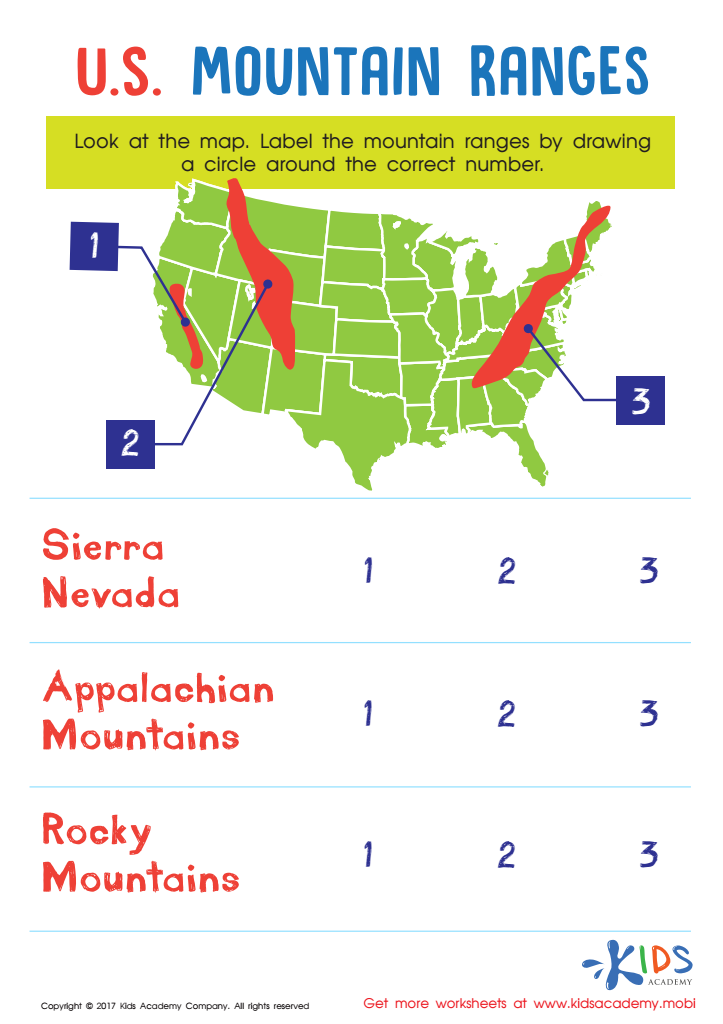
US Mountain Ranges Worksheet
Introduce your little one to the U.S. with this Mountain Ranges worksheet! It'll help them recognize the major ranges and locate them on a map, sharpening their map skills.
US Mountain Ranges Worksheet
Worksheet
Join Kids Academy for Free
Who is primarily going to use this learning content?







Map reading skills are essential for children aged 8-9 as they form a foundational element of social studies. These skills not only enhance geographical literacy but also promote critical thinking and problem-solving abilities. Understanding maps helps children navigate their environments, both literally and figuratively, fostering a sense of spatial awareness. This skill is invaluable as children learn to interpret symbols, scales, and legends, which are integral components of maps.
Additionally, map reading encourages curiosity about the world, sparking interest in different cultures, histories, and communities. When parents and teachers cultivate map reading skills, they nurture informed citizens who can comprehend social issues and appreciate global diversity. Maps also provide a contextual backdrop for historical events, enabling children to visualize and connect with the past more meaningfully.
Furthermore, in our increasingly interconnected world, being able to read maps is crucial for real-world applications, including travel, planning, and even digital navigation. By emphasizing map reading in social studies, parents and teachers equip children with skills that enhance both academic performance and everyday decision-making. Ultimately, cultivating these skills fosters a deeper understanding of the world and prepares children for future learning and exploration.