Understanding suffixes Normal Writing Worksheets for Ages 8-9
6 filtered results
-
From - To
Understanding suffixes is a crucial stepping stone in a child’s writing and vocabulary development. Our "Normal Writing Worksheets for Ages 8-9" focus on reinforcing this vital skill through engaging and thoughtfully crafted exercises. These worksheets guide young learners in identifying and using common suffixes to form new words, enhancing both their decoding and encoding abilities. Perfect for practice at home or at school, the activities are designed to make learning fun and effective. Boost your child’s confidence in writing while expanding their vocabulary with our expertly developed suffixes worksheets tailored specifically for 8-9 year-olds.
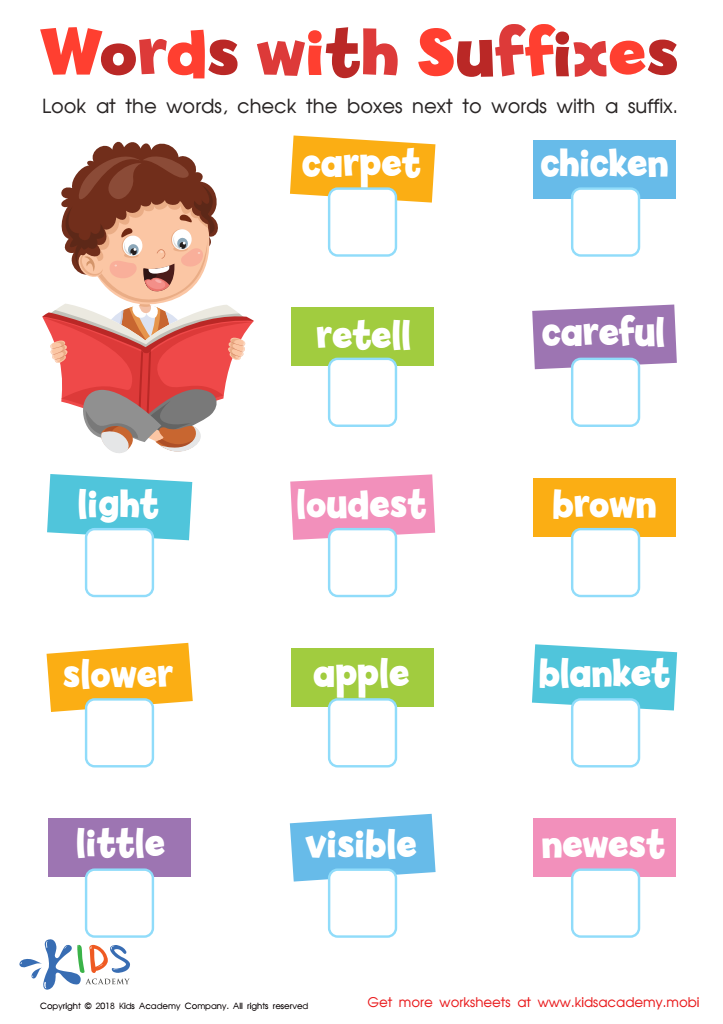
Reading: Words With Suffixes Worksheet
 Assign to My Students
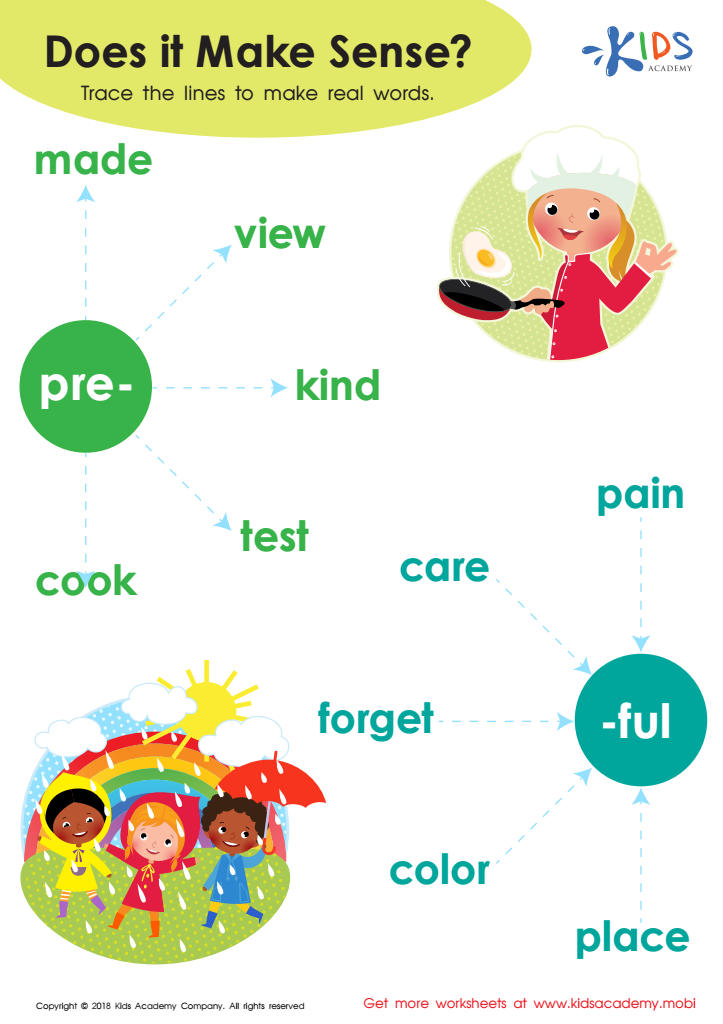
Prefix pre– and Suffix ful– Worksheet
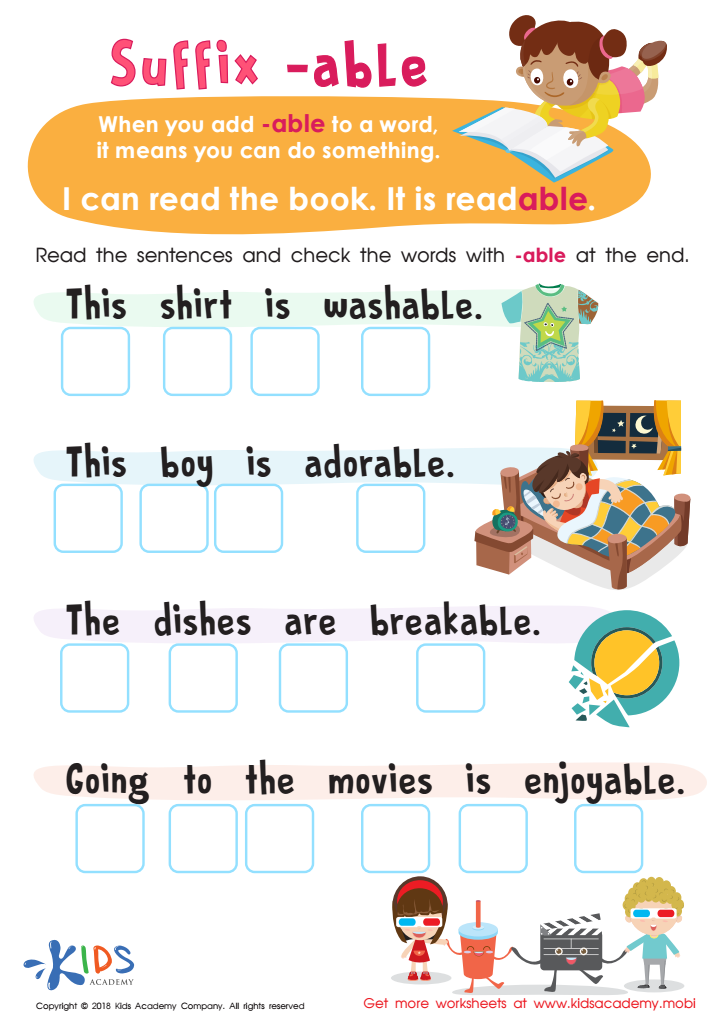
Suffix -Able Worksheet
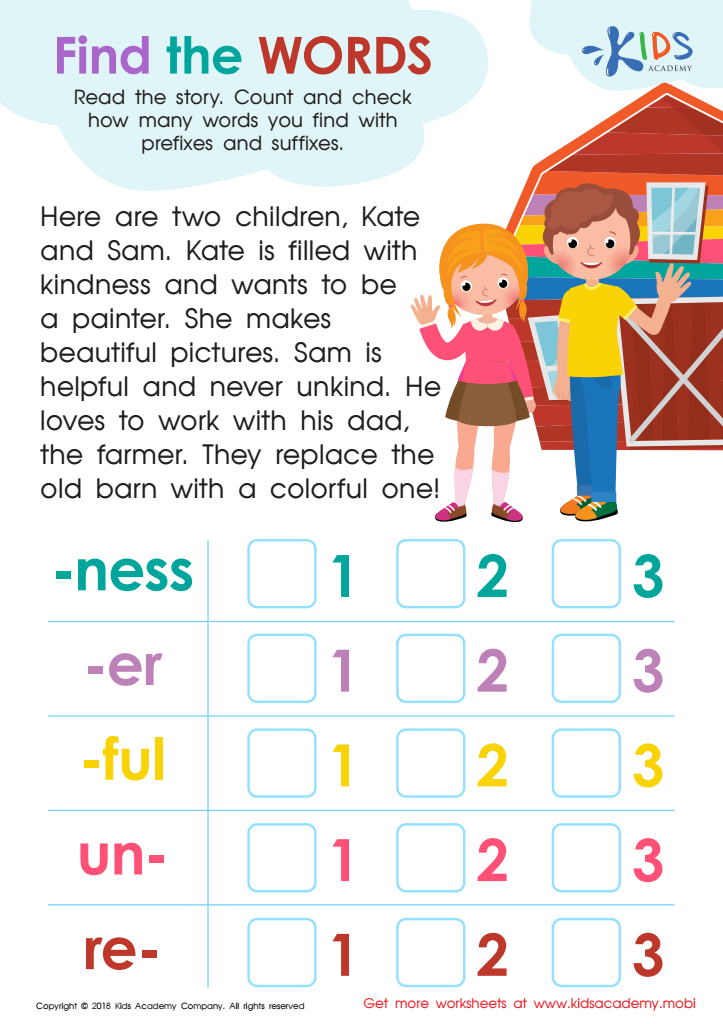
Prefix and Suffix Worksheet For Grade 3
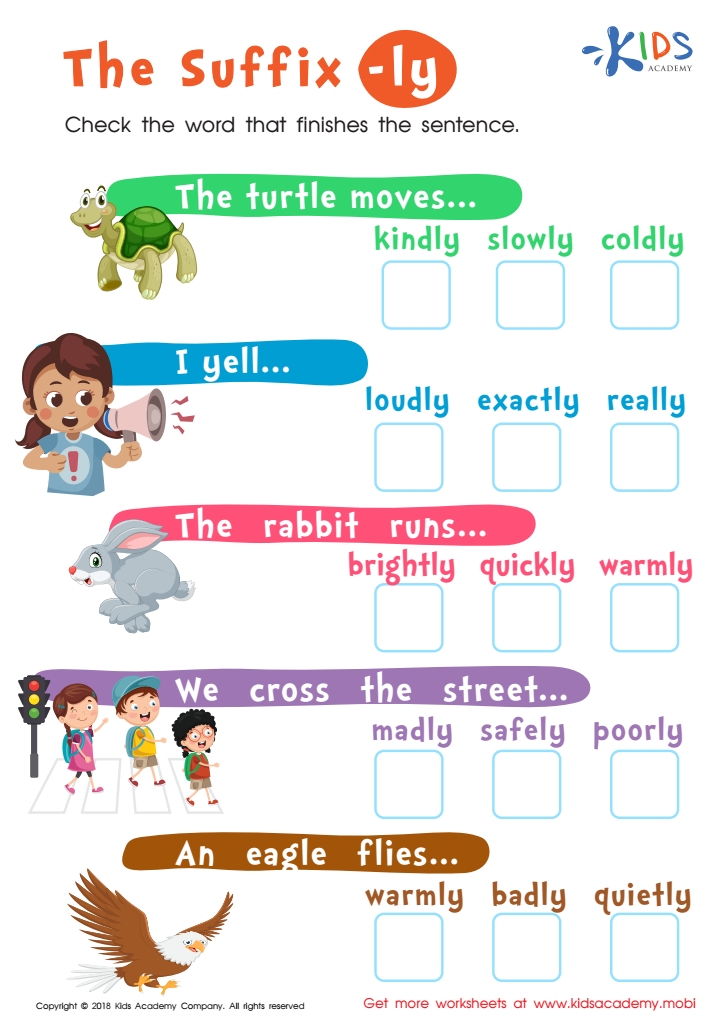
The Suffix -Ly Worksheet
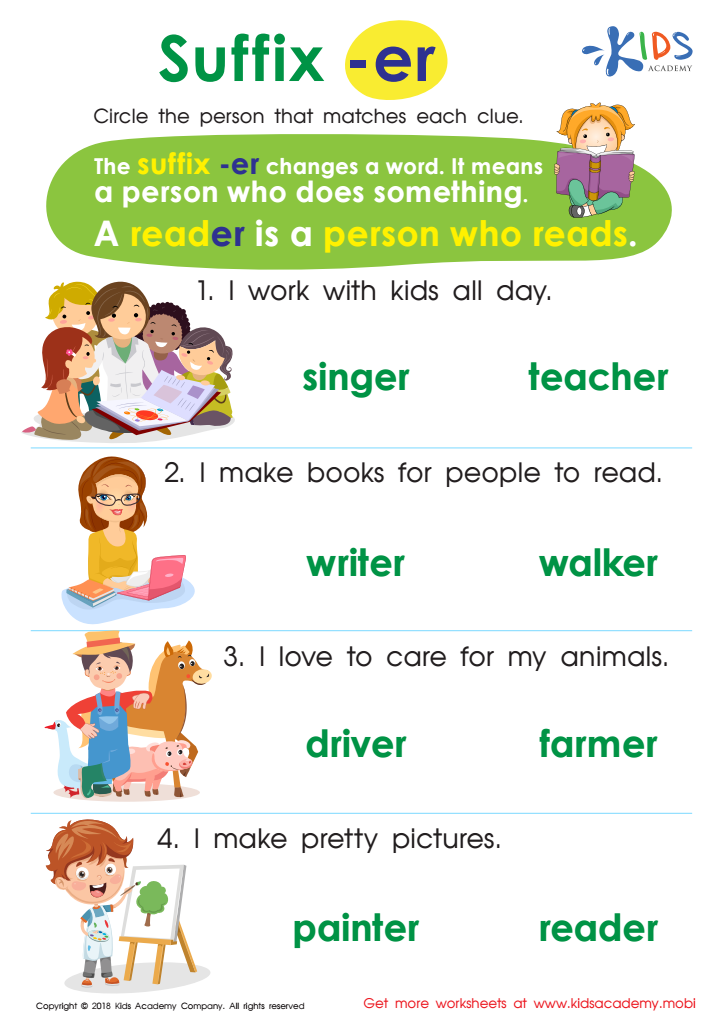
Suffix –er Printable Worksheet






.jpg)

Understanding suffixes is crucial for young learners aged 8-9 as it plays a key role in their literacy development. Suffixes, which are added to the end of base words, can change the meaning or grammatical function of a word. When children discover how suffixes work, they enhance their vocabulary and are better equipped to comprehend and construct sentences more effectively.
For parents and teachers, emphasizing the importance of suffixes can significantly impact a child's reading and writing skills. Knowledge of common suffixes like "-ful," "-ness," "-er," and "-able" allows children to decode unfamiliar words and grasp their meanings contextually. This understanding fosters reading fluency and contributes to improved reading comprehension.
Moreover, learning about suffixes encourages spelling accuracy and consistency. Recognizing patterns in word formation helps children spell words correctly, reducing the typical frustration associated with spelling errors. In writing, students are able to express themselves more precisely and creatively, making their narratives and reports richer and more engaging.
Overall, focusing on suffixes equips children with essential tools for effective communication. By supporting this aspect of their education, parents and teachers can empower young learners to become more confident and proficient in their language skills.