Vocabulary enhancement Normal Writing Worksheets for Ages 8-9 - Page 2
26 filtered results
-
From - To
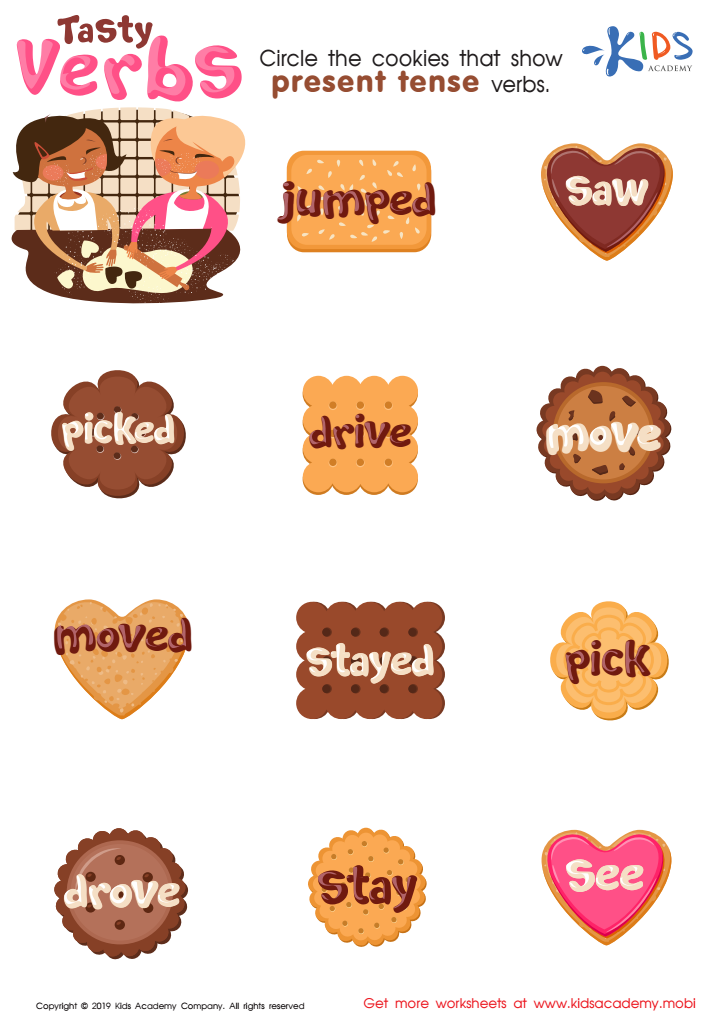
Tasty Verbs Worksheet
 Assign to My Students
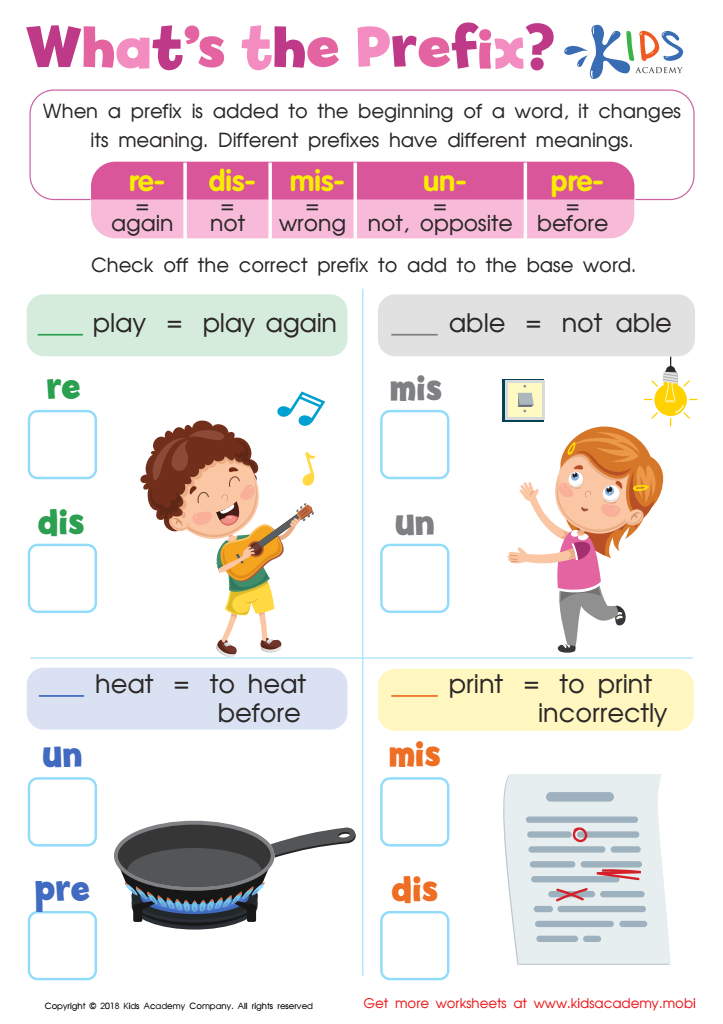
Reading: What Is the Prefix Worksheet








Vocabulary enhancement is essential for children ages 8-9 because it significantly impacts their overall academic and personal development. At this age, kids are transitioning from learning to read to reading to learn, and a robust vocabulary is foundational to this shift. A richer vocabulary enables children to understand and engage more deeply with what they read, fueling their enthusiasm for learning and promoting better comprehension.
For parents and teachers, investing in vocabulary enhancement supports critical thinking and communication skills. As children encounter new words, they learn to define, contextualize, and use them in conversation, writing, and other forms of expression. This process can boost their confidence and improve their ability to articulate thoughts clearly and persuasively.
Moreover, a strong vocabulary can enhance a child's academic performance across subjects such as science, math, and social studies, where understanding terminology is crucial. Early vocabulary building also lays the groundwork for future learning, equipping children to tackle more complex subjects and tasks as they progress through their education.
Ultimately, by prioritizing vocabulary growth for 8-9-year-olds, parents and teachers can help children develop a lifelong love for learning, better preparedness for more advanced education, and stronger communication skills that benefit social interactions and future career prospects.