Word Recognition Normal Writing Worksheets for Ages 8-9
8 filtered results
-
From - To
Enhance your child's reading and writing abilities with our engaging Word Recognition Normal Writing Worksheets for ages 8-9! These worksheets are designed to support young learners in identifying and using words effectively, fostering confidence and fluency in literacy. Featuring a variety of activities, including filling in blanks, matching words to pictures, and sentence creation, students will expand their vocabulary while developing essential writing skills. Ideal for at-home practice or classroom use, these worksheets cater to diverse learning styles. Help your child become a proficient reader and writer with our comprehensive resources today! Access the worksheets and watch their skills grow!
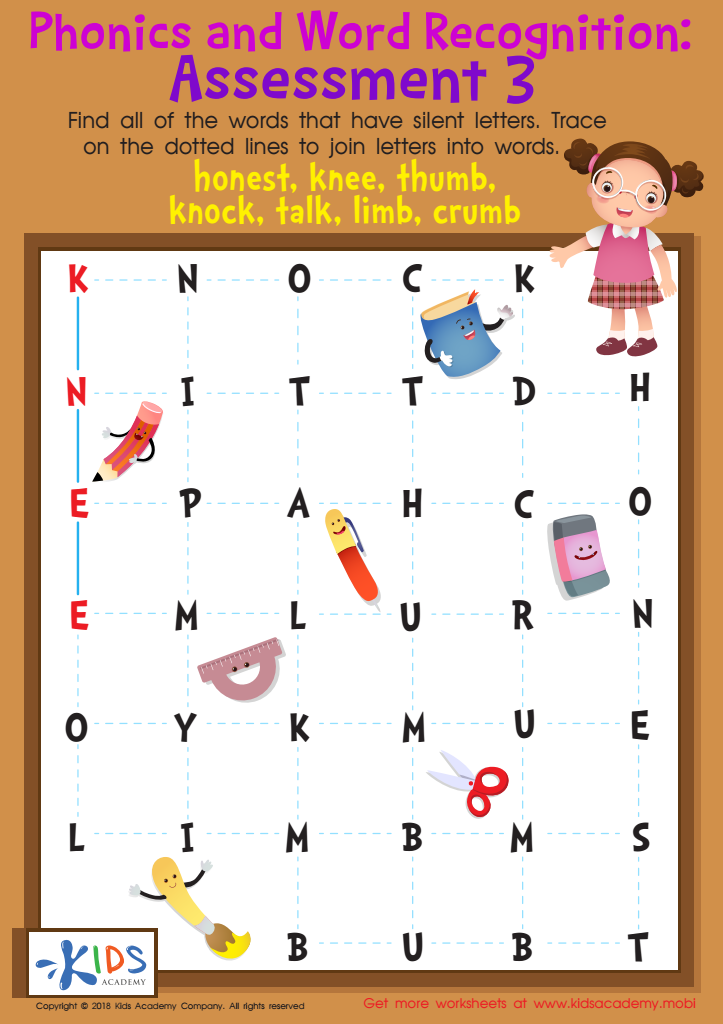
Phonics and Word Recognition: Assessment 3 Worksheet
 Assign to My Students
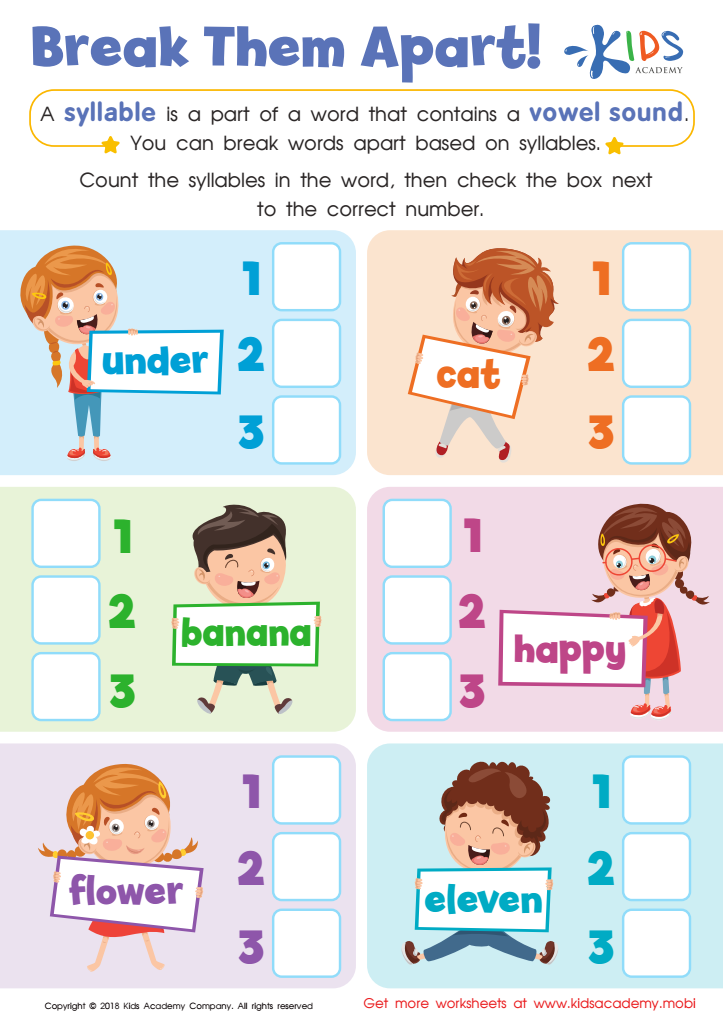
Reading: Break Them Apart Worksheet
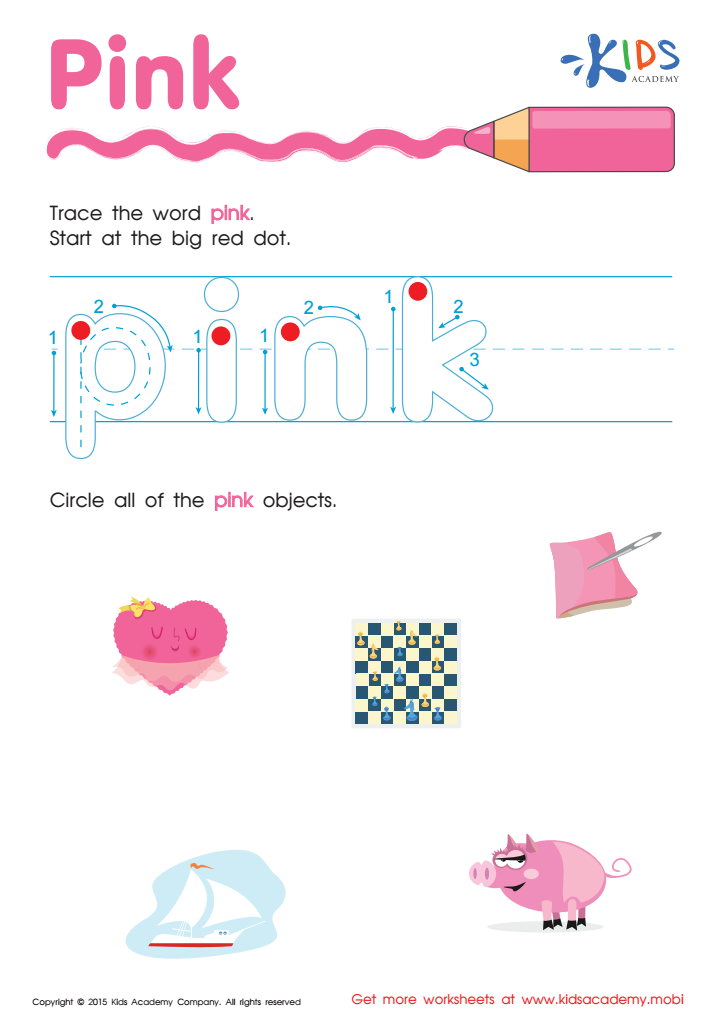
Pink Tracing Color Words Worksheet
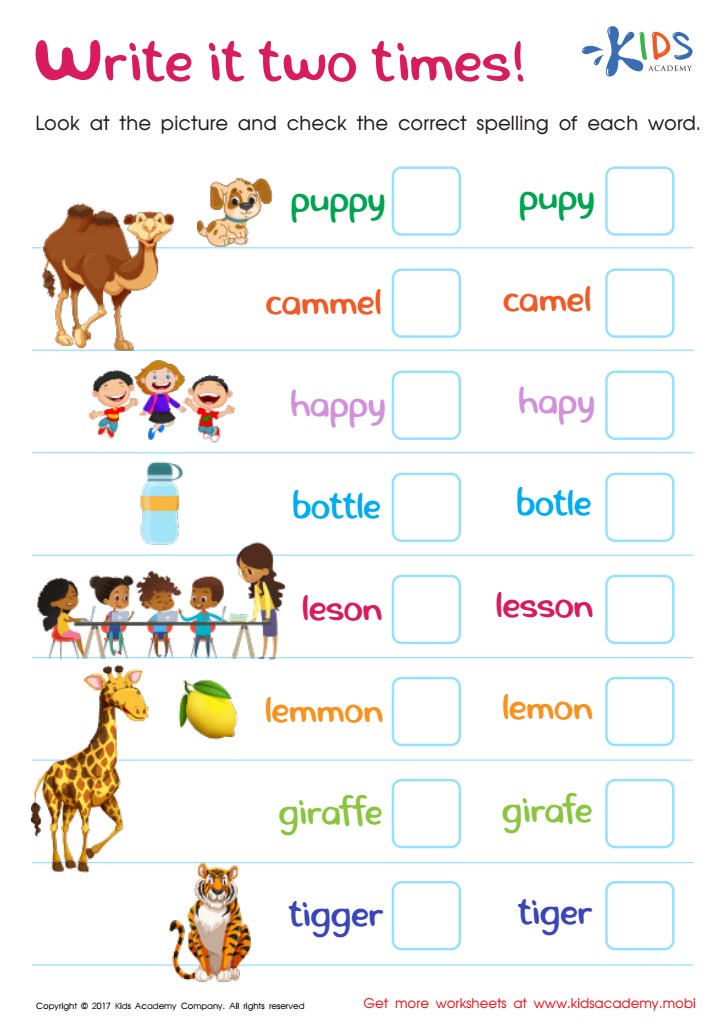
Spelling Practice Worksheet
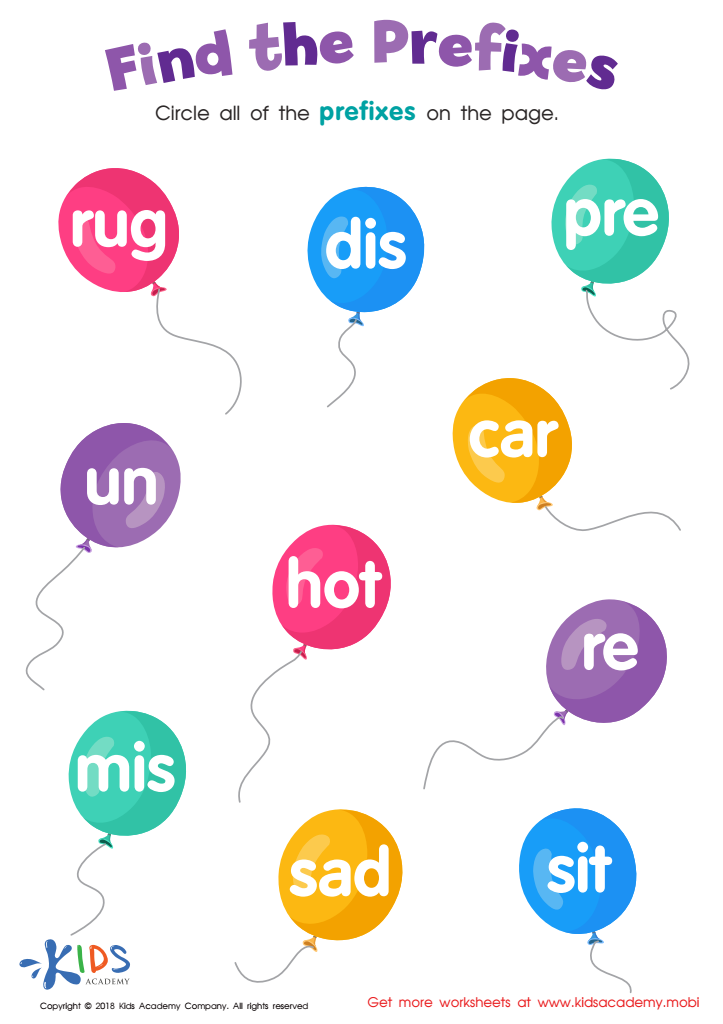
Reading: Find the Prefixes Worksheet
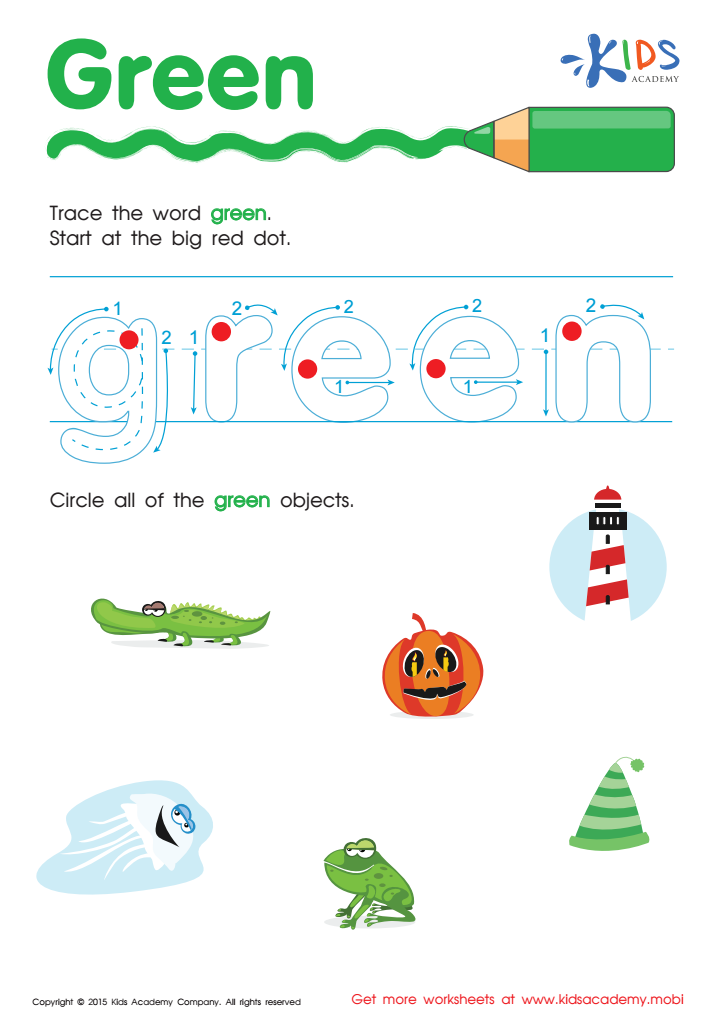
Green Tracing Color Words Worksheet
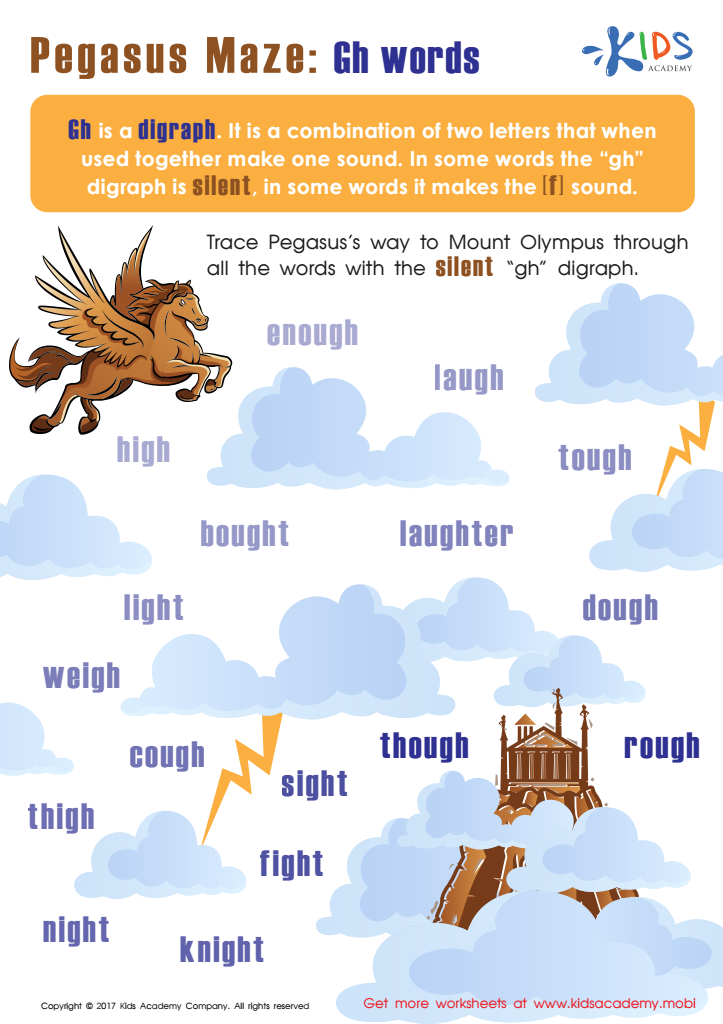
Pegasus Maze: GH Words Worksheet
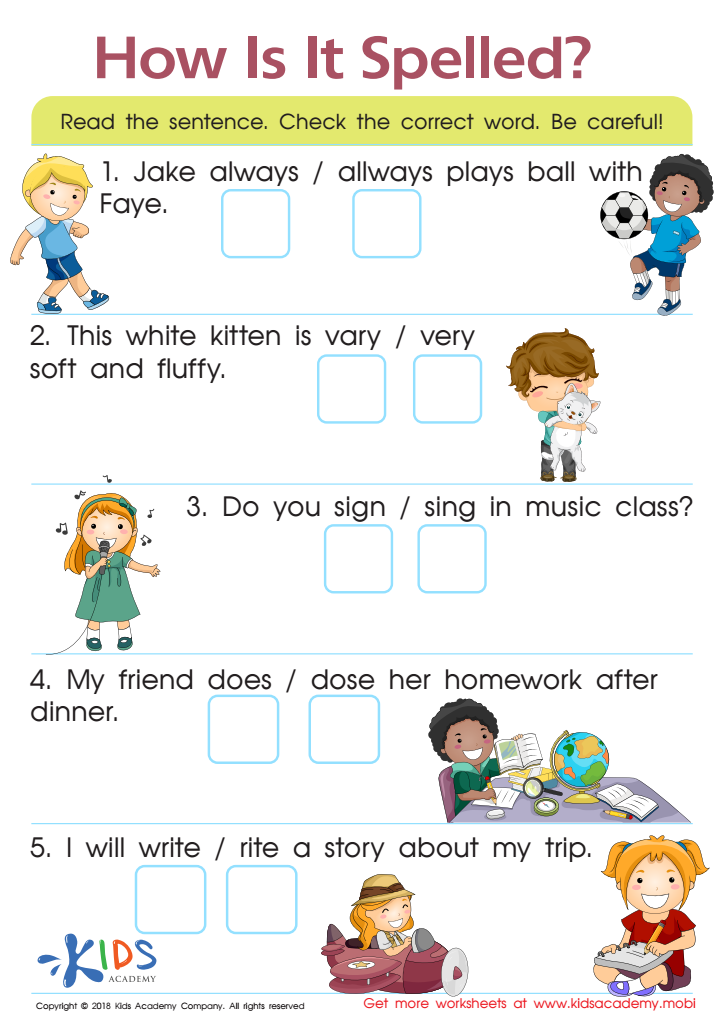
How is it spelled? Worksheet







Word recognition is a fundamental skill for children aged 8-9 as it greatly influences their reading proficiency and overall academic success. At this stage, children transition from learning to read to reading to learn. Strong word recognition enables them to quickly and accurately identify words, which fosters fluency, comprehension, and retention of information. This relates directly to their ability to engage with more complex texts, which are crucial for subjects like science, history, and mathematics.
By promoting effective word recognition practices at home and in the classroom, parents and teachers can help build a solid foundation in literacy. This involves encouraging children to read regularly, using age-appropriate materials that pique their interest, and incorporating word games that enhance spelling and vocabulary.
Additionally, when adults show interest in children's reading progression—celebrating milestones or discussing stories—it instills a positive attitude towards literacy. Ultimately, investing in word recognition skills not only lays the groundwork for future academic achievement but also equips students with essential tools for lifelong learning and communication. Therefore, supporting word recognition is paramount for nurturing confident, capable readers who can navigate the complexities of their education and beyond.