
Hand-eye Coordination Normal Alphabet Worksheets for 8-Year-Olds
6 filtered results
Difficulty Level
Grade
Age
-
From - To
Subject
Activity
Standards
Enhance your 8-year-old's hand-eye coordination with our engaging Normal Alphabet Worksheets! Designed specifically for this age group, these worksheets leverage fun activities to improve fine motor skills and coordination as children interact with letters of the alphabet. Each worksheet promotes learning through playful exercises, ensuring your child stays engaged while they practice letter recognition and tracing. As they navigate these exercises, they'll build confidence in their handwriting abilities and critical motor skills essential for their academic journey. Perfect for home or classroom use, our printable worksheets are an excellent tool for supporting your child's development in a fun and educational way!
Favorites
With answer key
Interactive
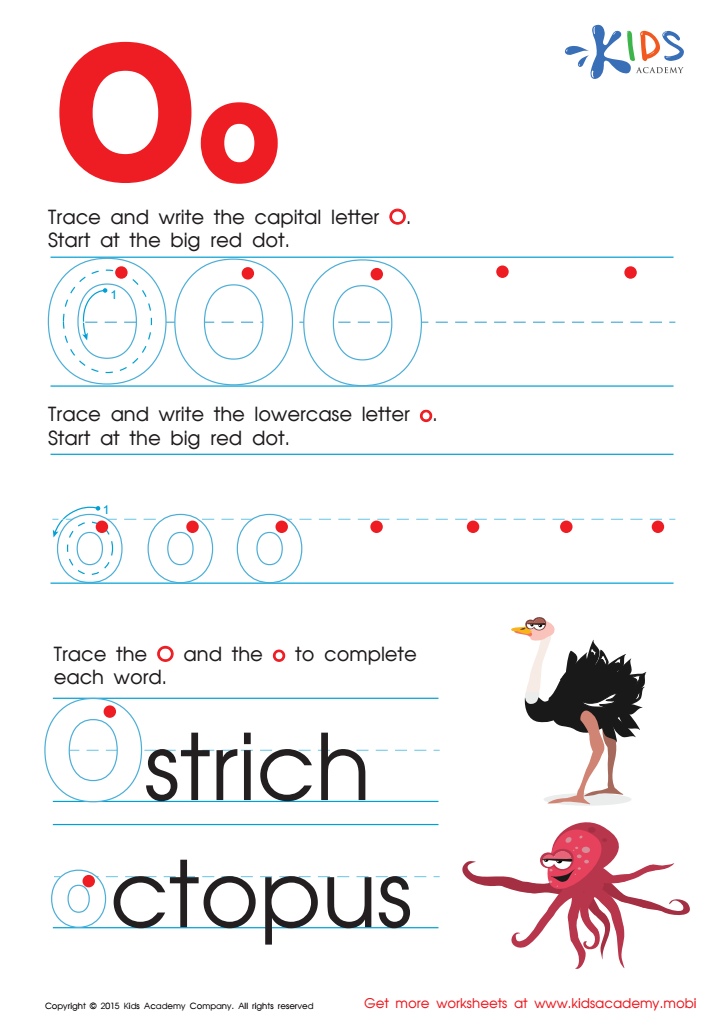
Letter O Tracing Page
Practice writing the letter "O" with our new worksheet. Trace and write the letter several times, starting at the red dot. First do the uppercase letter, then the lowercase. Use the pictures to complete the words "Ostrich" and "octopus". Kids Academy offers more fun alphabet worksheets.
Letter O Tracing Page
Worksheet
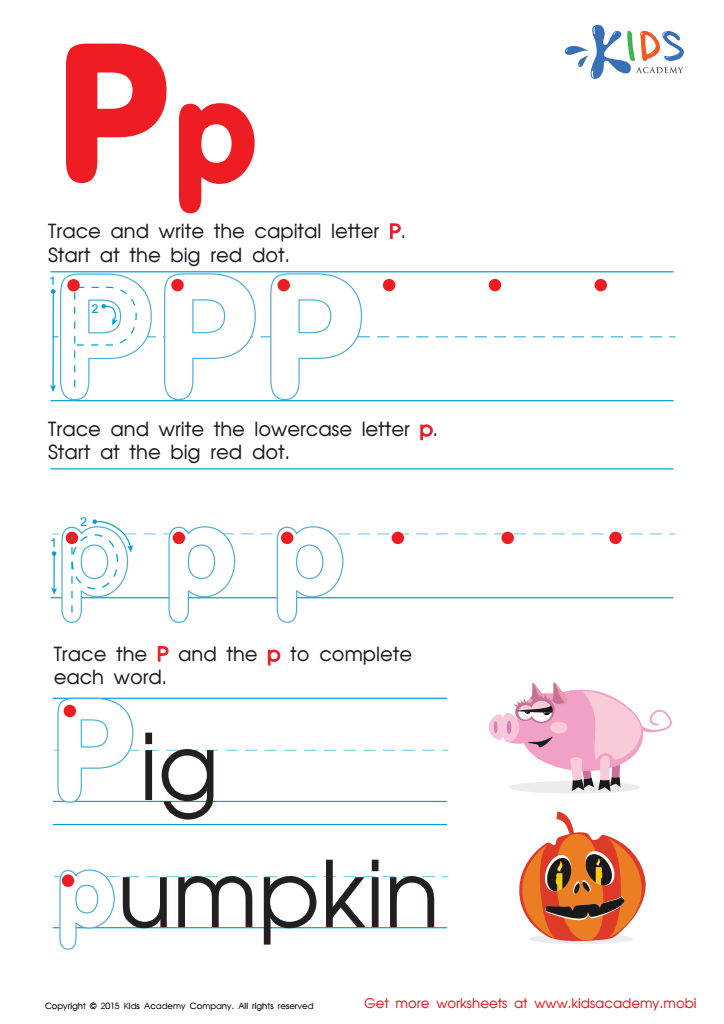
Letter P Tracing Page
Trace the lines from the red dot to learn to write "P"! Then practice this letter with the fun activities: complete the word "Pig" and "Pumpkin". Check out Kids Academy to get more free ABC worksheets.
Letter P Tracing Page
Worksheet
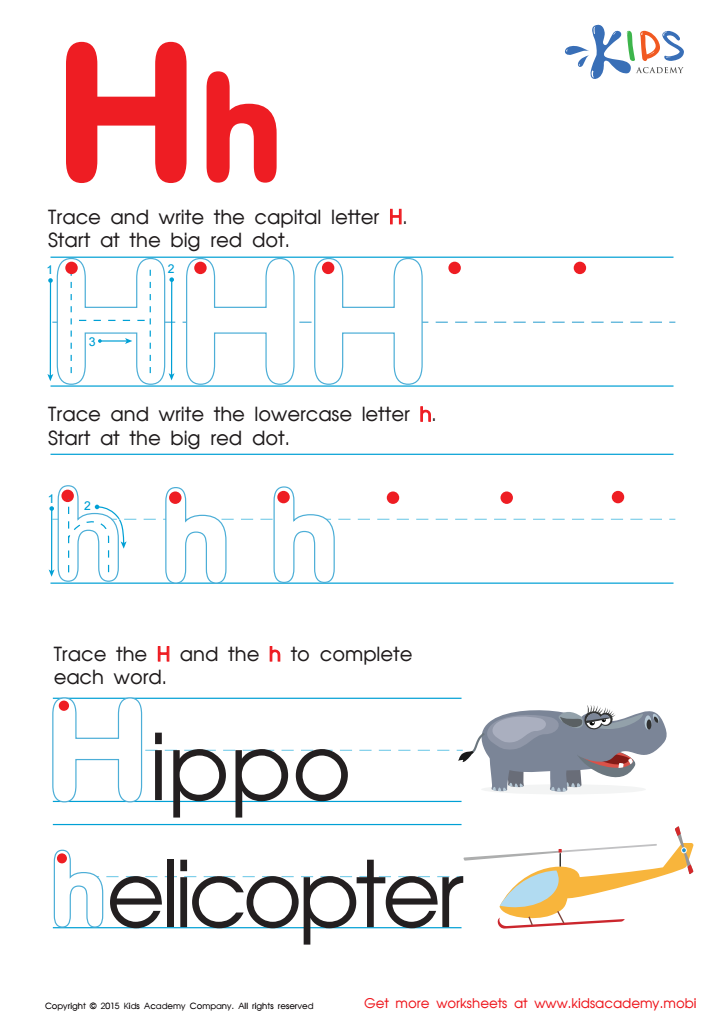
Letter H Tracing Page
Trace the letter "H", then practice writing its lowercase form. Finally, choose your favorite form of transport and ride away! Get our worksheets to make learning fun and easy.
Letter H Tracing Page
Worksheet
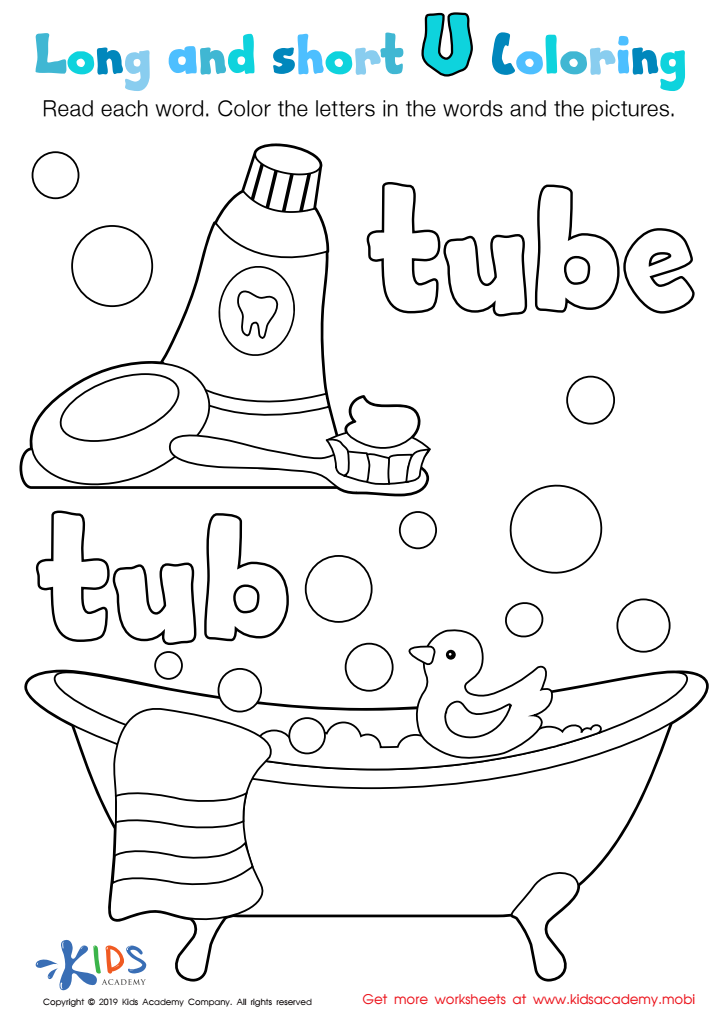
Long and Short U Worksheet
Revised: Spice up your lesson on long and short vowels with this fun printout! Kids read the words "tube" and "tub," then reinforce the sound by coloring in the words and pictures. It's a great way to make phonics class enjoyable!
Download (PDF)
 Assign to My Students
Assign to My Students
Long and Short U Worksheet
Worksheet

Long and Short E Worksheet
This fun printout makes learning phonics enjoyable for Grade 3 students. Get them to read the words “tree” and “bed” to recognize the different sounds of the letter “E”. After hearing the words they can color the words and the pictures to understand differences between long and short vowels.
Download (PDF)
Assign to My Students
Assign to My Students
Long and Short E Worksheet
Worksheet

Letter D Tracing Page
Trace and write capital and lowercase letter "D" with our free printable alphabet worksheet! Be careful not to mix up "b" and "d" - just look at the ducks and write their first letter. The dolphin wants to join the fun too - do you like dolphins? Get more fun worksheets and activities at Kids Academy!
Letter D Tracing Page
Worksheet
Join Kids Academy for Free
Who is primarily going to use this learning content?







Hand-eye coordination is a crucial skill that significantly impacts a child's overall development, especially for 8-year-olds who are at a formative stage. As they engage in activities that require this skill, such as writing, drawing, participating in sports, or even playing music, improved hand-eye coordination enhances their ability to execute tasks effectively. By focusing on normal alphabet activities that promote this coordination, parents and teachers can help children develop fine motor skills essential for academic success and daily life.
Moreover, strong hand-eye coordination supports cognitive development. It fosters problem-solving skills and encourages spatial awareness, which are vital as children transition into more complex learning environments. Engaging in activities designed around the normal alphabet, such as tracing letters or crafting words, can make learning fun while simultaneously enhancing coordination.
Additionally, hand-eye coordination is linked to self-esteem and confidence. When children master these motor skills, they gain a sense of accomplishment, which motivates them to tackle new challenges. Furthermore, these foundational exercises strengthen social skills as they often involve teamwork or peer interaction. Thus, prioritizing hand-eye coordination is significant not only for academic readiness but also for holistic growth and development in children.







