Phonics practice Normal Alphabet Worksheets for 8-Year-Olds
6 filtered results
-
From - To
Enhance your 8-year-old's reading skills with our engaging Phonics Practice Normal Alphabet Worksheets. Designed specifically for young learners, these worksheets offer a fun and interactive way to reinforce letter recognition and phonetic sounds. Each activity is tailored to build foundational literacy skills, helping children connect letters to their corresponding sounds through varied exercises. Users will find colorful illustrations and enlightening practice that promote phonemic awareness, making learning enjoyable. Perfect for both classroom settings and at-home learning, our worksheets are a valuable resource for educators and parents alike. Dive into a world of phonics and unlock the magic of reading today!
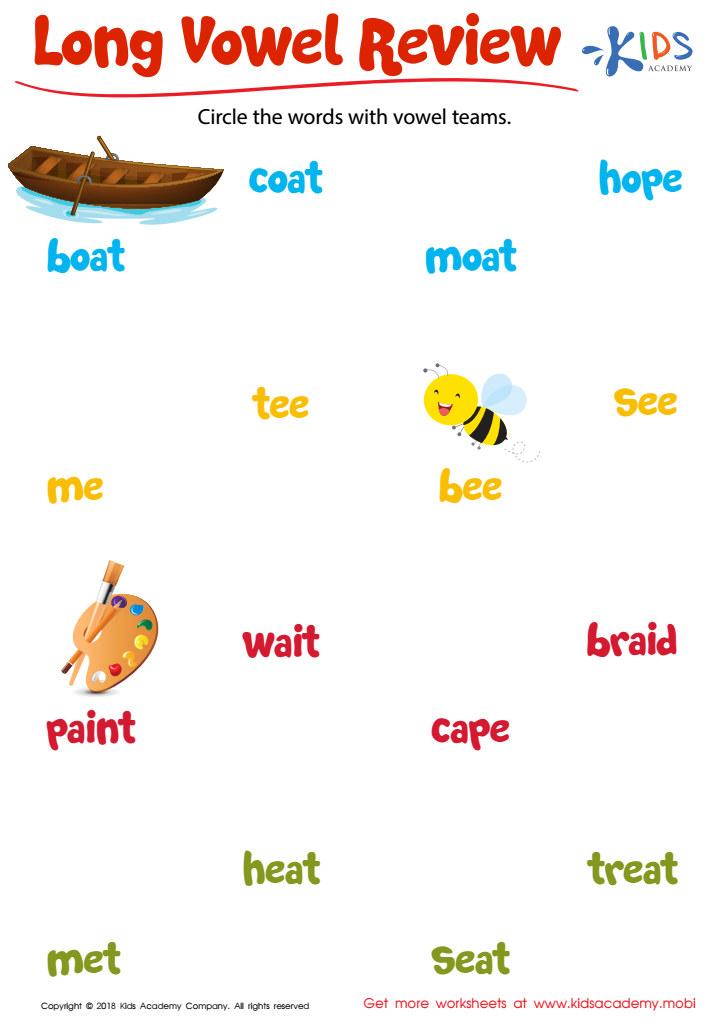
Long Vowel Review Worksheet
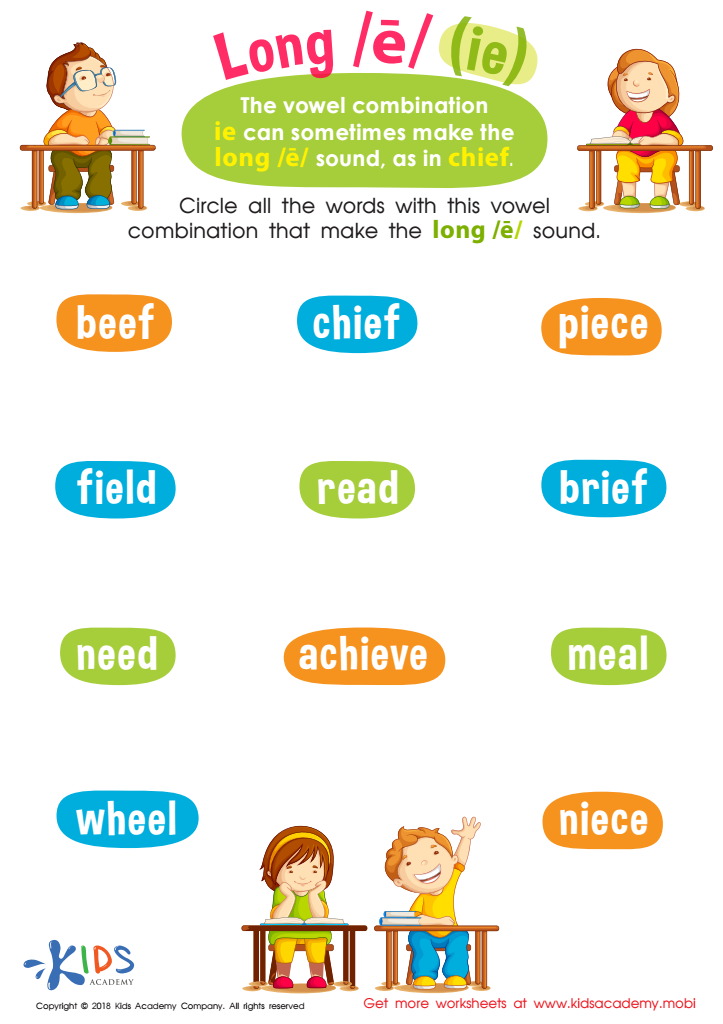
Reading: Long E and IE Worksheet
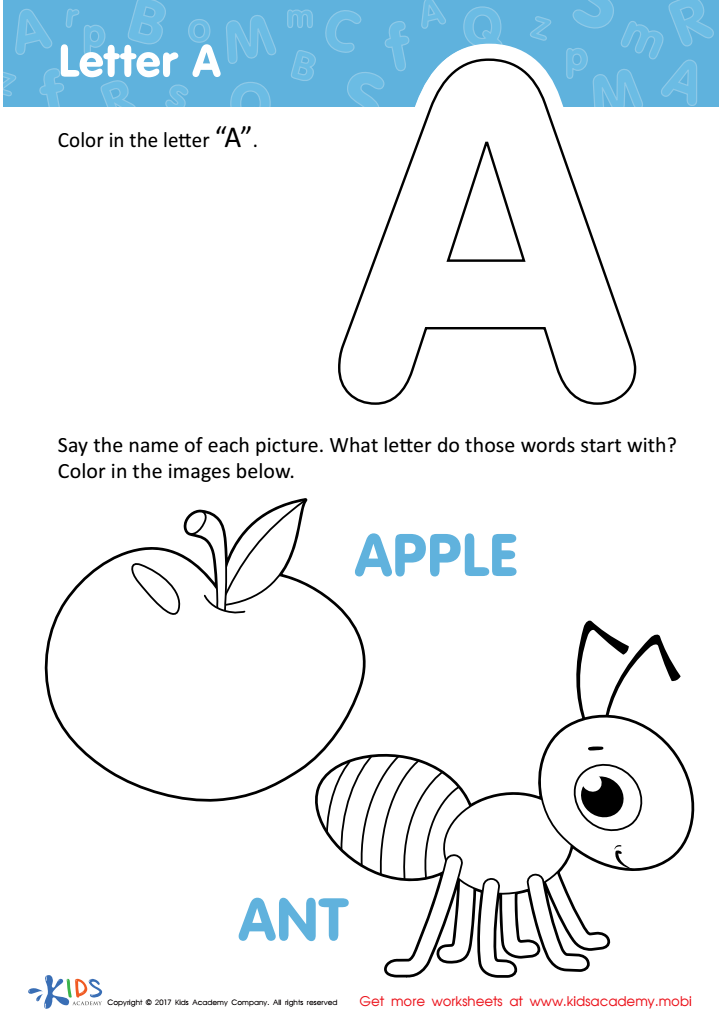
Letter A Coloring Sheet
 Assign to My Students
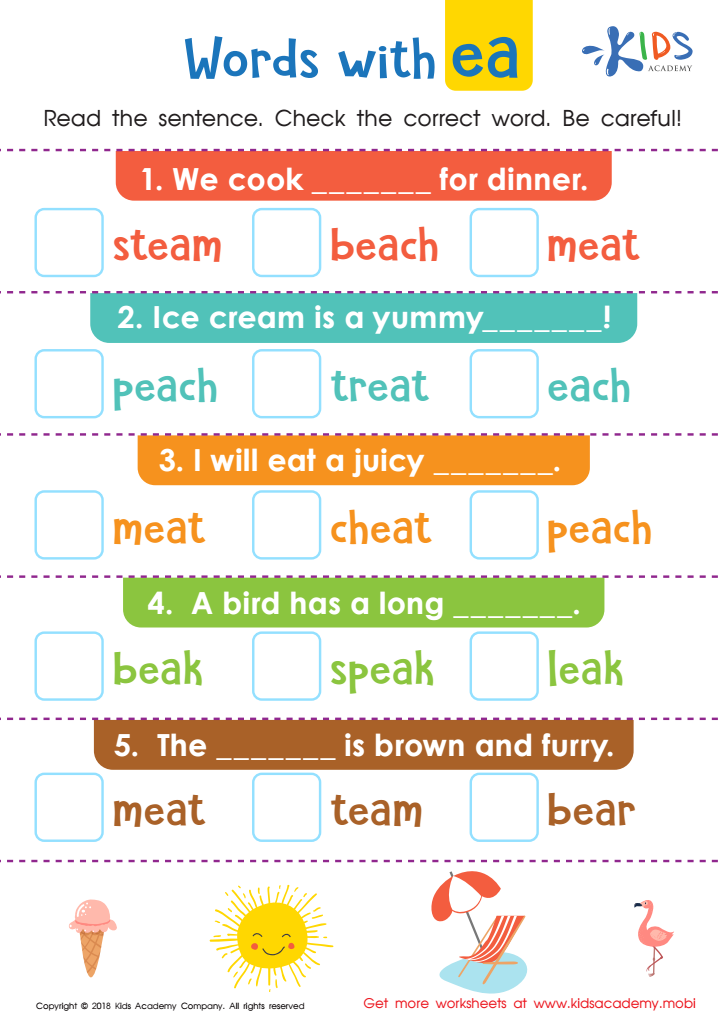
Words with ea Worksheet
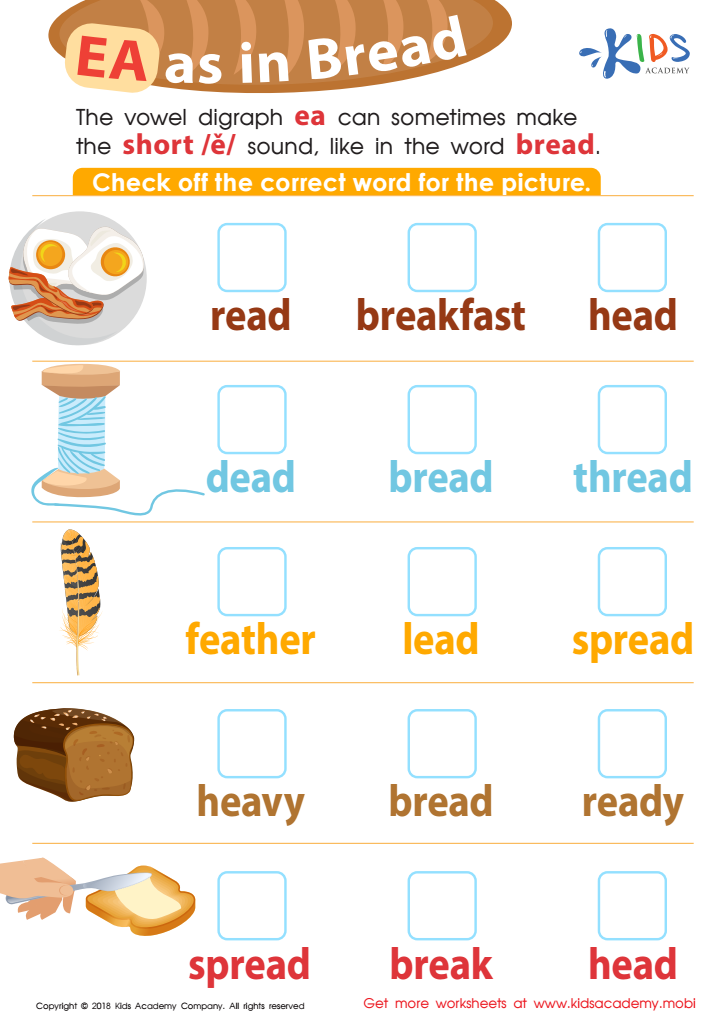
Reading: EA as in Bread Worksheet
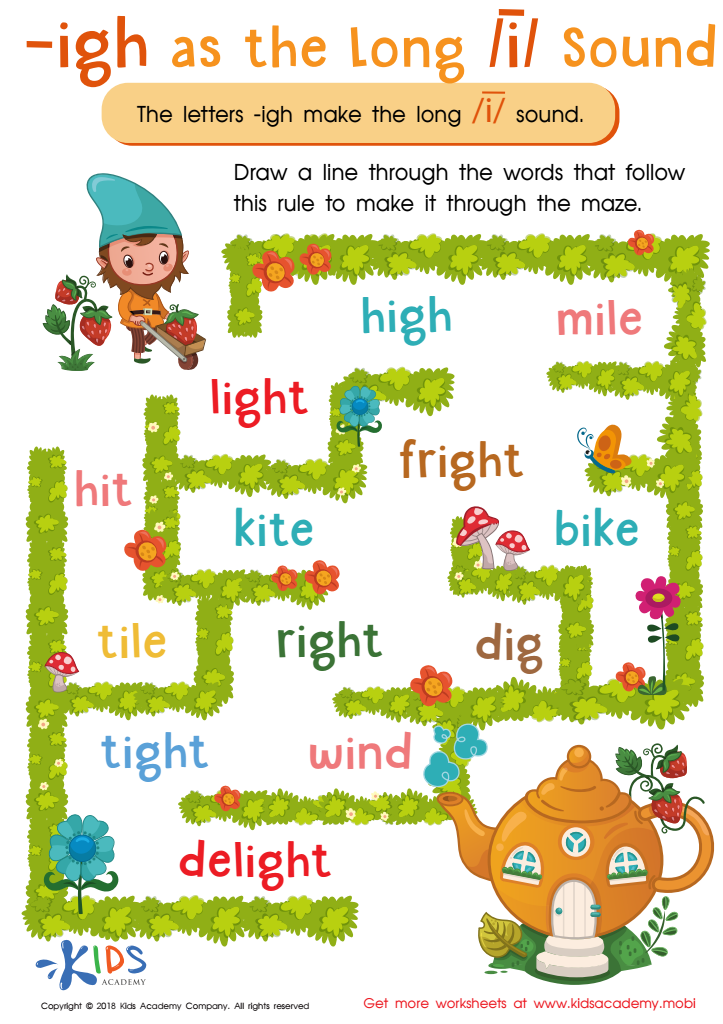
Reading: IGH as Long I Worksheet








Phonics practice is vital for 8-year-olds as it forms the foundation for reading and writing proficiency, skills essential for academic success. At this age, children often transition from learning to read to reading to learn, making strong phonics knowledge imperative. Mastering phonics helps students decode words, recognize patterns, and improve their overall literacy.
Parents and teachers should care about phonics because it promotes confidence in reading, allowing children to engage with a variety of texts independently. Furthermore, a solid grasp of phonics enhances spelling and vocabulary development, enriching their communication skills.
Struggling with phonics can lead to frustration and a negative attitude toward reading, which can impact other subjects. By integrating phonics practice into daily activities—through games, books, and engaging exercises—parents and teachers can make learning enjoyable and meaningful.
Additionally, consistent phonics practice aligns with educational standards and assessments, ensuring that students are well-prepared for academic challenges ahead. Investing time in phonics not only supports immediate literacy goals but also fosters a lifelong love for reading, which is crucial in our knowledge-driven world. Therefore, both parents and teachers play a key role in fostering effective phonics practices in their children’s education.







