
Vocabulary Building Normal Alphabet Worksheets for 8-Year-Olds
6 filtered results
Difficulty Level
Grade
Age
-
From - To
Subject
Activity
Standards
Boost your 8-year-old's vocabulary with our engaging Normal Alphabet Worksheets! Designed to enhance language skills, these worksheets provide fun and interactive activities that make learning enjoyable. Children will explore new words, improve their comprehension, and develop a love for reading through a variety of exercises tailored to their age. From matching exercises to fill-in-the-blanks, each worksheet encourages creativity and critical thinking. These activities not only reinforce proper letter formation but also promote spelling and word recognition. Perfect for at-home learning or classroom use, our worksheets are a valuable resource for parents and educators aiming to support vocabulary growth. Start your child’s journey today!
Favorites
With answer key
Interactive
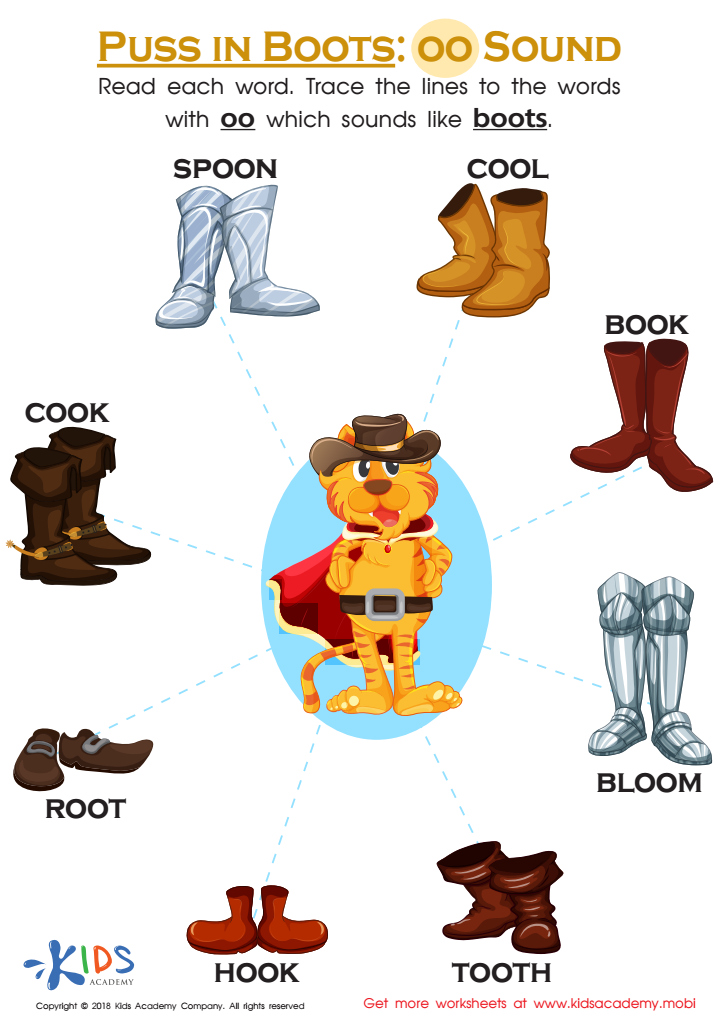
Puss in Boots: OO Sound Worksheet
Read out the words in this printout with the correct pronunciation. Have your child repeat each word after you. Then have them read the words and identify the ones with the "oo" sound. Guide their hands as they trace the lines to the right words.
Puss in Boots: OO Sound Worksheet
Worksheet
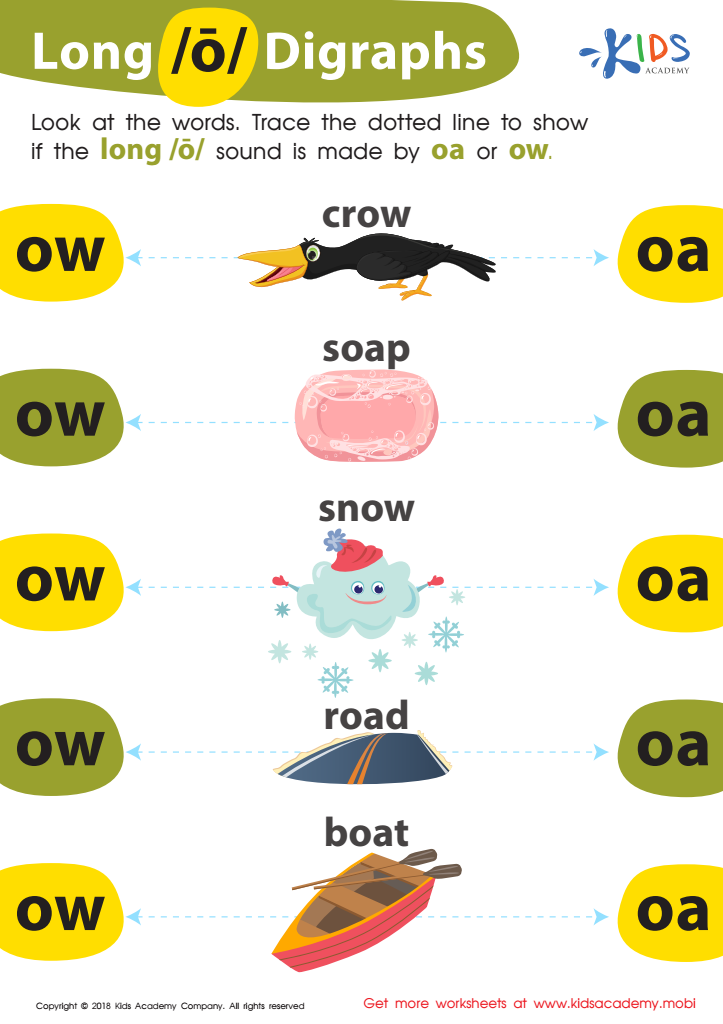
Reading: Long O Digraphs Worksheet
Reading and decoding words can be complex for learners when they start studying digraphs, two letters that make one sound. This worksheet focuses on the long O sound, /oa/ and /ow/. With the understanding of digraphs, students can decode more words and build their reading confidence.
Reading: Long O Digraphs Worksheet
Worksheet
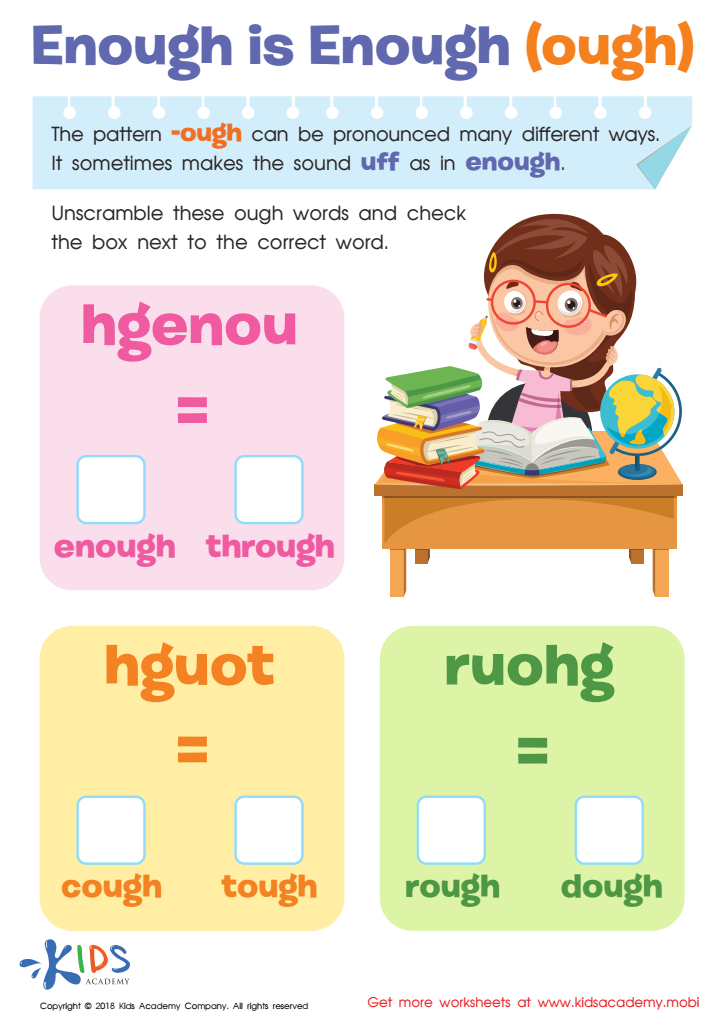
Enough Is Enough (ough) Worksheet
As your students learn more about reading and pronouncing words, they can explore how some word patterns can be said differently. The 'ough' pattern, for instance, can be pronounced several ways. 'Enough' has the 'uff' sound. Provide your students with examples of words pronounced similarly and help them unscramble 'ough' words on this worksheet, ticking the box for the correct word.
Enough Is Enough (ough) Worksheet
Worksheet
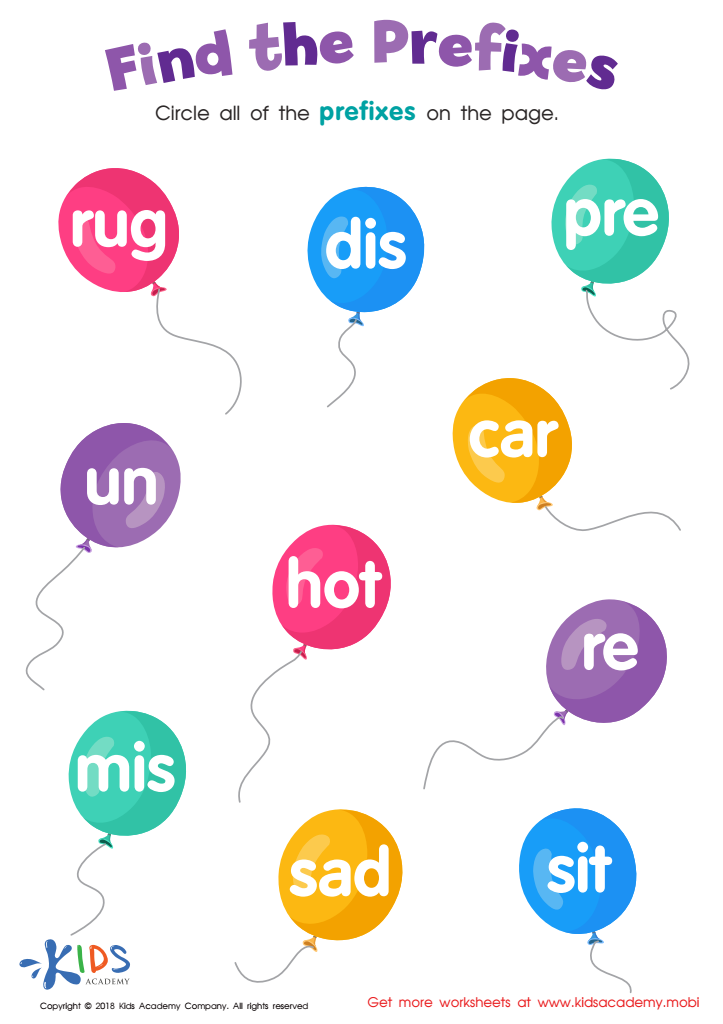
Reading: Find the Prefixes Worksheet
Students are asked to circle all prefixes on this worksheet and brainstorm a list of words that have them. It's a great tool for teaching vocabulary and helps students understand new and unfamiliar words by recognizing how prefixes change meaning.
Reading: Find the Prefixes Worksheet
Worksheet
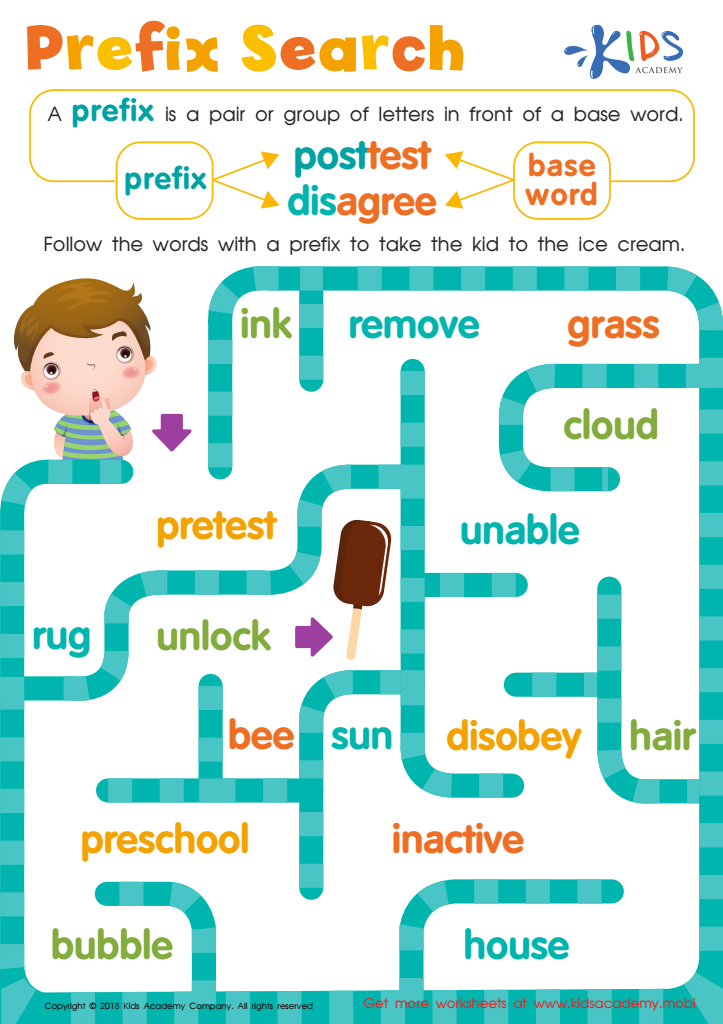
Reading: Prefix Search Worksheet
Maze your way through prefixes! This worksheet helps students practice reading new words with a prefix and figuring out the base word. An understanding of prefixes gives students the skills to comprehend new words. A fun and useful activity for the reading classroom!
Reading: Prefix Search Worksheet
Worksheet
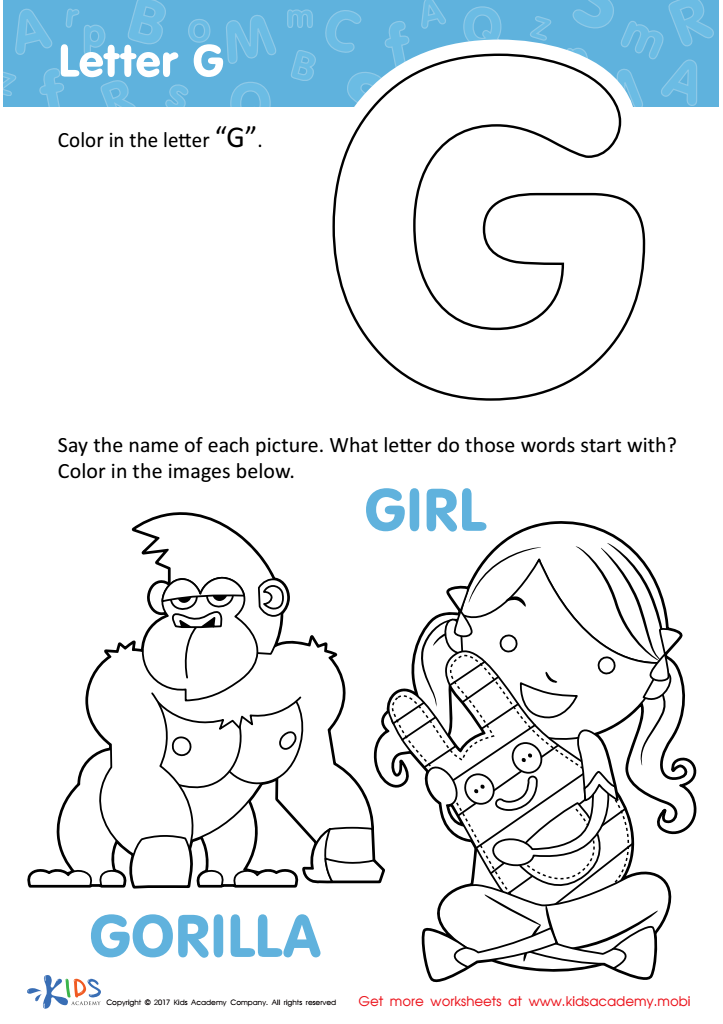
Letter G Coloring Sheet
This "G" coloring page encourages creativity and teaches kids the letter "G" sound. With its fun visuals and familiar words, it's sure to excite your child. Plus, you can talk about the letter’s sound with the pictures given.
Download (PDF)
 Assign to My Students
Assign to My Students
Letter G Coloring Sheet
Worksheet
Join Kids Academy for Free
Who is primarily going to use this learning content?




.jpg)


Vocabulary building is crucial for 8-year-olds as it lays the foundation for their communication skills, reading comprehension, and overall academic success. At this age, children engage with increasingly complex texts, and a robust vocabulary enables them to understand and express ideas more effectively. When parents and teachers focus on vocabulary development, they empower children to articulate their thoughts, feelings, and concepts with greater clarity and confidence.
Moreover, a strong vocabulary enriches children’s interactions with peers and adults, enhancing their social skills. It fosters critical thinking by enabling them to explore and manipulate language in diverse contexts, which is essential for subjects like math and science, where precise language is necessary.
Parents and teachers can make vocabulary building engaging and interactive. Activities like word games, storytelling, and reading varied texts encourage exploration and retention of new words. This not only makes learning fun but also integrates vocabulary expansion into everyday interactions.
In today’s fast-paced and information-rich world, being articulate and confident in language use is essential. By prioritizing vocabulary building, parents and teachers can provide children with essential tools that will support their lifelong learning and successful communication. Ultimately, a well-developed vocabulary helps children navigate the world more effectively.







