
Phonics recognition Normal Phonics Worksheets for 8-Year-Olds
4 filtered results
Difficulty Level
Grade
Age
-
From - To
Subject
Activity
Standards
Discover our engaging Normal Phonics Worksheets designed for 8-year-olds to enhance phonics recognition skills! These worksheets provide a fun and interactive way for children to explore letter sounds, blend phonemes, and build vocabulary. Tailored to align with educational standards, our printable resources feature various activities that promote reading fluency and comprehension. Each worksheet encourages critical thinking and boosts confidence in young learners as they practice distinguishing sounds and decoding words. Whether used at home or in the classroom, these phonics worksheets are an essential tool for fostering a strong foundation in reading. Explore our collection and ignite a passion for learning today!
Favorites
With answer key
Interactive
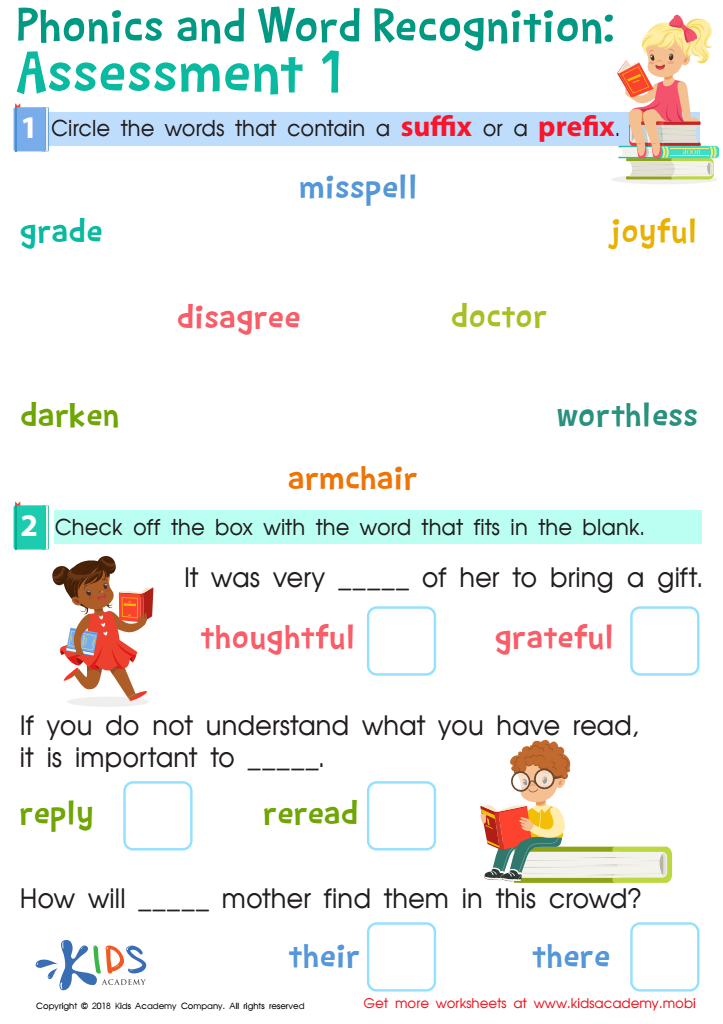
Phonics and Word Recognition: Assessment 1 Worksheet
Explain prefixes (words added to start of another word to give it a new meaning) and suffixes (added to end of word to change its meaning) to your kids with examples like 'unhappy' (prefix) and 'forgetful' (suffix). Now, help your child complete this worksheet, including circling words and checking boxes.
 Assign to My Students
Phonics and Word Recognition: Assessment 1 Worksheet
Worksheet
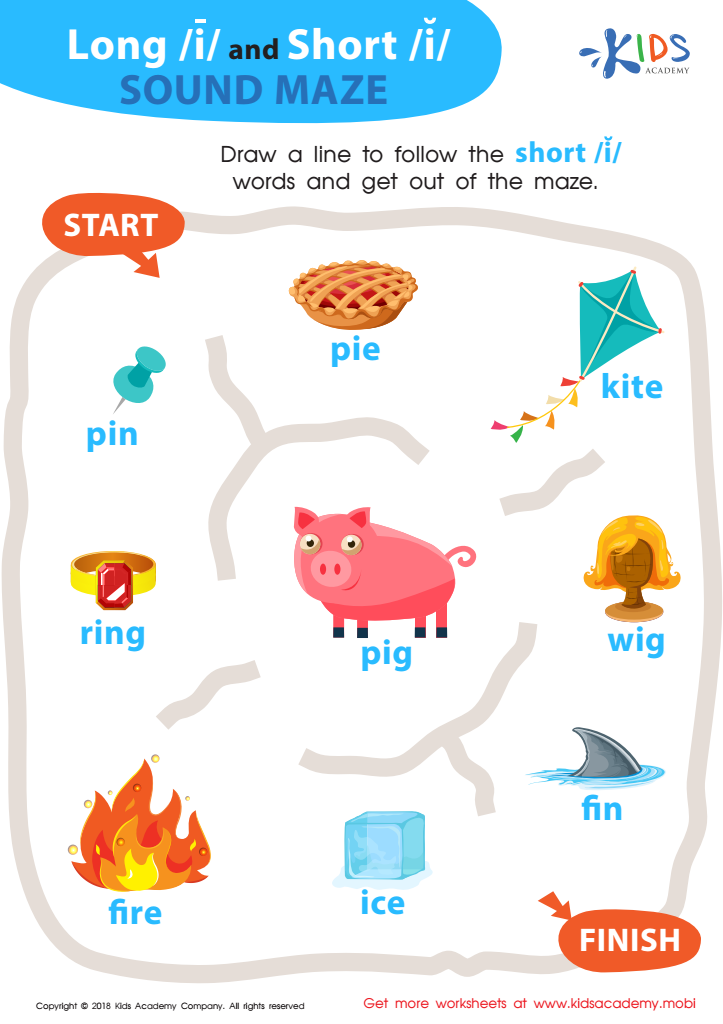
Reading: Long I and Short I Sound Maze Worksheet
Question your students if the worksheet is entertaining. They may respond negatively! Nonetheless, this activity will bring satisfaction while learning the distinction between a long and short I sound. Students read the words in the maze and only follow the words with the short I sound to finish the exercise. Grasping the difference between long and short vowels is demanding, but this worksheet helps students understand this reading skill.
Reading: Long I and Short I Sound Maze Worksheet
Worksheet
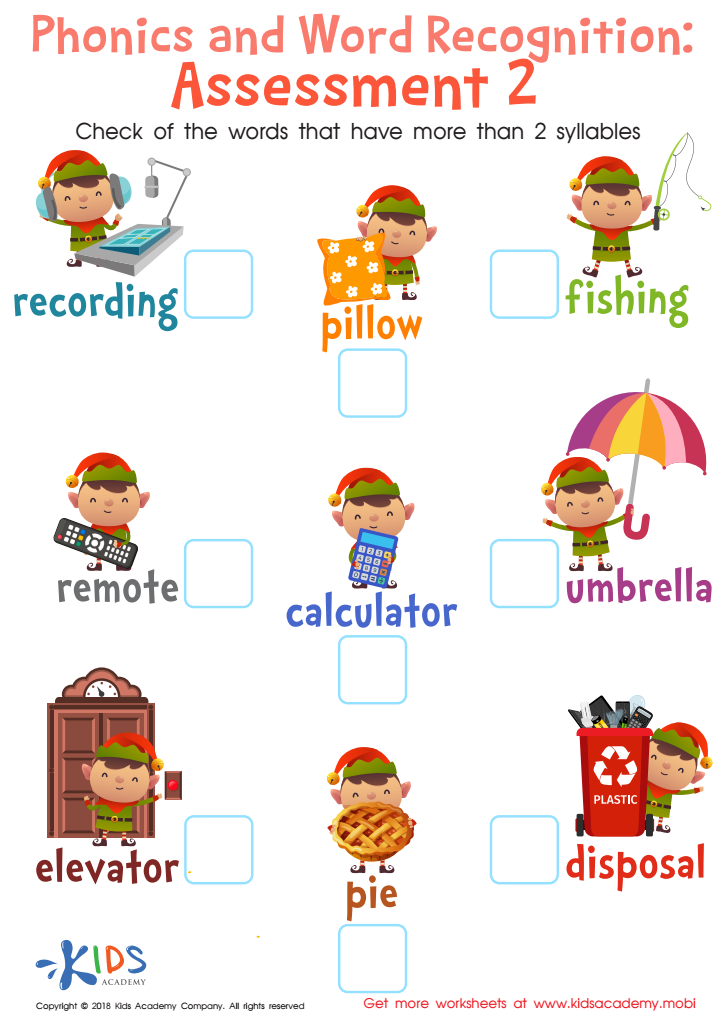
Phonics and Word Recognition: Assessment 2 Worksheet
Help your kids learn proper pronunciation by counting syllables. Most words they'll encounter have 1-3 syllables, making them simple to say. Have them repeat the words in your worksheet after you. Focus on longer words with more than two syllables.
Phonics and Word Recognition: Assessment 2 Worksheet
Worksheet
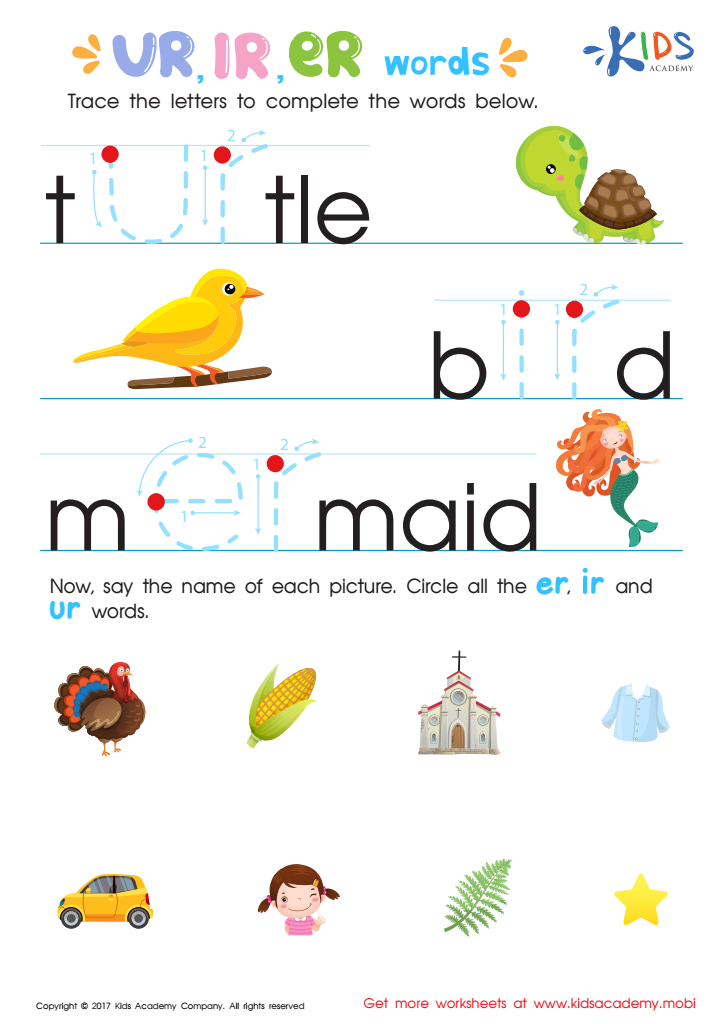
IR UR ER Words Worksheet
Trouble spelling words with the same initial vowel sound? Our worksheet is here to help! With its exercises to help your child learn to read and spell turtle, bird, and mermaid, it'll make differentiating these tricky digraphs a snap.
IR UR ER Words Worksheet
Worksheet
Join Kids Academy for Free
Who is primarily going to use this learning content?








Phonics recognition is crucial for 8-year-olds because it serves as the foundation for reading fluency and comprehension, pivotal skills in a child’s academic journey. At this age, children are transitioning from learning to read to reading to learn, making the ability to decode words vital. Mastery of phonics aids in the identification of letter-sound relationships, enabling children to tackle unfamiliar words and enhancing their reading confidence.
Parents and teachers should prioritize phonics recognition, as it supports literacy development not only in reading but also in spelling and writing. An understanding of phonics helps children break down and manipulate sounds, paving the way for effective communication skills.
Moreover, strong phonics skills are linked to better overall academic performance. When children are proficient at leveraging phonics, they are empowered to engage with diverse texts, fostering a love for reading and learning. Additionally, early investments in phonics education can reduce future literacy struggles, diminishing the risk of academic challenges later on. By nurturing phonics recognition in 8-year-olds, parents and teachers can contribute significantly to their long-term educational success and self-esteem, essential components of a well-rounded childhood experience.







