Phonics practice Normal Vowels Worksheets for 8-Year-Olds
5 filtered results
-
From - To
Our "Phonics Practice Normal Vowels Worksheets for 8-Year-Olds" offer engaging and educational activities designed to reinforce the understanding of vowel sounds in a fun and interactive way. Tailored for young learners, these worksheets help children master the fundamental aspects of phonics, enabling them to improve reading and writing skills. Featuring a variety of exercises, such as fill-in-the-blank tasks, matching activities, and sound recognition games, each worksheet focuses on enhancing phonemic awareness and vocabulary development. Ideal for classrooms or at-home learning, our resources empower 8-year-olds to become confident readers while enjoying the learning process. Get started today!
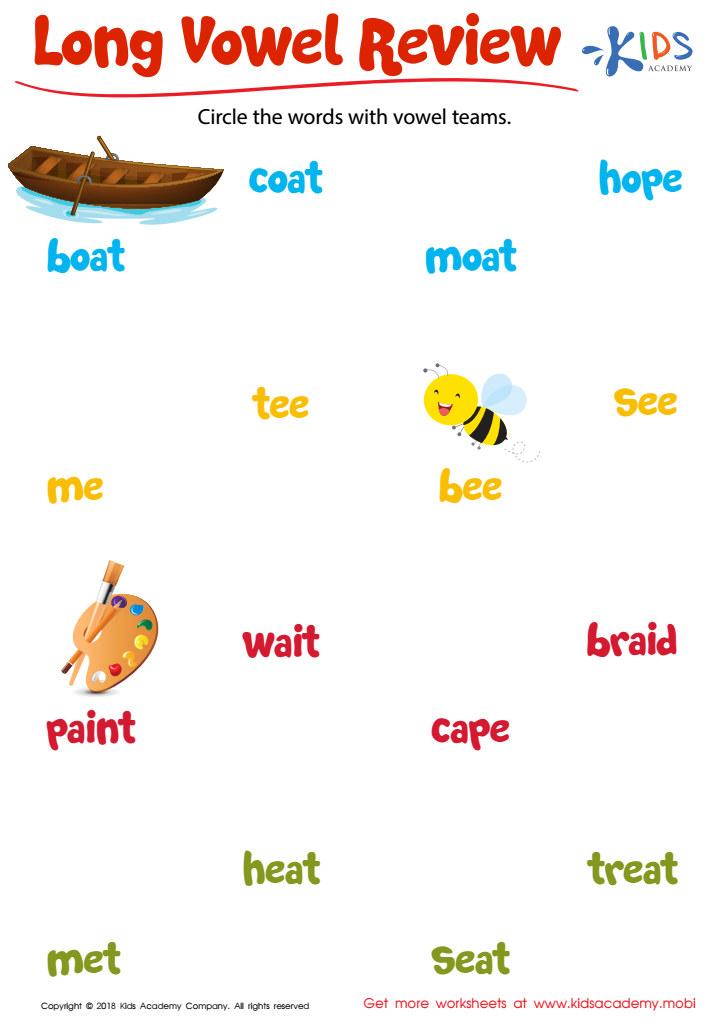
Long Vowel Review Worksheet
 Assign to My Students
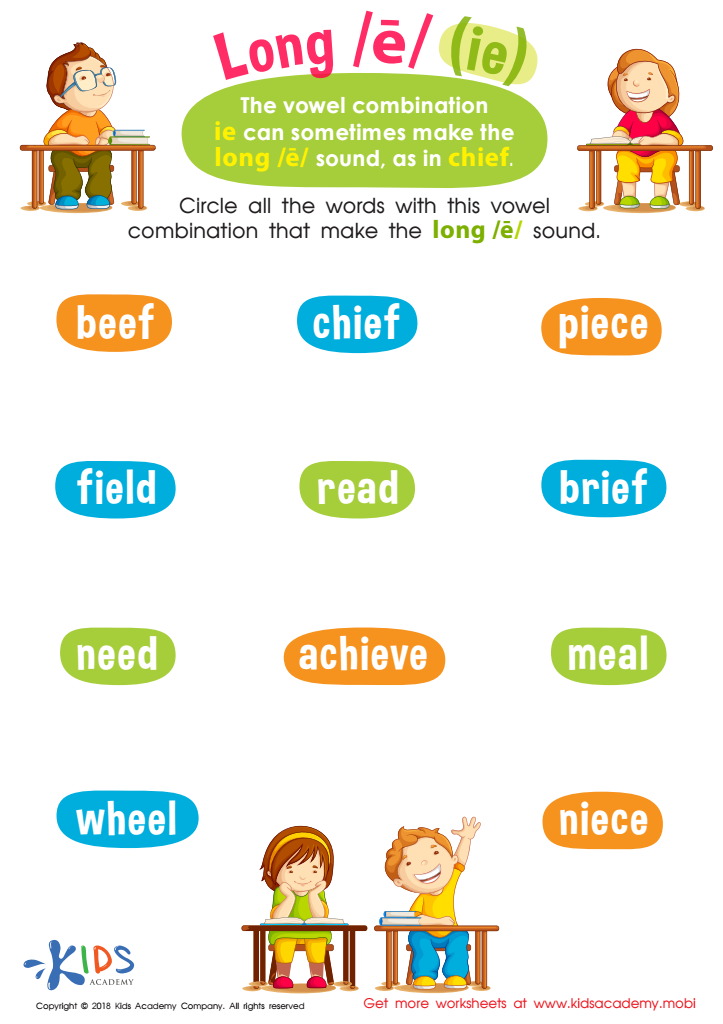
Reading: Long E and IE Worksheet
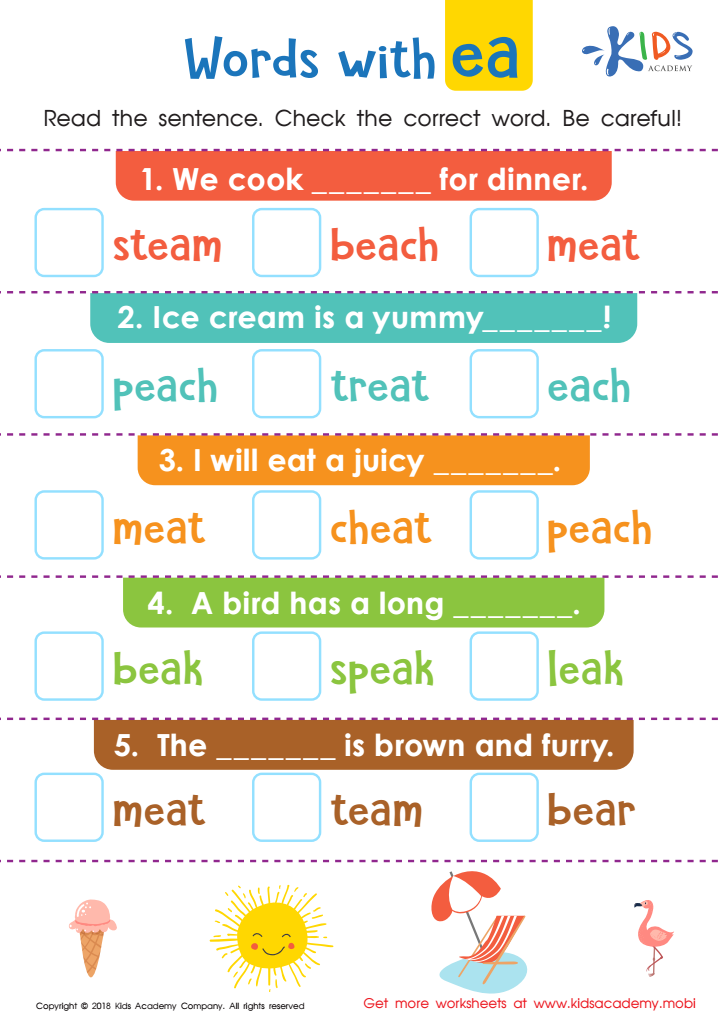
Words with ea Worksheet
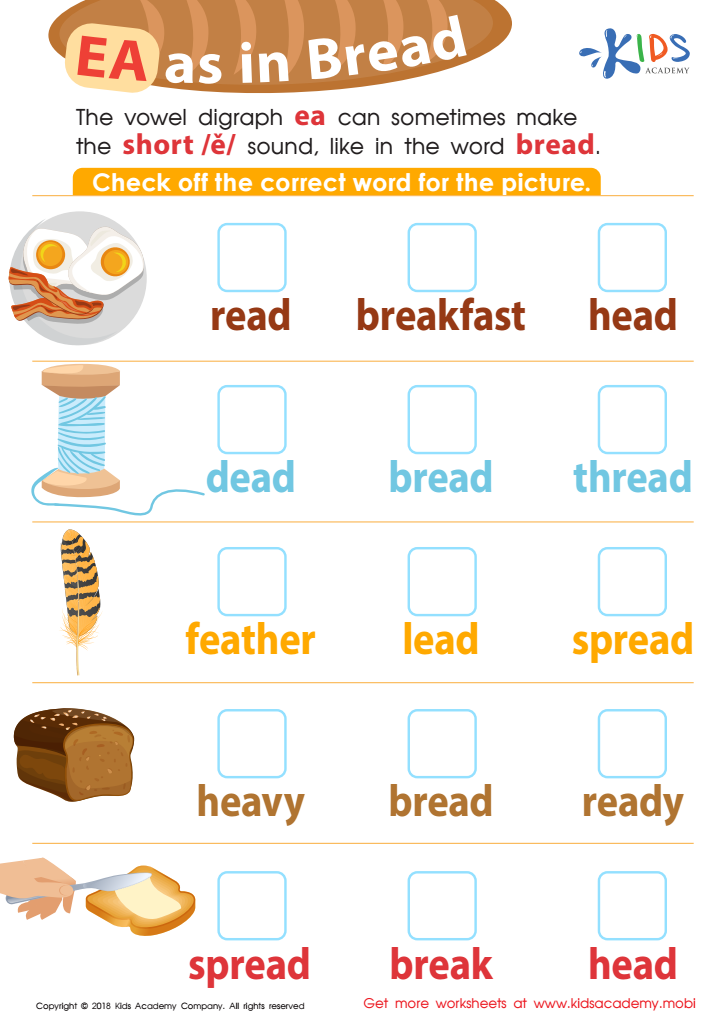
Reading: EA as in Bread Worksheet
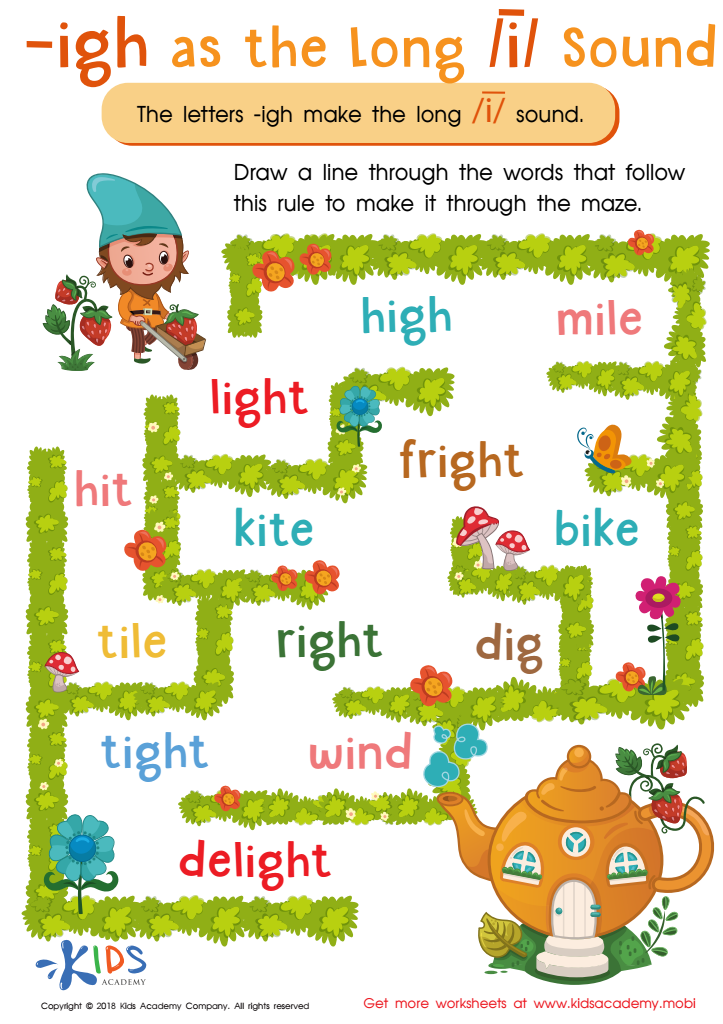
Reading: IGH as Long I Worksheet





Phonics practice, particularly focusing on normal vowels, is crucial for 8-year-olds as it forms the foundation for their reading skills and overall literacy development. At this age, children are usually transitioning from learning to read to reading to learn, making strong phonics abilities essential. Normal vowels, including their sounds and combinations, enable children to decode words more easily, enhancing their reading fluency and comprehension.
By engaging in phonics practice, children build confidence in their reading abilities, which can lead to greater enthusiasm for learning. Mastery of vowel sounds aids in spelling, writing, and pronunciation, facilitating clear communication and academic success. Additionally, phonics knowledge supports language processing, helping children connect sounds to letters and words meaningfully.
For parents and teachers, emphasizing phonics practice for normal vowels equips children with essential skills necessary for navigating increasingly complex texts and academic concepts. This practice ultimately promotes lifelong learning and literacy, preparing children not only for future schooling but for all avenues of life. Engaging in consistent phonics activities can be beneficial for children who may struggle in reading, ensuring all learners have the tools necessary to succeed academically. Thus, phonics practice is a vital component of early childhood education.






