Comparative analysis Normal Worksheets for 8-Year-Olds
3 filtered results
-
From - To
Discover effective educational resources with our "Comparative Analysis: Normal Worksheets for 8-Year-Olds". Our expertly designed worksheets focus on enhancing critical thinking and comparison skills in young learners. Engaging activities encourage intellectual growth, while interactive exercises ensure students stay motivated. Parents and educators can track progress using our in-depth comparative tools, making it easy to identify areas for improvement. Developed by Kids Academy, these worksheets cater to the developmental needs of 8-year-olds, combining fun with academic rigor. Equip your child with the thinking skills needed for success with these valuable and accessible learning materials.
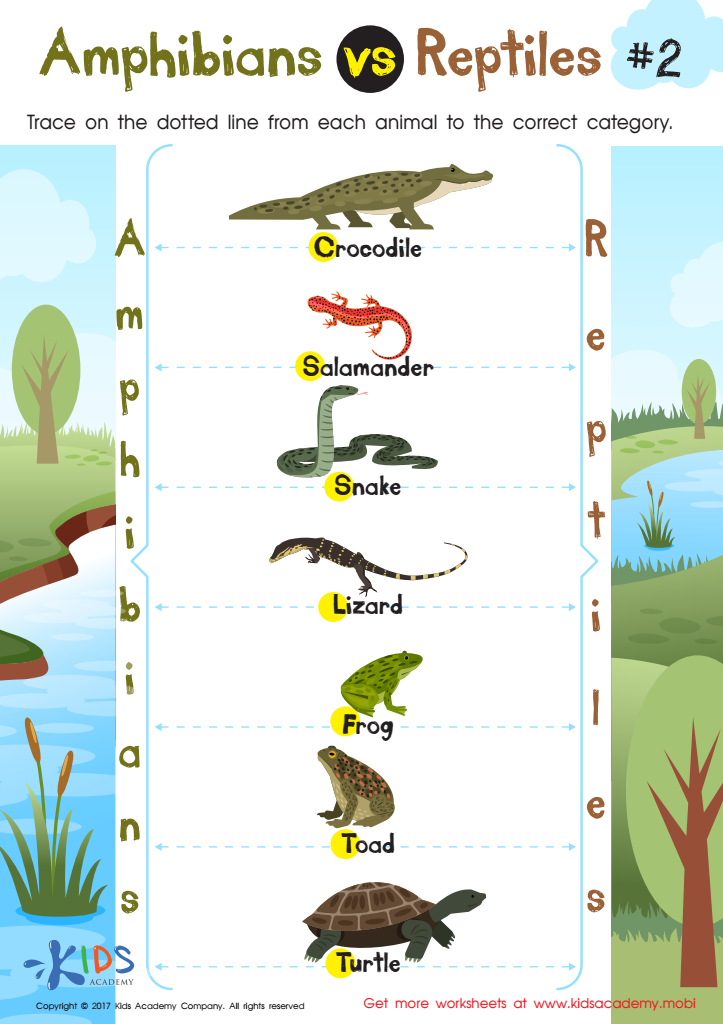
Amphibians vs Reptiles Worksheet for 3rd Grade
 Assign to My Students
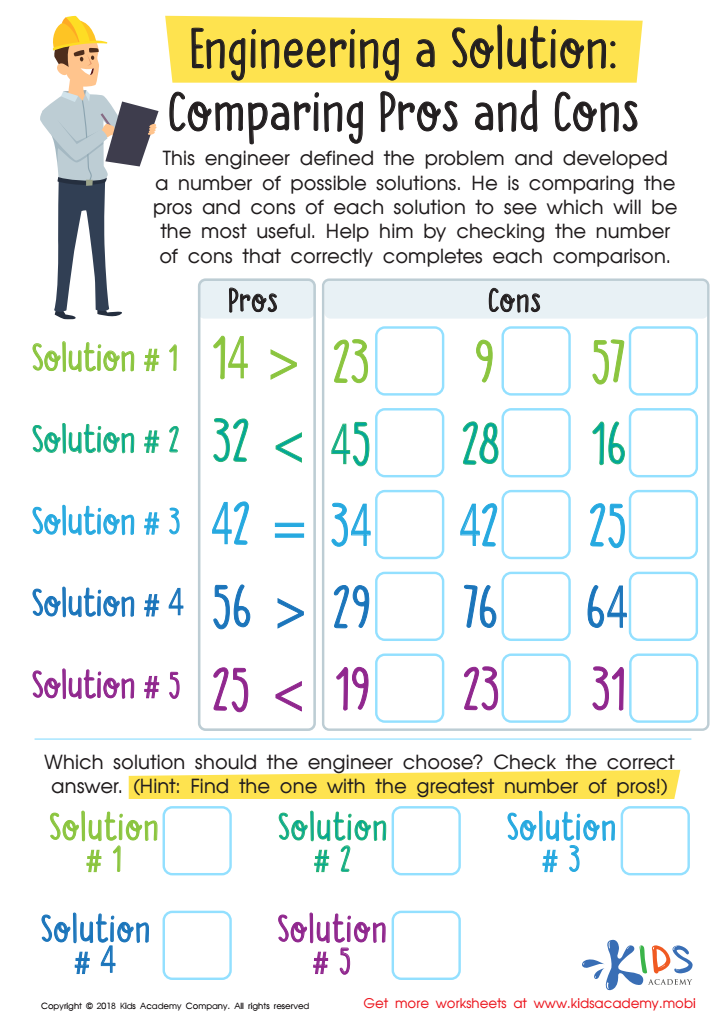
Engineering a Solution: Comparing Pros and Cons Worksheet
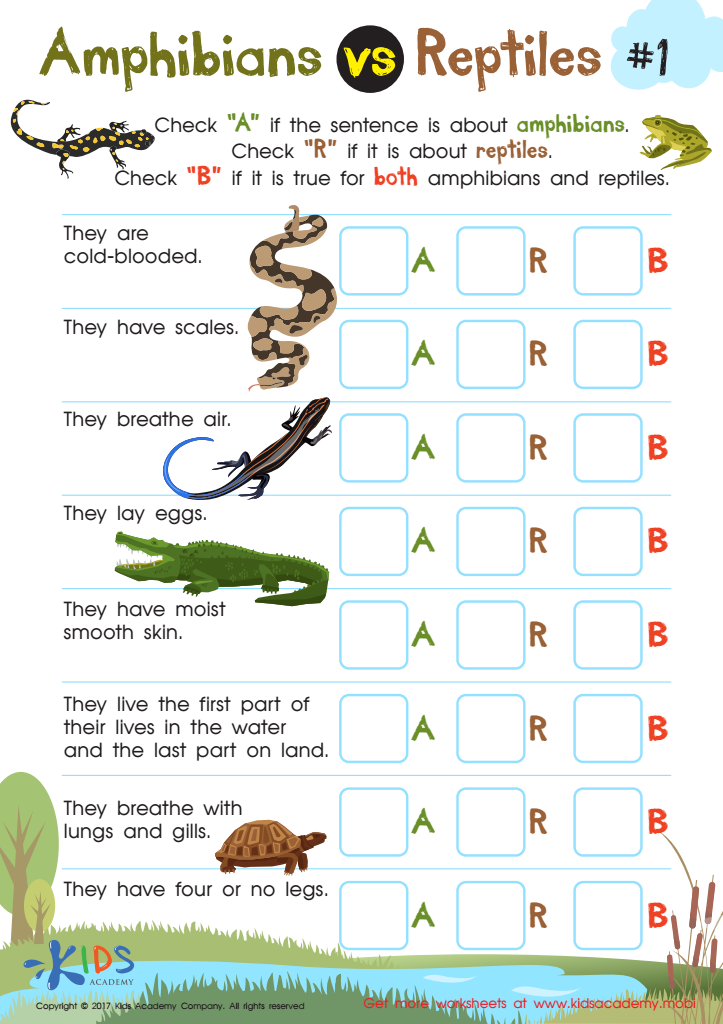
Amphibians vs Reptiles Worksheet





Parents and teachers should care about comparative analysis normal for 8-year-olds as it provides crucial insights into a child's development relative to established benchmarks. Comparing a child’s progress against age-appropriate norms helps identify strengths and areas needing attention, allowing for timely interventions that can steer the child towards achieving their full potential. By understanding where an 8-year-old should typically stand in terms of cognitive, social, emotional, and physical development, educators and parents can tailor learning activities and support strategies more effectively.
For instance, if literacy rates, mathematical understanding, or social skills differ significantly from the norm, it might prompt a need for specialized instruction or resources. On the emotional front, recognizing deviations can lead to better emotional support and conflict resolution strategies, fostering a more supportive learning environment. Besides academic growth, this insight aids in behavioral management by fostering environments that accommodate typical energy levels or attention spans of this age group, promoting a more conducive atmosphere for learning and personal growth.
Moreover, knowing these norms enables parents and teachers to set realistic expectations, reducing undue pressure while encouraging children toward achievable goals. Ultimately, awareness of developmental benchmarks ensures holistic development and well-being, laying a solid foundation for future educational success and personal fulfillment.








