Differentiating goods/services Normal Worksheets for 8-Year-Olds
3 filtered results
-
From - To
Welcome to our engaging collection of worksheets designed specifically for 8-year-olds, focused on differentiating between goods and services! Our thoughtfully crafted resources help young learners develop essential understanding of these important concepts in the world around them. Through interactive activities, colorful visuals, and real-life examples, children will enhance their critical thinking skills while identifying various types of goods and the services that fulfill needs in their everyday lives. Perfect for classroom use or at-home learning, these worksheets promote fun and educational experiences that support children's growth and comprehension. Explore our collection today and inspire your child’s learning journey!
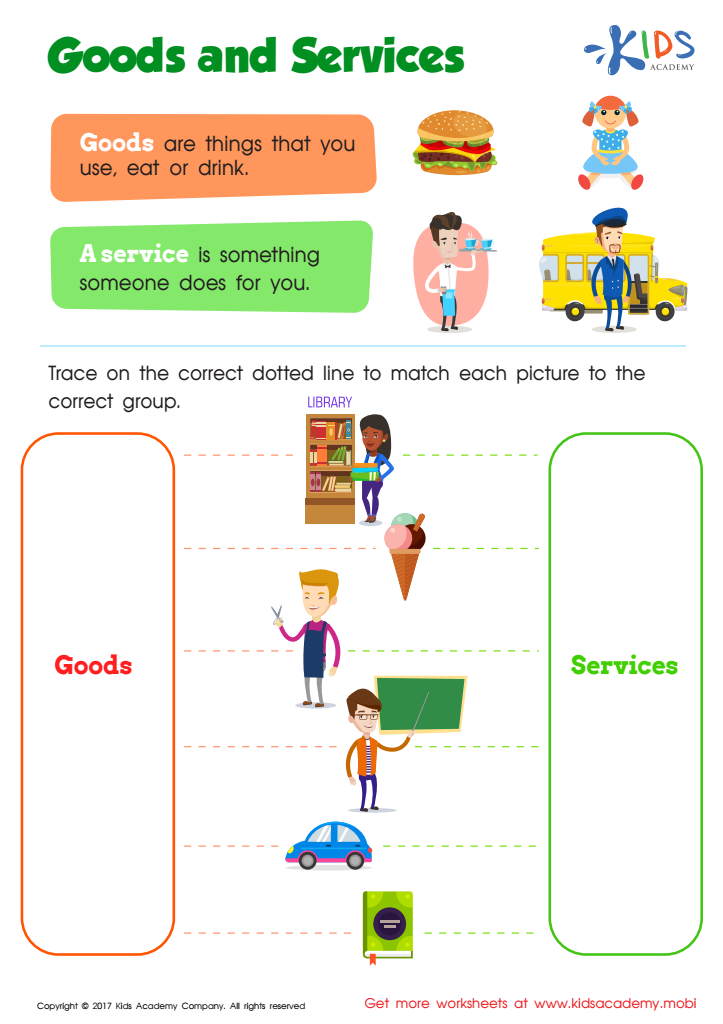
 Assign to My Students
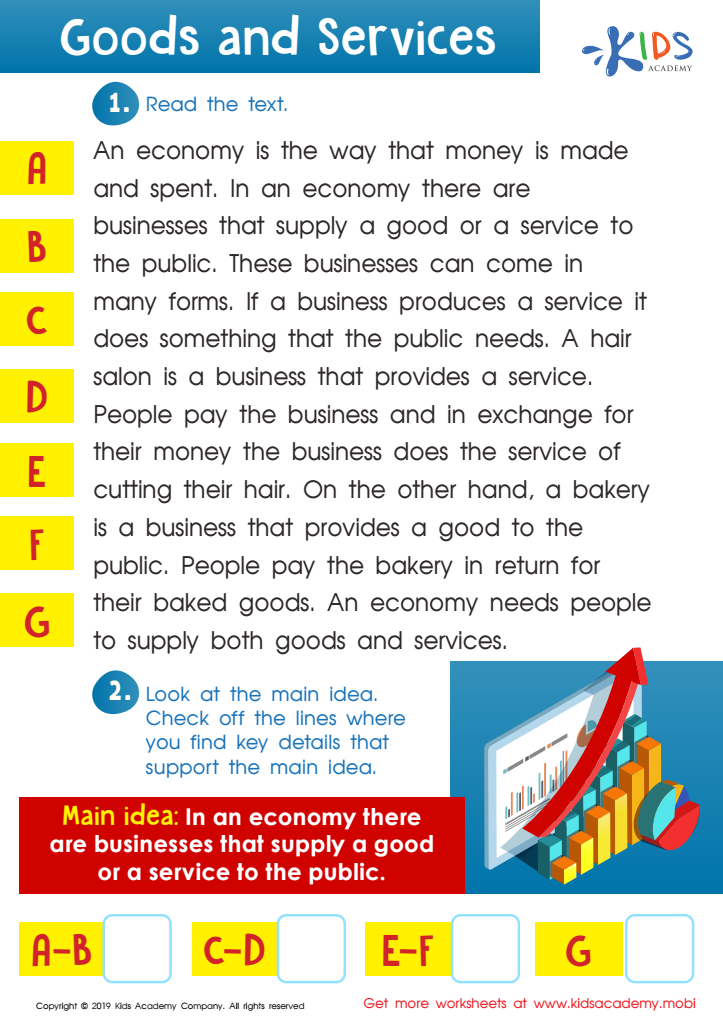
Goods and Services Worksheet
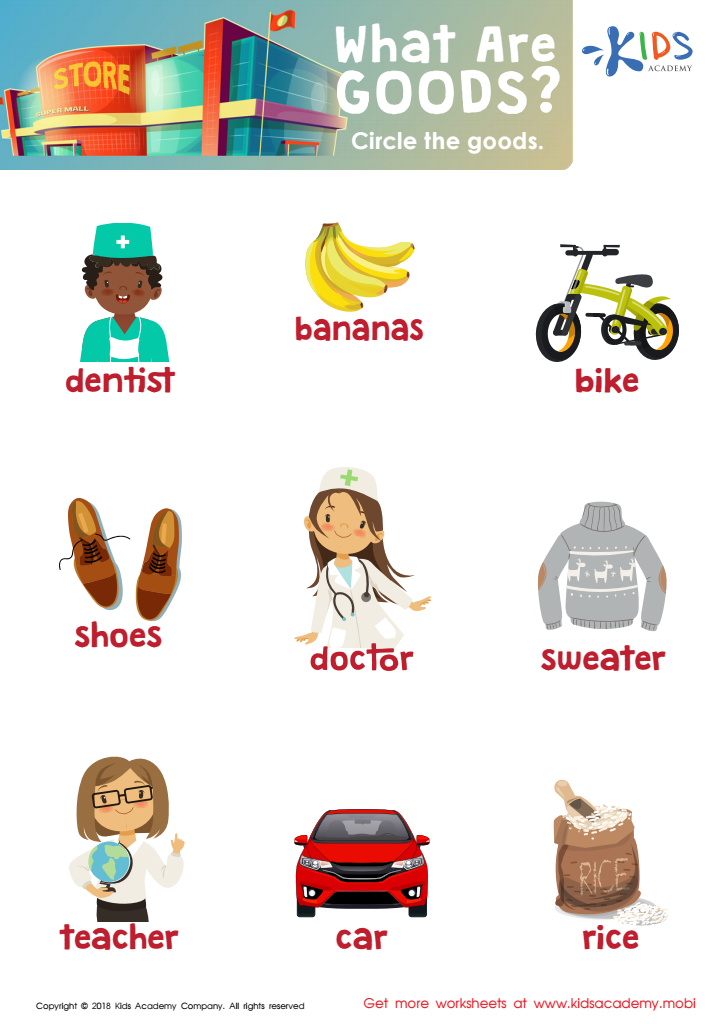
What Are Goods? Worksheet







Differentiating goods and services is an important concept for 8-year-olds to understand, as it helps them recognize the variety of products available that meet different needs and preferences. Parents and teachers should care about this for several reasons.
Firstly, it fosters critical thinking skills. When children learn about differentiating goods, they start to analyze why an item might be better for one person than another, promoting decision-making skills that are vital in everyday life. For example, understanding why one type of shoe may be better for running versus walking can translate into relevant real-world scenarios.
Secondly, it teaches children the value of individuality and diversity. Accepting that people have various preferences encourages empathy and respect for others' choices, which is important in their social development. Learning about differentiation helps kids grasp basic economics, such as supply and demand and pricing, preparing them for future financial literacy.
Lastly, when kids learn to differentiate goods and services, it can spark their creativity and inspire them to innovate. Whether through crafting unique products or solving problems through tailored services, understanding differentiation empowers them to think outside the box. In turn, these skills and values will be beneficial throughout their schooling and beyond.








