Recognizing number patterns Normal Numbers Worksheets for 8-Year-Olds
3 filtered results
-
From - To
Discover an engaging collection of "Recognizing Number Patterns" worksheets designed specifically for 8-year-olds. These interactive Normal Numbers worksheets help young learners identify and understand various number patterns through fun and educational activities. By working with sequences, skip counting, and recognizing odd and even numbers, children develop essential math skills that lay the foundation for more complex concepts. Perfect for classroom use or at-home study, these worksheets promote critical thinking and problem-solving abilities in a vibrant, supportive environment. Enable your child’s math readiness while keeping them entertained with these thoughtfully crafted resources. Explore the world of number patterns today!
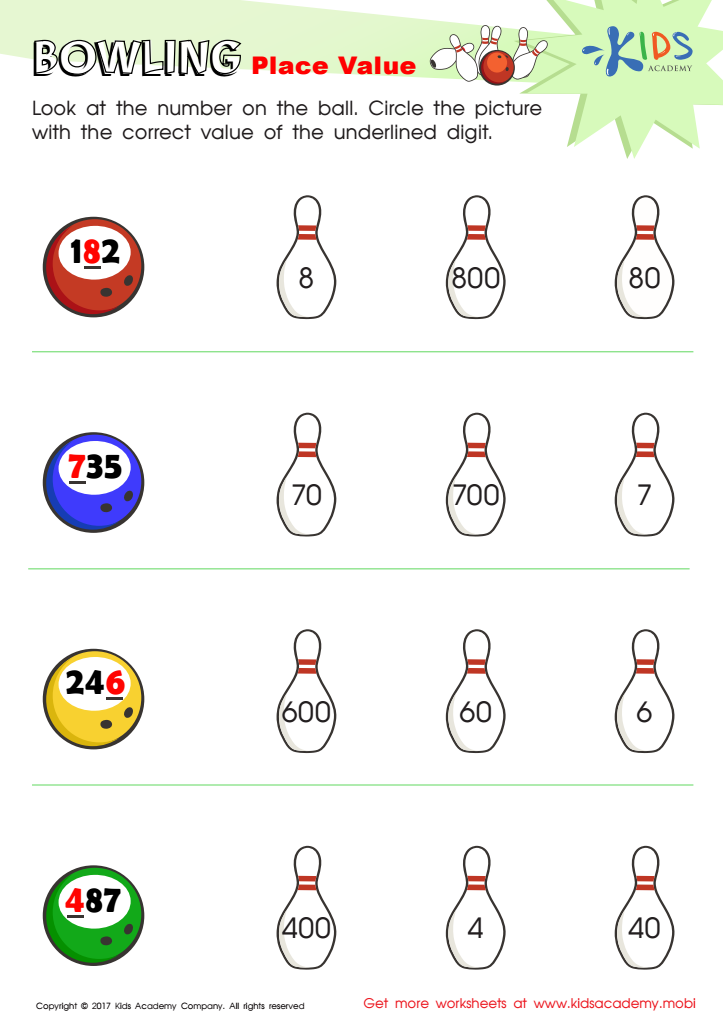
Place Value Worksheet
 Assign to My Students
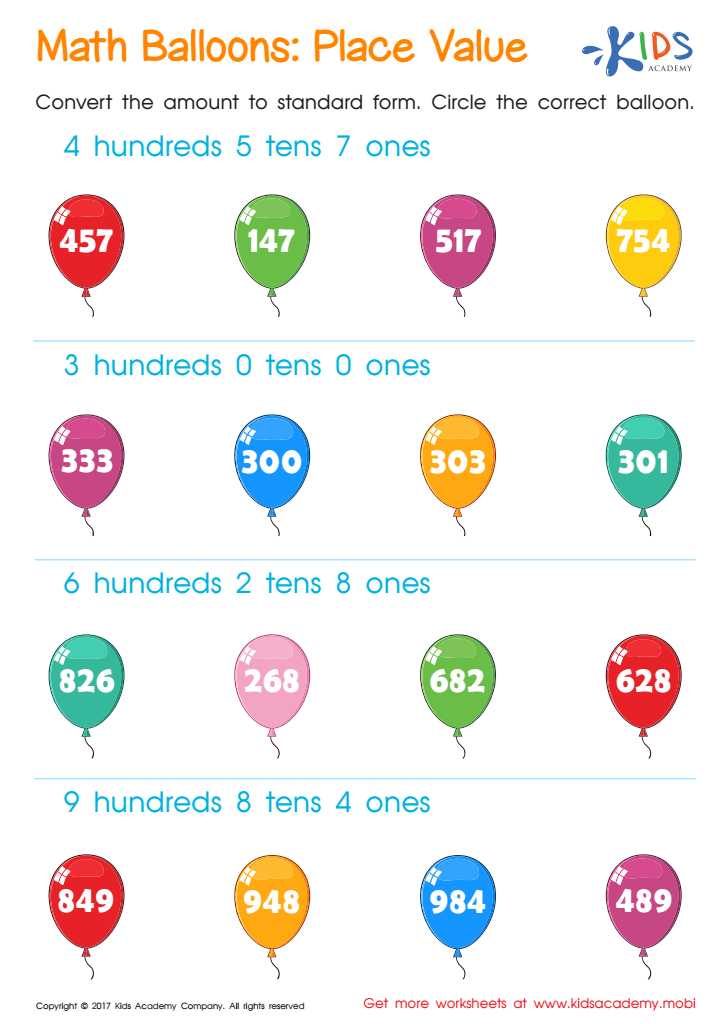
Place Value Printable Worksheet
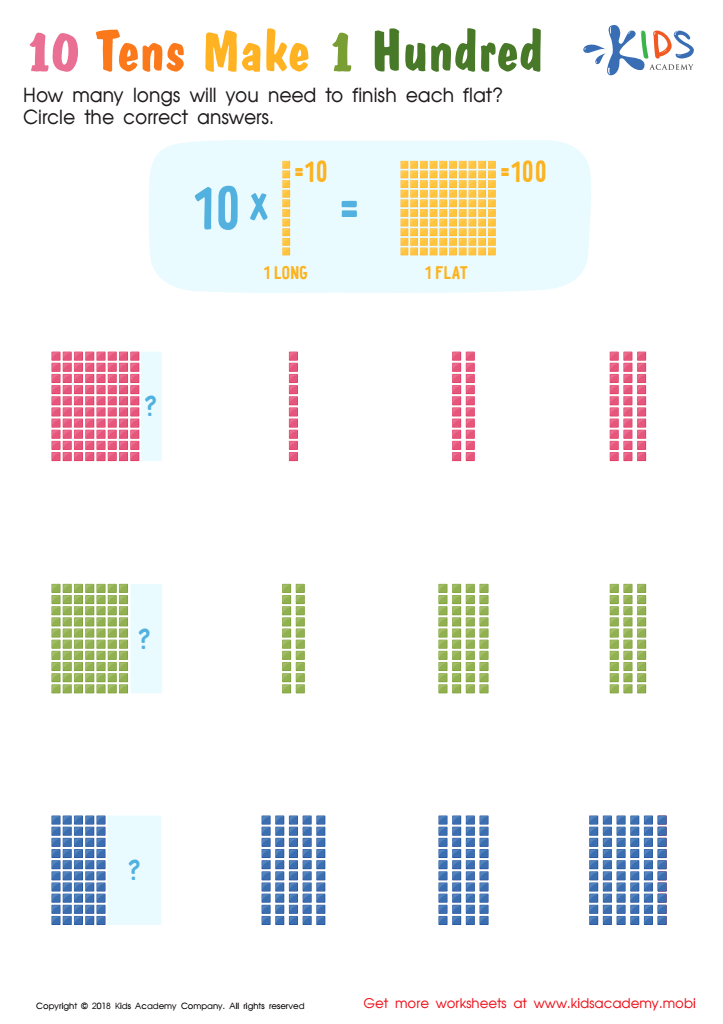
10 Tens Make 1 Hundred Worksheet








Recognizing number patterns and understanding normal numbers is crucial for 8-year-olds as it lays the foundation for their mathematical literacy and problem-solving skills. At this stage, children are transitioning from simple counting to more complex mathematical concepts. By identifying and understanding number patterns, they develop critical thinking skills that are essential in everyday life and future academic endeavors.
Parents and teachers should care about this because patterns enhance cognitive development, allowing children to make connections between numbers, improve their fluency in arithmetic, and build a strong number sense. Recognizing patterns—such as skip counting or addition sequences—helps students to predict outcomes, understand basic algebraic concepts, and visualize relationships between numbers.
Furthermore, when children grasp the concept of normal numbers—those appearing consistently in everyday calculations—they become better equipped to tackle real-world problems. It fosters a positive attitude toward math, enabling confidence in tackling more advanced topics later on. Engaging children with activities that emphasize number patterns not only makes learning fun but also supports their overall intellectual development. Ultimately, a strong grasp of these foundational concepts can inspire a lifelong appreciation and enthusiasm for mathematics.








