Recognizing number patterns Normal Math Worksheets for 8-Year-Olds
3 filtered results
-
From - To
Discover our engaging "Recognizing Number Patterns" Normal Math Worksheets for 8-year-olds! Designed to enhance mathematical skills, these worksheets focus on identifying and understanding sequences and patterns. Perfect for reinforcing core concepts, students will enjoy a variety of fun activities that challenge them to recognize numbers in different configurations, analyze trends, and complete sequences. Each worksheet is tailored to foster critical thinking and boost confidence in young learners, making math enjoyable and accessible. Ideal for teachers and parents, our resources are printable and easy to use at home or in the classroom. Start your child's math journey today with our interactive resources!
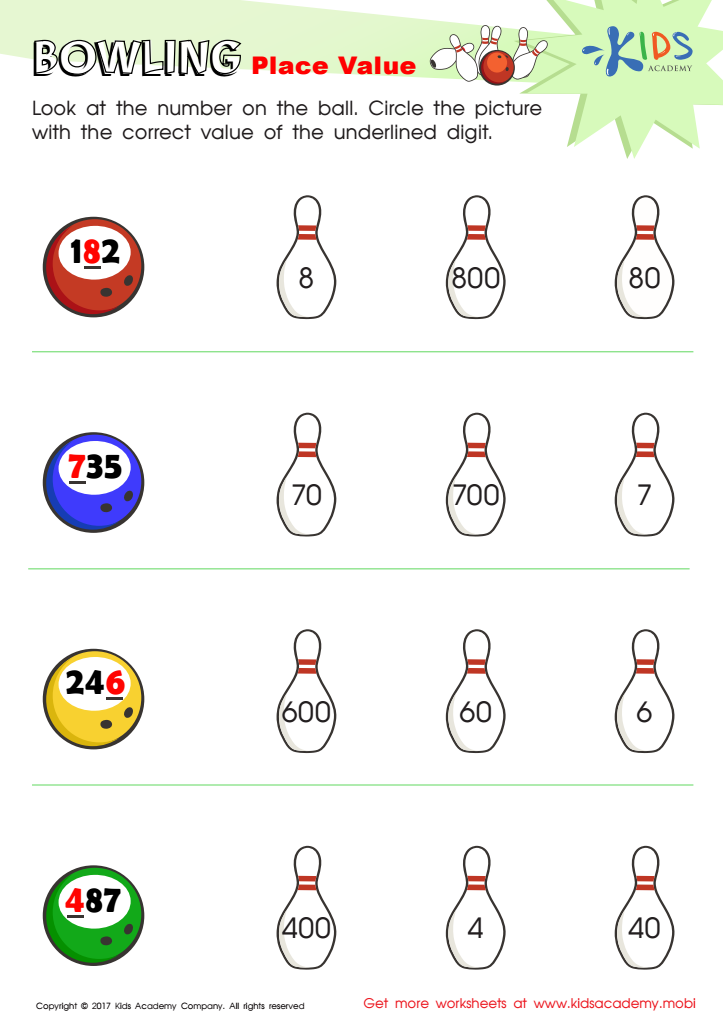
Place Value Worksheet
 Assign to My Students
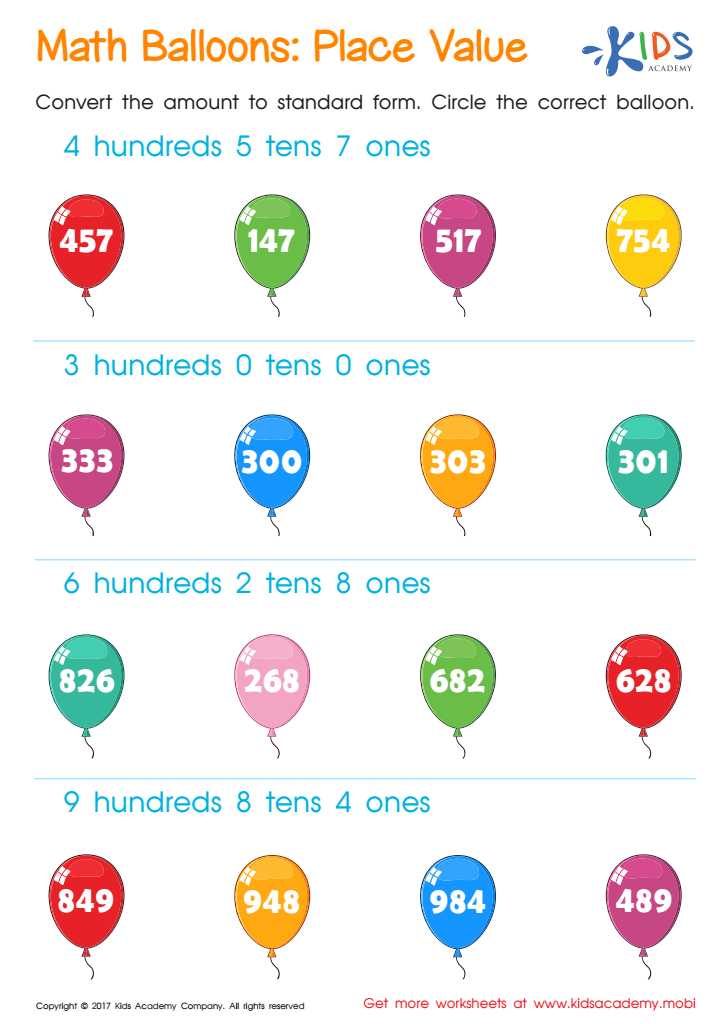
Place Value Printable Worksheet
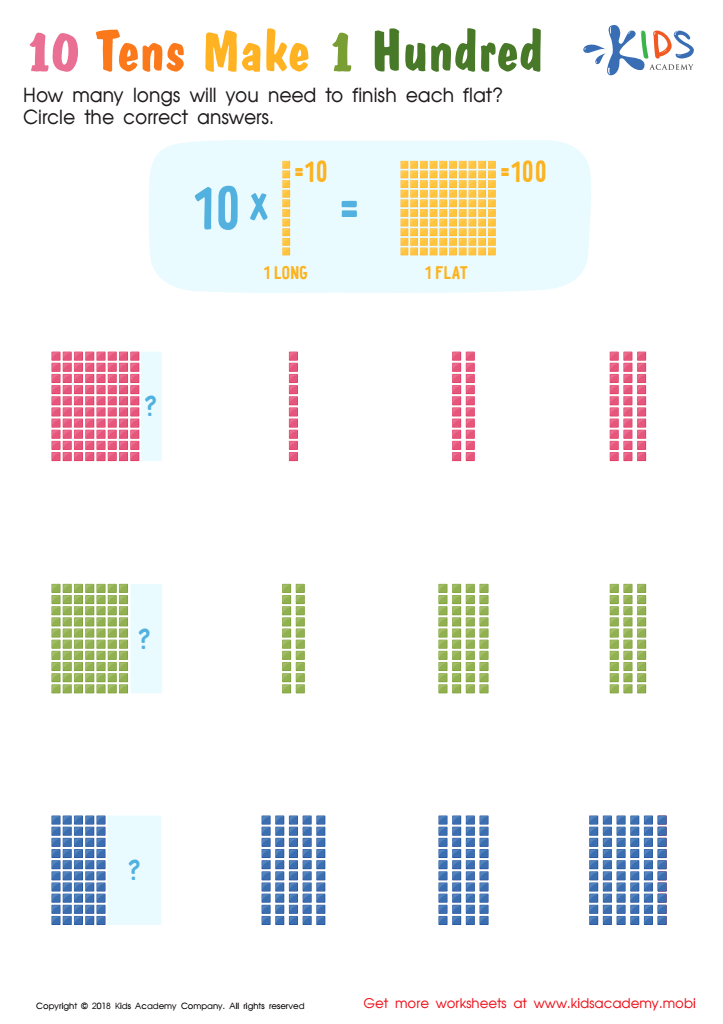
10 Tens Make 1 Hundred Worksheet







Recognizing number patterns is crucial for 8-year-olds, as it lays the foundation for advanced mathematical concepts. At this age, children are developing their critical thinking and problem-solving skills. Understanding patterns helps them recognize relationships between numbers, which is essential in operations such as addition, subtraction, multiplication, and division.
When parents and teachers emphasize pattern recognition, they foster a child's ability to anticipate outcomes and solve problems more efficiently. This skill is transferable beyond math, cultivating logical reasoning and analytical skills applicable in various real-world situations.
Moreover, recognizing number patterns boosts confidence in young learners. As they identify and manipulate these patterns, they develop a sense of achievement and a positive attitude towards math. It also engages their curiosity, prompting them to explore further and discover more mathematical concepts.
In addition to cognitive benefits, recognizing patterns enriches social learning. Group activities involving patterns can encourage teamwork and communication among peers, essential skills in a collaborative world. Ultimately, supporting children in recognizing number patterns set them up for future success in math and related fields, preparing them for lifelong learning and a robust understanding of the world around them.








