Understanding times tables Normal Math Worksheets for 8-Year-Olds
3 filtered results
-
From - To
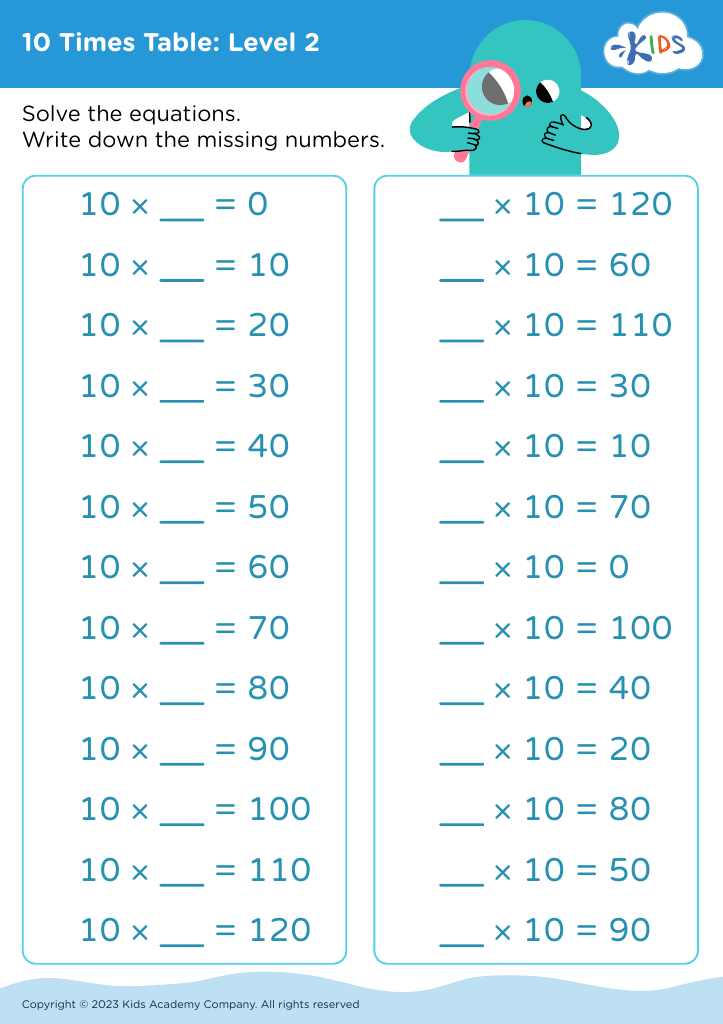
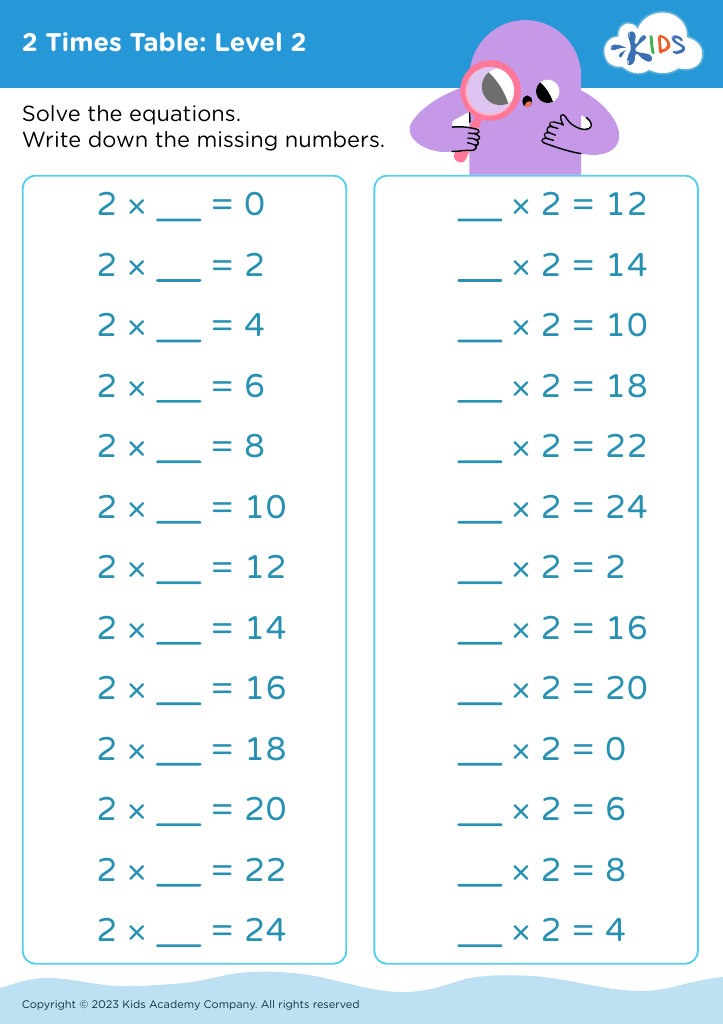
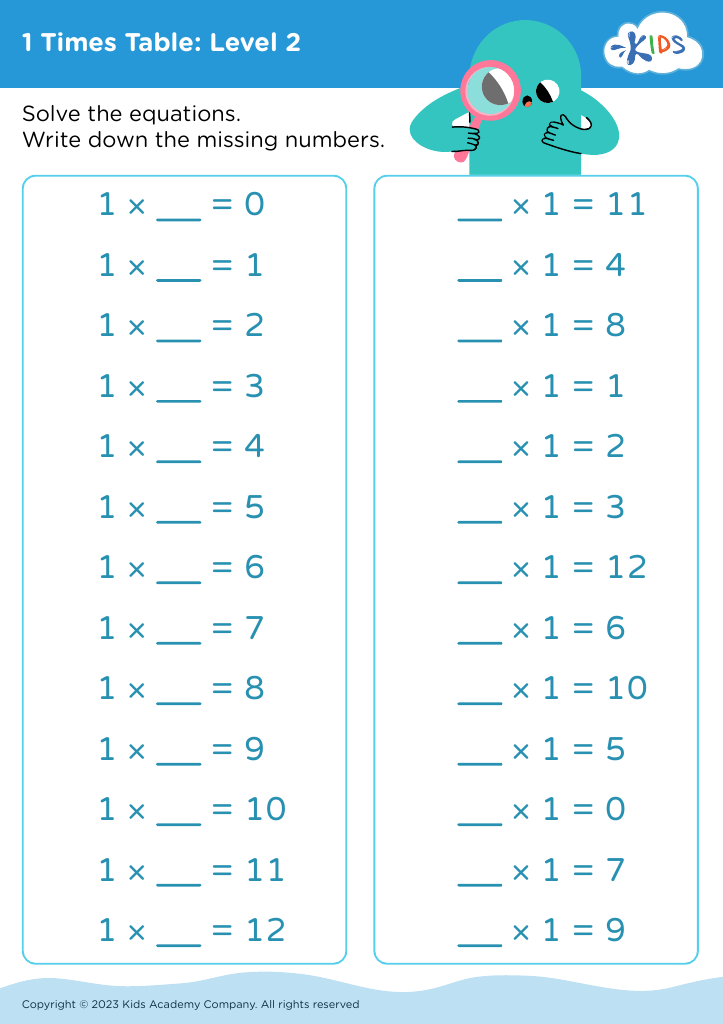
Welcome to our "Understanding Times Tables Normal Math Worksheets" page designed specifically for 8-year-olds! These engaging worksheets aim to make learning multiplication fun and accessible. Ideal for young learners, our resources help reinforce mathematical concepts through a variety of exercises. With colorful visuals and interactive challenges, children will develop fluency in times tables and build a strong foundation for future math proficiency. Each worksheet is crafted to accommodate different learning styles, ensuring every child can master their times tables in an enjoyable way. Explore our collection today and help your child unlock the secrets of multiplication with confidence!







Understanding times tables is fundamental for 8-year-olds as it lays the groundwork for their overall mathematical development. At this age, children begin to tackle more complex concepts involving multiplication and division, so mastering times tables enhances their confidence and fluency in math. It helps them recognize patterns, build problem-solving skills, and fosters logical thinking.
Parents and teachers play a crucial role in supporting this learning phase. When children grasp times tables, they become more efficient in calculations, allowing them to focus on advanced developments in math, such as fractions and area measurement. In real-life situations, knowledge of times tables helps with practical tasks, such as budgeting, time management, and cooking.
Moreover, proficiency in multiplication fosters a positive attitude towards math, encouraging lifelong learning and curiosity. Parents can cultivate this skill through engaging activities, games, or repetition, while teachers can integrate discovery methods that make learning interactive and enjoyable.
By prioritizing times tables, parents and teachers set a solid foundation that impacts children's academic success and instills confidence, helping them enjoy mathematics instead of fearing it. Ensuring children have a strong understanding of times tables is essential for their overall cognitive development and success in future math endeavors.








