Mental math skills Normal Subtraction Worksheets for 8-Year-Olds
3 filtered results
-
From - To
Enhance your child's mental math skills with our Normal Subtraction Worksheets for 8-Year-Olds. These carefully crafted worksheets focus on developing quick, accurate subtraction abilities essential for everyday math tasks. Each worksheet is designed to challenge and engage young learners, boosting their confidence and proficiency in mental subtraction. With various exercises ranging from straightforward problems to more complex ones, our collection cultivates critical thinking and problem-solving skills. Ideal for mastering subtraction within and beyond the basic facts, these worksheets are perfect for classroom use or at-home practice, ensuring your child builds a strong foundation in math.
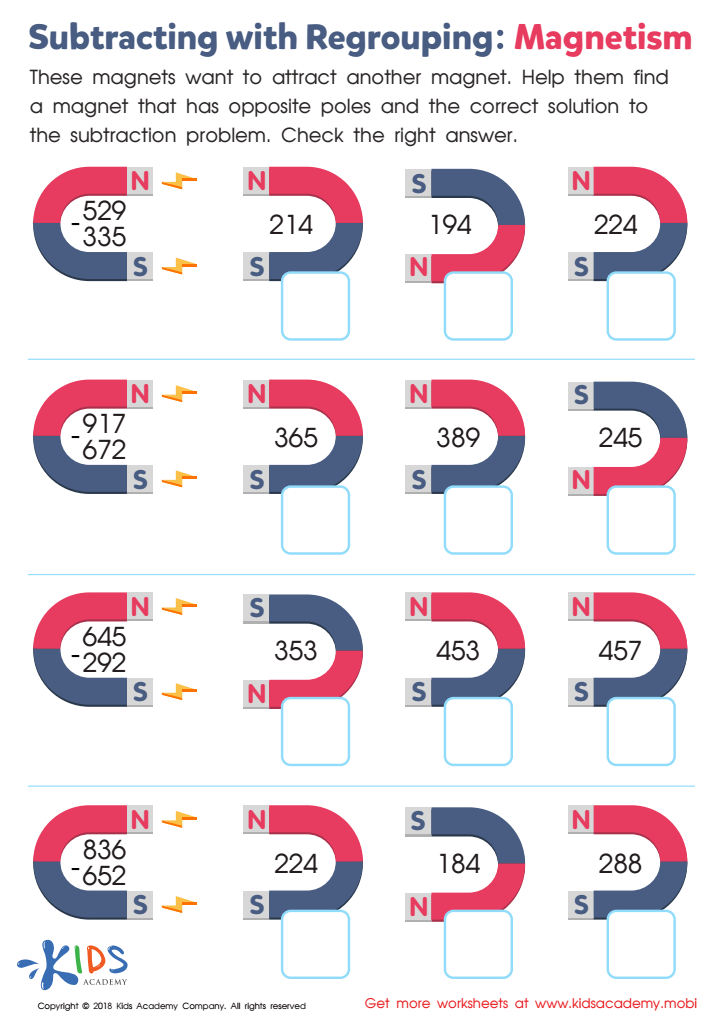
Subtracting with Regrouping: Magnetism Worksheet
 Assign to My Students
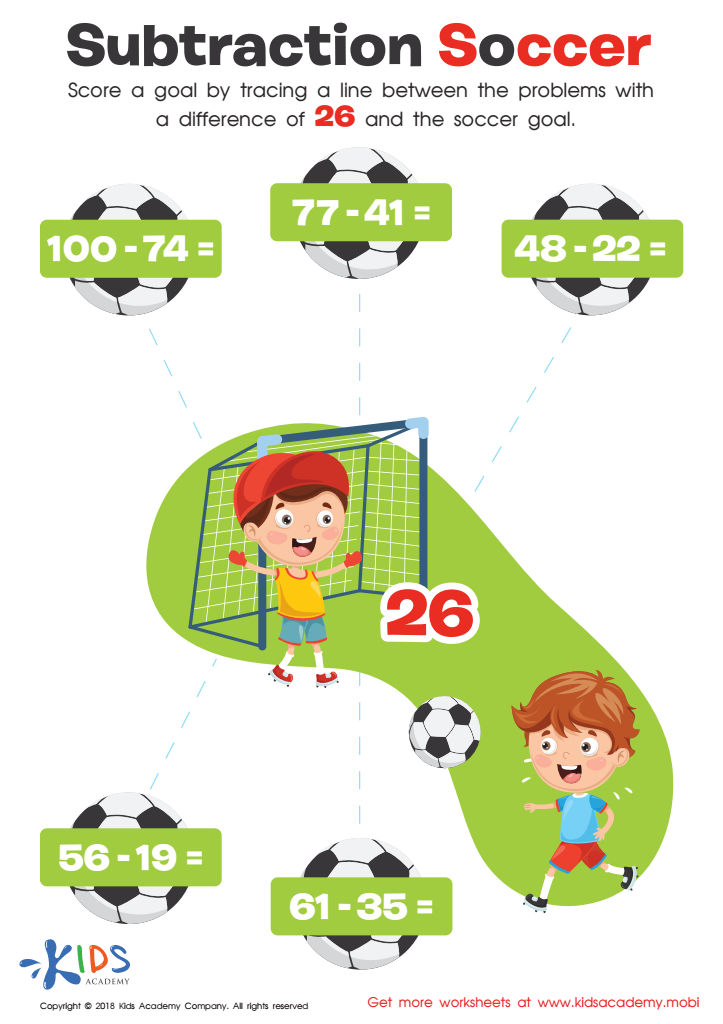
Subtraction Soccer Worksheet
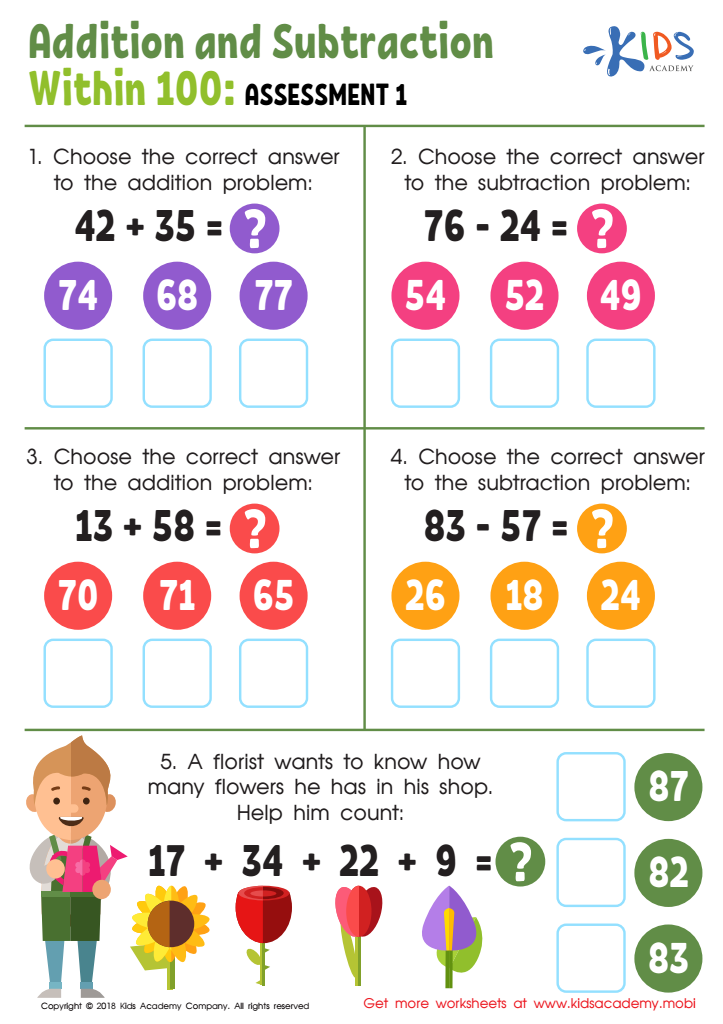
Addition and Subtraction Within 100 Worksheet




.jpg)



Mental math skills, particularly in the area of normal subtraction, are a critical component of an 8-year-old child's cognitive and mathematical development. Parents and teachers should be highly attentive to nurturing these skills for several important reasons.
Firstly, mental subtraction strengthens numerical understanding and number sense. When children can subtract numbers mentally, they develop a more profound comprehension of the relationships between numbers and operations. This foundational numeracy is crucial for their success in more advanced mathematics later on.
Secondly, mental math enhances problem-solving and critical-thinking abilities. Efficiently subtracting numbers in their heads requires children to think strategically, visualize problems, and determine solutions swiftly. These are transferable skills that will benefit them beyond the mathematics classroom.
Additionally, mental subtraction fosters confidence and independence. Mastery of this skill allows children to tackle everyday mathematical tasks without relying on calculators or written methods, building their self-esteem and reducing anxiety around math.
It also promotes cognitive flexibility and memory retention. Mental subtraction engages working memory and strengthens mental agility, aiding children in other areas of learning and daily life.
By prioritizing mental subtraction, parents and teachers not only support academic achievement but also encourage positive attitudes toward mathematics, laying a solid foundation for lifelong learning and problem-solving abilities.