Critical thinking development Normal Reading Comprehension Worksheets for 8-Year-Olds
3 filtered results
-
From - To
Enhance your child's reading skills with our critical thinking development worksheets designed specifically for 8-year-olds. Our engaging reading comprehension exercises promote analytical skills and help young learners interpret and evaluate text effectively. Each worksheet combines captivating stories with thought-provoking questions that encourage children to analyze character motivations, draw conclusions, and make inferences. Ideal for home or classroom use, these resources support literacy development while fostering essential critical thinking abilities. Give your child the tools to become an insightful reader by exploring our curated collection of normal reading comprehension worksheets today! Boost their confidence and success in reading comprehension!
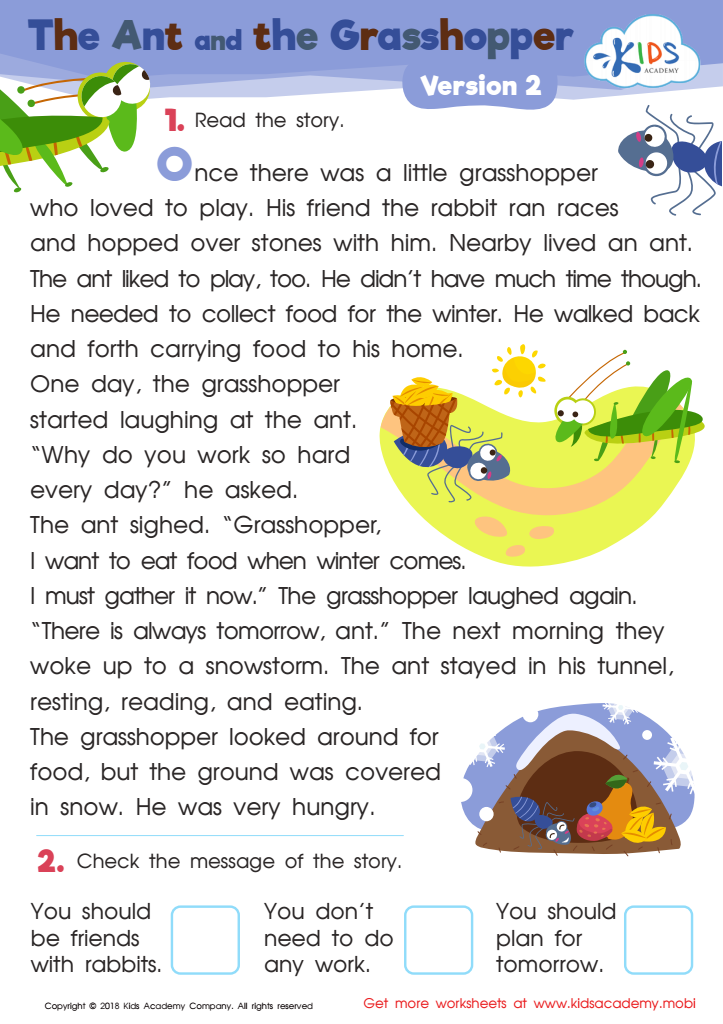
The Ant and The Grasshopper Version 2 Worksheet
 Assign to My Students
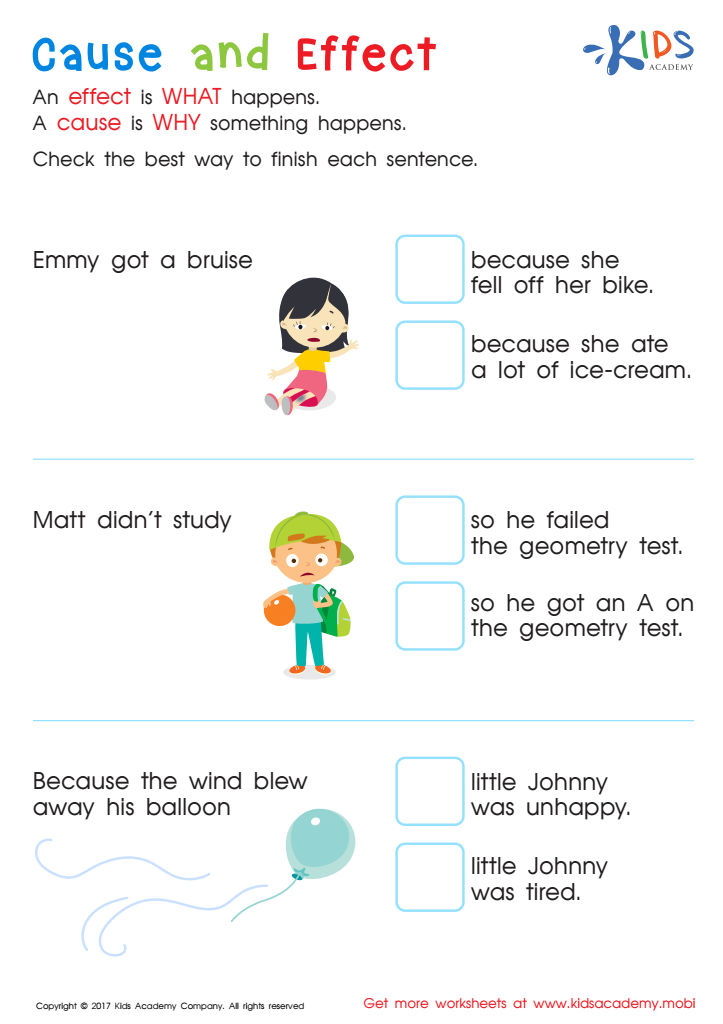
Cause and Effect Worksheet
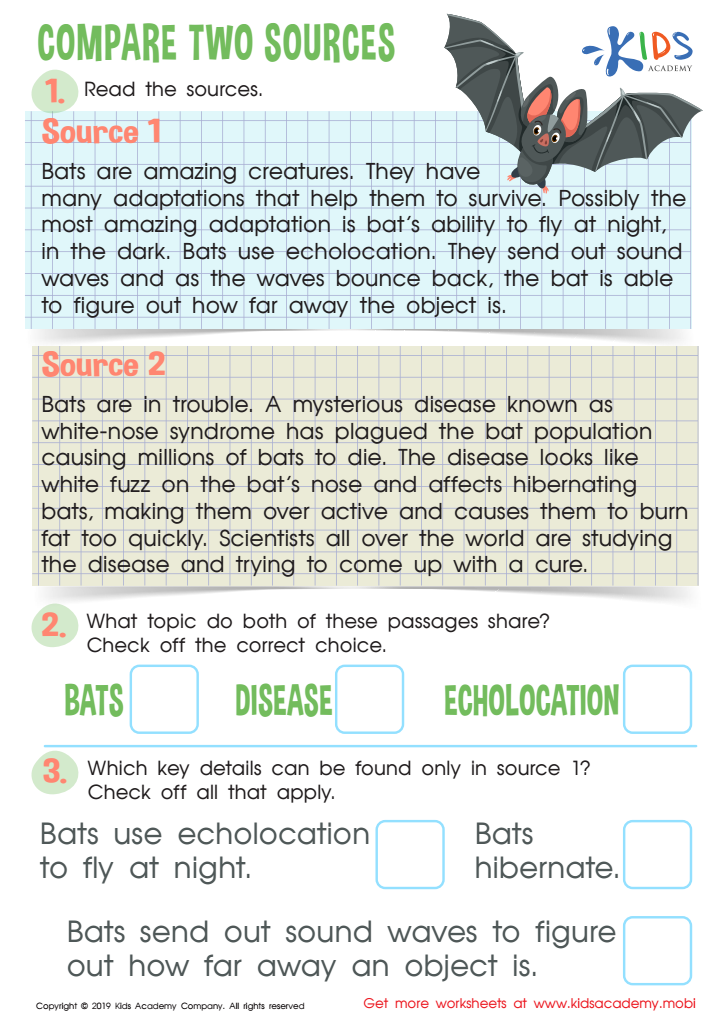
Compare Two Sources Worksheet






.jpg)
Parents and teachers should prioritize the development of critical thinking skills in 8-year-olds, particularly as it relates to reading comprehension, because these abilities are foundational for lifelong academic success and effective decision-making. At this age, children begin to process information beyond mere facts; they start to analyze, synthesize, and evaluate arguments, which enhances their understanding of texts.
Critical thinking enables young readers to question the material, differentiate between fact and opinion, and identify biases, all of which fosters deeper engagement with literature and improves retention. As they encounter diverse narratives and complex characters, children learn to empathize and understand multiple perspectives, which is essential in our increasingly interconnected world.
Moreover, strong reading comprehension skills improve not just literacy but also overall cognitive development. Engaging in discussions about stories, encouraging predictions about plots, and analyzing characters cultivate an inquisitive mindset that promotes problem-solving abilities across various subjects. Armed with these skills, children will navigate future academic challenges more confidently and effectively. Thus, fostering critical thinking in reading sets the stage for both current and future learning, ultimately assisting children in becoming informed, thoughtful, and constructive members of society.








