Moral understanding Normal Reading Fiction Worksheets for 8-Year-Olds
3 filtered results
-
From - To
Welcome to our "Moral Understanding Normal Reading Fiction Worksheets" designed specifically for 8-year-olds! These engaging worksheets aim to enhance children's reading skills while promoting critical thinking about moral values. By exploring captivating stories, young readers will identify moral lessons and ethical dilemmas within various narratives. Our specially crafted activities help children articulate their understanding of right and wrong, fostering empathy and social awareness. Ideal for classroom use or at-home learning, these worksheets offer a fun and educational way to deepen one's appreciation for literature and its relevance to real-life situations. Unlock your child's moral reasoning skills today!
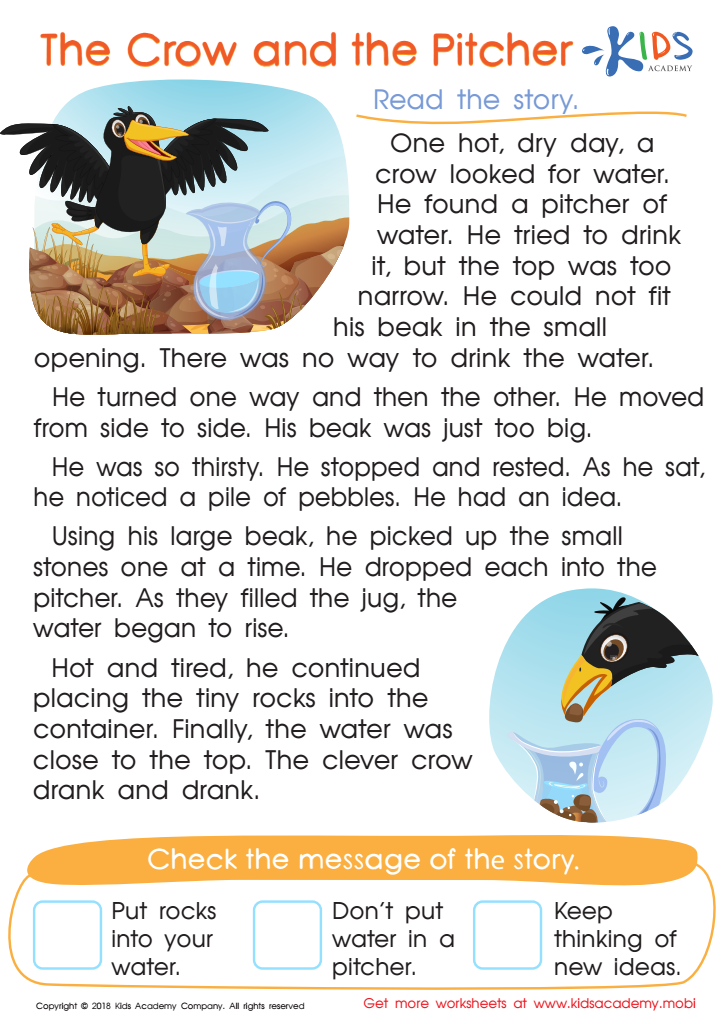
The Crow and the Pitcher Worksheet
 Assign to My Students
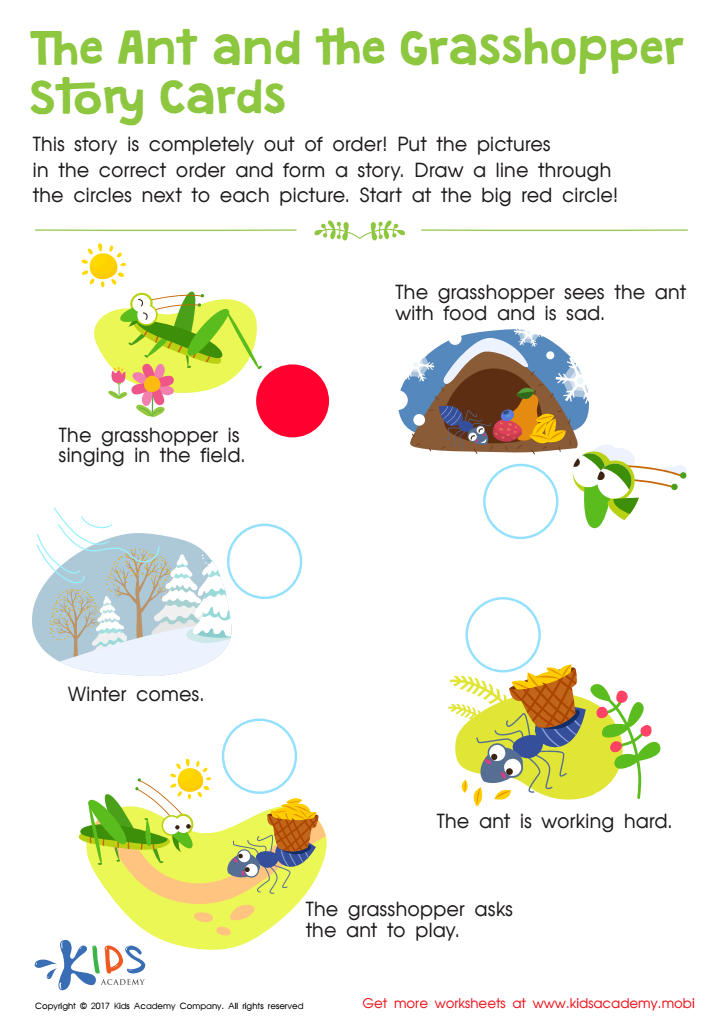
The Ant and The Grasshopper Worksheet
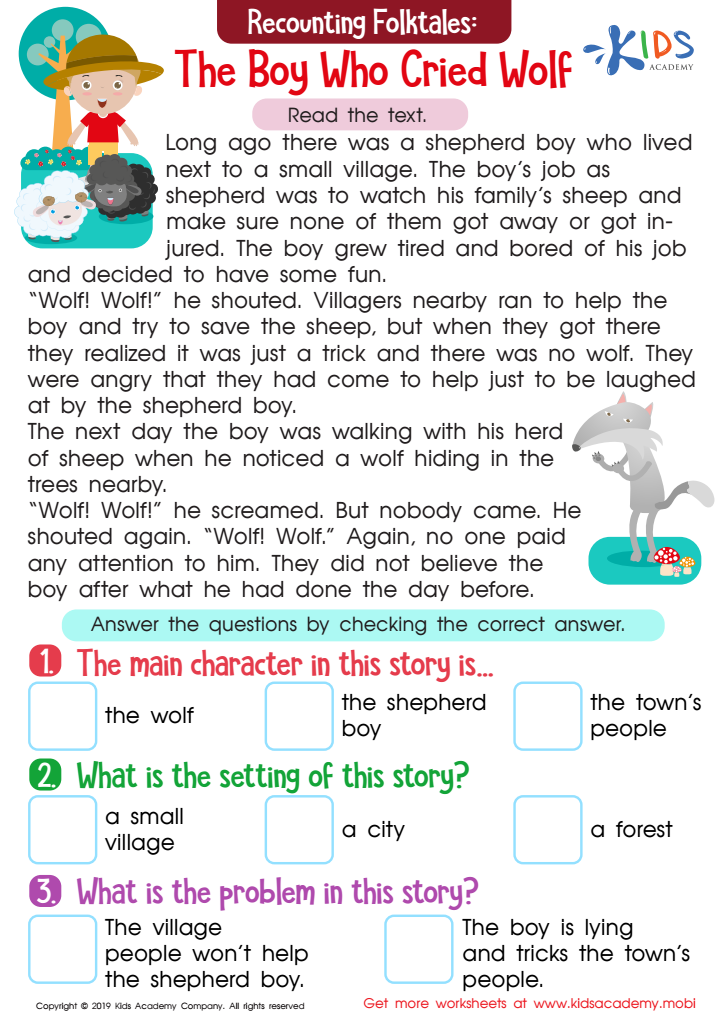
The Boy Who Cried Wolf Part 1 Worksheet








Moral understanding is crucial for children's development, especially at age eight, when they transition from egocentric thinking to a more empathetic worldview. Engaging with fictional narratives is a powerful way to cultivate this understanding. When parents or teachers introduce normal reading fiction to children, they present opportunities for young readers to encounter diverse characters and moral dilemmas. Through tales of friendship, bravery, and honesty, kids learn to navigate complex emotions and question what is right or wrong.
Reading fiction helps children develop critical thinking and empathy as they immerse themselves in different perspectives and experiences. This can foster emotional intelligence, enabling them to relate to others' feelings and viewpoints, which is essential for positive interactions in school and beyond. Additionally, stories often highlight consequences for characters' actions, underscoring the importance of ethical behavior and decision-making.
Furthermore, engaging in discussions about the themes and lessons in stories encourages children to articulate their views and build their moral compass. This practice not only strengthens their literacy skills but also solidifies values that contribute to their overall character development. By prioritizing moral understanding through reading, parents and teachers equip children with the necessary tools to navigate the complexities of human relationships and social situations.







